
Turn on the TV in 1984, and you weren’t just watching a music video; you were studying for a test on how to dress. The MTV era, which launched in August 1981, changed everything. Before this, radio ruled. After this, image was king. Female musicians didn’t just sing hits; they dressed like visual manifestos. They took three specific materials-lace, leather, and tailored wool-and turned them into symbols of rebellion, toughness, and authority.
We often think of these looks as random trends from a decade of excess. But if you look closer, every outfit had a job to do. A lace bustier wasn’t just sexy; it was a challenge to modesty. A leather jacket wasn’t just cool; it was armor against a male-dominated rock scene. A power suit wasn’t just office wear; it was a declaration that women belonged in boardrooms and on stages with equal weight. Let’s break down how these icons used fabric to fight for space.
The Lace Rebellion: Turning Underwear into Outerwear
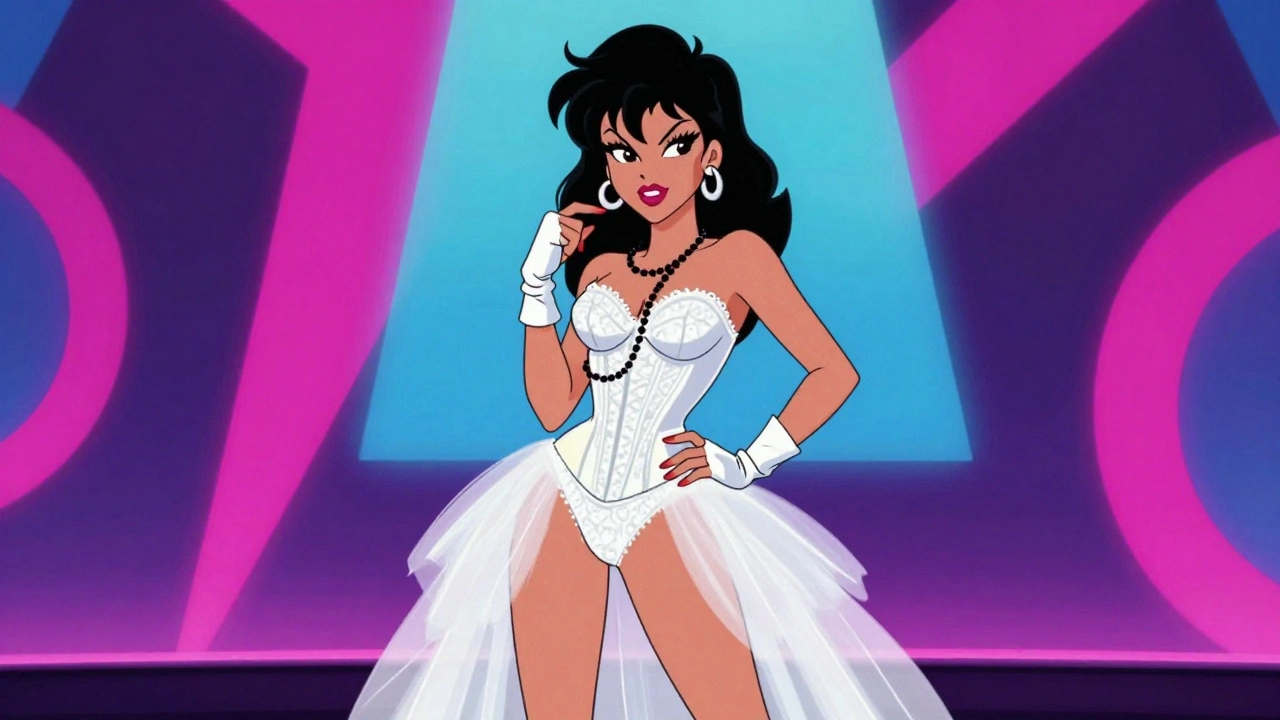
Lace has always been associated with privacy. It belongs inside drawers or under wedding veils. In the mid-80s, Madonna decided that private shouldn’t mean hidden. Her stylist, Maripol, helped craft a look that shocked parents and thrilled teenagers. The defining moment came at the 1984 MTV Video Music Awards. Madonna walked out in a white lace bustier, a tulle skirt that looked like a bridal train, fingerless gloves, and rosary beads. She even wore a belt that said “BOY TOY.”
This wasn’t accidental. By wearing lingerie as street clothes, Madonna inverted the rules. She claimed ownership over her sexuality in a way that felt aggressive rather than passive. Fashion historians note that this look mixed religious iconography with sexual provocation, creating a tension that defined pop culture for years. Retailers scrambled to copy it. Suddenly, teenage girls everywhere were buying cheap lace tops and fishnet stockings because they wanted a piece of that defiant energy.
Cyndi Lauper took a different angle with lace. While Madonna’s lace was stark and provocative, Lauper’s was playful and chaotic. In her “Girls Just Want to Have Fun” video (1983), she layered lace gloves and slips with neon colors and thrift-store finds. Her approach felt less like a calculated statement and more like joyful experimentation. Both artists proved that lace could be loud. It didn’t have to be delicate or demure. It could be a weapon of mass distraction.
Leather Armor: Toughness in a Rock World
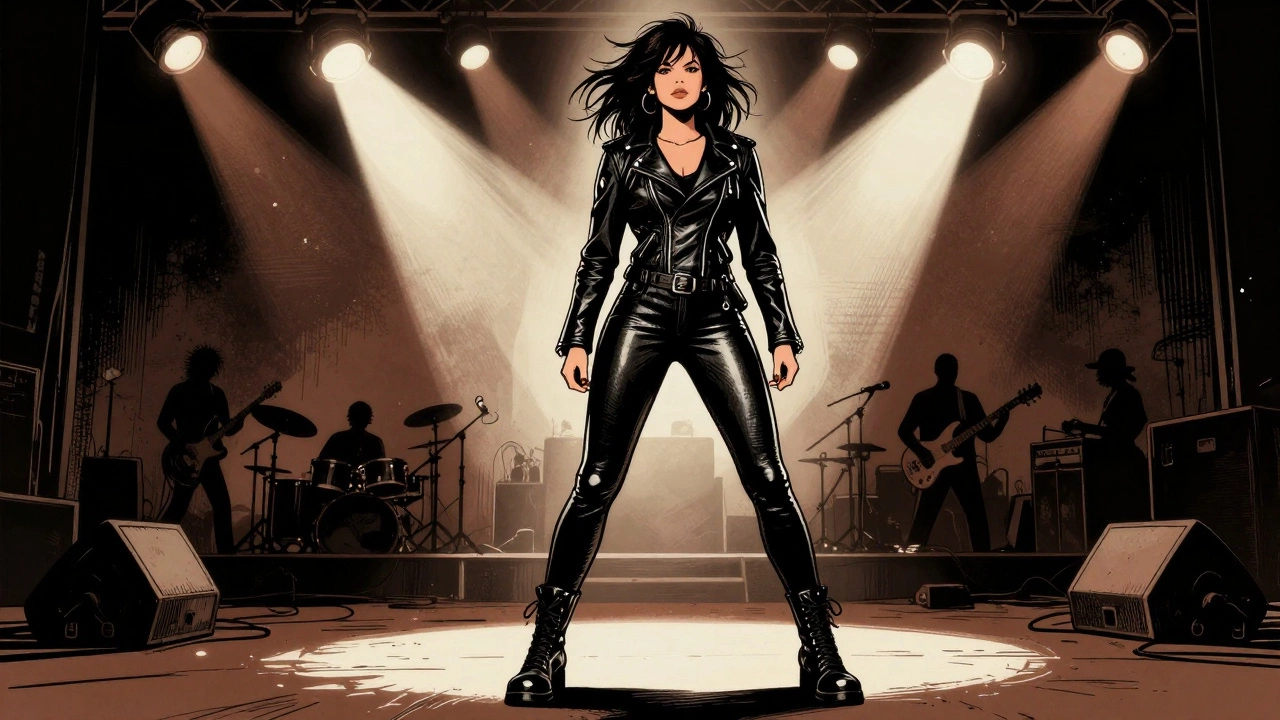
If lace was about reclaiming femininity, leather was about claiming toughness. The rock and roll world in the early 80s was heavily male. Women who played guitar or sang hard rock often faced skepticism. To counter this, artists like Joan Jett and Pat Benatar adopted the biker aesthetic. Black leather jackets, tight pants, and heavy boots became their uniform. This wasn’t just fashion; it was a signal. It told the audience, “I belong here. I am as hard as the men on stage.”
Tina Turner elevated this look when she relaunched her solo career with the album Private Dancer in 1984. In videos like “What’s Love Got to Do with It,” she paired fitted leather mini-skirts and jackets with high heels and voluminous hair. This combination was crucial. It merged the grit of punk rock with the glamour of show business. She showed that a woman could be tough without losing her elegance. For audiences in their 30s and 40s, Turner represented a mature, resilient form of power that resonated deeply.
Then there was Grace Jones. She treated leather not as clothing but as sculpture. In albums like Nightclubbing (1981) and Slave to the Rhythm (1985), Jones wore harness-like tops and angular leather pieces that emphasized her sharp physique. Her look was futuristic and androgynous. Leather functioned as armor, protecting her intense persona while highlighting her control over her own image. She blurred the lines between fashion editorial and performance art, influencing designers long after the decade ended.
Power Suits: The Architecture of Authority
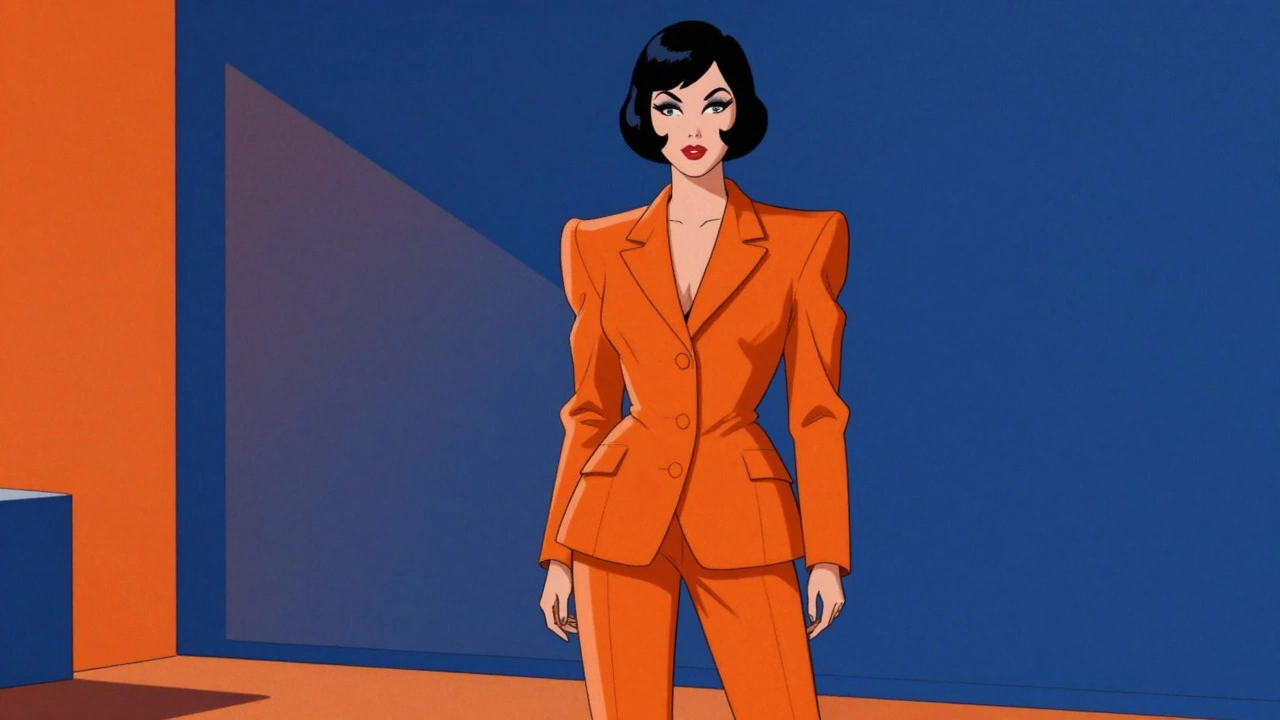
You can’t talk about 80s fashion without mentioning the shoulder pad. The women’s power suit emerged from a cultural shift where more women entered white-collar jobs. Public figures like Margaret Thatcher and Princess Diana popularized structured skirt suits in the early 80s. But musicians exaggerated this silhouette to make a point. They made the shoulders bigger, the waists tighter, and the statements louder.
Annie Lennox of Eurythmics is the master of this genre. In the “Sweet Dreams (Are Made of This)” video (1983), she appeared with cropped orange hair and a tailored suit. She looked like a banker, but the framing and her presence made it clear she was challenging gender norms. She asked viewers to question why authority looked masculine. By dressing in menswear-inspired cuts, she claimed that power for herself. It was a quiet revolution in a boxy jacket.
By the late 80s, Janet Jackson introduced a militarized twist. For her Rhythm Nation 1814 era (1989), she wore black, uniform-like jackets with epaulettes and caps. These outfits combined corporate structure with military precision. The matching suits worn by her dancers created a sense of collective discipline. It reflected growing concerns about social justice and unity. Jackson’s power suits weren’t just about individual success; they were about organized strength.
| Material | Key Artists | Cultural Signal | Iconic Moment |
|---|---|---|---|
| Lace | Madonna, Cyndi Lauper | Reclaimed sexuality, playful rebellion | Madonna’s 1984 VMA performance |
| Leather | Joan Jett, Tina Turner, Grace Jones | Toughness, androgyny, resilience | Tina’s “Private Dancer” tour (1984) |
| Power Suits | Annie Lennox, Janet Jackson, Grace Jones | Authority, professional ambition, discipline | Lennox’s “Sweet Dreams” video (1983) |
Why These Looks Still Matter Today
We see echoes of these styles every time a new pop star releases a video. Designers constantly revive strong-shouldered blazers, leather biker jackets, and lingerie-as-outerwear. But the context has shifted. In the 80s, these choices were radical because they broke taboos. Today, they are part of the fashion vocabulary.
The legacy of these women isn’t just in the clothes we buy at vintage stores. It’s in the permission they gave future generations to experiment. They showed that fashion could be a tool for negotiation. You could use lace to be seen, leather to be respected, and suits to be heard. They proved that what you wear is never just about aesthetics. It’s about who you are and how you want the world to treat you.
When you look back at photos from 1980 to 1989, you aren’t just seeing big hair and neon colors. You’re seeing women carving out identities in a media landscape that was just learning how to watch them. They didn’t wait for approval. They dressed for impact. And decades later, we’re still trying to match their confidence.
Who is considered the biggest fashion icon of the 1980s?
While many artists influenced style, Madonna is frequently cited as the most impactful due to her ability to turn controversial looks, like lace lingerie as outerwear, into global trends. However, Grace Jones and Annie Lennox are also top contenders for their pioneering work in androgynous and avant-garde styling.
Why did female musicians wear power suits in the 80s?
Power suits symbolized authority and professional ambition. As more women entered corporate roles, musicians like Annie Lennox and Janet Jackson adopted these silhouettes to challenge gender norms and claim space in male-dominated industries. The exaggerated shoulders visually projected strength and control.
How did leather become associated with female rock stars?
Leather connected female performers to punk and biker subcultures, signaling toughness and rebellion. Artists like Joan Jett and Pat Benatar used leather jackets and pants to appropriate masculine-coded garments, asserting their place in the rock scene and defying traditional expectations of femininity.
What was the significance of Madonna's 1984 VMA outfit?
Madonna’s white lace bustier and tulle skirt outfit recontextualized bridal and lingerie elements as provocative public wear. Combined with religious jewelry and a “BOY TOY” belt, it challenged societal norms around modesty and sexuality, becoming one of the most iconic images of the decade.
Did political figures influence 80s music fashion?
Yes. Figures like Margaret Thatcher and Princess Diana popularized structured power suits in the public eye. Musicians borrowed this template of authority but exaggerated it with larger shoulders and bolder colors to create a distinct, theatrical version of corporate chic suitable for stage performance.