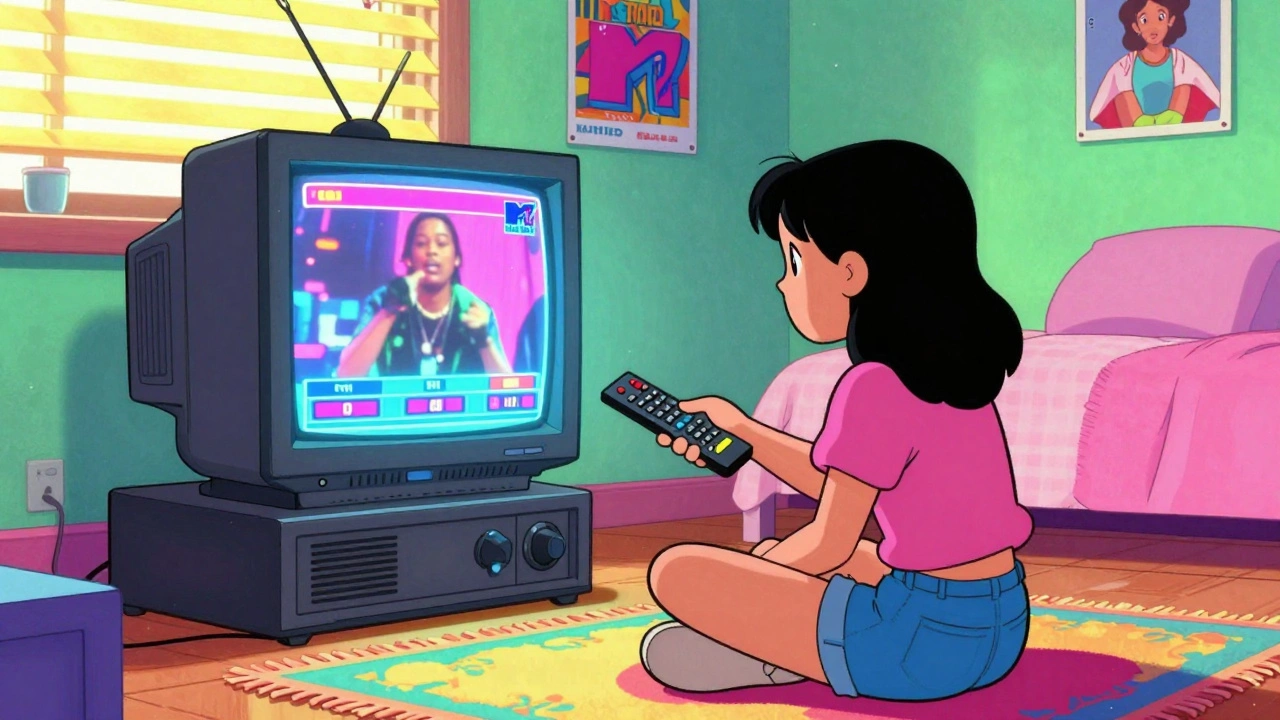

Remember the ritual? It was roughly 4:30 PM on a school day. You rushed home, dropped your backpack, and grabbed the remote. The clock ticked toward 5:00 PM because that was when Total Request Live (TRL), the MTV countdown show that defined late-90s youth culture by ranking music videos based on fan votes premiered in Times Square. If you missed it, you were out of the loop. If you caught it, you immediately needed the latest issue of Tiger Beat a monthly teen magazine known for its pull-out posters and exclusive interviews with boy bands and teen idols to see who had won.
This wasn't just random luck or organic growth. The massive success of 1990s teen pop the wave of youth-oriented pop music dominated by acts like Britney Spears, *NSYNC, and the Spice Girls between 1997 and 2001 was engineered. Record labels, television networks, and magazine publishers created a closed-loop ecosystem. They didn't just sell songs; they sold an identity. By coordinating what you saw on screen with what you held in your hands, they turned casual viewers into obsessive fans.
The TV Hook: Creating Urgency and Community
Television provided the spark. In the pre-internet era, you couldn't just search for a new song whenever you wanted. You had to wait for the network to give it to you. This scarcity created urgency. Channels like MTV Music Television, the cable channel that became the primary gatekeeper for music video exposure and youth trends in the 1990s, Nickelodeon the children's cable network that hosted shows like All That and introduced many future pop stars to young audiences, and Disney Channel the family-oriented cable network that launched the careers of Britney Spears, Justin Timberlake, and Christina Aguilera through The Mickey Mouse Club acted as the launchpad.
Consider the strategy behind Britney Spears American singer whose 1998 debut single ...Baby One More Time made her the defining female voice of late-90s teen pop. Her career didn't start with a radio hit alone. It started with visual storytelling on Disney Channel’s The All-New Mickey Mouse Club (MMC). Fans already knew her face from 1992 to 1994. When she debuted "...Baby One More Time" in October 1998, she wasn't a stranger. She was a friend returning with a new look. The music video, featuring her in a Catholic schoolgirl outfit, played on repeat on MTV. But the real magic happened with TRL.
TRL changed everything. Hosted by Ryan Seacrest, the show allowed fans to call in and vote for their favorite videos. This created a feedback loop. If *NSYNC American boy band formed in Orlando in 1995 that achieved massive global success with albums like No Strings Attached in 2000 was climbing the charts, fans felt personally responsible for keeping them there. They organized phone banks after school. They texted friends. This participation made fans feel like co-creators of the star's success. It wasn't passive consumption; it was active labor. And the reward? Seeing the group perform live on stage in New York City, feeling like you were part of the crowd even if you were watching from a bedroom in Ohio.
The Magazine Anchor: Sustaining the Obsession
TV appearances were fleeting. A performance lasted three minutes. A news segment lasted thirty seconds. Once the broadcast ended, the image vanished from the screen. That’s where magazines stepped in. They provided permanence.
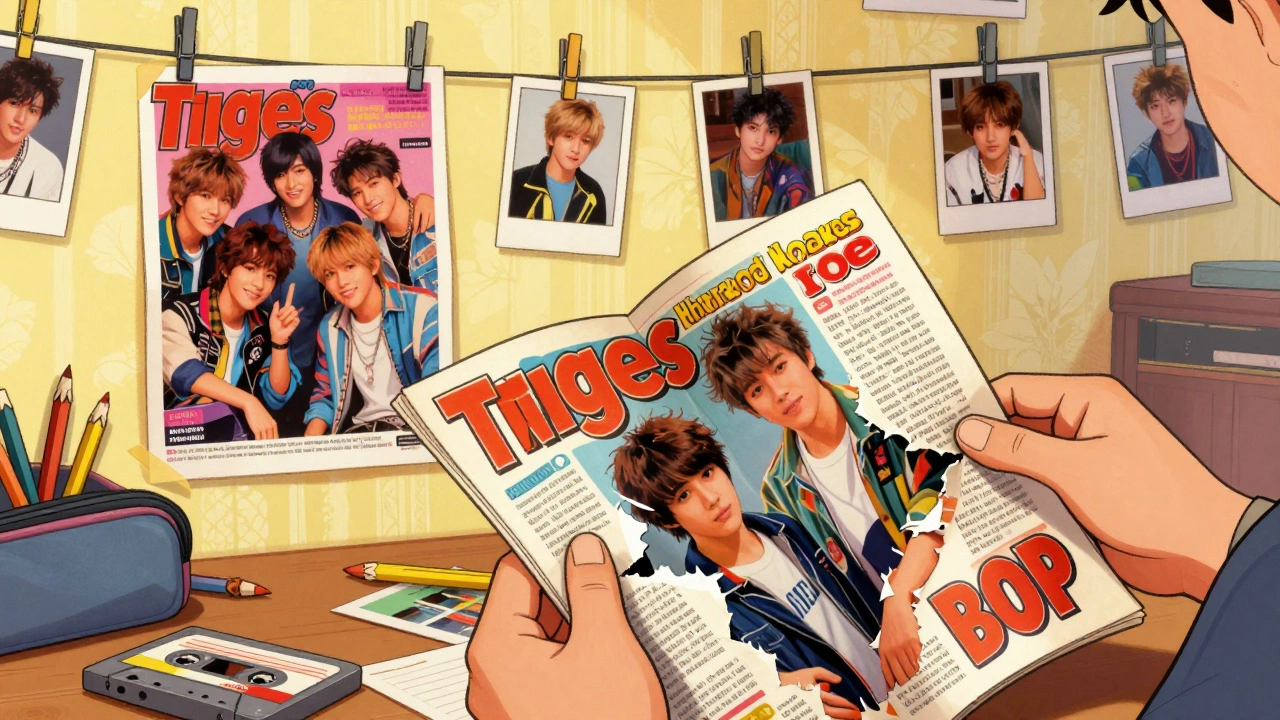
Titles like Tiger Beat, Bop a teen magazine published from 1994 to 2008 that focused heavily on celebrity gossip, quizzes, and pull-out posters, and Teen People a magazine launched in 1998 targeting teenagers with celebrity-heavy content, acting as a younger sibling to People magazine were designed to be kept, not discarded. For $2.50 to $3.99, a teen could buy a month’s worth of intimacy with their idols. These magazines offered what TV couldn’t: detailed access.
Think about the physical experience. You bought the magazine at the supermarket checkout. You took it home. You tore out the poster. You taped it to your wall. Maybe you cut out individual photos and pasted them into a binder. This process transformed the celebrity into a physical presence in your personal space. Your bedroom became a shrine. The boundary between public figure and private friend blurred completely.
Magazines also used specific editorial formats to deepen this connection. Personality quizzes asked, "Which Spice Girl are you?" Advice columns addressed crushes and heartbreaks using quotes from stars. "Day in the Life" profiles revealed mundane details-what they ate for breakfast, how they brushed their teeth. These details made superstars feel relatable. They weren't untouchable gods; they were kids who liked pizza and hated math, just like you. This parasocial intimacy is powerful. It makes you care about someone you’ve never met as if they were your best friend.
The Synergy: How Labels Orchestrated the Boom
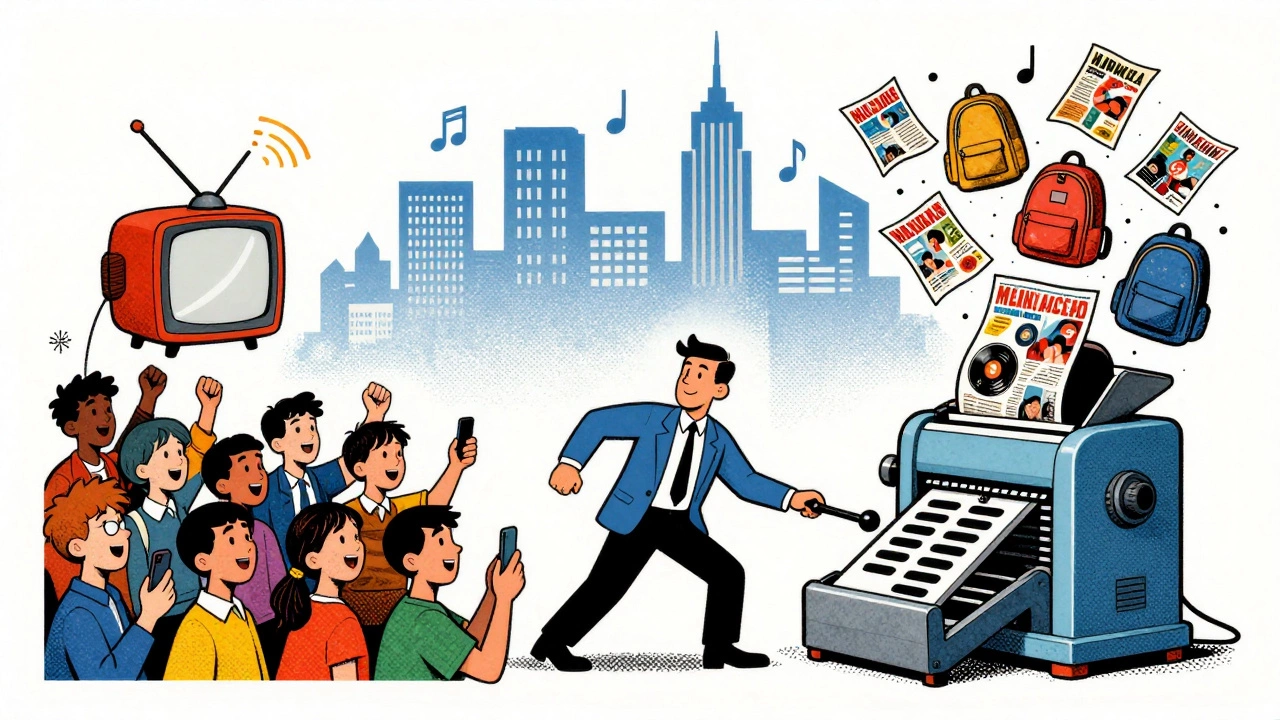
Record labels understood this dynamic perfectly. They didn't treat TV and magazines as separate channels. They treated them as parts of a single machine. Here is how the typical rollout worked for a major act like Backstreet Boys American boy band formed in Orlando in 1993 that broke through in the US in 1997 with hits like I Want It That Way:
- Visual Introduction: A high-budget music video premieres on MTV during heavy rotation. The choreography is simple enough to copy, encouraging imitation.
- Live Validation: The group performs on a major talk show or awards ceremony. This proves they can sing and dance live, adding credibility.
- Magazine Deep Dive: Within weeks, an exclusive interview appears in Tiger Beat or Seventeen. The article includes a "20 Things You Didn't Know" list and a large fold-out poster.
- Fan Activation: The magazine prints the schedule for the next TV appearance or contest entry forms. Fans are directed back to TV to vote or watch.
This cycle repeated every few months. As long as the act appeared on TV regularly and graced magazine covers frequently, the fandom remained hot. If one channel stopped, the other picked up the slack. If a song wasn't getting much airplay, a juicy magazine rumor might keep interest alive. If a magazine feature was dry, a viral moment on TRL could reignite passion.
Consider the economic logic. Magazines needed celebrities to sell copies. Celebrities needed magazines to maintain relevance between TV spots. Networks needed both to drive ratings. Everyone benefited. Teen People, launched in 1998, explicitly targeted this synergy. It positioned itself as the bridge between the serious world of adult journalism and the chaotic energy of teen pop. It gave advertisers direct access to the demographic that was spending hours voting on TRL and buying concert tickets.
Building Identity Through Consumption
Fandom in the 1990s was also about social signaling. What you listened to and what you read told people who you were. Having a poster of Christina Aguilera American singer who rose to fame in the late 1990s with her vocal prowess and debut album Christina Aguilera, released in 1999 on your wall signaled that you were into soulful vocals and perhaps a bit more mature than the bubblegum pop crowd. Collecting issues of Bop showed you were plugged into the latest gossip and fashion trends.
School hallways became trading posts. Did you get the rare photo of Nick Carter without his jacket? Did you have the updated TRL results sheet? These small artifacts mattered. They were currency in the social economy of adolescence. Magazines facilitated this by including contests, pen-pal listings, and fan club addresses. They created a community structure offline. You weren't just a fan; you were part of a tribe.
This approach relied on limited information. Unlike today, where you can follow an artist’s every move on Instagram, 1990s fans had gaps in their knowledge. Those gaps were filled with imagination and speculation. Magazines often fed this speculation with ambiguous headlines or cryptic quotes. Was Nick Lachey dating Jessica Simpson? Who was the secret admirer sending flowers to Britney? The lack of immediate answers kept fans talking, reading, and buying more issues to find clues.
| Media Type | Primary Function | Key Examples | Fan Interaction |
|---|---|---|---|
| Television (MTV/TRL) | Create urgency, visibility, and communal voting | Total Request Live, MTV Video Music Awards | Phone voting, live viewing parties |
| Teen Magazines | Provide intimacy, permanence, and collectibles | Tiger Beat, Bop, Teen People | Cutting out photos, taking quizzes, writing letters |
| Kids' Cable (Disney/Nick) | Build early familiarity and trust | The Mickey Mouse Club, All That | Long-term parasocial bonding before stardom |
Why This Model Disappeared
This highly orchestrated system collapsed in the early 2000s, not because fans lost interest, but because technology changed the rules. The internet democratized access. Fan sites emerged where users could post leaked photos, transcribe interviews, and share opinions instantly. You no longer had to wait for a monthly magazine to learn a star’s favorite color. You could find out in seconds.
MTV shifted away from music videos toward reality TV shows like The Real World and later Laguna Beach. The gatekeeping power of TRL diminished as YouTube allowed anyone to upload and view videos on demand. Magazines struggled to compete with free online content. Teen People ceased print publication in 2006. Tiger Beat followed suit years later.
Yet, the core psychology remains. Today’s K-pop fandoms use Twitter voting and TikTok challenges to replicate the participatory energy of TRL. Fan accounts on Instagram provide the daily intimacy that magazines once offered. The tools have changed, but the desire for connection, community, and control over our cultural heroes is exactly the same. The 1990s model taught us how to be modern fans. It trained a generation to organize, vote, collect, and defend their idols. That training didn't disappear; it just moved online.
What was the role of MTV's Total Request Live (TRL) in 1990s teen pop?
TRL served as the central hub for music video promotion and fan engagement. By allowing fans to vote for their favorite videos via phone calls, it created a sense of agency and competition. Acts like *NSYNC and Backstreet Boys dominated the countdown, which drove record sales and increased media coverage. It turned passive watching into active participation.
Why were magazines like Tiger Beat so important to teen pop fans?
Magazines provided tangible, lasting connections to stars. They included pull-out posters for bedroom decoration, exclusive interviews that revealed personal details, and quizzes that helped fans identify with their idols. Unlike fleeting TV appearances, magazines could be re-read, collected, and shared with friends, sustaining fandom between TV broadcasts.
How did Disney Channel contribute to the rise of teen pop stars?
Disney Channel, particularly through The All-New Mickey Mouse Club, introduced future stars like Britney Spears, Justin Timberlake, and Christina Aguilera to a young audience years before they became pop icons. This early exposure built a loyal fan base that grew up with them, ensuring immediate support when they launched their music careers.
Did record labels coordinate between TV and magazines?
Yes, labels orchestrated a synchronized campaign. A music video premiere on MTV would be followed by exclusive magazine features. Publicists traded access to artists for guaranteed cover stories. This cross-promotion ensured constant visibility, keeping the artist in the public eye through multiple touchpoints.
Why did the 1990s teen pop media model decline?
The rise of the internet disrupted the monopoly of traditional media. Fan sites and early social networks provided instant access to celebrity news and images, reducing reliance on monthly magazines. Simultaneously, MTV shifted focus to reality programming, diminishing the importance of music video countdowns as the primary source of discovery.