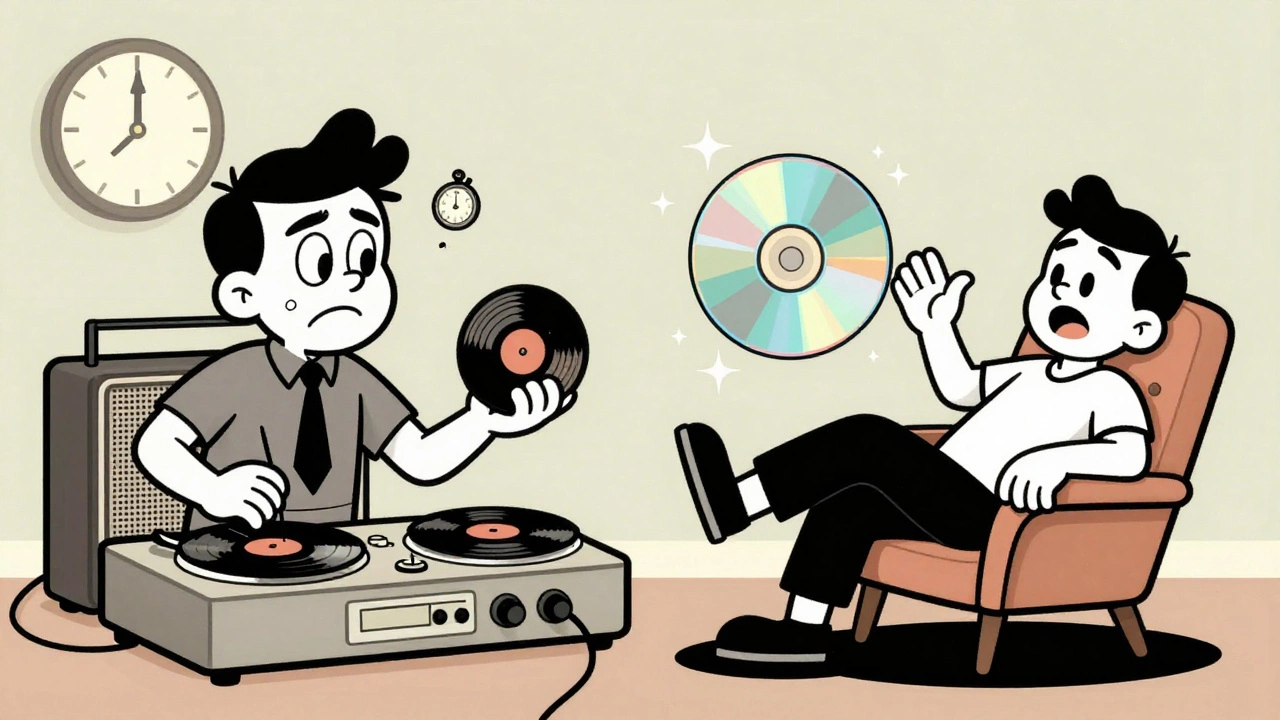

Think about the last time you listened to a pop hit from today. Chances are, it’s built on loops, layered vocals, and a production style that feels infinite in its polish. Now think back to the late 1980s. Songs were tighter, shorter, and often constrained by the physical limits of tape. What happened in between? The answer lies in the technological explosion of the 1990s. This decade didn’t just change how music sounded; it fundamentally rewrote the rules of how songs were structured and arranged.
The shift wasn't subtle. It was a complete overhaul of the creative process. For the first time, artists weren't limited by what they could physically play or record in a single take. They were empowered by tools that allowed them to edit, layer, and manipulate sound with precision previously reserved for major studios. This democratization of technology changed who got to make arrangement decisions and what those arrangements looked like.
The Death of the Three-Minute Rule
For nearly a century, pop songwriting was governed by an invisible clock. Why? Because early phonograph records and later cassette tapes had physical limitations. A standard vinyl side held about 20 minutes, but to maintain audio fidelity, singles were kept under three minutes. This created the infamous "three-minute rule" that dominated radio play. Songwriters stuck to verse-chorus-verse structures, 4/4 time signatures, and familiar major keys because there was simply no room for experimentation.
Then came the Compact Disc (CD). Introduced in the early 1980s but dominating the market by the mid-1990s, the CD offered a massive leap in capacity. A single disc could hold 74 to 80 minutes of uninterrupted, high-fidelity audio. Suddenly, the physical constraint vanished. Producers and arrangers realized they didn't need to rush to the chorus anymore. Album tracks became longer, more elaborate, and structurally complex. We saw the rise of extended intros, bridge sections that lasted longer than previous verses, and ambient outros that faded into silence rather than cutting off abruptly. The CD gave composers the breathing room to explore narrative arcs within songs that were previously impossible.
MIDI and the Precision of Arrangement
If the CD expanded the canvas, MIDI (Musical Instrument Digital Interface) provided the paintbrushes. By the 1990s, MIDI had evolved from a simple communication protocol into the backbone of modern composition. Before MIDI, if you wanted to fix a drum hit that was slightly off-beat, you had to re-record the entire track. With MIDI, every note, every velocity, and every timing adjustment could be edited digitally.
This capability revolutionized arrangement choices. Composers could now sequence complex polyrhythms and synchronize instrumental sections with machine-like precision. In genres like techno, house, and trance, this led to arrangements built on repetitive, looped structures rather than traditional verse-chorus forms. The focus shifted from harmonic progression to rhythmic texture and timbral evolution. Artists could layer dozens of synthesized instruments, creating dense soundscapes that would have been logistically impossible to orchestrate with live musicians. The result was a new kind of musical architecture-one that prioritized groove and atmosphere over linear storytelling.
| Feature | Analog Era (Pre-1990s) | Digital Era (1990s+) |
|---|---|---|
| Editing Capability | Destructive (tape cuts/splices) | Non-destructive (digital undo/redo) |
| Song Length Limit | ~3 minutes (single), ~22 mins (side) | Unlimited (up to 80 mins per CD) |
| Instrumentation | Live musicians required | Virtually unlimited via MIDI/Synth |
| Timing Precision | Human feel (natural variance) | Quantized (grid-perfect alignment) |
| Vocal Production | Single take or manual overdubs | Algorithmic pitch correction & layering |
The Democratization of Sound Design
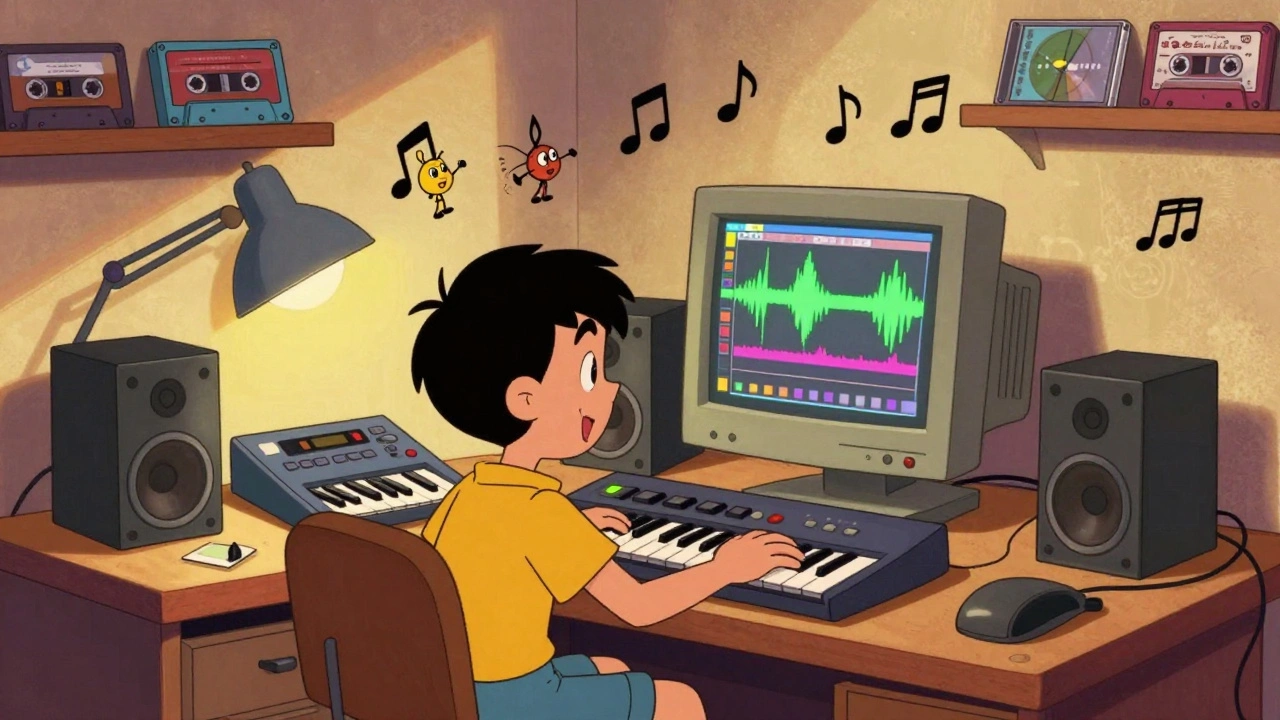
One of the most profound changes in the 1990s was not just *what* people recorded, but *who* recorded it. Affordable synthesizers from brands like Yamaha and Korg, combined with emerging computer-based music software, lowered the barrier to entry. You no longer needed years of classical training or a budget to hire a full orchestra. A bedroom producer could create lush string sections, epic brass swells, and intricate percussion patterns using sample libraries and virtual instruments.
This DIY culture fostered a wave of experimental arrangement choices. Independent artists began blending electronic precision with organic elements, creating hybrid sounds that defied genre classification. The line between composer, arranger, and producer blurred. In the past, these roles were distinct; today, they are often performed by the same person using a laptop. This shift meant that arrangement decisions were no longer dictated solely by industry veterans but by a broader, more diverse group of creators willing to take risks. The result was a richer, more varied musical landscape where electronic textures became standard even in rock and R&B contexts.
Vocal Manipulation and the Illusion of Perfection
Vocals underwent their own transformation during this period. Earlier eras relied on the natural timbre of the singer and the acoustics of the studio. The introduction of the microphone brought intimacy, but the 1990s brought control. Tools like Antares Auto-Tune, initially designed as a corrective tool, became an artistic instrument. Producers could now pitch-shift vocals without losing quality, layer harmonies algorithmically, and correct imperfections instantly.
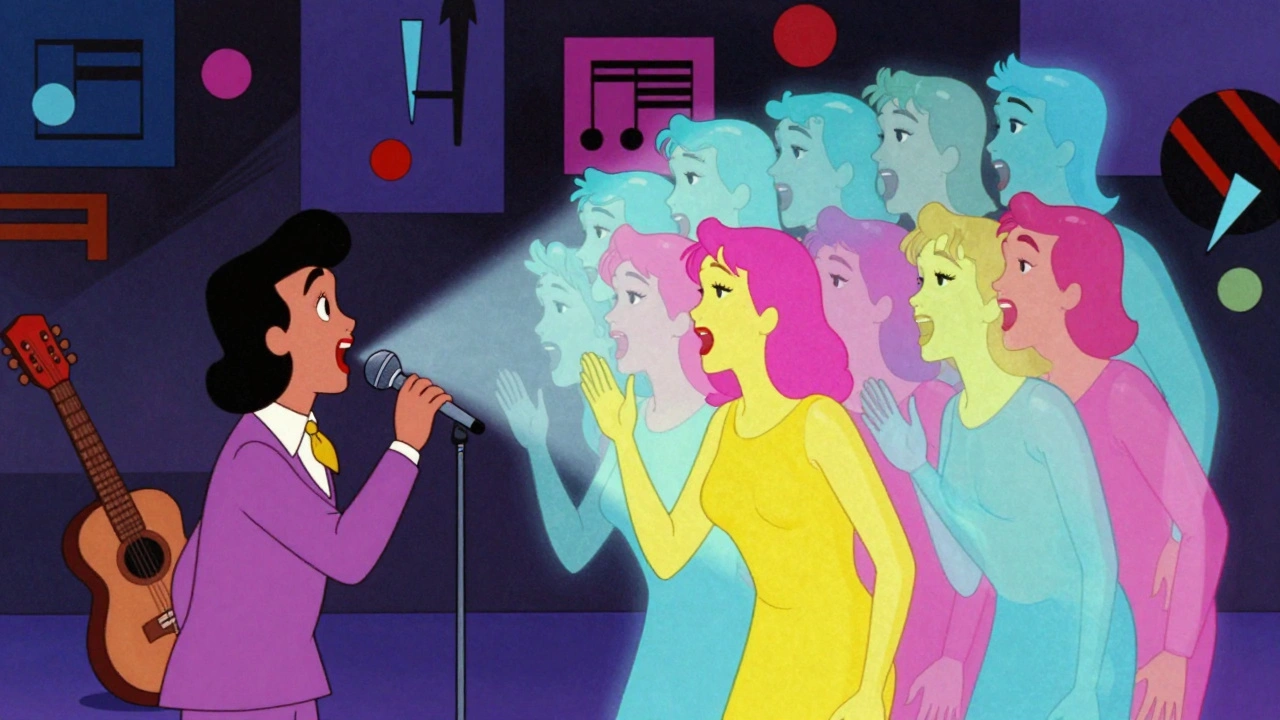
This technology influenced arrangement choices significantly. Arrangers could build complex vocal stacks that sounded like a choir but were actually one singer processed multiple times. It allowed for perfect harmony in pop productions, creating a sheen and polish that became the industry standard. However, it also introduced a new aesthetic-the robotic, stylized vocal effect-that became a hallmark of certain subgenres. The ability to manipulate voice so freely meant that the human element could be enhanced, exaggerated, or entirely obscured, giving arrangers a new palette of emotional expression.
Cross-Pollination of Genres
The technological tools of the 1990s didn't stay siloed. Electronic music techniques bled into mainstream pop, hip-hop, and rock. Groups like C+C Music Factory demonstrated how electronically produced rhythms could coexist with soulful vocals and rap lyrics. This cross-pollination challenged traditional arrangement logic. Hip-hop, once rooted in sampling and breakbeats, began incorporating live instrumentation and complex chord progressions facilitated by MIDI sequencing. Rock bands started using drum machines and synthetic bass lines to achieve heavier, more precise sounds.
The underground rave scene, flourishing in urban centers across the US and Europe, played a crucial role in this integration. As electronic genres like acid techno and epic trance gained traction, their structural conventions-long builds, drop-outs, and repetitive motifs-influenced mainstream songwriting. By the late 1990s, deejays and electronic producers were essential contributors to film soundtracks and chart-topping hits. Their methods became embedded in professional music practice, proving that technology-driven arrangements were not a fad but a permanent shift in how music is conceived.
Legacy and Modern Implications
The impact of 1990s technology on song structure is still felt today. The workflows established then-digital multitracking, MIDI sequencing, non-linear editing-are the foundation of modern music production. The expectation of flawless vocal tuning and dense, layered instrumentation stems directly from the capabilities unlocked in that decade. Moreover, the removal of physical constraints like tape length has led to a listening culture that embraces variety, from short viral snippets to hour-long concept albums.
Understanding this history helps us appreciate why modern songs sound the way they do. It wasn't just a change in taste; it was a change in possibility. When you hear a track with a perfectly quantized beat, a synth pad that sustains indefinitely, or a vocal stack that seems impossibly large, you're hearing the legacy of 1990s innovation. These tools gave artists the freedom to break old rules and write new ones, shaping the sonic landscape we inhabit today.
How did MIDI change song arrangement?
MIDI allowed composers to sequence instruments with precise timing, edit notes after recording, and layer multiple synthesized parts without needing live musicians. This enabled complex polyrhythms and loop-based structures that were difficult to achieve with analog methods.
Why did songs get longer in the 1990s?
The introduction of the Compact Disc (CD) removed the physical storage limits of vinyl and cassettes. With up to 80 minutes of high-quality playback, artists and producers felt free to extend intros, bridges, and outros, moving beyond the strict three-minute single format.
What role did synthesizers play in 1990s music?
Affordable synthesizers from companies like Yamaha and Korg democratized music production. They allowed individual artists to create orchestral textures and complex soundscapes without hiring live ensembles, leading to denser and more experimental arrangements.
Did digital recording affect vocal arrangements?
Yes. Digital tools like Auto-Tune enabled pitch correction and algorithmic harmony layering. This allowed arrangers to create massive vocal stacks and perfect harmonies from a single performance, changing the texture and polish of pop vocals.
How did 1990s tech influence hip-hop and rock?
Electronic production techniques, such as drum machines and MIDI sequencing, were integrated into hip-hop and rock. This led to tighter rhythmic precision, the use of sampled loops, and hybrid sounds that blended organic instruments with synthetic elements.


