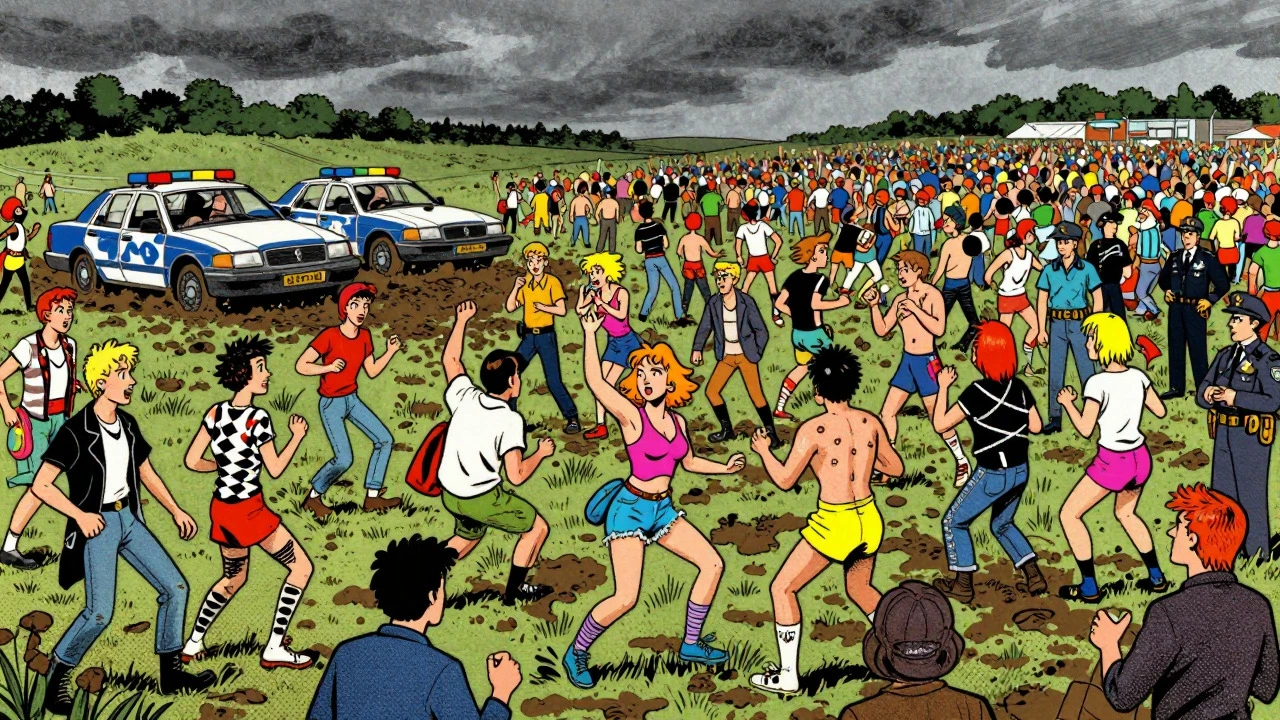

Imagine a law that didn't just ban drugs or noise, but specifically outlawed a musical style. That is exactly what happened in the United Kingdom during the 1990s. The Criminal Justice and Public Order Act 1994, often called the "anti-rave law," gave police the power to shut down any outdoor gathering playing music with "repetitive beats." This wasn't just about keeping the peace; it was a political move to control youth culture, reshape the nightlife economy, and push electronic dance music into commercial venues. While similar crackdowns happened in the US, the UK approach uniquely targeted the sound itself.
The Castlemorton Catalyst: Why the Government Cracked Down
To understand why these laws were passed, you have to look at the social climate of early 1990s Britain. The acid house boom had created a massive subculture centered around free parties-unlicensed events held on farms, squats, and industrial sites. These gatherings were semi-legal, organized by travelers and local promoters, and they drew thousands of young people who felt disconnected from traditional society.
The breaking point came in May 1992 at Castlemorton Common in Worcestershire. What started as a small festival grew into the largest illegal rave in UK history, attracting an estimated 10,000 to 30,000 people over several days. The event ended in chaos, with police struggling to manage the crowd and significant damage to the site. The subsequent trial cost the government approximately £4 million and sparked intense media outrage.
Politicians seized on this incident. Prime Minister John Major’s Conservative government framed raves as a threat to public order and moral values. Historians note that this panic was part of a broader conflict between late-Thatcherite neoliberalism and working-class youth resistance. The government decided that existing laws weren't enough to stop these gatherings, leading to the drafting of specific anti-rave legislation.
| Factor | Impact on Policy |
|---|---|
| Castlemorton Festival (1992) | Triggered immediate political response and costly legal proceedings |
| Rise of MDMA (Ecstasy) | Linked dance culture to drug use, fueling moral panic |
| Free Party Movement | Challenged state control over land and public space |
| Youth Subculture Visibility | Perceived as a threat to traditional social norms |
Defining Music in Law: The CJPOA 1994
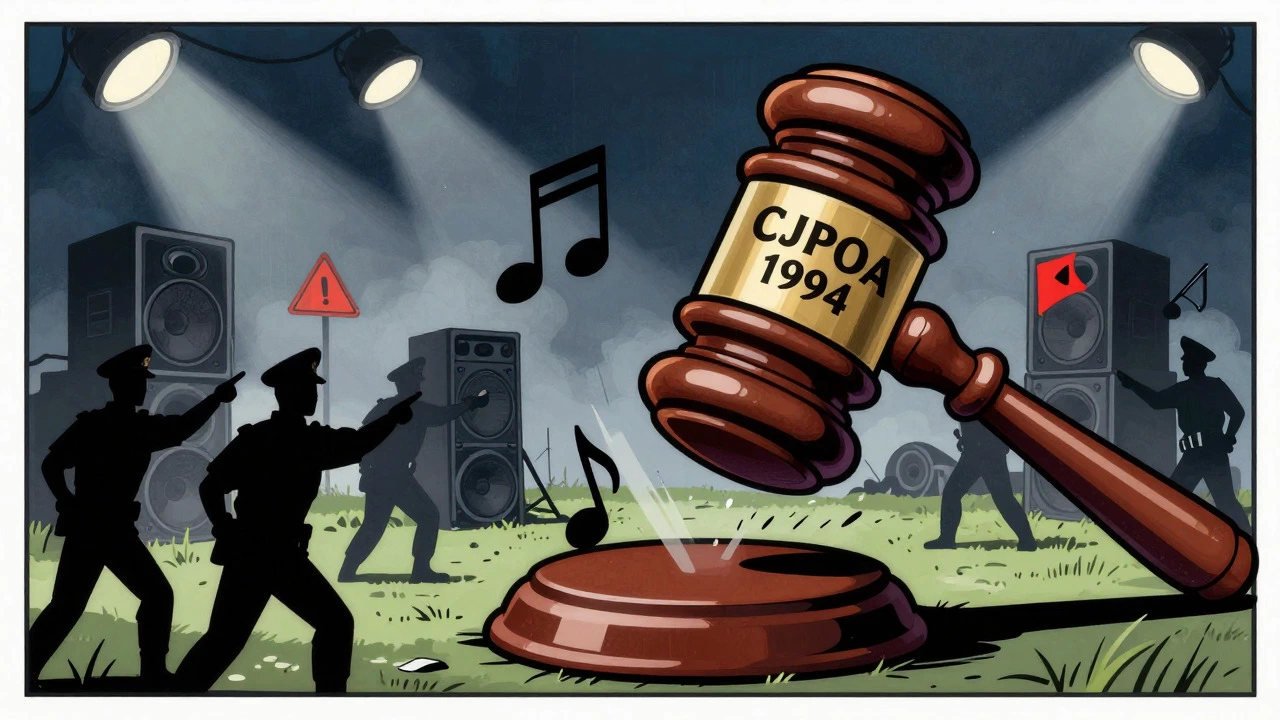
The Criminal Justice and Public Order Act 1994 (CJPOA) was signed into law in November 1994. Its most controversial section, Part V, Sections 63-65, created a new legal definition of a "rave." The law defined it as a nocturnal, open-air gathering of 100 or more people where amplified music was characterized by "the emission of a succession of repetitive beats" likely to cause serious distress to local inhabitants.
This wording was unprecedented. For the first time, a British government effectively prohibited a specific genre of music in statutory language. Police were granted wide powers to:
- Direct people to leave land if they believed two or more were preparing for a rave.
- Stop individuals within a five-mile radius of the site if they believed those people were heading to the event.
- Impose fines up to £2,500 and imprisonment for up to three months for non-compliance.
Critics argued that this was de facto censorship. By defining rave music by its repetitive beats, the law targeted electronic dance music specifically. It also expanded police stop-and-search powers and limited the right to silence. Activists saw this as part of a wider attack on marginalized groups, including travelers and protesters, not just partygoers.
The US Approach: Drug Panic and Venue Liability
While the UK focused on the music and the location, the United States took a different path. The American "rave panic" emerged later, driven largely by concerns over ecstasy (MDMA) and high-profile deaths among young dancers. In the mid-to-late 1990s, prosecutors began using the federal "Crack House Statute" (21 U.S.C. §856) against rave promoters.
This statute allowed authorities to shut down locations used primarily for manufacturing or distributing drugs. Prosecutors argued that raves were essentially drug-facilitation spaces. A notable case involved James "Disco Donnie" Estopinal and the owners of New Orleans’ State Palace Theater following the death of 17-year-old Christina Kirkland in 1998.
This trajectory culminated in the Illicit Drug Anti-Proliferation Act, known as the RAVE Act, signed into law on April 30, 2003. The act expanded liability for venue owners and event organizers who knowingly allowed drug use or distribution at their events. Unlike the UK's focus on outdoor gatherings and music style, the US approach targeted the economic actors behind the scenes, forcing venues to implement strict security measures or risk severe legal penalties.
Licensing, Zoning, and the Commercialization of Nightlife
Both in the UK and the US, these laws had a profound effect on the structure of nightlife. Before the crackdowns, many raves were informal, low-cost, and community-driven. After the laws were enforced, promoters faced huge financial risks. In the UK, earlier reforms like the Entertainments (Increased Penalties) Bill of 1990 had already raised fines for unlicensed parties to £20,000.
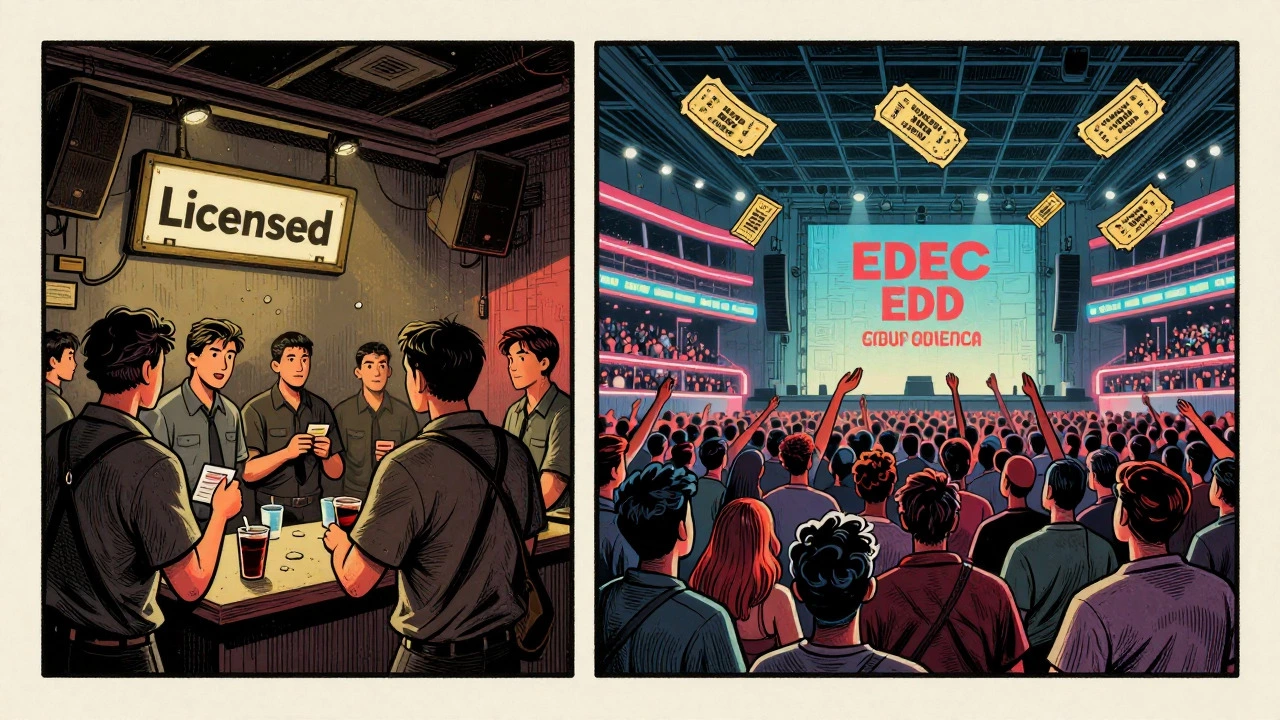
The result was a shift toward licensed, commercial venues. Local authorities gained more power through acts like the Public Entertainment Licences (Drugs Misuse) Act 1997, which allowed them to revoke licenses for premises with "drug problems." This created a system where clubs had to work closely with police to survive. They adopted stricter door policies, hired registered security staff, and often censored certain types of music or clientele to avoid scrutiny.
In cities like Leeds, the number of licensed premises increased significantly between 1994 and 2001, reflecting a national trend toward longer opening hours and more regulated nightlife. However, this growth came at the cost of spontaneity. The underground scene was pushed out, replaced by corporate festivals and mega-clubs that could afford the compliance costs.
Long-Term Impact on Electronic Dance Music Culture
The legacy of these laws is still visible today. The grassroots, DIY ethos of the early 1990s rave scene has largely been replaced by a highly commercialized industry. Electronic dance music (EDM) became a multi-billion-dollar global business, but access to it is now mediated by ticket prices, brand partnerships, and strict safety regulations.
Scholars argue that while the laws succeeded in reducing large-scale illegal outdoor parties, they also entrenched unequal access to nightlife. Independent clubs struggled against rising business rates and licensing restrictions, leading to a decline in small venues. Meanwhile, large commercial operators thrived under the new regulatory framework.
Moreover, the stigma attached to dance music persisted. Civil liberties groups noted that the RAVE Act incentivized venues to avoid electronic dance events altogether or impose intrusive searches. This changed the experience of nighttime dancing for patrons, replacing the sense of freedom and community with surveillance and control.
Conclusion: Balancing Safety and Freedom
The debate over rave laws continues to resonate. On one hand, authorities argued that regulation was necessary to protect public safety, reduce drug-related harm, and manage noise pollution. On the other hand, critics viewed these measures as excessive censorship that criminalized youth culture and stifled artistic expression.
Today, the core provisions of the CJPOA remain in force in the UK, though they are rarely used in the same way as in the 1990s. The Licensing Act 2003 further integrated nightlife governance, giving police and local authorities significant power to close venues quickly. As we look back, it's clear that these laws didn't just change how parties were held-they reshaped the very nature of electronic music culture, pushing it from the margins into the mainstream, but at the cost of its rebellious spirit.
What was the main purpose of the Criminal Justice and Public Order Act 1994?
The main purpose was to give police powers to shut down outdoor gatherings of 100 or more people playing music with "repetitive beats," effectively targeting illegal raves and free parties associated with youth subcultures and drug use.
How did the US RAVE Act differ from UK rave laws?
The UK laws focused on banning specific musical styles and outdoor gatherings, while the US RAVE Act focused on holding venue owners and promoters liable for allowing drug use or distribution at their events, emphasizing legal responsibility over musical censorship.
Did these laws successfully stop raves?
They significantly reduced large-scale illegal outdoor parties in the short term, but they didn't stop the culture. Instead, they pushed it into licensed, commercial venues and larger festivals, changing the nature of the scene rather than eliminating it.
What role did MDMA play in the creation of these laws?
MDMA (ecstasy) was heavily associated with raves, leading to moral panics about drug use among young people. High-profile deaths and media coverage fueled political pressure to regulate dance events more strictly.
Are the anti-rave laws still in effect today?
Yes, the core provisions of the UK's Criminal Justice and Public Order Act 1994 remain on the statute book, although they are less frequently invoked in the same manner as in the 1990s. Modern nightlife is governed more by the Licensing Act 2003.