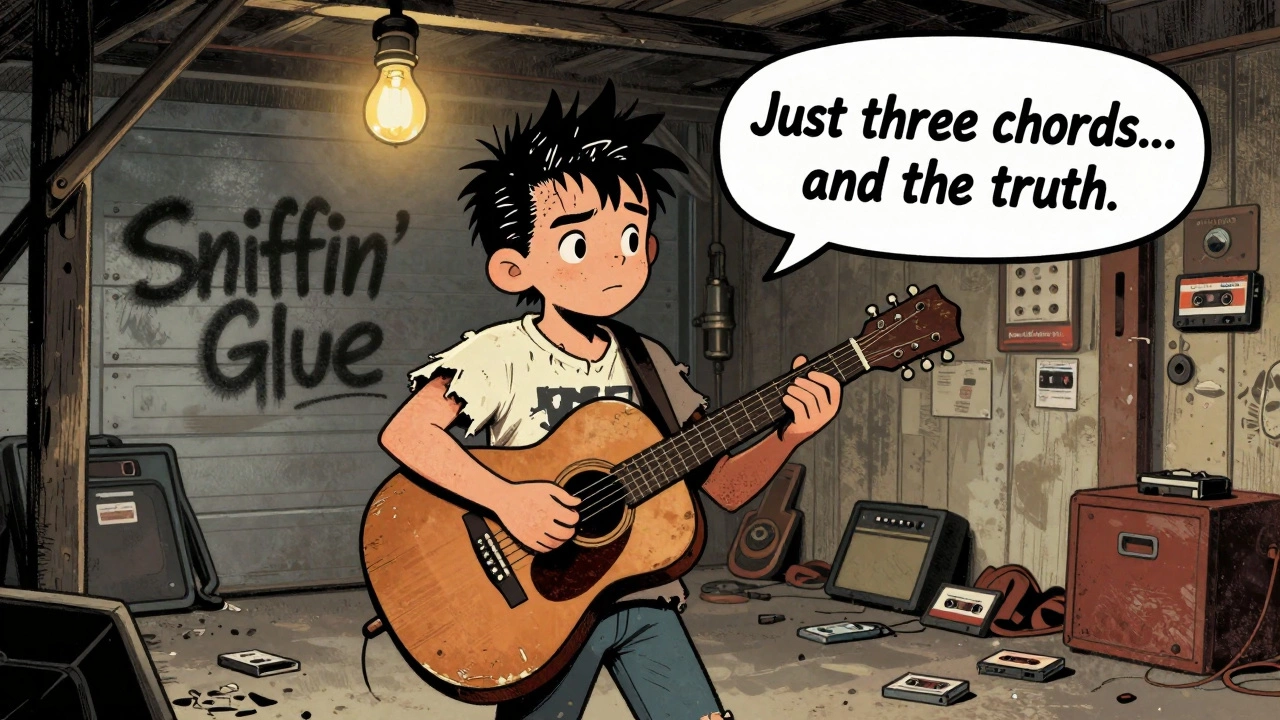

Think about the last time you heard a song that felt like it was shouting right into your chest. No fancy solos. No layered synths. Just three chords, a raw voice, and a message that didn’t care if it was pretty-it just wanted to be heard. That’s the three-chord anthem. And in the 1990s, punk didn’t just bring it back. It remade it for a new generation.
The idea wasn’t new. Back in the 1970s, bands like the Ramones and Sex Pistols turned simplicity into a weapon. Three chords and the truth-that phrase, born in country music, became punk’s battle cry. It wasn’t about skill. It was about honesty. If you couldn’t play a complex solo, you didn’t need to. You just needed to mean it. The Sniffin’ Glue fanzine said it best in 1976: "Here’s three chords. Now form a band." And millions did.
But by the time the 1990s rolled around, punk had been through a lot. The original wave had faded. The mainstream had co-opted some of its anger. And a new crop of kids, raised on cassette tapes and underground shows, weren’t content to just copy the old records. They wanted to make the three-chord anthem mean something new.
It Wasn’t Just About Chords-It Was About Attitude
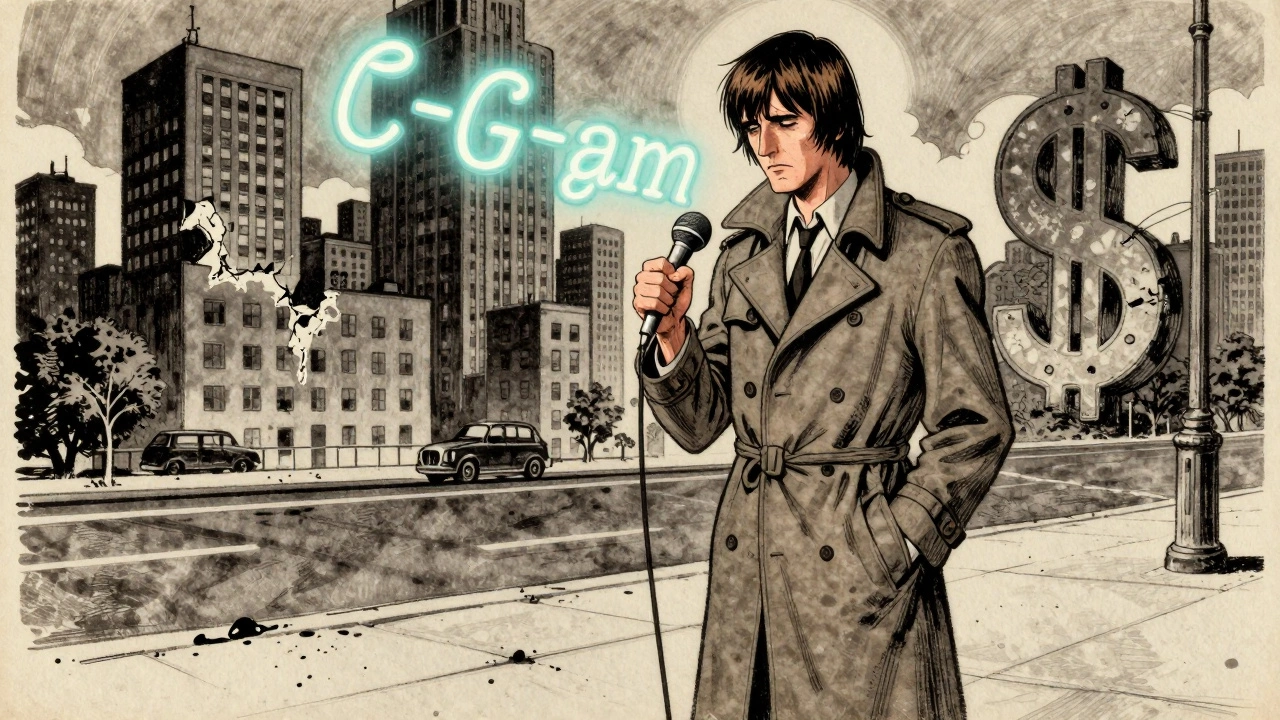
Let’s be clear: the I-IV-V progression (C-G-Am, or whatever your key is) didn’t change. What changed was how it was used. In the 1970s, punk was fast, loud, and angry. In the 1990s, it got slower. More thoughtful. More personal.
Pulp’s "Common People" is the perfect example. Released in 1995, it’s built on three chords that barely move. The verse is just a slow crawl. The chorus lifts just enough to feel like a release. But it’s not about speed. It’s about observation. Jarvis Cocker sings about class, about pretending to be poor for fun, about the quiet cruelty of privilege. The music doesn’t scream. It watches. And that’s what made it powerful. It took the three-chord format and turned it into a story.
And it wasn’t just Pulp. Bands like Rancid, NOFX, and Green Day were doing the same thing. They kept the structure simple-two bars of power chords, a quick drop, a shout. But the lyrics? They talked about dead-end jobs, failed relationships, growing up broke. They didn’t need 12-string guitars or orchestral builds. They needed a mic, a garage, and a truth that hurt.
The Remix That Broke the Band
Then there’s Cornershop. Their original version of "Brimful of Asha" was a three-chord folk-punk track with a hypnotic groove. It barely registered when it came out in 1997. But then Norman Cook-aka Fatboy Slim-remixed it. He added a beat, looped the chorus, turned it into a dancefloor banger. Suddenly, it hit number one in the UK. The song was everywhere.
But here’s the twist: the band didn’t want this. Tjinder Singh, Cornershop’s frontman, said later that the remix "took the carpet away from underneath us as an album artist." They were never really known as a hit single band. They were known for albums full of strange, layered, deeply personal songs. But the remix became the face of their music. And suddenly, people didn’t care about the rest. It showed how the three-chord anthem could be hijacked-how simplicity could be turned into mass-market candy.
That tension-between raw art and commercial success-was everywhere in 1990s punk. Bands like The Offspring and Blink-182 got huge. But were they punk? Some fans said no. Others said: who cares? The three chords were still there. The anger was still there. The feeling-that you could pick up a guitar tomorrow and write something real-that was the real legacy.
Electronic Punk? Yes, Really
Here’s where things get weird-and brilliant. You’d think three chords meant guitars. But in the 1990s, punk’s simplicity started showing up in synths. Bands like Depeche Mode and The Human League had already proven that a few chords on a keyboard could carry emotion. But in the 1990s, punk kids started doing it too.
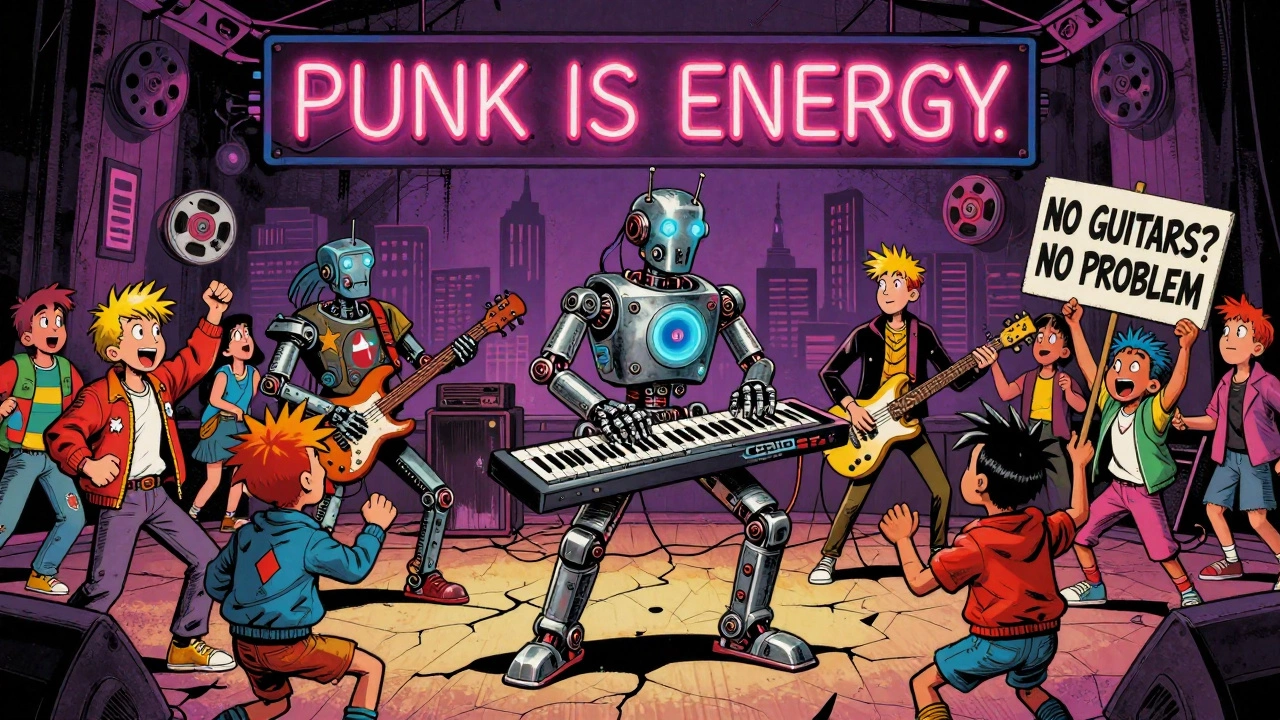
Look at bands like The Dwarves or early LCD Soundsystem. They didn’t use guitars. They used drum machines, cheap synths, and a lot of attitude. The chords were still there-just played on a Casio. The structure was still I-IV-V. But now it had a robotic heartbeat. And it worked. Because punk never cared about instruments. It cared about energy. And energy can come from anywhere.
It’s why Gary Numan’s 1970s synthpunk still mattered in the 1990s. He proved that you didn’t need six strings to scream. You just needed three notes and a sneer.
The Soundtrack of the Disillusioned
By the mid-90s, the world felt different. The Cold War was over. The economy was shaky. The future didn’t look shiny anymore. Punk didn’t need to scream about revolution anymore. It needed to whisper about loneliness.
That’s why songs like "Common People" and "Brimful of Asha" stuck. They weren’t anthems for riots. They were anthems for people sitting on their beds, wondering why life felt so heavy. The three-chord structure became a mirror. No distortion. No fireworks. Just a simple progression that let the words breathe.
And that’s the real reinvention. The 1990s didn’t make punk faster or louder. It made it quieter. Deeper. More human.
Why It Still Matters Today
Look at any indie band today. Look at the basement shows in Portland, or the garage gigs in Detroit. You’ll hear the same three chords. The same raw voice. The same refusal to pretend.
The 1990s didn’t invent punk. But they saved it from becoming a nostalgia act. They proved that simplicity isn’t lazy. It’s brave. It takes guts to stand up with nothing but three chords and say: this is how I feel. And if you don’t like it? Good. That’s the point.
That’s why, 30 years later, you can still walk into a dive bar and hear someone playing "Anarchy in the UK" on a busted acoustic. And someone else, five years later, playing "Common People" on a laptop with a free synth plugin. The format never changed. The meaning just got heavier.
| Aspect | 1970s Punk | 1990s Punk |
|---|---|---|
| Tempo | Fast, frantic | Slower, more deliberate |
| Lyrics | Outrage, chaos | Personal, observational |
| Instrumentation | Guitars, bass, drums | Guitars, synths, drum machines |
| Goal | Destroy the system | Understand the system |
| Commercial Reach | Underground, banned | Chart-topping, mainstream |
What Got Lost Along the Way
Not everything improved. The 1990s brought polish. Labels got involved. Record deals. Music videos. Suddenly, "punk" meant a haircut, not a philosophy. Some bands got rich. Others got swallowed.
But the core? The three-chord anthem? That stayed. Because it’s not about the production. It’s about the moment you pick up the guitar and play something so simple, it sounds like it was always there. Like you didn’t write it-you just remembered it.
That’s the magic. And it’s still alive.
Did 1990s punk invent the three-chord anthem?
No. The three-chord anthem started with early rock and country, but it was the 1970s punk bands like the Ramones and Sex Pistols that turned it into a rebellion. The 1990s didn’t invent it-they reinvented it. They slowed it down, made it more personal, and proved that simplicity could still move millions.
Why did 1990s punk use the same three chords as the 1970s?
Because the power wasn’t in the complexity. It was in the honesty. A three-chord song is easy to play, easy to remember, and easy to shout along to. That’s why it works. The 1990s didn’t need new chords-they needed new stories. And they found them.
Was Pulp really a punk band?
They didn’t look like one. No safety pins, no mohawks. But they had the spirit. "Common People" is built on three chords, a biting lyric, and zero pretense. That’s punk. It’s not about looks. It’s about truth. And Pulp gave truth in a way that made people feel seen.
How did Rancid keep the three-chord anthem alive?
Rancid didn’t change the formula. They doubled down on it. Fast drums, shout-sung lyrics, simple progressions. Songs like "Time Bomb" and "Ruby Soho" were straight-up punk revival. But they added urgency. They talked about addiction, prison, and surviving. They made the three-chord anthem feel like a lifeline.
Can a synth song be a three-chord anthem?
Absolutely. Punk was never about guitars. It was about energy. Bands like LCD Soundsystem and early The Prodigy used synths, drum machines, and loops-but they stuck to three-chord structures. The chord progression was still I-IV-V. The feeling was still raw. That’s punk. It’s the message, not the machine.
What Comes Next?
Today, you’ll find three-chord anthems everywhere-from TikTok punk covers to indie folk bands playing basement shows. The format hasn’t changed. But the world has. People are tired of noise. They’re looking for meaning. And that’s exactly what punk gave them in the 1990s: a way to say something real with almost nothing.
So next time you hear a kid playing "Anarchy in the UK" on a broken guitar, don’t laugh. Listen. Because that’s not nostalgia. That’s the future.


