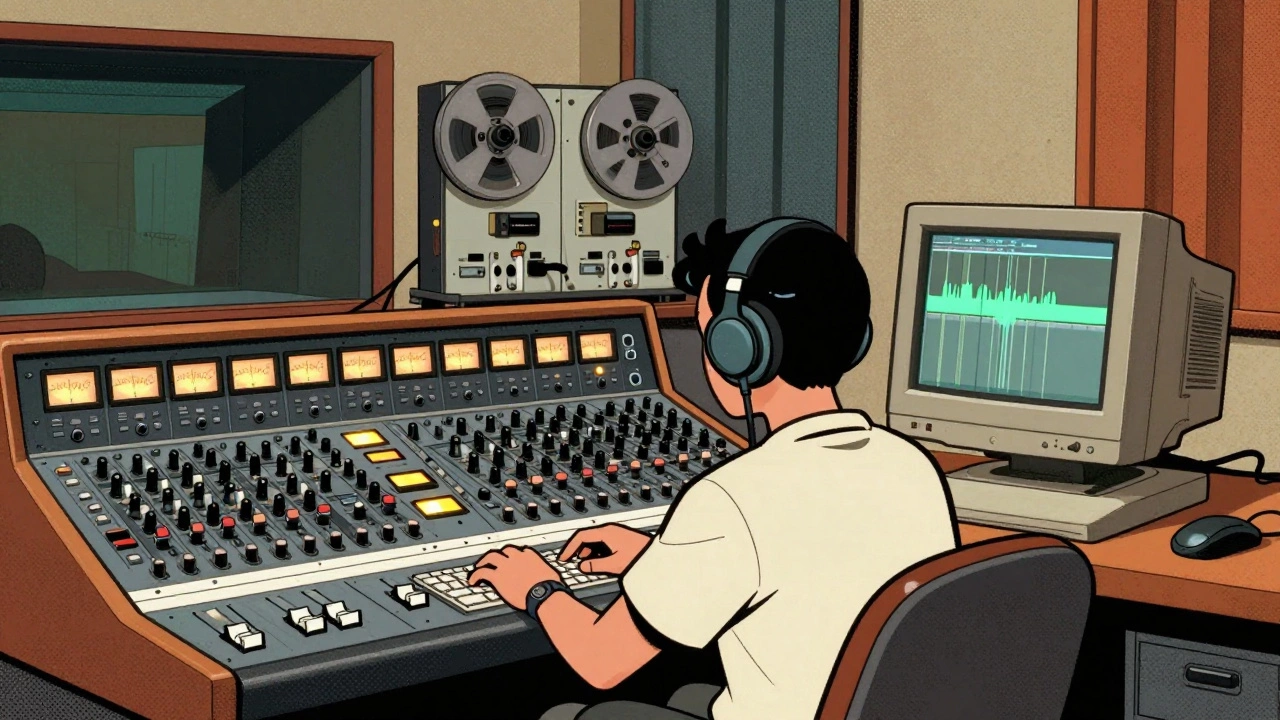

Have you ever listened to a chart-topping pop song from 2025 and felt a strange sense of déjà vu? That gritty snare hit, the slightly distorted bassline, or the vocal that sits just behind the mix-it’s not an accident. It’s a deliberate nod to the 1990s. While we often think of today’s music as sleek, hyper-polished, and entirely digital, the sonic DNA of modern hits is deeply rooted in the recording practices of three decades ago.
The 1990s were a transitional decade. Engineers moved from pure analog tape machines to early Digital Audio Workstations (DAWs), creating a hybrid workflow that combined the warmth of vintage gear with the precision of computers. Today’s producers aren’t just copying old records; they are using plugins and techniques to recreate that specific "commitment" and texture. Here is how those 1990s methods define what we hear on the radio today.
The Hybrid Workflow: Tape Warmth Meets Digital Precision
In the 1990s, studios didn’t have the infinite undo buttons we enjoy now. A common practice was to record instruments through high-quality analog preamps and equalizers directly onto tape. This process added natural saturation and harmonic distortion-what engineers call "warmth." Once captured on tape, the audio was transferred to digital systems for editing. This meant decisions about tone and compression were made upfront and "printed" to the recording.
Modern producers replicate this by using software emulations. Instead of rolling physical tape, they use plugins like RC-20 Retro Color or iZotope Vinyl. These tools add subtle hiss, crackle, and pitch fluctuations to clean digital tracks. The goal isn’t to make the track sound broken, but to give it character. By balancing these vintage artifacts with modern EQ and multiband compression, producers achieve a sound that feels classic yet retains the clarity required for streaming platforms.
Sampling Culture and Loop-Based Beatmaking
If you listen to hip-hop or house music from the mid-90s, you notice repetitive, groove-driven loops. This wasn’t just a stylistic choice; it was a technical necessity. Hardware samplers like the Akai MPC had limited memory. Producers had to slice samples into short phrases and loop them tightly to fit their arrangements. This constraint created a tight, rhythmic aesthetic that became the foundation of boom-bap hip-hop and electronic dance music.
Today, while DAWs offer unlimited memory, the 90s sampling ethos remains central. Modern beatmakers still chop, pitch-shift, and restructure audio samples. You can hear this in genres like synthwave or modern trap, where producers blend 90s boom-bap drum loops with contemporary synthesizer textures. The technique has evolved from simple looping to creative reinterpretation, but the core idea-building a track around a compelling, sampled groove-is straight out of the 1990s playbook.
Punchy, Mid-Forward Drums for Small Speakers
One of the most distinct features of 90s rock and alternative mixes was the emphasis on punchy mid-range frequencies. Engineers knew that many listeners would hear their albums on car stereos or small home speakers, which often struggled with deep bass. To ensure the drums cut through, they boosted the mids and used heavy compression on snares. This created a "hard-hitting" sound that felt massive even on low-fidelity equipment.
This approach hasn’t gone away; it has become essential. In the era of smartphone listening, clarity is king. Modern pop production guides consistently advise producers to aim for "tight kicks, snappy snares, and crisp hi-hats." By focusing on the mid-range punch of drums, producers ensure their tracks remain impactful across all playback devices. The 90s lesson here is clear: if it doesn’t sound good on a phone speaker, it’s not finished.

Vocal Aesthetics: From Dark and Distant to Polished and Present
Vocal mixing underwent a dramatic shift between the 90s and today. In 90s rock and alternative music, vocals were often darker and sat slightly behind the guitars and cymbals in the frequency spectrum. Imperfections in timing and tuning were embraced as part of the emotional performance. Cymbals might crash over the singer’s head, adding energy rather than clutter.
Modern mainstream pop takes the opposite approach. Vocals are typically the loudest, clearest element in the mix, heavily processed with multiple compressors, de-essers, and pitch correction tools like Auto-Tune. However, there is a growing trend to reintroduce 90s-style vocal aesthetics. In lo-fi pop and indie rock, producers deliberately pull vocals back, add tape saturation, and leave minor imperfections to create intimacy and nostalgia. This hybrid approach allows artists to have the best of both worlds: the emotional rawness of the 90s with the technical polish of the 2020s.
Aggressive High-Pass Filtering and Minimalism
Mix engineers in the 1990s relied heavily on high-pass filters to keep mixes clean. Because guitar-heavy arrangements could easily become muddy, engineers would aggressively roll off low frequencies on non-bass instruments. This "less is more" mindset ensured that the kick drum and bass guitar dominated the low end, providing a solid foundation for the rest of the track.
Today, this technique is standard practice in pop and EDM production. Overcrowding the mix is considered a major mistake. Modern producers use high-pass filters routinely to carve out space for each instrument. Additionally, while 90s engineers had limited automation capabilities, today’s producers use sophisticated DAW automation to dynamically filter sounds, swell reverbs, and change textures throughout a song. The principle of maintaining clarity through subtraction remains unchanged.
The Loudness War and Modern Mastering
By the late 1990s, the "loudness war" began. Mastering engineers started using brickwall limiters to push average volume levels higher without clipping. This made CDs sound louder on the radio but reduced dynamic range, often resulting in fatiguing, compressed audio. While streaming platforms have since introduced loudness normalization to combat this, the desire for competitive loudness persists.
Modern mastering still prioritizes perceived loudness and tonal balance. Engineers use glue compression and EQ adjustments to ensure tracks stand out in playlists. However, there is a greater awareness of the pitfalls of over-compression. The 90s taught us that pushing too hard can kill the life in a track. Today’s producers aim for a balance: loud enough to compete, but dynamic enough to breathe.
| Technique | 1990s Approach | Modern Application |
|---|---|---|
| Workflow | Analog tracking to tape, then digital editing | Fully digital with vintage emulation plugins |
| Drums | Mid-forward, punchy, compressed for impact | Tight, transient-shaped, optimized for mobile |
| Vocals | Darker, less bright, some imperfections kept | Clear, loud, heavily tuned, sometimes retro-styled |
| Sampling | Hardware samplers (MPC/Akai), memory limits | DAW slicing, pitch-shifting, unlimited memory |
| Mixing | Aggressive high-pass filtering, minimal plugins | Surgical EQ, extensive automation, stereo imaging |
Why Constraints Create Creativity
The 1990s forced producers to make decisions quickly. With limited tracks and expensive studio time, every choice mattered. Today, the abundance of options in DAWs can lead to decision paralysis. Many modern producers intentionally impose 90s-style constraints on themselves. They might limit their track count, avoid using certain plugins, or commit to sounds early in the process. This mimics the focus and immediacy of 90s sessions, helping to preserve the human feel in an increasingly automated world.
The legacy of the 1990s isn’t just about nostalgia; it’s about foundational skills. Understanding how to balance frequencies, create punch with compression, and use samples creatively are lessons learned in that era. As technology advances, these core principles remain the bedrock of great music production.
What makes 90s drums sound different from modern drums?
90s drums are characterized by strong mid-range punch and heavy compression, designed to cut through on smaller speakers. Modern drums often have tighter transients and wider stereo imaging, optimized for headphones and smartphones, though they still borrow the mid-forward punch for impact.
How do modern producers emulate 90s tape saturation?
Producers use software plugins like RC-20 Retro Color or iZotope Vinyl to add harmonic distortion, hiss, and pitch instability to digital recordings, mimicking the warm, imperfect sound of analog tape machines.
Why were vocals darker in 90s rock mixes?
In 90s rock, vocals were often mixed to sit behind guitars and cymbals to emphasize the band's energy and raw emotion. This contrasted with modern pop, where vocals are typically the brightest and loudest element for clarity and intimacy.
Did the loudness war start in the 1990s?
Yes, the late 1990s saw the rise of brickwall limiting in mastering to increase average volume levels on CDs. This practice reduced dynamic range and influenced modern mastering, although streaming normalization has since mitigated some effects.
How did hardware samplers influence 90s hip-hop?
Limited memory on samplers like the Akai MPC forced producers to use short, looped samples and repetitive patterns. This created the tight, groove-based aesthetic of boom-bap hip-hop, a style that continues to influence modern beatmaking.