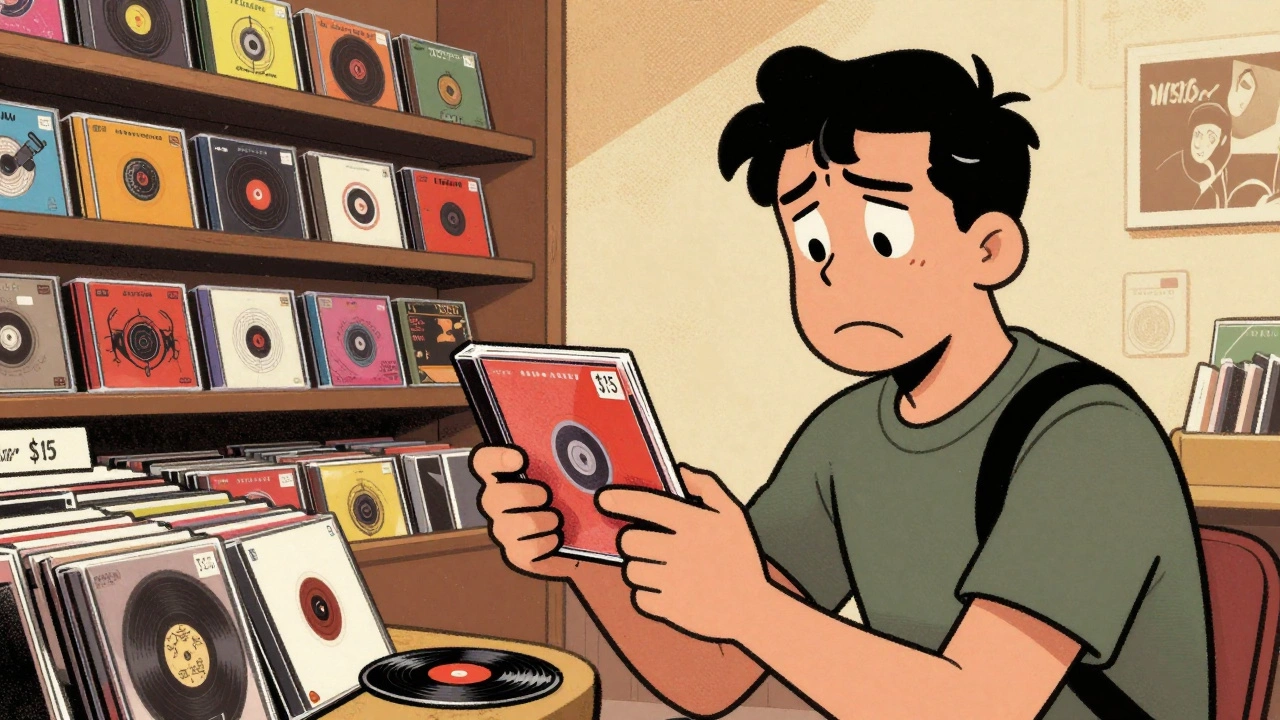

Imagine buying a full-length record just to hear one song you liked on the radio. In the early 1990s, that was the standard deal for millions of fans. Major record labels made a calculated move to kill the commercial single format. They believed that by forcing consumers to buy entire albums at higher price points, they could maximize revenue during a booming economic period. It seemed like a smart financial play at the time. The U.S. recorded music business grew into an adjusted-for-inflation juggernaut exceeding $20 billion annually.
But this strategy had a fatal flaw. It ignored how people actually wanted to listen to music. More importantly, it ignored the technological storm brewing in the background. When digital piracy exploded in the late 1990s, the industry’s rigid pricing model collapsed under its own weight. The shift wasn’t just about lost sales; it fundamentally rewired how albums were created, released, and consumed. Here is how that chaotic decade changed everything.
The Strategic Elimination of the Single
To understand the crash, you have to look at the calm before the storm. Throughout the 1980s, physical singles-whether 7-inch vinyl or cassette singles-were a staple of retail. Fans could buy their favorite track for a few dollars without committing to a full hour of music. But as the 1990s began, major labels decided this was inefficient. Why sell one song for $3 when you could sell twelve songs for $15?
This decision effectively removed a lower-price entry point for casual listeners. Labels pushed the album cycle as the primary product. Marketing budgets shifted entirely toward promoting the full record rather than individual tracks. Radio remained the main promotional tool for singles, but the commercial transaction was tied exclusively to the album. This created a massive gap between what fans wanted (specific songs) and what the industry sold (complete packages).
For a few years, this worked. The CD replacement cycle was in full swing. Consumers who had bought vinyl and cassettes in the 70s and 80s were upgrading their libraries. Sales soared. But the industry failed to realize they were building a house of cards on top of consumer goodwill. They assumed loyalty would drive purchases, not realizing that convenience and price sensitivity were far stronger forces.
The Technological Foundation of Piracy
Piracy didn’t start with the internet. If you think back to the 1970s and 1980s, the cassette tape revolution introduced the concept of "home piracy." You could record songs from the radio or copy a friend’s album. It was imperfect-the sound quality degraded with each generation-but it was accessible. Then came the Compact Disc (CD). CDs offered perfect digital copies. You could duplicate an album with zero loss in quality. This made physical duplication easier and more appealing.
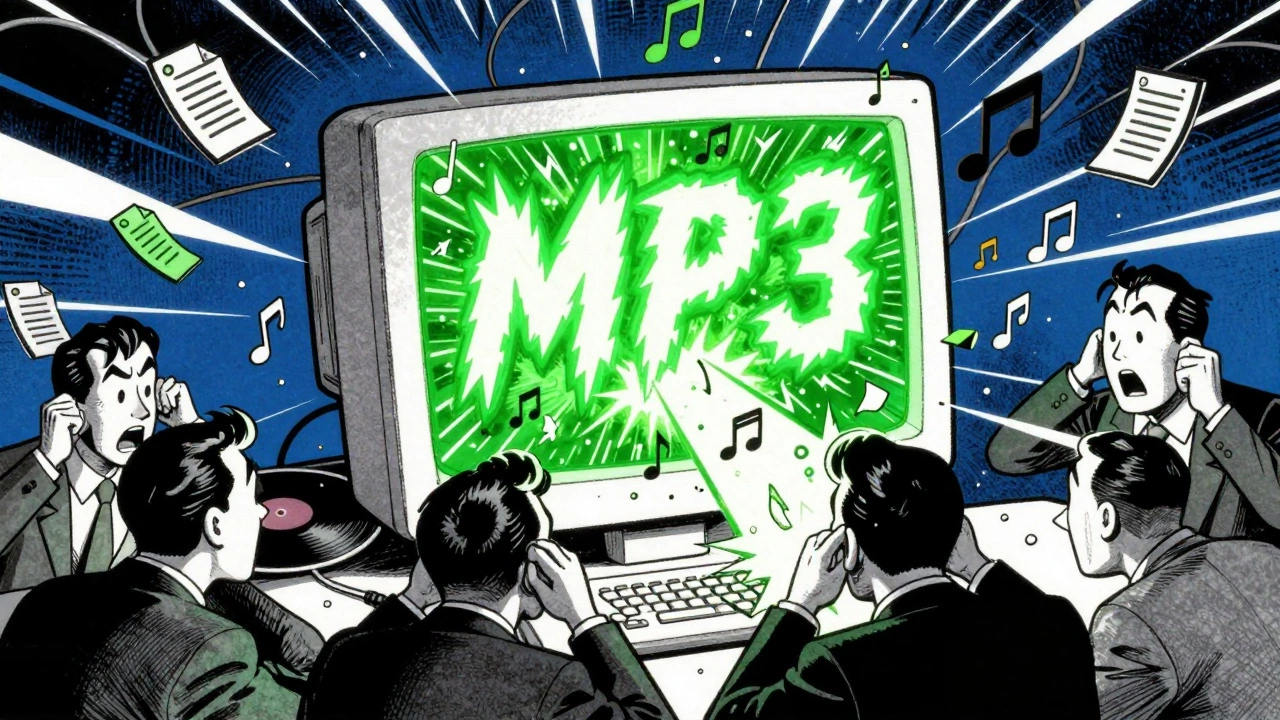
However, the real game-changer arrived in the mid-1990s: the MP3 format. Developed by the Fraunhofer Institute, MP3 technology compressed audio files drastically while maintaining acceptable listening quality. Suddenly, music wasn’t just a physical object anymore; it was data. A single song could be shrunk down to a few megabytes. This small file size meant it could travel over the internet quickly and cheaply. The barrier to sharing dropped from burning a disc to clicking a button.
| Era | Medium | Quality Loss | Ease of Sharing |
|---|---|---|---|
| 1970s-80s | Cassette Tape | High (Generational degradation) | Low (Physical exchange required) |
| 1990s (Early) | Compact Disc | None (Perfect copy) | Medium (Requires burner hardware) |
| 1990s (Late) | MP3 / Digital File | Minimal (Perceptually transparent) | Very High (Instant global transfer) |
Napster and the Watershed Moment
In 1999, Napster launched. It wasn’t the first peer-to-peer service, but it was the first one that was easy enough for anyone to use. Napster connected users directly, allowing them to share MP3 files without needing technical expertise. The growth was explosive. At its peak, estimates suggest between 26 million and 80 million users were on the network simultaneously.
The impact was immediate and devastating. Record labels had spent the previous decade convincing fans that albums were the only way to support artists. Napster showed them that they could get any song, instantly, for free. The traditional album-sales model eroded rapidly. U.S. recorded music revenues plummeted. In 1999, sales stood at approximately $14.5 billion. By 2009, that number had fallen to just $7.7 billion-a drop of nearly 50 percent. Some analyses suggest the decline was even steeper, citing a 62 percent drop from 2000 to 2010.
The industry was caught completely off guard. They viewed Napster as a criminal enterprise rather than a market signal. They sued, they lobbied, and they tried to shut it down. But as the saying goes, once the genie is out of the bottle, you can’t put it back. After Napster was forced to close in 2001, dozens of successors emerged. Kazaa, LimeWire, BitTorrent, and decentralized networks like Gnutella filled the void. These services were often riddled with viruses, but they kept the flow of free music going.
Why Piracy Thrived: The Pricing Gap
There is a direct causal link between the elimination of the single and the rise of piracy. When labels removed affordable options for individual songs, they created a vacuum. Fans still wanted specific tracks. They didn’t want to pay $15 for an album if they only cared about two songs. Piracy stepped in to fill that gap.
Napster and subsequent services provided granular access at zero cost. For many consumers, especially younger demographics with limited disposable income, this was the only viable option. The industry’s refusal to offer legal, low-cost alternatives accelerated the adoption of illegal platforms. Instead of adapting their pricing models, labels doubled down on enforcement. This strategy alienated customers and drove them deeper into the underground economy.
The economic context also played a role. The late 1990s saw a "perfect bubble" in the music industry, fueled by the CD replacement cycle. When that cycle ended, combined with the dot-com recession of 2000-2001, consumers tightened their belts. Piracy became a way to maintain musical consumption without spending money. The industry blamed piracy for the revenue collapse, but analysts argue that internal strategic errors-like killing the single-made the industry vulnerable to the very technology that eventually destroyed it.
Artist Impact: Exposure vs. Revenue
The narrative that piracy killed the music industry is incomplete. While revenue from recorded sales crashed, the relationship between artists and fans evolved. For major acts, piracy often meant fewer album sales but greater exposure. Songs spread virally, reaching audiences that traditional radio might never touch. This increased visibility often translated into higher concert ticket sales and merchandise revenue.
Consider Radiohead. In 2007, they released In Rainbows using a "pay-what-you-want" model, bypassing traditional labels entirely. This move was a direct response to the changing landscape. It acknowledged that controlling distribution was no longer possible, so they focused on connecting directly with fans. Similarly, independent and underground artists benefited from piracy as a marketing tool. Bands like Metallica had built their early careers on the tape-trading scene of the 1980s. Ironically, Lars Ulrich later became one of the fiercest opponents of Napster, highlighting the complex irony of how different generations of musicians viewed unauthorized sharing.
For niche genres, piracy acted as a global distributor. Without a physical retail presence, these artists relied on file-sharing to build international fanbases. The barrier to entry for discovery lowered significantly. A kid in Brazil could find a band from Norway without waiting for a local distributor to import records. This democratization of access changed the cultural fabric of music consumption.
The Industry’s Response and Transformation
The music industry did not die; it transformed. The catastrophic revenue declines forced a reckoning. Labels realized that fighting technology was futile. They needed to compete on convenience and legality. The first major step was iTunes, launched in 2003. Apple reintroduced the single as a purchasable unit. For 99 cents, you could buy a song. This addressed the core complaint of the Napster era: the lack of granular purchasing options.
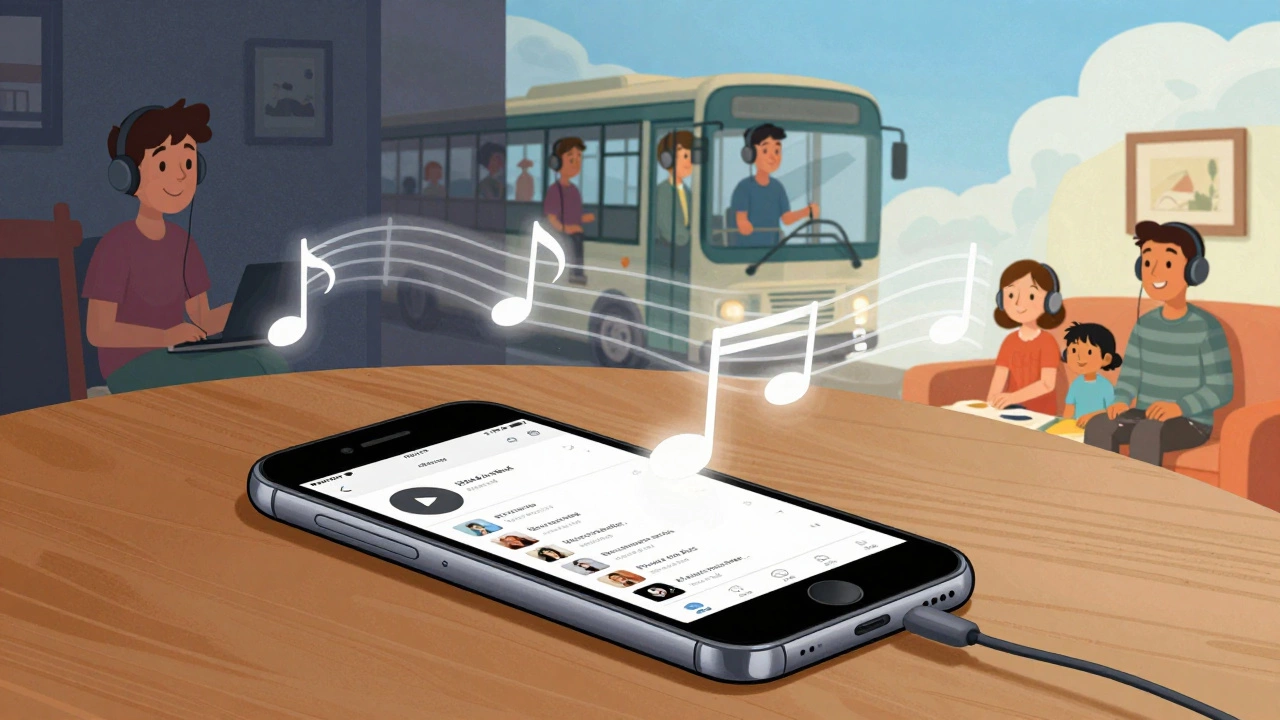
However, iTunes was still based on ownership. The next evolution was streaming. Services like Spotify (launched in 2008) and Apple Music (launched in 2015) offered unlimited access to entire catalogs for a monthly subscription. This model aligned perfectly with consumer behavior shaped by piracy. Users wanted access, not ownership. They wanted variety, not commitment to a single artist’s album.
By 2026, the music industry has stabilized. Global revenues have recovered, driven largely by streaming subscriptions. The album-centric physical sales model of the 1990s is gone. In its place is a digital ecosystem where singles are again the dominant unit of consumption, but within a framework of curated playlists and algorithmic discovery. The piracy of the 1990s forced the industry to adapt, leading to a more flexible, consumer-friendly business model.
Lessons for the Modern Music Landscape
The story of 1990s piracy offers critical lessons for today’s creators and executives. First, resistance to technological change is rarely successful. Second, pricing strategies must align with consumer value perception. When the industry eliminated singles, they ignored what fans actually wanted. Third, accessibility drives adoption. Legal services succeed when they are easier to use than illegal alternatives.
Today, we face new challenges with AI-generated music and social media platforms. The same principles apply. If the current models don’t serve the user, alternative methods will emerge. The industry’s survival in the post-Napster era proves that adaptation is key. The goal isn’t to stop the flow of music but to channel it in ways that sustain artists and satisfy listeners.
Did piracy kill the music industry?
No, piracy did not kill the music industry, but it forced a massive transformation. Recorded music revenues plummeted by roughly 50% in the 2000s due to digital piracy. However, the industry adapted by developing legal streaming models like Spotify and Apple Music. By the 2020s, revenues had stabilized and recovered, driven by subscription-based access rather than physical sales.
Why did record labels eliminate the single in the 1990s?
Major record labels eliminated the commercial single format to force consumers to purchase full albums at higher price points. During the 1990s CD boom, this strategy initially boosted revenue by encouraging fans to buy complete records instead of individual tracks. However, this decision later proved problematic as it created a gap in affordable access that digital piracy easily filled.
What was the impact of Napster on music sales?
Napster’s launch in 1999 caused a dramatic decline in music sales. U.S. recorded music revenues fell from approximately $14.5 billion in 1999 to $7.7 billion by 2009. The peer-to-peer service allowed millions of users to share MP3 files freely, eroding the traditional album-sales model and accelerating the shift toward digital consumption.
How did the MP3 format change music distribution?
The MP3 format compressed audio files significantly while maintaining acceptable quality, making digital sharing simple and fast. Unlike physical media like cassettes or CDs, MP3s could be transmitted instantly over the internet. This reduced the barrier to sharing from physical exchange to digital transfer, enabling the rapid spread of music through peer-to-peer networks.
Did artists benefit from piracy in the 1990s?
Yes, many artists benefited from piracy despite the loss in recorded sales. For major acts, piracy often increased exposure and led to higher concert and merchandise revenue. Independent and underground artists used file-sharing as a marketing tool to build global fanbases. Bands like Metallica had previously relied on tape trading for early career growth, showing that unauthorized sharing can aid artist discovery.
How did the music industry respond to digital piracy?
Initially, the industry responded with lawsuits and attempts to shut down services like Napster. Recognizing the futility of this approach, labels later partnered with tech companies to create legal alternatives. iTunes reintroduced the purchasable single, and streaming services like Spotify provided unlimited access for a subscription fee. These adaptations helped recover revenue and stabilize the industry.