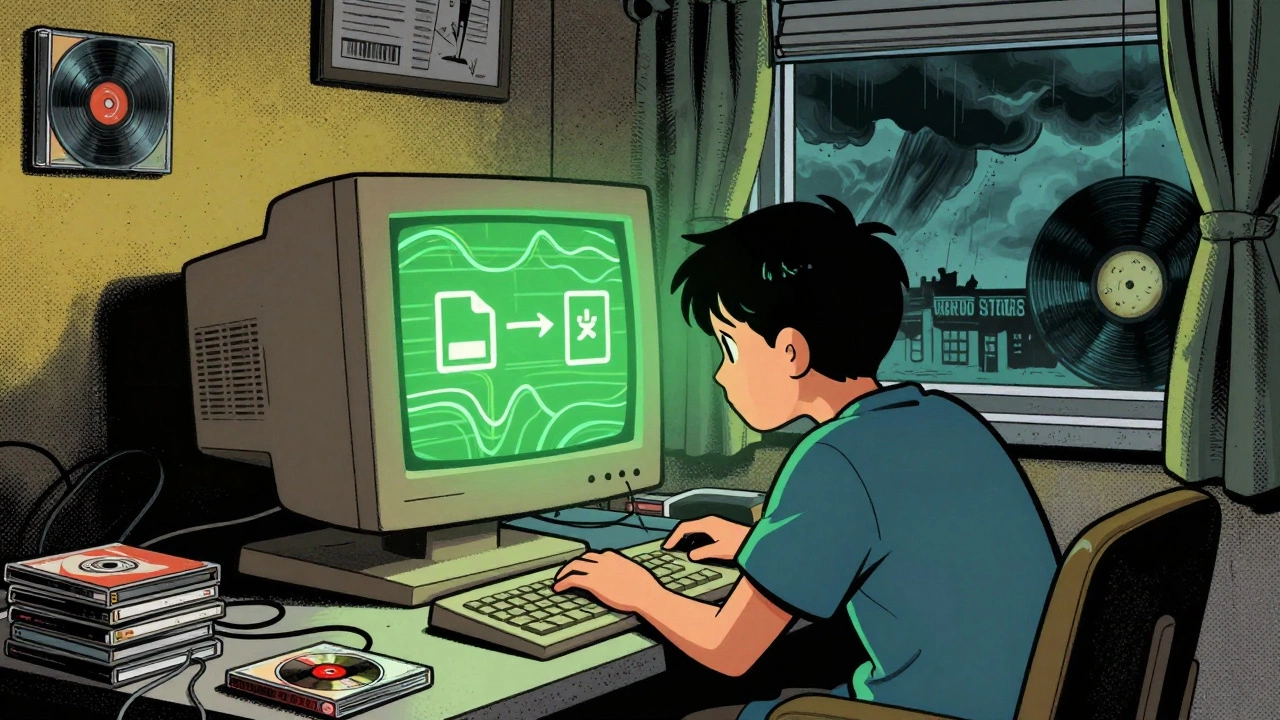

Picture this: it’s 1999. You buy a brand-new album for $18. It sounds crisp, looks cool, and sits on your shelf. Then, a kid in his bedroom named Shawn Fanning launches a website called Napster is a peer-to-peer file-sharing service that allowed users to exchange MP3 files directly with each other. Suddenly, that $18 album is free. And not just for you-for millions of people, instantly.
This wasn’t just a nuisance. It was an earthquake. The music industry lost half its value in less than a decade. But here’s the twist: while everyone focused on the lawsuits and the lost money, the real story happened behind closed doors in A&R (Artists & Repertoire) departments and marketing suites. Labels didn’t just lose revenue; they completely rewrote how they found talent, signed deals, and released music. If you want to understand why today’s music landscape looks so different from the ’90s, you have to look at how piracy broke the old rules.
The CD Bubble That Burst Overnight
To get why piracy hit so hard, you first need to understand what it broke. In the 1990s, the compact disc was king. These plastic discs were expensive-often priced between $18 and $20 in the U.S.-and incredibly profitable for labels. In fact, later investigations revealed that major labels had colluded to keep these prices artificially high, creating what analysts call a "CD bubble."
But there was a fatal flaw in the design. CDs contained uncompressed digital audio and had zero copy protection. By the mid-90s, if you had a computer with a CD-ROM drive, you could make a perfect copy of an album in minutes. As Techdirt pointed out, this lack of Digital Rights Management (DRM) was a design choice from the 1980s that became a liability by the 1990s. Consumers were paying premium prices for products that were technically trivial to duplicate. When MP3 compression arrived, allowing users to shrink songs into tiny files, the stage was set for chaos. People weren’t just copying albums anymore; they were burning hundreds of tracks onto single CD-R discs, multiplying their libraries for pennies.
When Scarcity Died: The A&R Panic
A&R departments are the talent scouts of the music business. Their job is to find artists, sign them, and develop them over time. Before Napster, this process relied on scarcity. If a band wanted to be heard, they needed radio play or retail distribution. Labels controlled those gates.
Napster blew the gates off their hinges. For the first time, listeners could audition hundreds of tracks from unsigned or obscure artists without paying a dime. This created a double-edged sword for A&R executives. On one hand, it was an invaluable research tool. They could see which underground bands were getting traded heavily on P2P networks. On the other hand, it meant new signings faced infinite competition. Why listen to the label’s new pop star when you can download every indie rock demo ever recorded?
Faced with plummeting revenues-U.S. recorded music sales dropped from $14.6 billion in 1999 to $7.0 billion in 2013, a 53% crash according to RIAA data-labels got scared. Risk aversion skyrocketed. Instead of investing in multi-album development arcs that might take five years to turn a profit, A&R shifted toward "blockbuster" thinking. They poured money into a smaller number of acts with perceived global hit potential. The experimental artist? Too risky. The niche genre fanbase? Hard to monetize. The result was a homogenization of sound as labels chased immediate radio-ready singles rather than long-term catalog value.
The End of the Album as a Product
Piracy also changed how music was consumed, which forced a massive shift in release strategies. In the CD era, the album was the primary product. Labels would anchor a record around two or three strong singles and fill the rest with "filler" tracks. Fans bought the whole package because that was the only way to get the hits.
Napster unbundled the album. Listeners no longer had to purchase a $20 CD to obtain the two songs they preferred; they could download every song posted on Napster for free. This destroyed the economic rationale for cross-subsidizing A&R experiments through high-margin album filler. If consumers could extract the hits and ignore the rest, labels couldn't rely on deep cuts to cover the cost of signing an artist.
This pressure accelerated a pivot toward track-centric marketing. The album began to feel like a luxury item again, while the single became the primary commercial unit. This shift laid the groundwork for Apple’s iTunes Store launch in 2003, which formalized the $0.99 single model. But even before iTunes, labels were already tightening their belts, focusing resources on ensuring that at least one or two tracks on a record were undeniable bangers, because those were the only things driving any remaining engagement.
Leaks, Lawsuits, and the Race Against Time
If you’ve ever wondered why album leaks seem so common today, blame the late ’90s. Napster enabled demos and unreleased albums to appear online weeks or months before official street dates. High-profile artists like Metallica discovered their unmastered tracks circulating freely and sued, sparking a cultural war between fans and the industry.
For labels, this meant the end of carefully planned marketing cycles. Previously, campaigns relied on 6-12 week lead times for radio promotion and physical distribution. Now, a promo CD sent to a journalist could be ripped and shared with millions within hours. Labels responded by tightening security around advance copies, using watermarked discs, and holding secure listening sessions. But more importantly, they started compressing timelines. Once a leak occurred, marketing blitzes had to happen in 1-2 weeks to capture sales before piracy saturated demand. The slow burn was dead; everything was now a sprint.
| Aspect | Pre-Napster (Early-Mid 90s) | Post-Napster (Late 90s-Early 2000s) |
|---|---|---|
| Primary Product | Full Album (CD) | Individual Singles / Hits |
| A&R Focus | Long-term artist development | Immediate hit potential / Blockbusters |
| Release Window | Staggered international rollouts (3-6 months) | Simultaneous global launches to prevent imports/piracy |
| Marketing Cycle | 6-12 weeks lead time | Rapid 1-2 week blitzes post-leak |
| Anti-Piracy Tactic | None (CDs were unprotected) | Lawsuits, DRM, Copy-Protected CDs |
The Backfire of Litigation and DRM
In response to the crisis, the Recording Industry Association of America (RIAA) launched a aggressive litigation campaign, suing individual users for tens or hundreds of thousands of dollars. At the same time, labels experimented with copy-protected CDs and DRM technologies designed to stop ripping.
It backfired spectacularly. Studies, including one from Missouri State University, suggest that this prosecution model actually decreased legitimate album sales by damaging public perception. Meanwhile, DRM often broke compatibility with legitimate playback devices or degraded audio quality, frustrating paying customers without stopping pirates who simply used unprotected versions from other regions. This defensive posture wasted crucial years. While labels fought Napster, they failed to build user-friendly digital alternatives until iTunes arrived in 2003. The lesson was clear: ignoring consumer demand for flexible, low-cost access-or responding primarily with lawsuits-can have multi-billion-dollar consequences.
From Records to Roadshows: The New Revenue Model
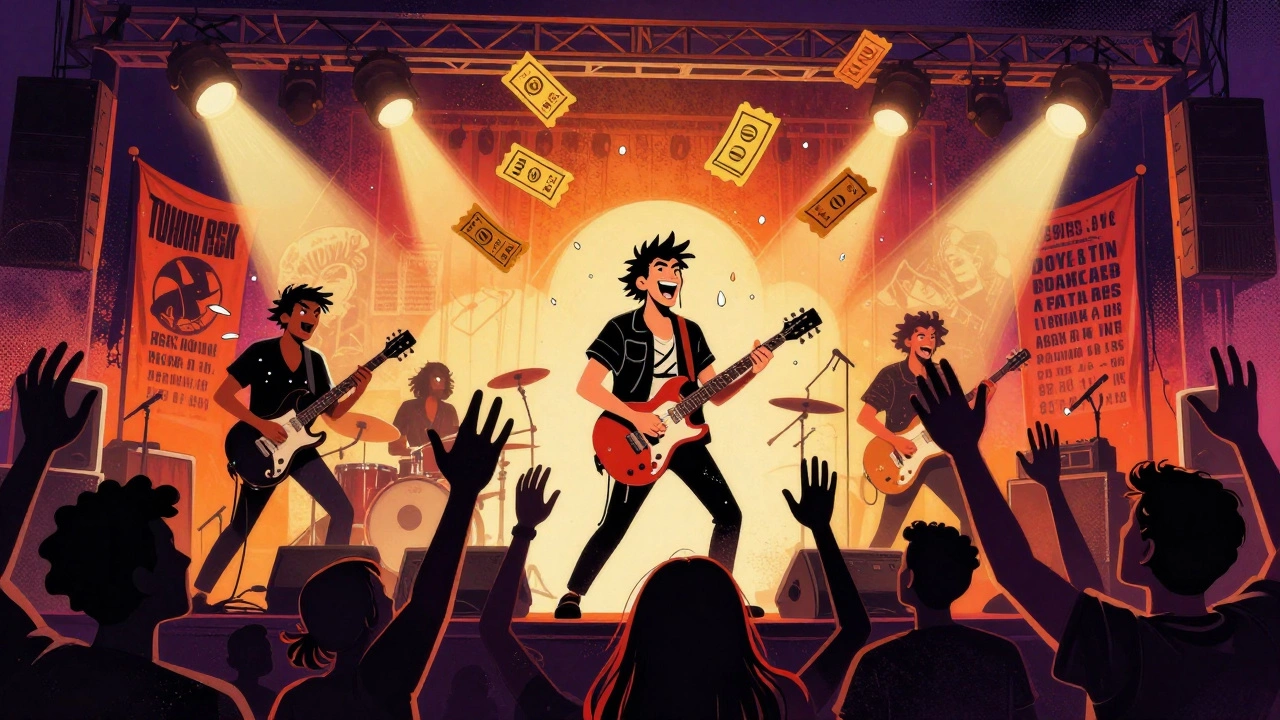
As recorded music revenues collapsed, A&R had to rethink what made an artist valuable. If you couldn’t count on selling 500,000 CDs, what justified a signing? The answer lay in touring and merchandising. Piracy made recorded music effectively free, but it couldn’t replicate the live experience. Artists who could draw crowds to arenas became the new gold standard. A&R departments began evaluating signees based on their ability to generate live income, not just chart positions. This shift elevated the importance of performance energy and fan loyalty over pure studio polish, fundamentally altering the type of talent that labels sought to invest in.
Did Napster kill the music industry?
Not exactly. Napster disrupted the *recorded music* business model, causing a 53% drop in U.S. revenues between 1999 and 2013. However, it also served as a discovery engine that helped many artists gain exposure. The industry eventually adapted by shifting focus to streaming, touring, and merchandise, rather than relying solely on physical sales.
How did piracy change A&R decisions?
Piracy made A&R more risk-averse. With falling revenues, labels stopped investing in long-term artist development. Instead, they focused on signing acts with immediate hit potential, prioritizing radio-ready singles over experimental albums or niche genres that required years to cultivate an audience.
Why did labels stop releasing full albums as the main product?
Napster allowed users to download individual songs for free, breaking the bundle of the CD. Since consumers no longer needed to buy a $20 album to hear one hit, the economic model supporting "filler" tracks collapsed. Labels shifted to emphasizing singles, a strategy later formalized by iTunes’ $0.99 per-track pricing.
What role did CD pricing play in the rise of piracy?
High CD prices, maintained through alleged collusion among major labels, created consumer resentment. When easy-to-use MP3 tools and P2P networks appeared, many buyers turned to free copies instead of paying inflated prices for unprotected physical media, accelerating the decline in sales.
How did labels try to stop piracy in the early 2000s?
Labels used two main tactics: aggressive lawsuits against individual users via the RIAA and technical measures like DRM and copy-protected CDs. Both strategies largely failed, alienating customers and failing to stop sharing, while delaying the adoption of legal digital stores like iTunes.