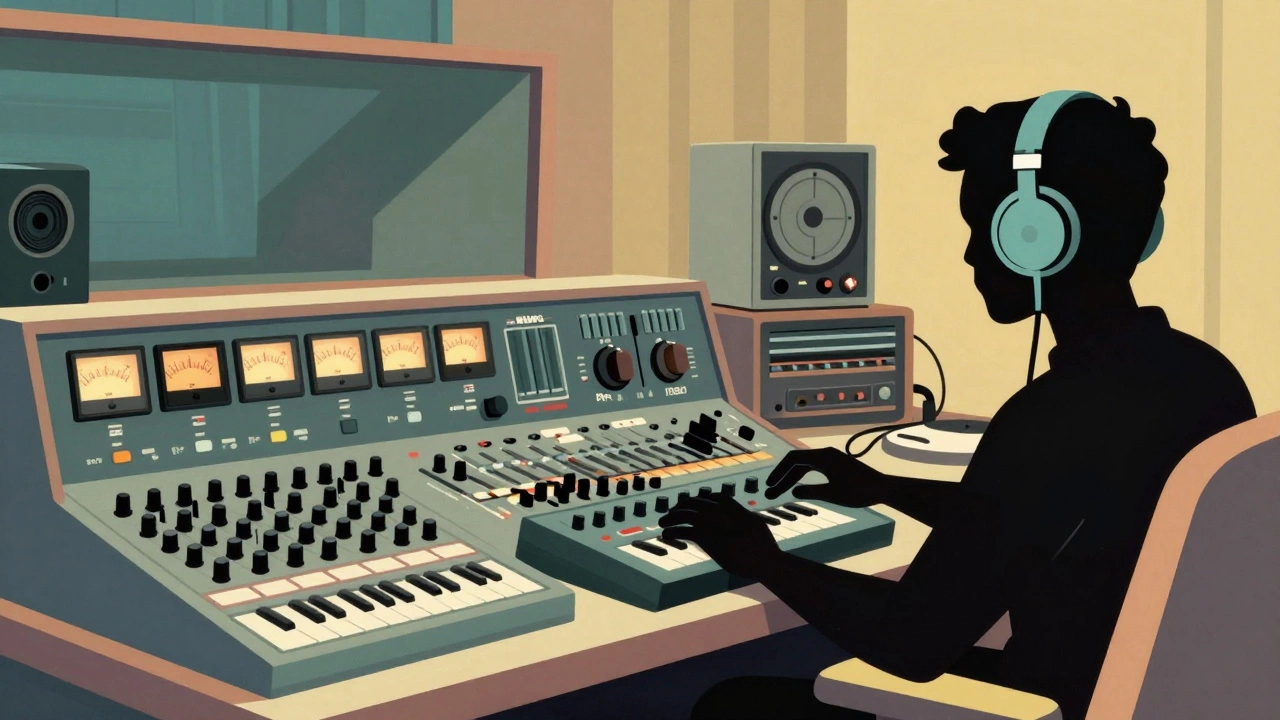

Think about the last time you heard a massive pop hit or a chart-topping rap song. Chances are, it had smooth vocals, a heavy bassline, and a hook that stuck in your head instantly. That sound didn't just appear out of thin air in the 1990s. It was built on a foundation laid down by 1980s R&B, which served as the crucial bridge between classic soul and the modern era. This decade didn't just produce great songs; it created the technological and stylistic blueprint that defined the next twenty years of popular music.
When we look back at the transition from the '80s to the '90s, we see more than just a change in fashion or slang. We see a fundamental shift in how music was made, marketed, and consumed. The electronic production techniques pioneered by R&B artists in the 1980s became the default setting for 1990s hip-hop and pop. Without the sonic experiments of that earlier decade, the "New Jack Swing" era and the subsequent boom of hip-hop soul would not have existed in the same way.
The Electronic Revolution of 1980s R&B
To understand the impact, we first need to look at what was happening in the studios during the 1980s. Rhythm and blues was undergoing a massive transformation. It moved away from the live-band arrangements of Motown’s golden age and embraced new technology. Producers started using synthesizers, drum machines, and digital recording equipment to create a polished, futuristic sound.
This shift wasn't just about having cool new toys. It was about precision and texture. Synthesizers replaced many acoustic instruments, allowing for thicker basslines and shimmering keyboard layers that could be programmed to repeat perfectly. This "electronic polish" became the signature of the era. Artists like Luther Vandross and Patti LaBelle delivered powerful, gospel-infused vocals over these sleek, synthetic backdrops. This combination-organic emotion meeting mechanical precision-created a template that was incredibly adaptable.
Why does this matter? Because when hip-hop producers in the late 80s and early 90s looked for material to sample or emulate, they found a goldmine in these records. The clean separation of instruments in 1980s R&B recordings made them perfect for sampling. A drum break from an R&B track could be isolated and looped without muddy interference from other instruments. This technical clarity directly enabled the loop-based production style that dominated 1990s hip-hop.
Bridging the Gap: Technology and Texture
By the time the 1990s arrived, the lines between genres were beginning to blur. In 1990, Billboard magazine reintroduced the term "R&B" to categorize all styles of Black popular music other than hip-hop. This classification highlighted a growing reality: R&B and hip-hop were distinct but deeply interconnected. They shared the same audience, the same radio stations, and increasingly, the same production tools.
| Feature | 1980s R&B Approach | 1990s Hip-Hop Adoption |
|---|---|---|
| Primary Instrumentation | Synthesizers, drum machines (LinnDrum), electric bass | Samples of 80s R&B drums/bass, MPC samplers |
| Vocal Style | Smooth, melismatic, gospel-influenced harmonies | Rapped verses with sung hooks (often featuring R&B singers) |
| Production Goal | Polished, crossover pop appeal | Gritty, rhythmic focus with melodic accessibility |
| Song Structure | Verse-Chorus-Bridge format | Loop-based structures, extended intros/outros for DJing |
The connection here is direct. 1990s R&B producers adopted the "hip-hop sensibility"-harder drums, looped samples-but kept the melodic and harmonic frameworks of 1980s R&B. This hybridization created a new subgenre often called "hip-hop soul." Artists like Mary J. Blige emerged by blending the tough, street-level aesthetic of hip-hop beats with the vulnerable, singing style of 1980s R&B divas. This fusion proved that you didn't have to choose between rhythm and melody; you could have both.
The Power of Remix Culture and DJ Influence
You can't talk about this era without mentioning DJs. In the 1980s and 90s, DJ culture was a primary driver of musical innovation. DJs weren't just playing records; they were reimagining them. They took classic R&B tracks and remixed them, adding faster tempos, heavier bass, and hip-hop-style scratches or breaks. These remixes played in clubs and on radio, exposing audiences to a blended sound long before official collaborations happened.
This practice normalized the idea that an R&B vocal could sit comfortably on top of a harder, more aggressive beat. When you hear a 1990s pop song with a rapper featured on the chorus, or an R&B ballad with a trap-inspired beat, you're hearing the legacy of that remix culture. It taught producers and listeners that genre boundaries were fluid. A song could start as pure R&B, get remixed into a club banger, and then influence a pop artist's next single. This cross-pollination accelerated the mainstream acceptance of hip-hop elements in pop music.
Soundtracks as Cultural Catalysts
If production provided the tools, film and television provided the megaphone. The 1990s saw a "golden era" of Black media, with movies and TV shows heavily featuring R&B and hip-hop soundtracks. Films like *The Bodyguard* (1992), *Waiting to Exhale* (1995), and *Love Jones* (1997) weren't just entertainment; they were massive marketing campaigns for the music industry.
These soundtracks showcased the hybrid sound we've been discussing. They featured big, emotional ballads rooted in 1980s R&B traditions, often paired with mid-tempo tracks that incorporated hip-hop rhythms. For millions of viewers who might not have listened to Black radio, these movies introduced the sound of R&B-hip-hop fusion as the soundtrack of romance, drama, and coolness. This exposure pushed R&B into the global mainstream, making its stylistic traits-like melisma (singing multiple notes on one syllable) and layered harmonies-standard features of pop music worldwide.
Chart Consolidation and Industry Recognition
The commercial success of this fusion eventually forced the industry to adapt its tracking methods. By the early 2000s, Billboard consolidated its charts to create the "Hot R&B/Hip-Hop" chart. This move recognized what fans and producers already knew: the two genres were functioning as a fused commercial category. You couldn't separate them anymore because the most successful songs in both categories relied on the same ingredients.
This consolidation validated the influence of 1980s R&B. It showed that the melodic hooks, vocal performances, and songwriting structures developed in the 80s were essential for hip-hop to achieve mass pop appeal. Pure rap tracks often struggled to crack the Top 40 pop charts unless they included a sung hook or a feature from an R&B artist. Conversely, R&B songs needed the rhythmic drive of hip-hop to stay relevant with younger audiences. The symbiotic relationship ensured that the DNA of 1980s R&B remained alive and well in the charts.
Legacy in Modern Pop Music
So, where does this leave us today? If you listen to current pop hits, you'll find that the sound is still steeped in this tradition. Modern pop music is essentially contemporary R&B. The vocal stylings, the use of auto-tune as an artistic effect (which evolved from earlier electronic experiments), and the emphasis on groove over complex chord changes all trace back to the playbook established in the 1980s and refined in the 1990s.
Producers today still use the same core toolkit: synthesized basslines, programmed drums, and polished vocal arrangements. The difference is mostly in the speed of production and the distribution channels. But the aesthetic goal remains the same: to merge emotionally expressive vocals with danceable, technologically advanced beats. Understanding this lineage helps explain why certain sounds feel familiar even when the artists are completely new. We are still listening to the echoes of 1980s R&B, amplified by the energy of 1990s hip-hop.
What specific technologies from the 1980s influenced 1990s music?
The widespread adoption of synthesizers, drum machines (like the LinnDrum and Roland TR-808), and digital recording consoles allowed for cleaner, more precise production. These tools enabled the creation of loop-based beats and sampled textures that became central to 1990s hip-hop and R&B production.
How did Billboard's chart changes reflect the merging of genres?
In 1990, Billboard redefined R&B to include all non-hip-hop Black popular music, acknowledging the dominance of the style. Later, in the early 2000s, they combined the charts into "Hot R&B/Hip-Hop," officially recognizing that the commercial markets for both genres had merged due to frequent collaborations and shared production styles.
What role did movie soundtracks play in popularizing this sound?
Soundtracks for films like *The Bodyguard* and *Waiting to Exhale* exposed mainstream, non-Black audiences to R&B and hip-hop hybrids. These movies sold millions of copies and associated the music with major cultural moments, helping to normalize the blend of sung hooks and rap verses in pop culture.
Who are some key artists that bridged 1980s R&B and 1990s Hip-Hop?
Artists like Mary J. Blige, Jodeci, and TLC exemplified the "hip-hop soul" movement. They combined the vocal prowess and melodic structures of 1980s R&B with the rhythmic aggression and sampling aesthetics of 1990s hip-hop, creating a new dominant sound.
Is modern pop music still influenced by 1980s R&B?
Yes, significantly. Many experts argue that contemporary pop is essentially modern R&B. The use of melisma, synthesized basslines, and the emphasis on groove and vocal texture in today's hits are direct descendants of the techniques pioneered in the 1980s and popularized in the 1990s.


