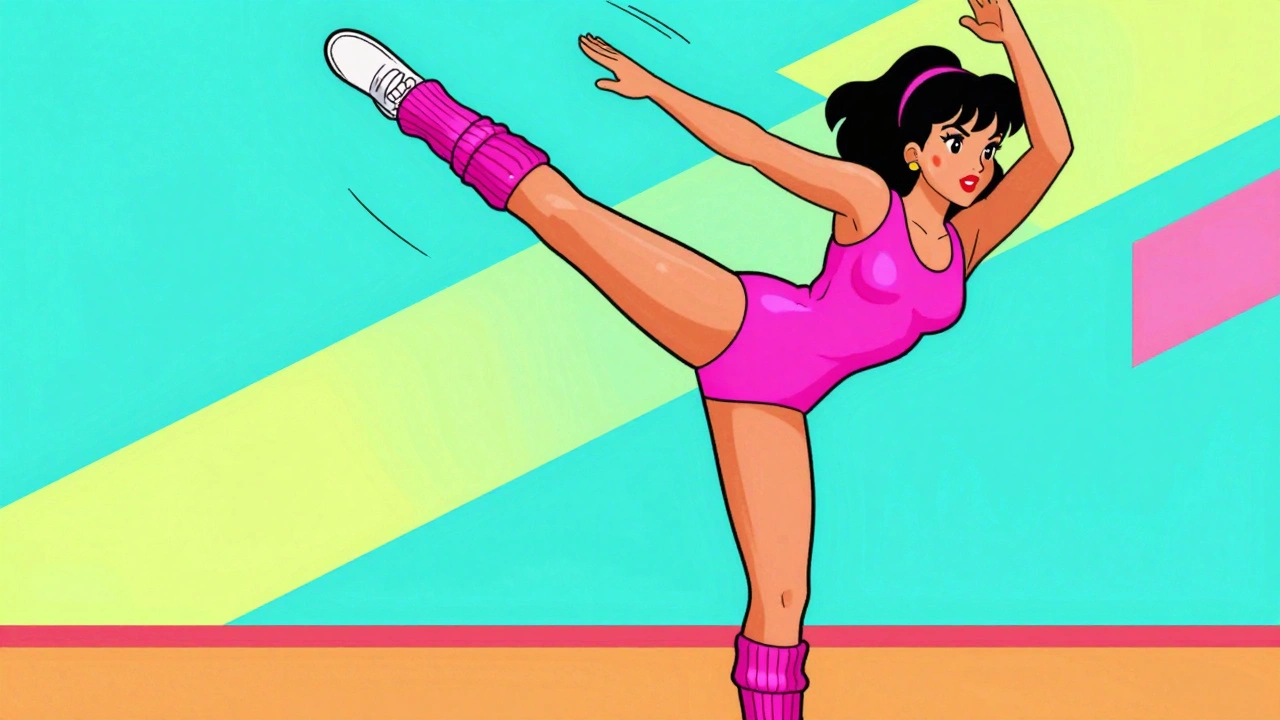

Picture a neon pink leotard hugging every curve, ribbed leg warmers scrunched at the ankles, and a sweatband keeping hair out of eyes during an intense dance break. This wasn't just gym wear; it was the visual language of 1980s pop culture. Between 1980 and 1989, fitness fashion in music videos transformed functional athletic gear into a symbol of youth, energy, and sexual confidence. You didn't need to be working out to look like you were ready for a high-intensity aerobics class. The screen told you that looking fit was just as important as being fit.
This aesthetic didn't happen by accident. It was driven by the rise of MTV, the explosion of home workout VHS tapes, and the perfect timing of synthetic fabrics becoming affordable and stylish. When you watch clips from this era today, you are seeing a specific moment where exercise culture collided with celebrity glamour. Let's unpack how lycra and leg warmers took over the airwaves and why they still echo in our closets today.
The Science Behind the Stretch: Why Lycra Took Over
To understand the look, you have to understand the fabric. Before the 1980s, tight clothing was often restricted or uncomfortable. That changed with the widespread adoption of Lycra, a brand name for elastane fiber developed by DuPont in 1958. While it existed in swimwear and underwear by the 1970s, the 1980s saw it move to the surface.
Lycra offered four-way stretch and excellent recovery, meaning it clung to the body without sagging. For music video directors, this was a game-changer. Woven cotton or denim hides movement. Lycra highlights it. When a dancer kicked or lunged in a video, the fabric moved with them, emphasizing muscle definition and fluidity. This visual clarity worked perfectly with the analog video technology of the time, which struggled with complex textures but loved solid, saturated colors.
The result was a silhouette that prioritized flexibility and body visibility. Performers wore high-cut bikini lines, unitards, and leggings that acted as a second skin. This shift repositioned stretch fabrics from hidden foundation garments into aspirational outerwear. It signaled that the female form, specifically, was something to be displayed proudly, not concealed. The fabric itself became a character in the narrative, communicating discipline and physical prowess instantly.
From Ballet Studio to Mainstream: The Rise of Leg Warmers
If Lycra was the canvas, leg warmers were the bold brushstrokes. Originally, these tubular knit accessories had a purely functional purpose in ballet and modern dance studios. Dancers wore them to keep their calf muscles warm after stretching, preventing injury during rigorous training sessions involving repeated pliés and jumps.
Somewhere between 1980 and 1985, this practical tool escaped the studio. Television shows and movies highlighting dance culture brought them into living rooms across North America and Western Europe. Suddenly, everyone wanted that "dancer" look, even if they hadn't taken a step in a barre class. The fashion peak occurred roughly between 1980 and 1985, spreading from sidewalks to shopping malls.
Why did they stick? They added texture and volume to an otherwise sleek outfit. A ribbed knitted warmer extending from mid-calf to just below the knee created a striking contrast against smooth Lycra leggings. People started wearing them over skinny jeans, tights, or bare legs. They could be pulled up neatly or scrunched around the ankles for a more casual, "just finished a workout" vibe. This layering technique allowed for endless customization, making them a staple for women aged 15 to 35 in urban centers who wanted to participate in the trend without committing to full gym attire.
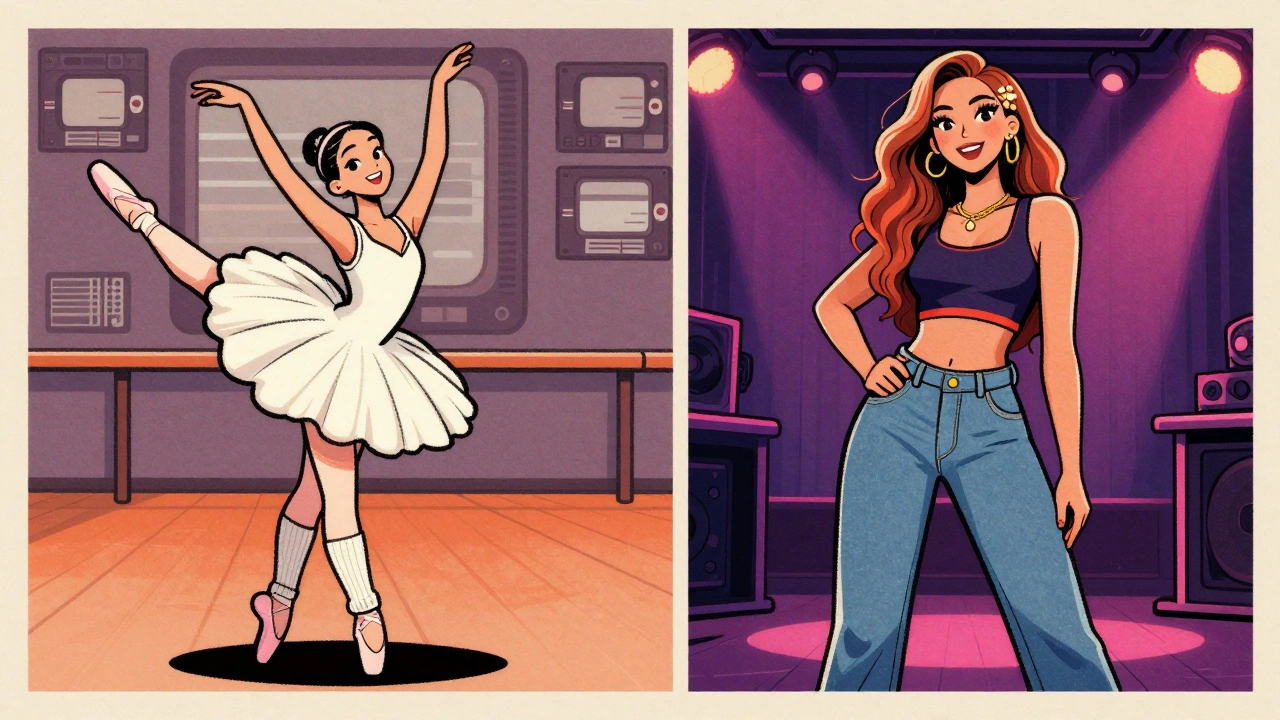
Olivia Newton-John’s “Physical”: The Defining Moment
You cannot talk about 1980s fitness fashion without mentioning Olivia Newton-John. Her 1981 hit “Physical” is widely cited as the single most influential example of fitness aesthetics crossing into pop iconography. The song’s release coincided perfectly with the aerobics boom and the early growth period of MTV.
The accompanying video album and promotional clips released in 1982 featured Newton-John and dancers in tight workout outfits: fitted tops, short shorts, headbands, and gym accessories designed to resemble health-club attire rather than traditional stage costumes. But it wasn't just about exercise; it was about desire. The video combined comedic narrative with homoerotic undertones and stretchy gym wear to broaden the cultural meaning of exercise clothing.
It turned practical apparel into a coded language of bodily display. The slick bodysuits and sequined exercise wear blended fitness imagery with glamorous pop star styling. Critics argue that this video helped normalize tight stretch garments for women of varying ages and body types. It showed that you could be sexy and sweaty at the same time. By linking pop music, sexuality, and workout culture, Newton-John paved the way for millions of viewers to see their own workout clothes as potential performance wear.
The Jane Fonda Effect: Aerobics as a Cultural Movement
While Newton-John provided the musical hook, Jane Fonda provided the blueprint. Her early-1980s workout videos and mall-culture exercise classes popularized the complete ensemble: leg warmers, leotards, sweatbands, and shiny tights. These weren't just costumes; they were uniforms for a new lifestyle.
Fonda’s influence reached middle-class women in the United States and the United Kingdom, turning aerobics into a social activity. Stars performing cardio routines on VHS tapes frequently wore vibrant leotards and leg warmers well into the early 1990s. One 1993 release kept this aesthetic alive more than ten years after its initial mainstream peak. This longevity suggests that the style had deep roots beyond a fleeting fad.
The characteristic silhouette emphasized long, narrow leg lines with highlighted shoulders and hips. Oversized sweatshirts cut to reveal one shoulder paired with snug bottoms created a balanced look that was both comfortable and visually interesting. This combination allowed performers to execute jumps, kicks, and dance routines without restriction. It was fashion that functioned, which made it incredibly appealing to a generation obsessed with health and vitality.
Color Theory: Neon and Saturation
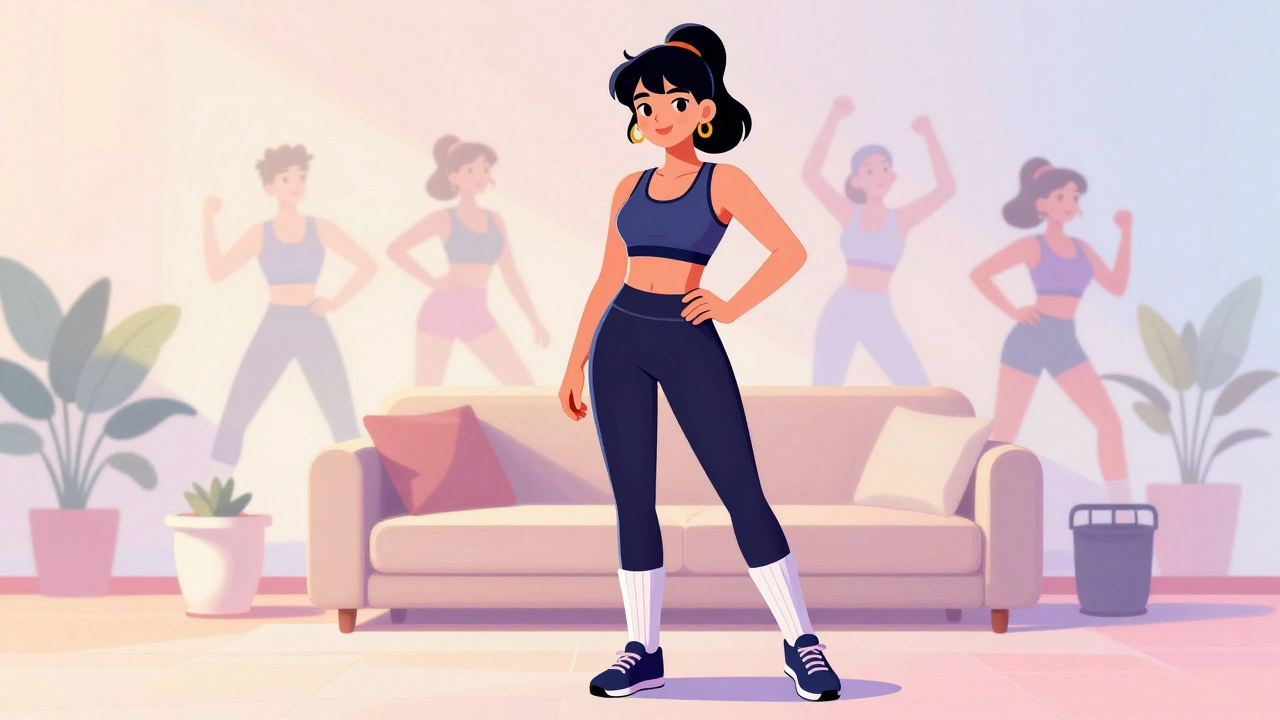
1980s fitness fashion was loud. Typical color schemes included high-saturation neon pinks, turquoise blues, and citrus greens. These choices were deliberate. They popped on television screens and captured attention immediately. White or black accessories were often used to highlight the body’s movement against these bright backdrops.
This use of color differentiated fitness fashion from contemporaneous street and office wear. While power suits with large shoulder pads and conservative skirts dominated corporate dress codes in the mid-1980s, music-video fitness looks showcased legs, hips, and arms through high-cut leotards and bare calves. It signaled a different set of values oriented toward physical performance and youth culture rather than professional authority.
The permeability between exercise fashion and casual streetwear was high by about 1983. Once the fad moved beyond gyms, many people wore these accessories over jeans or leggings in everyday contexts. A neon leg warmer could transform a simple pair of denim into a statement piece. This blending of categories meant that fitness fashion wasn't confined to the gym; it became a general aesthetic for expressing energy and optimism.
Legacy: From 80s Fad to Modern Athleisure
Did the trend disappear? Not entirely. Expert commentary emphasizes that 1980s fitness fashion directly anticipates the 2010s athleisure market. Today’s branded compression socks echo the function and look of leg warmers. Neon sports bras and color-blocked leggings sold by global companies mirror the aesthetic of those early aerobics outfits.
The primary legacy lies in the normalization of stretch fabrics in everyday life. The shift toward public visibility of tight garments that started in the early 1980s underlies current norms around gym wear in North America and Europe. We no longer think twice about wearing leggings to the grocery store because pioneers like Newton-John and Fonda made that look acceptable decades ago.
In the 2020s, leg warmers and Lycra leotards continue to influence fashion, but largely as nostalgic references. Social content on TikTok and Instagram from 2024 and 2025 shows modest revival interest, with creators styling leg warmers with contemporary clothing. There remains a stable niche audience for the look, appreciating its retro charm. While the scale of the fad today is far smaller than the 1980s boom, the DNA of that era is still visible in how we dress for comfort and performance.
Why were leg warmers so popular in the 1980s?
Leg warmers became popular because they transitioned from functional ballet studio gear to mainstream fashion icons. Influenced by celebrities like Jane Fonda and Olivia Newton-John, they represented the aerobics craze. Their ability to add texture and color to outfits, while signaling an active lifestyle, made them a versatile accessory for everyday wear.
What role did MTV play in 1980s fitness fashion?
MTV amplified the reach of fitness fashion by broadcasting music videos featuring artists in athletic wear. Channels like MTV expanded rapidly after its 1981 U.S. launch, exposing millions of viewers to images of Lycra-clad performers. This constant visual reinforcement normalized tight, body-conscious sportswear as cool and desirable.
Is Lycra the same as spandex?
Yes, Lycra is a brand name for elastane fiber, commonly known as spandex. Developed by DuPont in 1958, it provides four-way stretch and recovery. In the 1980s, Lycra became synonymous with high-quality stretch fabric used in leotards and leggings, distinguishing it from generic elastic materials.
How does 1980s fitness fashion relate to modern athleisure?
1980s fitness fashion laid the groundwork for modern athleisure by normalizing the wear of performance fabrics outside the gym. The acceptance of leggings, sports bras, and stretchy materials in daily life stems from the cultural shifts initiated by the aerobics boom and music video trends of the 1980s.
Who was the biggest influencer in 1980s workout style?
Olivia Newton-John and Jane Fonda are considered the biggest influencers. Newton-John’s “Physical” video linked pop stardom with gym wear, while Fonda’s workout videos provided a practical template for millions of women to emulate the aerobics look at home, cementing the style in mainstream culture.


