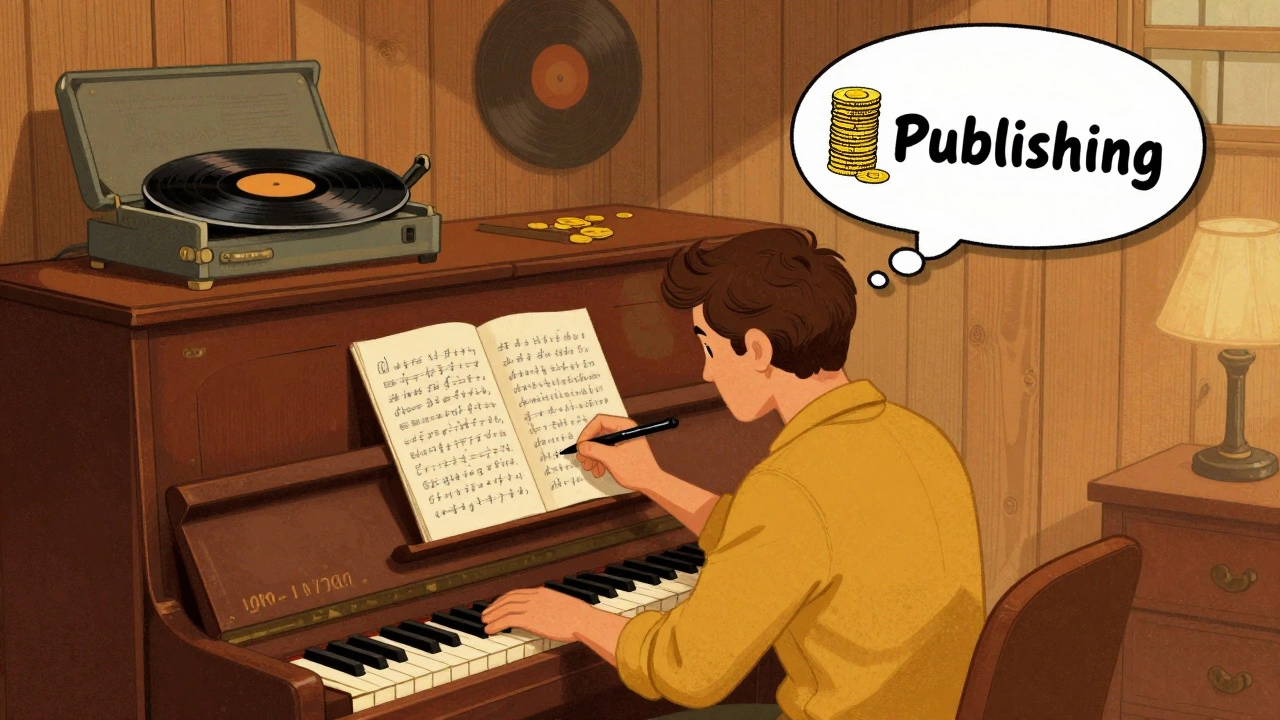

Imagine you wrote a hit song in 1975. You recorded it, sold millions of vinyl records, and played it on tour. But here is the twist: most of your long-term wealth didn’t come from selling those plastic discs or buying tickets. It came from something invisible called song publishing. For the singer-songwriters of the 1970s-artists like Carole King, James Taylor, and Joni Mitchell-the business of owning their compositions was just as critical as the art of performing them.
We often think of musicians making money when fans buy albums. That’s only half the story. The other half involves complex legal rights, royalty splits, and deals with publishers that determined who got paid when a song was played on the radio, covered by another artist, or licensed for a movie. Understanding this system reveals why some artists stayed wealthy for decades while others struggled, even after massive commercial success.
The Core Concept: Composition vs. Recording
To understand how these artists made money, we first need to separate two distinct copyrights. There is the sound recording, which is the actual audio file or vinyl master owned by the record label. Then there is the musical composition, which consists of the melody and lyrics. This second piece belongs to the songwriter and their publisher.
In the 1970s, if you signed a record deal, the label usually owned the master recording. They took the lion's share of album sales revenue. However, if you kept control of your publishing rights, you collected money every time someone else used your song. This distinction is vital. A cover version of your song generates no income for the original record label but pays full royalties to the songwriter and publisher. For a singer-songwriter who wrote their own hits, retaining publishing rights meant creating a passive income stream that lasted long after the initial album sales slowed down.
The Four Shares Structure
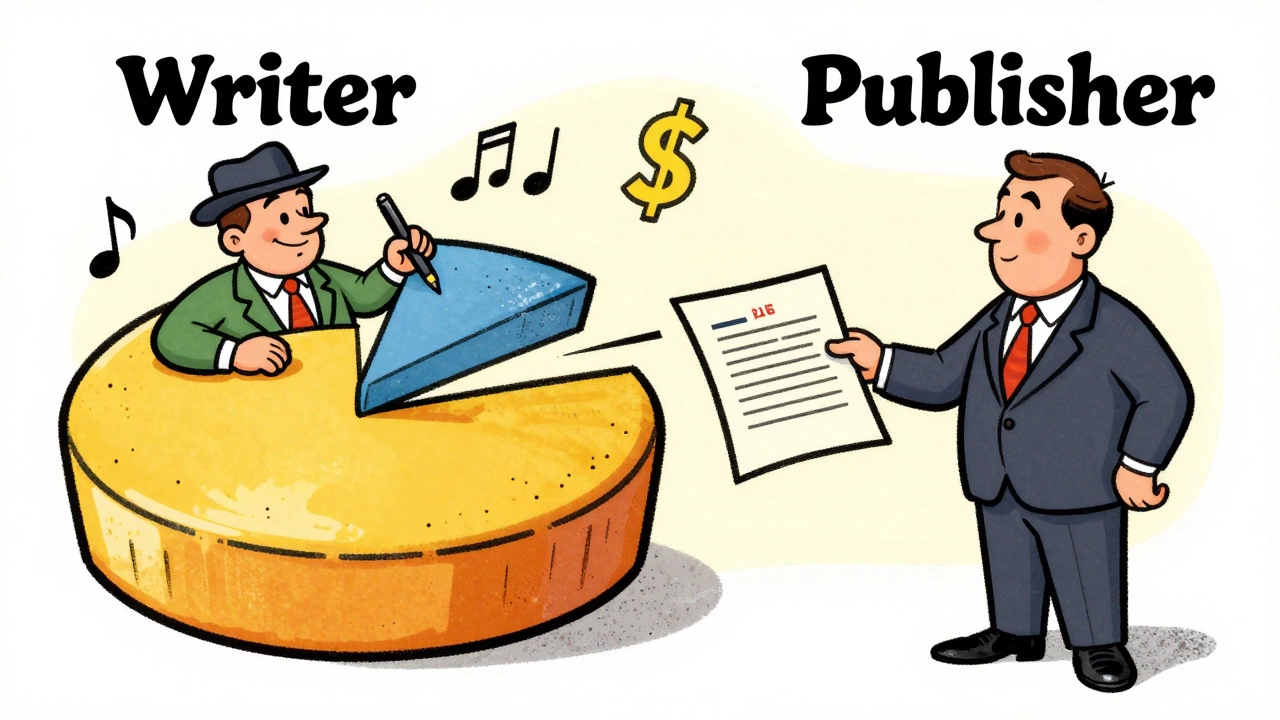
Industry experts often explain song ownership using a "four shares" model. Think of every song as being divided into four equal parts:
- Writer’s Share (50%): This belongs to the person who wrote the lyrics and melody.
- Publisher’s Share (50%): This belongs to the entity that administers the copyright and promotes the song.
If you are a solo writer, you start with 100% of the Writer’s Share. If you sign a standard publishing deal, you typically give away the Publisher’s Share to a company in exchange for an advance and promotional services. This results in a 50/50 split of total income. However, savvy 1970s artists often formed their own publishing companies. By doing so, they could negotiate "co-publishing" deals where they retained part of the Publisher’s Share, effectively keeping 75% of the total income instead of just 50%. This small percentage difference translated into hundreds of thousands of dollars over the life of a hit song.
Mechanical Royalties: The Vinyl Engine
In the 1970s, the primary source of publishing income was mechanical royalties. These are payments made whenever a song is physically reproduced-pressed onto vinyl, cassette, or later, CDs. Under the U.S. Copyright Act of 1909, which governed much of the early decade, the statutory rate was $0.02 per copy per song.
Let’s look at the math. Imagine a singer-songwriter writes all 10 songs on an album. That album sells 500,000 copies (a gold record). Here is the calculation:
- 10 songs × $0.02 = $0.20 per album in mechanical royalties.
- $0.20 × 500,000 copies = $100,000 total mechanical income.
- If the artist has a 50/50 publishing deal, they keep $50,000. The publisher gets $50,000.
This might sound modest compared to modern streaming numbers, but in the 1970s, $50,000 was significant, especially since it was pure profit from the composition side, separate from artist royalties paid by the record label. As the decade progressed, the Copyright Act of 1976 took effect in 1978, gradually increasing these rates and extending copyright terms to the life of the author plus 50 years, further securing long-term earnings for writers.
| Royalty Type | Trigger Event | Collector | Typical Rate (1970s) |
|---|---|---|---|
| Mechanical | Sale of physical copy (vinyl/cassette) | Publisher / Harry Fox Agency | $0.02 per copy per song |
| Performance | Radio play, TV broadcast, live concert | PROs (ASCAP, BMI) | Variable based on airplay frequency |
| Sync | Licensed for film or TV show | Publisher | Negotiated fee (often high) |
| Sale of sheet music | Publisher | Percentage of sale price |
Performance Royalties and PROs
While mechanical royalties came from sales, performance royalties came from airplay. In the 1970s, radio was king. If your song was in heavy rotation across hundreds of stations, the money added up quickly. To collect these fees, songwriters had to affiliate with Performing Rights Organizations (PROs) like ASCAP (American Society of Composers, Authors and Publishers) or BMI (Broadcast Music, Inc.).
These organizations monitored radio and television broadcasts. When a station played a song, the PRO tracked it and sent quarterly checks to the registered writer and publisher. Unlike mechanical royalties, which were tied to units sold, performance royalties rewarded popularity and cultural penetration. A song that became a staple on AM radio could generate substantial income for years, far outlasting its chart run. For singer-songwriters, registering correctly with ASCAP or BMI was non-negotiable; failure to do so meant leaving money on the table forever.

Sync Fees and Print Royalties
Two other streams contributed to the 1970s publishing pot: synchronization (sync) fees and print royalties. Sync fees occurred when a song was placed in a movie or TV commercial. Unlike mechanical or performance royalties, sync fees are negotiated directly between the publisher and the production company. A major film placement could pay anywhere from a few thousand to six figures, split between the writer and publisher. This was a lucrative opportunity for artists whose songs fit the mood of popular cinema.
Print royalties, derived from the sale of sheet music, were more significant in the 1970s than they are today. Back then, many people learned piano or guitar by buying sheet music of current hits. While this segment now accounts for less than 3% of publishing revenue, in the ’70s, it provided a steady trickle of income for popular tunes. It was a reminder that the composition itself had value independent of the recording.
The Risk of Bad Deals
Not all singer-songwriters navigated this landscape successfully. Many young artists, eager to get their foot in the door, signed away their publishing rights to labels or predatory publishers. In a "full publishing" deal, the writer might give up 100% of the Publisher’s Share and sometimes even part of the Writer’s Share. Worse, advances given by publishers were often recoupable against future royalties. If a song wasn’t a massive hit, the writer could remain in debt to their publisher for years, receiving no checks despite having written successful work.
The key lesson from the 1970s era is clear: understanding the difference between the master recording and the composition was essential. Artists who retained control of their publishing-or at least negotiated favorable co-publishing splits-built enduring financial foundations. Those who treated publishing as a minor detail often found themselves dependent solely on touring and new recordings, lacking the safety net that royalties provide.
What is the difference between a writer's share and a publisher's share?
The writer's share (50% of total royalties) goes to the person who created the lyrics and melody. The publisher's share (the other 50%) goes to the entity that administers the copyright, promotes the song, and handles licensing. If you write a song alone and have no publishing deal, you keep both shares.
How did mechanical royalties work in the 1970s?
Mechanical royalties were paid every time a physical copy of a song was pressed, such as a vinyl record or cassette. Under the 1909 Copyright Act, the rate was $0.02 per copy per song. So, an album with 10 songs generated $0.20 in mechanical royalties per unit sold.
Why was owning publishing rights important for singer-songwriters?
Owning publishing rights allowed artists to earn money from uses of their songs beyond their own recordings, such as covers by other artists, radio play, and sync placements in films. It created a long-term passive income stream that was not dependent on the success of their specific record label releases.
What role did ASCAP and BMI play in the 1970s?
ASCAP and BMI were Performing Rights Organizations (PROs) that collected performance royalties from radio stations, TV networks, and venues. Songwriters affiliated with these organizations to ensure they were paid whenever their songs were broadcast publicly.
Did the Copyright Act of 1976 change how songwriters were paid?
Yes, the 1976 Act, effective in 1978, extended copyright terms to the life of the author plus 50 years (later increased to 70) and began raising statutory mechanical rates. It also clarified the bundle of exclusive rights that publishers could license, strengthening the legal framework for collecting royalties.


