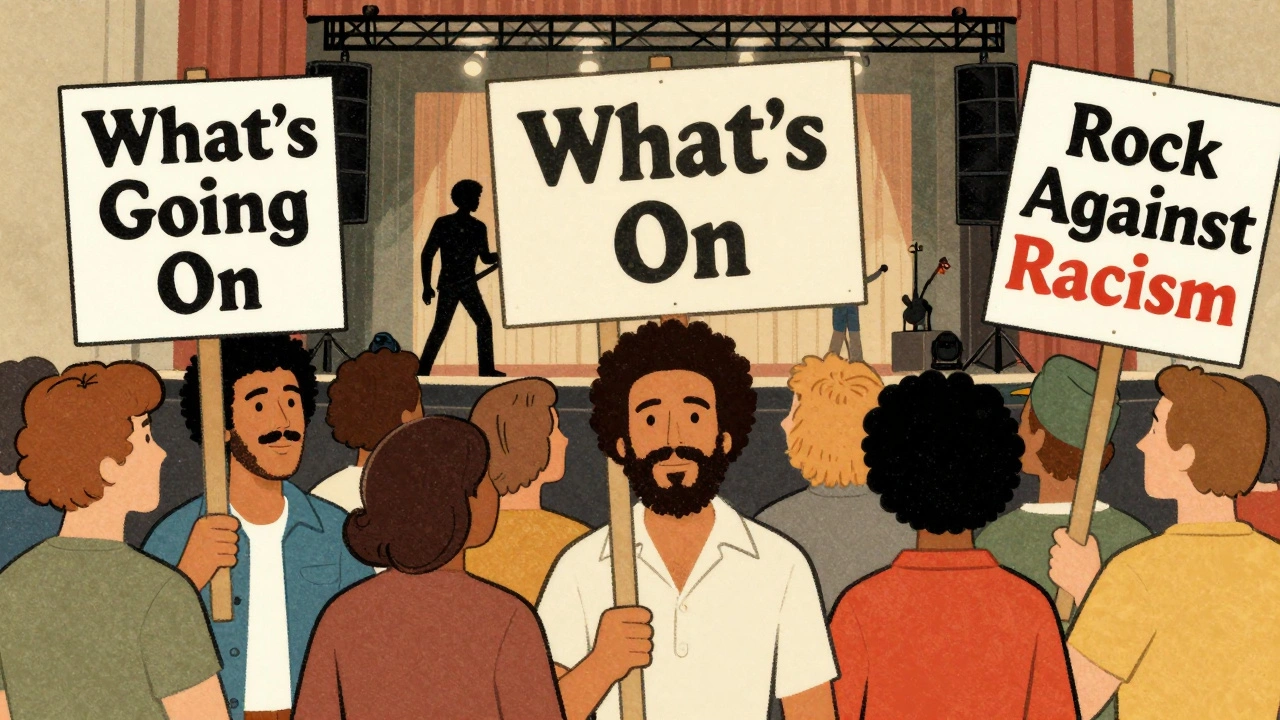

Turn on any protest playlist from the last decade, and you’ll hear echoes of the 1970s. When activists chant at a rally today, they are often borrowing rhythms, phrases, or even specific melodies that were forged in the smoke-filled clubs and rain-soaked parks of 1970-1979. It wasn’t just about catchy tunes back then; it was about building a toolkit for resistance. The music of that decade didn’t just reflect the anger over the Vietnam War or the fight for civil rights-it created the actual methods modern movements use to organize, bond, and speak out.
You might think of the 1960s as the golden age of protest songs, but the 1970s did something different. While the sixties were about starting the conversation, the seventies were about sustaining it. Artists took the raw energy of earlier folk protests and mixed it with soul, rock, reggae, and eventually punk. This blend created what sociologists Ron Eyerman and Andrew Jamison call "mobilizing traditions." These are cultural resources-songs, styles, and performance habits-that movements reuse over decades. If you want to understand why Black Lives Matter chants have a certain cadence or why benefit concerts still work, you have to look at the blueprints drawn in the 1970s.
The Anthem Factory: Songs That Became Weapons
In the 1970s, artists stopped writing simple protest ballads and started creating complex anthems that addressed multiple crises at once. Take Marvin Gaye’s "What’s Going On", released in May 1971. It wasn’t just a song; it was a suite that connected war, police brutality, and environmental decay into one emotional narrative. Today’s hip-hop artists who sample that track aren’t just looking for a cool beat. They are tapping into a rhetorical structure that links systemic issues together. When Kendrick Lamar or J. Cole address mass incarceration and poverty, they are walking a path cleared by Gaye’s holistic approach to injustice.
Then there was Gil Scott-Heron’s "The Revolution Will Not Be Televised". Recorded in 1970 and refined in 1971, this track predicted the media saturation we live in now. Its title has become a shorthand for activists who distrust corporate news and prefer street-level organizing. Even in the age of Twitter and TikTok, where everything *is* televised (or streamed), the phrase remains a powerful critique of passive consumption. It teaches us that watching isn’t enough; you have to be there. This linguistic inheritance shows how 1970s lyrics provided the vocabulary for later digital-age activism.
Heavy metal also joined the fray. Black Sabbath’s "War Pigs" (1970) proved that you didn’t need acoustic guitars to protest. By depicting political leaders sending ordinary people to die, Sabbath expanded the audience for anti-war sentiment to include working-class youth who felt alienated by the hippie movement. This opened the door for thrash metal in the 1980s and alternative rock in the 1990s to carry anti-authoritarian messages. The message stayed the same: power corrupts, and music can expose it.
Personas as Political Statements
Musicians in the 1970s didn’t just sing about change; they embodied it through their public personas. This was crucial for movements focused on identity, such as LGBTQ+ rights and feminism. At a time when same-sex activity was still illegal in many U.S. states and Britain had only recently decriminalized it, artists like David Bowie and Mick Jagger challenged rigid gender norms. Bowie’s Ziggy Stardust persona, with its androgynous fashion and ambiguous sexuality, gave young people a template for defiance. It showed that identity could be fluid and performative, a concept that became central to queer activism in the 1980s AIDS crisis and beyond.
For racial justice, figures like Bob Marley and Jimi Hendrix served as global symbols of unity. Marley’s reggae, rooted in Rastafarianism and Pan-Africanism, offered a spiritual framework for resistance against colonial legacies. His song "Marcus Garvey" (1975) honored the founder of the Universal Negro Improvement Association, linking contemporary struggles to a longer history of Black empowerment. This transnational perspective helped activists in the 1980s and 1990s connect local fights against apartheid in South Africa to global campaigns against racism. You couldn’t separate the artist from the cause; their very existence was part of the protest.
Building Movements Through Concerts
Perhaps the most practical legacy of 1970s music is the model for organizing large-scale activist events. In the UK, the rise of the far-right National Front led to the creation of Rock Against Racism around 1976. This wasn’t just a band; it was an organization that used punk and reggae gigs to draw tens of thousands of people into explicitly anti-racist spaces. Events like the Notting Hill Carnival in London combined music, political speeches, and visual art to create a sense of community among immigrant youth and allies.
| Initiative/Artist | Year/Era | Primary Focus | Long-Term Impact |
|---|---|---|---|
| Rock Against Racism | 1976-1979 | Anti-fascism, Immigrant Rights | Template for multicultural festivals and anti-racist coalitions in Europe. |
| Rock Against Police (France) | Late 1970s | Police Brutality, Marginalization | Influenced European leftist concert culture and direct action tactics. |
| Helen Reddy - "I Am Woman" | 1972 | Feminism, Gender Equality | Became a staple anthem for women’s liberation and later #MeToo movements. |
| Bob Dylan - "Hurricane" | 1975 | Wrongful Conviction, Racial Profiling | Pioneered the use of popular music to highlight specific legal injustices. |
This strategy proved so effective that it spread across Europe. In France, Rock Against Police used similar tactics to fight police brutality against immigrant communities. Historian Andy McSmith noted that the late 1970s saw more politics in British music than at any other time before or since. Why? Because these concerts weren’t just entertainment; they were recruitment centers. They taught organizers how to use music to lower barriers between different groups, creating a shared identity that made collective action possible. Later efforts like Live Aid (1985) and Rock Against Bush (2004) borrowed heavily from this playbook, though critics often argue they lacked the grassroots depth of the 1970s originals.
From Soul to Hip-Hop: The Sonic Lineage
If you listen closely to early hip-hop, you can hear the 1970s speaking. Hip-hop emerged around 1979-1982, drawing directly from the funk, soul, and disco records of the previous decade. But it wasn’t just about sampling beats; it was about inheriting themes. The Internet Encyclopedia of Philosophy notes that hip-hop synthesized elements from earlier protest genres to become the dominant global form of musical activism. When Grandmaster Flash and the Furious Five released "The Message" in 1982, they were continuing the tradition of documenting urban poverty and police violence that James Brown touched on in "Funky President" (1974).
This lineage is vital because it shows continuity. Activists in the 1990s and 2000s didn’t start from scratch. They had a library of sonic strategies. Call-and-response choruses, slogan-like refrains, and rhythmic chanting all trace back to the communal singing practices of 1970s rallies. Educators at projects like TeachRock use these connections to teach students how music frames social issues. By analyzing lyrics from the 1970s, young people learn how to craft their own messages for contemporary problems. It turns 50-year-old songs into living templates for modern coalition-building.
Why the 1970s Model Still Matters
So why do we keep coming back to the 1970s? Because it was a rare moment when commercial success and radical politics coexisted. Record labels promoted politically charged material alongside dance tracks, allowing dissent to reach mainstream audiences. Today, algorithms often segregate content, making it harder for protest music to break through. Yet, the principles remain relevant. As Peter Yarrow, member of Peter, Paul and Mary, reflected in 2026, the music of that era demanded that listeners "put their lives, their hearts, and their time on the line." It wasn’t passive listening; it was active participation.
Modern activists face new challenges-digital surveillance, fragmented attention spans, and polarized media-but the core tools haven’t changed. You still need anthems to unify crowds. You still need personas to humanize abstract causes. And you still need events that bring people together physically. The 1970s gave us the blueprint for all three. Whether you’re streaming a Spotify playlist of 60s & 70s protest songs or marching in a climate strike, you’re using the same cultural repertoire that Marvin Gaye, David Bowie, and Bob Marley helped build. The revolution may not be televised, but it definitely has a soundtrack-and that soundtrack started playing fifty years ago.
How did 1970s music differ from 1960s protest music?
While 1960s protest music was often acoustic and folk-based, focusing on starting conversations about civil rights and war, 1970s music diversified into soul, rock, reggae, and punk. It became more complex, addressing interconnected issues like environmentalism and gender equality, and established lasting organizational models like Rock Against Racism.
What is a "mobilizing tradition" in the context of music?
Coined by sociologists Ron Eyerman and Andrew Jamison, "mobilizing tradition" refers to the songs, styles, and performance practices that social movements reuse over decades. These cultural resources help articulate grievances, build collective identity, and maintain momentum across generations of activists.
Did 1970s music influence hip-hop activism?
Yes, significantly. Early hip-hop sampled beats and lyrical themes from 1970s soul, funk, and disco. Artists like Gil Scott-Heron and James Brown provided templates for addressing police brutality and urban poverty, which became central themes in hip-hop’s evolution as a primary vehicle for global protest.
How did artist personas contribute to activism in the 1970s?
Artists like David Bowie and Mick Jagger challenged gender norms through androgynous stage performances, providing role models for LGBTQ+ activism. Figures like Bob Marley embodied Pan-Africanism, offering a spiritual and political framework for anti-colonial and anti-racist movements worldwide.
What was Rock Against Racism?
Founded in the UK around 1976, Rock Against Racism was an organization that used punk and reggae concerts to combat the rise of the far-right National Front. It pioneered the use of large-scale, multi-act festivals to build anti-racist coalitions and recruit supporters, a model later adopted by movements across Europe.


