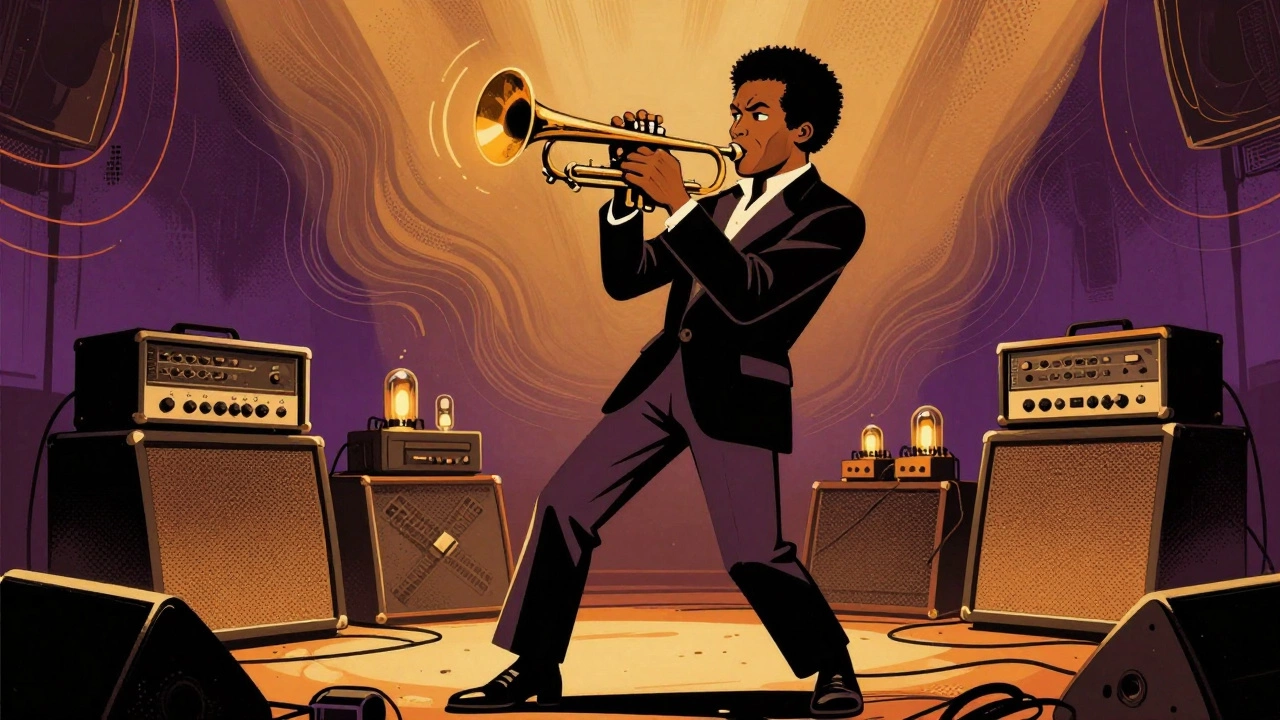

Have you ever wondered why a D’Angelo track feels so much like a Herbie Hancock jam, or why Roy Hargrove’s trumpet lines sit perfectly on top of a hip-hop beat? It isn’t magic. It is a direct musical lineage. The electric instrumentation, funk-driven backbeats, and complex harmonic language of jazz fusion, which crystallized between 1969 and 1975, formed the rhythmic and harmonic blueprint for later genres. Specifically, this legacy built the foundation for neo-soul and nu-jazz.
When Miles Davis dropped "Bitches Brew" in 1970, he didn’t just change jazz; he changed how rhythm sections worked forever. He abandoned the traditional swing ride-cymbal feel for rock backbeats and repetitive bass vamps. This shift created a new groove paradigm that artists like D’Angelo, Maxwell, and modern nu-jazz producers would rely on three decades later. Let’s break down exactly how those 1970s innovations became the DNA of today’s sophisticated soul and jazz.
The Rhythmic Shift: From Swing to Funk Vamps
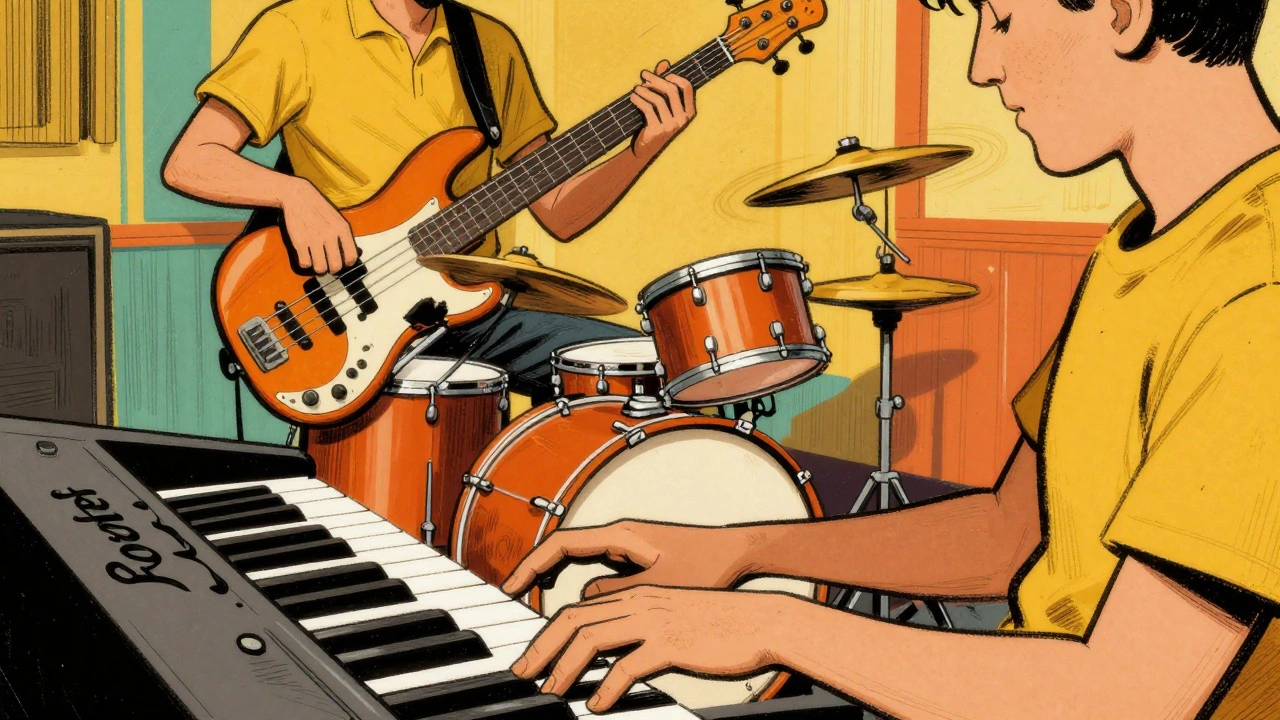
The most obvious connection between 1970s fusion and modern neo-soul is the drumming. Traditional jazz relied on a swinging ride cymbal pattern that kept time with a flowing, triplet-based feel. Fusion musicians looked at rock and funk and said, "Let’s try something heavier." They replaced that swing feel with a straight, often syncopated rock or funk backbeat centered on beats 2 and 4.
Take Herbie Hancock’s "Head Hunters," released in October 1973. The track "Chameleon" is the archetype here. It uses a syncopated, repetitive bass line locked tightly to a four-on-the-floor drum pattern. As the song progresses, layers of rhythm are added, building intensity while keeping that deep, hypnotic groove intact. This structure prefigures the loop-based tracks we hear in neo-soul today.
In the 1990s, when Kedar Massenburg coined the term "neo-soul" around 1994-1997, he was describing artists who updated this exact rhythmic approach for a hip-hop era. Instead of live funk drummers playing all night, neo-soul producers used sampled breaks and programmed drum machines. But the aesthetic remained the same: a laid-back, slightly "behind the beat" human performance over a strong, repetitive vamp. Whether it is a live drummer on a Maxwell record or a MPC sampler on a Erykah Badu track, the pulse comes directly from that 1970s fusion experiment.
Harmony: Extended Chords and Modal Vamps
If the drums provide the body, harmony provides the soul. And this is where the intellectual link between fusion and neo-soul gets really interesting. 1970s fusion retained the rich vocabulary of jazz-extended chords like sevenths, ninths, elevenths, and thirteenths-but simplified the surface progressions.
Instead of fast-moving ii-V-I cycles common in bebop, fusion bands often sat on one or two chords for long periods. These are called modal vamps. Bands like Weather Report and Mahavishnu Orchestra used these static harmonies as platforms for improvisation. This allowed soloists to explore timbre and rhythm rather than just navigating chord changes.
Neo-soul inherited this harmonic palette entirely. If you listen to D’Angelo’s "Brown Sugar" (1995) or Maxwell’s "Urban Hang Suite" (1996), you will hear lush voicings and color tones that decouple the music from traditional functional tonality. Musicians in the neo-soul community often describe their chord play as "fragmented," using large extended structures in dominant positions. This is not accidental. It is a direct subset of the jazz harmonic language developed by smooth jazz and fusion artists in the 1970s. Songs like Herbie Hancock’s "Butterfly" (1974) serve as concrete reference points for this style, offering mellow progressions that prioritize texture and mood over rapid complexity.
Electric Instrumentation and Texture
You cannot talk about this legacy without talking about gear. 1970s fusion leaned heavily on electric and electronic instruments. The Fender Rhodes electric piano, the clavinet, analog synthesizers, and effects-processed electric guitars became standard tools. This created a thick, sustained sound that could fill large venues and appeal to rock audiences.
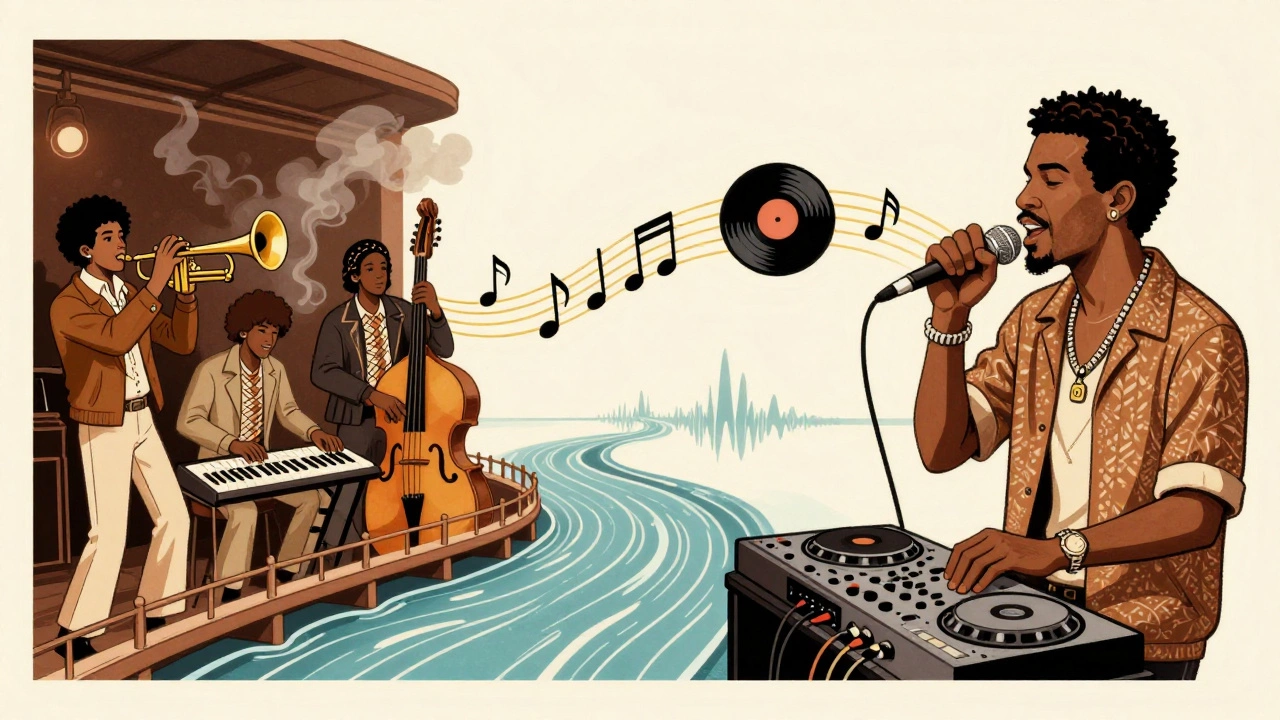
Nu-jazz, which emerged in the mid-1990s through the 2000s, explicitly builds on this electric legacy. Producers in Europe, Japan, and the U.S. merged jazz improvisation with club-oriented grooves, house, and downtempo textures. They sampled those iconic Rhodes chords from 1973-1977 fusion recordings and layered them over electronic beats. The result is a genre that shares fusion’s dual audience: listeners who appreciate jazz harmony but access it through DJ culture and playlists rather than traditional concert halls.
Even the use of effects matters. Miles Davis ran his trumpet through electronic pedals during his fusion phase, tying the timbre directly to the funk and rock mainstream. Today, nu-jazz artists do the same with synths and samplers, creating a sonic bridge that connects the smoky clubs of the 1970s to the digital studios of the 2020s.
Key Artists and Albums That Bridge the Gap
To see this lineage in action, look at specific records. Here are some pivotal moments where 1970s fusion aesthetics met contemporary production:
- Miles Davis - "Bitches Brew" (1970): The origin point. Rock backbeats and amplified bass grooves created long, hypnotic vamps.
- Herbie Hancock - "Head Hunters" (1973): Defined the funk-fusion groove with "Chameleon," influencing generations of bass players and drummers.
- D’Angelo - "Brown Sugar" (1995): Infused hip-hop beats with 1970s soul vibes and live, church-influenced feels that evoke jazz rhythm sections.
- Maxwell - "Maxwell’s Urban Hang Suite" (1996): Drew on Marvin Gaye and Herbie Hancock’s jazz fusion stylings, weaving them into a cohesive sound distinct from mainstream mid-90s R&B.
- Roy Hargrove - "Hard Groove" (2003): His RH Factor project combined jazz, funk, hip-hop, and soul, acting as a direct bridge between 1970s fusion and 21st-century neo-soul.
These artists didn’t just copy the past; they recontextualized it. D’Angelo carved out a new language of soul rooted in tradition but entirely his own, using swing-inflected phrasing and gospel roots alongside jazz harmony. Roy Hargrove normalized the fusion of groove-heavy beats and advanced trumpet improvisation for a broad audience.
Comparison: Fusion vs. Neo-Soul vs. Nu-Jazz
| Element | 1970s Jazz Fusion | Neo-Soul (1990s+) | Nu-Jazz (1990s+) |
|---|---|---|---|
| Rhythm Section | Live funk/rock drums, electric bass vamps | Sampled breaks, programmed hip-hop beats, live bass | Electronic beats, drum machines, trip-hop/house rhythms |
| Harmony | Extended chords (7ths, 9ths), modal vamps, odd meters | Jazz-inspired progressions, rich voice-leading, slow changes | Modal vamps, stacked extensions, synth pads |
| Instrumentation | Fender Rhodes, clavinet, analog synths, electric guitar | Acoustic/electric blend, soul vocals, live horns | Samplers, synthesizers, DJ turntables, processed instruments |
| Primary Influence | Jazz, Rock, Funk | 1970s Soul, Hip-Hop, Jazz Harmony | Jazz Improvisation, Electronic Dance Music |
Why This Matters for Musicians Today
If you are a musician trying to write or play in these styles, understanding this lineage saves you years of trial and error. Educational content from 2021-2026 shows that advanced chord progressions labeled "neo-soul" or "gospel" are taught using the same theoretical frameworks developed for 1970s fusion.
The learning curve usually involves several stages. First, master basic seventh-chord voicings. Second, add tensions like 9ths, 11ths, and 13ths. Third, incorporate chromatic passing chords and side-slipping techniques derived from post-bop and fusion improvisation. Finally, apply these chords over loop-based or beat-oriented song structures.
Forum posts suggest this process can take two to five years of dedicated practice to feel fluent. But if you study the repertoire of Herbie Hancock, Roy Ayers, and George Benson from the mid-1970s, you internalize the chord colors and rhythmic feels faster. You start thinking in terms of chord tones and extensions rather than just scales. This allows you to create those lush, textured sounds that define the genre.
The Future of the Groove
As of mid-2026, jazz fusion’s legacy remains embedded in neo-soul albums, nu-jazz productions, and music education. Online communities frame these genres as stylistic spaces where the harmonic vocabulary of 1960s-1970s jazz coexists with beat-oriented structures inspired by hip-hop and electronic dance music.
New projects continue to cite 1970s influences explicitly. For example, recent abstract projects with changing time signatures draw inspiration from "the music of Herbie, Stevie, and Chick," linking Herbie Hancock, Stevie Wonder, and Chick Corea to contemporary work. Given the sustained popularity of groove-oriented, harmonically rich styles in streaming playlists, the innovations of 1970s fusion are likely to remain central to neo-soul and nu-jazz aesthetics for decades to come. The groove hasn’t died; it has just evolved.
What is the main difference between jazz fusion and neo-soul?
The main difference lies in the rhythm section and vocal focus. Jazz fusion typically features live funk or rock drummers and emphasizes instrumental improvisation over complex harmonies. Neo-soul, emerging in the 1990s, incorporates hip-hop drum programming, sampled breaks, and prominent soul/R&B vocals, while retaining the extended jazz chords and modal vamps of fusion.
Which 1970s album is considered the blueprint for neo-soul harmony?
Herbie Hancock's "Head Hunters" (1973) is frequently cited as a primary blueprint, particularly for its groove-based structure. However, for harmony specifically, Hancock's "Butterfly" (1974) and the works of Roy Ayers are often referenced by neo-soul musicians for their lush, extended chord voicings and mellow progressions.
How did Miles Davis influence neo-soul?
Miles Davis influenced neo-soul indirectly through his fusion period. By abandoning swing rhythms for rock/funk backbeats and using electric instruments, he created a groove paradigm that neo-soul artists like D'Angelo and Maxwell adopted. His use of space, texture, and electric effects also paved the way for the atmospheric production found in neo-soul.
What are "modal vamps" and why are they important in nu-jazz?
Modal vamps are repetitive chord patterns that stay on one or two chords for an extended period. In nu-jazz, they are important because they provide a stable harmonic platform for improvisation and textural exploration over electronic beats. This technique, popularized by 1970s fusion bands like Weather Report, allows producers to layer synths and samples without cluttering the harmony.
Is neo-soul considered a subgenre of jazz?
Neo-soul is generally considered "jazz-adjacent" rather than a strict subgenre. While it heavily relies on jazz harmony, extended chords, and improvisational elements, its structural foundations are rooted in R&B, soul, and hip-hop. It prioritizes groove and vocal delivery in ways that align more with popular music traditions than traditional jazz forms.
Who coined the term "neo-soul"?
Kedar Massenburg, a Motown Records executive, popularized the term "neo-soul" around 1994-1997. He used it to describe artists like D'Angelo and Erykah Badu who blended classic 1960s-1970s soul aesthetics with contemporary R&B, hip-hop, and jazz fusion influences.


