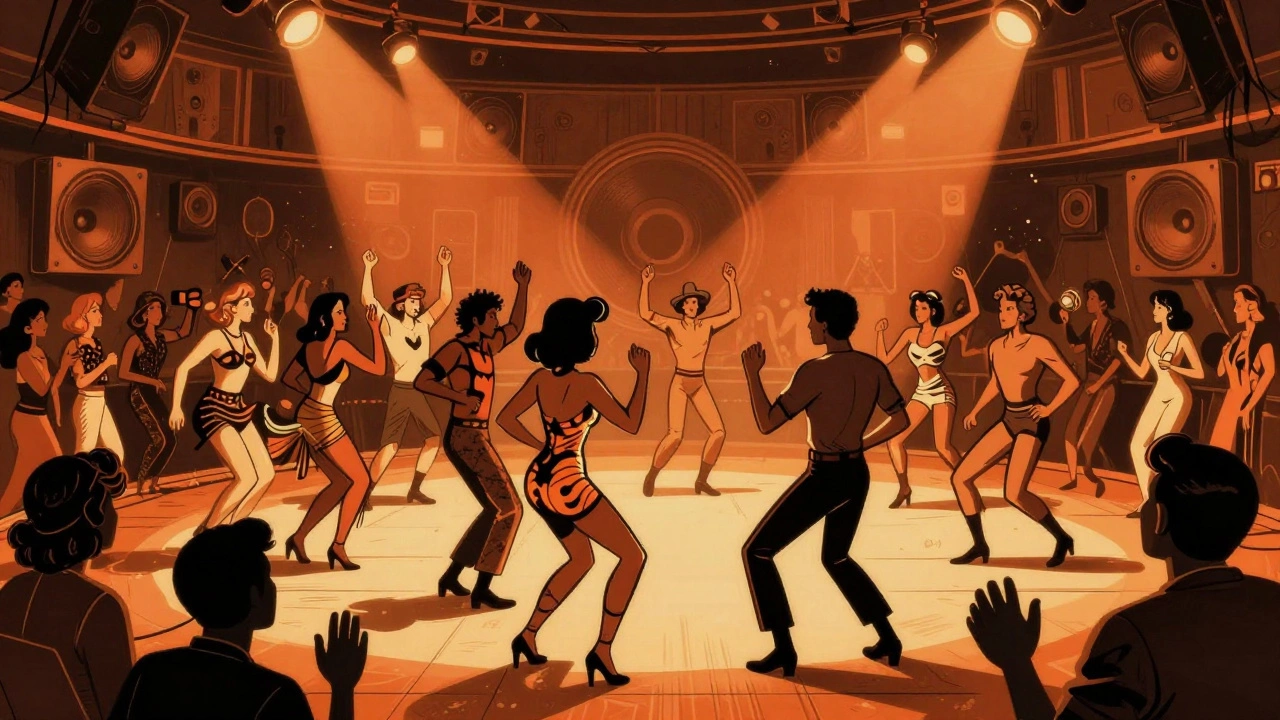

Imagine stepping onto a dancefloor in 1978 where the music doesn't just enter your ears but physically moves your chest. This wasn't magic; it was engineering. The disco revolution of the 1970s relied on massive, custom-built audio installations that turned nightclubs into immersive acoustic chambers. These systems prioritized deep bass and even coverage over raw volume, creating a physical connection between the dancer and the track that defined an era.
Before this period, clubs often retrofitted standard public address speakers into existing rooms. The shift happened when designers like Richard Long started building rooms around their sound systems instead. This article breaks down how these early engineers solved the problem of bass distribution, why horn-loaded cabinets became essential, and how the architecture of venues like Paradise Garage was shaped by the need to control low-frequency energy.
The Shift from PA to Immersive Audio
In the early 1970s, most nightclub audio setups were designed for speech or live bands. They lacked the power and frequency range needed for continuous electronic music playback. As disco emerged in cities like New York, Frankfurt, and London, DJs needed systems that could sustain high sound pressure levels (SPL) for hours without distortion. The goal shifted from simply being heard to being felt.
Richard Long & Associates, founded by designer Richard Long, led this change. Long understood that a club’s reputation depended on its sonic clarity and impact. He treated the sound system as the central feature of the venue. At Studio 54 and later at Dorian Gray in Frankfurt, his designs focused on extending low-frequency response down to 30-40 Hz. This allowed bass drums and synth lines to resonate through the floorboards, giving dancers a tactile experience rather than just an auditory one.
This approach required significant investment. Clubs began competing on sound quality alone. A venue with a superior system attracted loyal crowds who returned specifically for the physical sensation of the bass. This competition drove rapid innovation in amplifier technology, speaker enclosure design, and crossover networks.
Horn-Loaded Cabinets and the Levan Horn
Achieving powerful bass in the 1970s meant dealing with efficiency limits. Direct-radiating subwoofers required immense amounts of amplifier power to move enough air. Horn-loaded enclosures offered a solution. By using a horn shape to compress and direct sound waves, engineers could achieve 3-6 dB higher sensitivity. This meant less power was needed to reach the same volume, which was crucial when solid-state amplifiers capable of delivering thousands of watts were expensive and rare.
At Paradise Garage, opened in January 1978, this technology reached its peak. The club featured a custom bass loudspeaker known as the "Levan Horn," named after resident DJ Larry Levan. This horn was part of a larger array designed to intensify low-frequency energy across the dancefloor. It wasn't just about size; it was about control. Long’s team adjusted cabinet numbers, driver brands, and crossover points to minimize boominess while maintaining punch.
The technical setup typically involved splitting the signal into three or four bands using analog crossovers. Bass frequencies below 80-120 Hz went to dedicated horn arrays, mids handled vocals and instruments, and highs provided clarity. This separation prevented midrange muddiness and ensured that the bass remained tight and rhythmic even at high volumes.
| Component | 1970s Implementation | Modern Equivalent |
|---|---|---|
| Bass Enclosure | Horn-loaded stacks, vented boxes | Line-array subs, digital time alignment |
| Crossover | Analog passive/active networks | DSP-based precise filtering |
| Amplification | High-power audiophile amps (McIntosh) | Class-D professional amplifiers |
| Tuning Method | Listening tests, manual adjustment | Measurement microphones, software modeling |
Architecture as an Acoustic Tool
One of the most radical ideas introduced in the late 1970s was treating the room itself as part of the sound system. At Paradise Garage, the concrete shell, wooden floors, and balcony geometry were all considered in the design process. Engineers didn't just place speakers in a room; they used the room's boundaries to reflect and distribute sound.
Bass stacks were placed symmetrically around the perimeter of the dancefloor. This distributed array approach avoided the common problem of having one overwhelming source that forced dancers to cluster at one end. Instead, listeners near the center, sides, or under the balcony experienced similar bass levels. The difference in volume across the floor was kept within a few decibels, ensuring consistent engagement regardless of position.
Structural reinforcements were necessary to handle the weight of the stacks and the dynamic loads created by vibrating floors. Technicians worked overnight to make fine adjustments, moving cabinets by tens of centimeters or changing tilt angles by degrees. These small changes had large effects on phase cancellation and standing waves, which could create dead spots or peaks in certain areas.
The Role of the DJ and System Voicing
The relationship between the DJ and the sound system was symbiotic. DJs like Larry Levan selected and mixed tracks knowing exactly how the system would reproduce them. The interaction between mixing technique and system voicing was crucial. A well-tuned system could bring out details in a record that were otherwise hidden, making familiar songs feel new.
Community recollections from former attendees highlight this synergy. Many describe feeling kick drums and basslines as full-body vibrations rather than simple sounds. This physical connection encouraged long-form dancing sessions lasting from midnight until morning. The system’s warmth and non-fatiguing highs allowed people to stay on the floor for extended periods without ear fatigue.
This environment also influenced musical production. Producers began mixing records assuming club systems could deliver extended, controlled low-frequency energy. This expectation helped shape the development of house, garage, and techno genres in the following decades. The heavy-bass signature of 1970s clubs became a benchmark for future dance music.
Maintenance and Iterative Design
Maintaining these flagship systems required constant labor. Components aged quickly under heavy use. Drivers needed reconing, cables required rewiring, and amplifiers demanded cooling. Technicians learned through apprenticeship, passing down knowledge orally rather than through standardized manuals. Detailed schematics were often proprietary to firms like Richard Long & Associates.
Clubs regularly invested in upgrades. Adding more bass horns or reconfiguring stacks responded to evolving musical styles and crowd sizes. These systems were living infrastructures, tuned in real-time to cultural changes. For example, as disco gave way to early house music in the 1980s, systems were adjusted to accommodate faster tempos and different bass profiles.
Despite the lack of digital tools, the precision achieved was remarkable. Slow-blow fusing and limiting schemes protected both drivers and electrical infrastructure during peak usage. Ventilation for high-wattage amplifiers was critical to prevent overheating. Every aspect of the installation-from carpentry to electrical engineering-contributed to the final sonic result.
Legacy in Modern Nightlife
The principles established in the 1970s continue to influence modern club design. Venues like Ministry of Sound in London still use perimeter bass stacks and custom horns, though now enhanced with digital signal processing (DSP). Contemporary systems may have flatter measured frequency responses, but the experiential criteria remain the same: smooth bass across the entire floor, minimal harshness, and a sense of wrap-around sound.
Recent analyses of modern systems, such as those at Nowadays in New York, show that challenges like controlling directivity and tonal balance persist. Listeners still notice specific band emphasis depending on their position. This indicates that while technology has advanced, the fundamental goal of creating a cohesive emotional effect through sound remains unchanged.
The socio-cultural significance of these systems cannot be overlooked. In late-1970s New York, places like Paradise Garage provided safe, communal spaces for marginalized communities, particularly LGBTQ individuals. The audio environment facilitated connection and belonging, proving that sound design is not just technical but deeply human.
Who was the primary sound designer for Paradise Garage?
Richard Long was the primary sound designer for Paradise Garage. His firm, Richard Long & Associates, installed the custom system that became famous for its clarity, warmth, and powerful bass response. Long collaborated closely with DJ Larry Levan to tune the system to the club's specific acoustic needs.
What is a horn-loaded subwoofer?
A horn-loaded subwoofer uses a horn-shaped enclosure to compress and direct sound waves, increasing efficiency compared to direct-radiating boxes. This allows the speaker to produce higher sound pressure levels with less amplifier power, which was crucial in the 1970s when high-wattage amps were costly.
Why were bass stacks placed around the perimeter of the dancefloor?
Placing bass stacks around the perimeter created a distributed array that minimized left/right imbalances and reduced phase cancellations. This ensured that dancers everywhere on the floor experienced consistent bass levels, avoiding dead spots or overly intense zones.
How did 1970s club systems influence modern dance music?
These systems set expectations for low-frequency performance, encouraging producers to mix records with extended bass ranges. The physical impact of the sound inspired genres like house, garage, and techno, which rely heavily on rhythm and bass to drive movement.
What role did architecture play in 1970s club sound design?
Architecture was treated as part of the sound system. Rooms were built or modified to accommodate acoustic requirements, using walls, ceilings, and floors to reflect and distribute sound. This holistic approach ensured better coverage and reduced standing waves.