
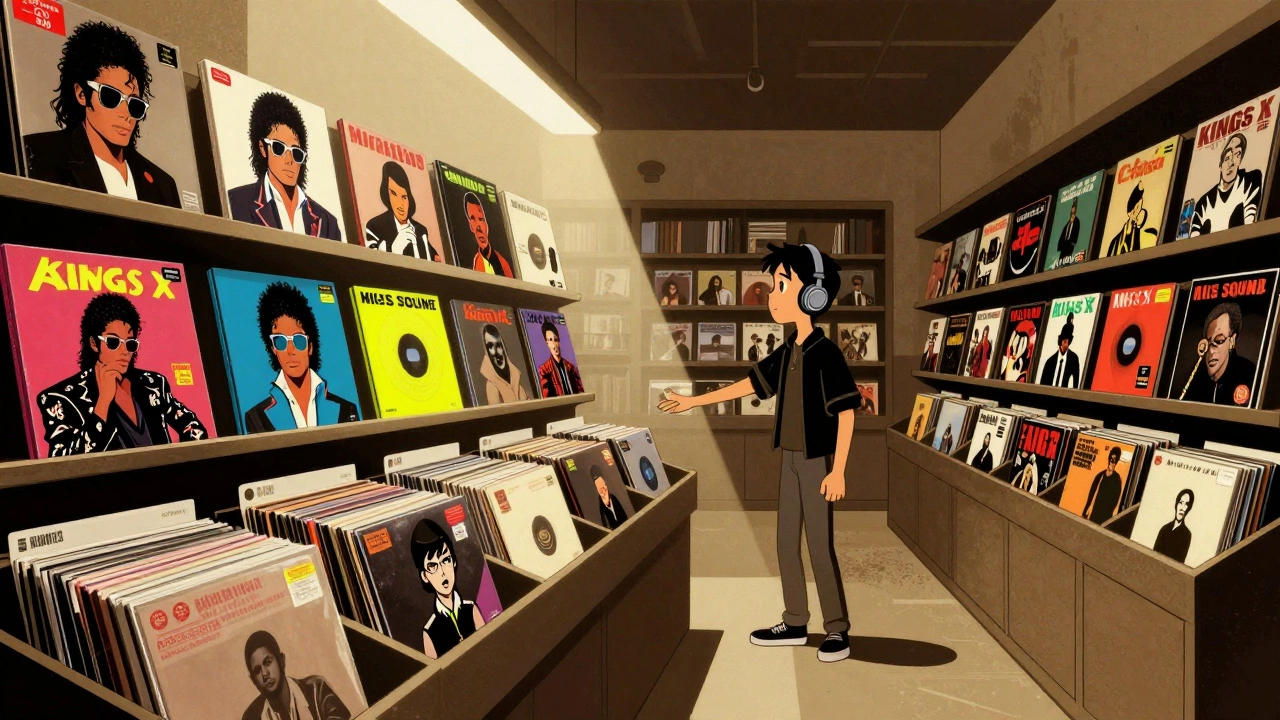
We all know the big names. You’ve heard Michael Jackson's Thriller, you’ve seen Prince's Purple Rain on vinyl racks, and you can probably hum a few bars from U2’s The Joshua Tree. These are the titans of the 1980s, the albums that defined the decade for millions. But if you stop there, you’re missing out on half the story.
The 1980s were a chaotic, explosive time for music. While pop stars dominated the charts, a massive underground scene was brewing. Bands were experimenting with synthesizers, gritty guitar tones, and raw political lyrics in basements and small clubs across the world. Many of these records sold poorly at the time, got buried by radio algorithms (or lack thereof), or were simply overshadowed by their more famous peers. Today, they are considered hidden gems-masterpieces waiting to be found.
Why Did Great Music Get Buried?
To appreciate these overlooked albums, we have to look at why they were ignored in the first place. The 1980s music industry was heavily gatekept. MTV launched in 1981, but it initially favored polished visuals and established acts. If you didn’t have a catchy video or a major label push, you stayed invisible.
Then there’s the "canon" problem. In 1989, Rolling Stone published its list of the "100 Best Albums of the Eighties." It featured icons like Madonna, The Clash, and Tracy Chapman. It was a great list, but it left no room for cult favorites like The Comsat Angels or Game Theory. For decades, casual listeners used those top-100 lists as their entire map of the decade. If an album wasn’t on the map, people assumed it wasn’t worth visiting. That assumption is finally changing.
Post-Punk and Atmospheric Rock: The Moody Masters
If you want to dive into the darker, more atmospheric side of the 80s, start with post-punk. This genre stripped away the blues-based rock of the 70s and replaced it with jagged guitars, driving basslines, and icy production.
The Sound’s 1981 album From The Lion's Mouth is often cited by critics as a flawless record. After their debut *Jeopardy*, this follow-up combined urgent rhythms with emotionally charged vocals that still sound modern today. Similarly, The Chameleons released Script Of The Bridge in 1983. It’s an intricate web of guitar arrangements and atmospheric soundscapes that rivals anything by Echo & the Bunnymen, yet it remains far less famous.
For something even more minimalist, check out Young Marble Giants’s Colossal Youth. Released in 1980, it uses sparse instrumentation to create immense tension. It’s a key document of the DIY aesthetic that influenced indie rock for the next forty years.
Guitar Rock and AOR: The Canadian Connection
When we think of 80s rock, we usually think of Guns N' Roses or Metallica. But some of the most technically proficient guitar work came from bands that never broke big in the US. Canada produced a wave of hard rock and AOR (Album-Oriented Rock) artists who were criminally overlooked.
Aldo Nova’s self-titled 1982 debut is a fresh take on hard rock that feels both classic and futuristic. Then there’s King's X. Their 1989 album Gretchen Goes to Nebraska is a prototype for progressive metal. It features complex time signatures and soulful vocals, bridging the gap between heavy riffs and jazz fusion. Despite its brilliance, it never achieved the sales of contemporaries like Metallica.
Don’t sleep on Triumph either. Albums like Progressions of Power (1980) and Never Surrender (1982) showcase tight songwriting and dual-guitar harmonies that rival any British band of the era.
New Wave, Synth-Pop, and Dance: Beyond the Hits
The 80s were the decade of the synthesizer. While Depeche Mode and New Order get the credit, several other bands pushed the boundaries of electronic dance music.
ABC had hits with "The Look of Love," but their 1985 album How to Be a Zillionaire is where they truly shined. It blends Motown influences with Art of Noise-style studio techniques to create a unique dance sound that felt ahead of its time. By then, however, the public had moved on.
On the funk side, Cameo’s 1986 album Word Up! is iconic for its title track, but the whole LP is filled with rubbery basslines and distinctive vocal hooks. Meanwhile, Neneh Cherry’s 1989 debut Raw Like Sushi mixed pop, hip-hop, and feminist themes in a way that challenged the status quo. It didn’t get the same canonical treatment as Madonna’s releases, but collectors now view it as a late-decade milestone.
Funk-Rock, Reggae, and Political Statements
Some albums were overlooked because they were too political or too genre-defying for mainstream radio. Little Steven Van Zandt’s 1984 solo album Voice of America is a direct counterpoint to Bruce Springsteen’s *Born in the U.S.A.* While Springsteen’s politics were subtle, Van Zandt explicitly criticized President Ronald Reagan’s economic policies. It failed commercially but stands as a powerful artistic statement.
Los Lobos’s 1987 album By the Light of the Moon is another gem. It blends Chicano rock, Americana, and social commentary. It’s often overshadowed by their earlier hit "La Bamba," but this record shows their depth as musicians and storytellers. Similarly, Ziggy Marley & the Melody Makers’s 1988 album Conscious Party brought vibrant reggae songwriting to a wide audience without achieving the legendary status of Bob Marley’s 70s work.
The Obscure and Experimental Fringe
If you really want to dig deep, look at the experimental fringe. These are albums that barely made it out of the recording studio, let alone the store shelves.
The Unclaimed’s 1983 album Primordial Ooze Flavored is a true unsung gem of ’80s psychedelia. It mixes garage rock with avant-garde electronics. Then there’s Sauveur Mallia’s 1981 release Cosmo-Synthetic Vol.1, which offers minimal synth textures that feel decades ahead of their time. These records are rare, often only available through dedicated collectors or reissue campaigns.
Metal and Hip-Hop: The Underappreciated Pioneers
Even in heavy genres, some albums fly under the radar. Black Sabbath’s 1989 album Headless Cross (featuring Tony Martin on vocals) was long overlooked by fans obsessed with Ozzy Osbourne, but recent reappraisals highlight its melodic strength. Iron Maiden’s Somewhere in Time (1986) and Seventh Son of a Seventh Son (1988) are also frequently skipped over in favor of *Number of the Beast*, despite featuring comparable musicianship and ambitious concepts.
In hip-hop, Two Live Crew’s 1989 album Nasty as They Want to Be is notorious for its explicit lyrics and censorship battles. But beyond the controversy, it changed rap music by expanding possibilities for Southern bass-heavy production and independent marketing. It’s a cultural pivot point that deserves more credit than just shock value.
| Artist | Album | Year | Genre | Why It’s Underrated |
|---|---|---|---|---|
| The Sound | From The Lion's Mouth | 1981 | Post-Punk | Overshadowed by later Cure/Madonna dominance |
| Kings X | Gretchen Goes to Nebraska | 1989 | Prog Metal/Rock | Too complex for mainstream rock radio |
| ABC | How to Be a Zillionaire | 1985 | Synth-Pop/Dance | Public forgot the band after early hits |
| Little Steven | Voice of America | 1984 | Rock/Political | Too explicitly anti-Reagan for broad appeal |
| Two Live Crew | Nasty as They Want to Be | 1989 | Hip-Hop | Censorship battles obscured musical innovation |
How to Find and Listen to These Gems
Finding these albums isn’t hard anymore. Streaming platforms have democratized access. Search for curated playlists like Far Out Magazine’s "Year by Year: Underrated albums of the 1980s" on Spotify. It’s a great starting point to sample tracks from Comsat Angels, The Sound, and others without committing to full purchases.
If you prefer physical media, the vinyl resurgence has helped labels reissue niche titles. Keep an eye on sites like Norman Records or specialty blogs like Slacker Shack, which regularly update lists of obscure finds. For the ultra-rare stuff, eBay and Discogs are your best friends. Just be prepared to pay a premium for original pressings of albums like *Primordial Ooze Flavored*.
Start with one album a week. Give it a full listen without distractions. You might find that the "best" album of the 80s isn’t the one everyone else is talking about-it’s the one you discover yourself.
What makes an 80s album "underrated"?
An underrated album typically has high artistic merit, strong songwriting, or innovative production but failed to achieve commercial success or critical acclaim at the time of release. It may have been overshadowed by bigger stars, lacked radio play, or was too experimental for mainstream audiences.
Are there any underrated 80s hip-hop albums?
Yes. Two Live Crew's *Nasty as They Want to Be* (1989) is often cited for its influence on Southern bass music and independent marketing, despite being known mostly for censorship controversies. Other underground rap scenes also produced influential but lesser-known works.
Where can I stream underrated 80s albums?
Most underrated albums are available on major streaming platforms like Spotify, Apple Music, and Tidal. Curated playlists from publications like Far Out Magazine or community-driven lists on Reddit can help you discover specific titles easily.
Is it worth buying vinyl copies of these albums?
If you are a collector, yes. Many of these albums have seen reissues due to the vinyl revival. Original pressings can be expensive and rare, but reissues offer a tangible connection to the music. Check Discogs for availability and pricing.
Why were so many great albums ignored in the 80s?
The 80s music industry was heavily controlled by major labels and MTV. Without a catchy video or significant marketing budget, many talented bands remained invisible. Additionally, critical lists like Rolling Stone's "100 Best" cemented a narrow canon that excluded diverse and experimental voices.