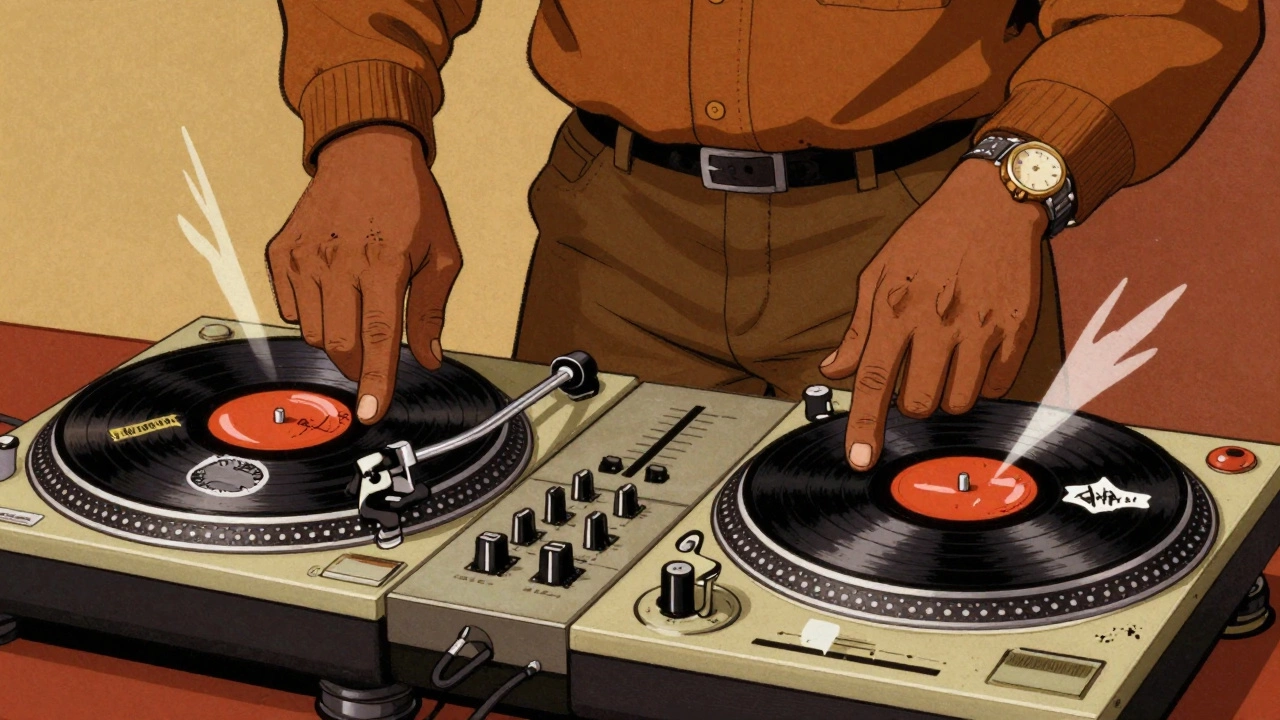

Before Grandmaster Flash was a pioneering DJ who turned the turntable into a musical instrument through techniques like backspinning and cutting, DJs were just people who played records. That’s it. They pressed play, maybe faded one track out while another came in, and let the music do its thing. But in the South Bronx during the late 1970s and early 1980s, Joseph Saddler-better known as Grandmaster Flash-changed everything. He didn’t just play records; he manipulated them with surgical precision, creating loops and rhythms that had never existed before. Alongside his MC group, the Furious Five was a hip hop vocal group led by Melle Mel that shifted rap lyrics from party braggadocio to gritty social commentary, they built the blueprint for modern hip hop. If you listen to any DJ set or conscious rap song today, you are hearing echoes of their innovations.
We often think of hip hop as a monolith, but the genre split into distinct roles very early on. There was the DJ, providing the beat, and the MC, riding the rhythm. Grandmaster Flash and the Furious Five perfected both sides of this equation simultaneously. While other groups focused on catchy hooks or dance breaks, this duo pushed technical boundaries and lyrical depth. Their work in the 1980s didn’t just entertain crowds at block parties; it created a new art form that required years of practice to master. Understanding their impact means looking closely at two specific areas: the mechanical genius of Flash’s mixing and the narrative power of the Furious Five’s rhymes.
The Science of Quick Mix Theory
You might assume that scratching a record is just about moving vinyl back and forth quickly. It’s not. It’s math. Grandmaster Flash developed what he called Quick Mix Theory is a systematic approach to DJing that uses precise counting and physical manipulation of vinyl to loop drum breaks seamlessly. This wasn’t a vague artistic feeling; it was a calculated method based on the structure of funk and disco records. Flash noticed that listeners responded most strongly to four-bar musical phrases. So, he studied how many times a record needed to rotate to complete those four bars. For most standard 33 RPM records, that was roughly six counter-clockwise revolutions.
To execute this, Flash needed tools that didn’t really exist yet. Standard turntables had rubber mats under the platters, which made it impossible to stop the record without stopping the motor-a risky move for cheap belt-drive decks. Flash invented the slipmat is a felt disc placed between the vinyl record and the turntable platter, allowing the DJ to hold the record stationary while the motor continues to spin. This simple piece of felt changed everything. It allowed him to hold the record still, cue up the next break, and then release it perfectly on the beat. Combined with a custom-built mixer featuring a sensitive crossfader, he could switch between two copies of the same record instantly. This technique, known as cutting, created the illusion of an endless drum loop. Before digital samplers like the Akai MPC existed, this manual looping was the only way to extend a short breakbeat into a full-length track for dancers.
His setup typically included two Technics SL-1200 turntables (or similar direct-drive models), a modified mixer, and a stack of wax marked with crayon stickers to indicate where the beats started and ended. This wasn’t just playing music; it was performing live composition. When he released "The Adventures of Grandmaster Flash on the Wheels of Steel" in 1981, he proved that a DJ could be a solo artist. The track mixed snippets of Queen, Chic, and Parliament-Funkadelic into a cohesive narrative, showcasing techniques like phasing (offsetting two identical records slightly to create a warbling effect) and backspinning (rewinding a record to repeat a section). These weren’t tricks; they were foundational skills that every hip hop DJ would have to learn for decades to come.
Melle Mel and the Birth of Socially Conscious Rap
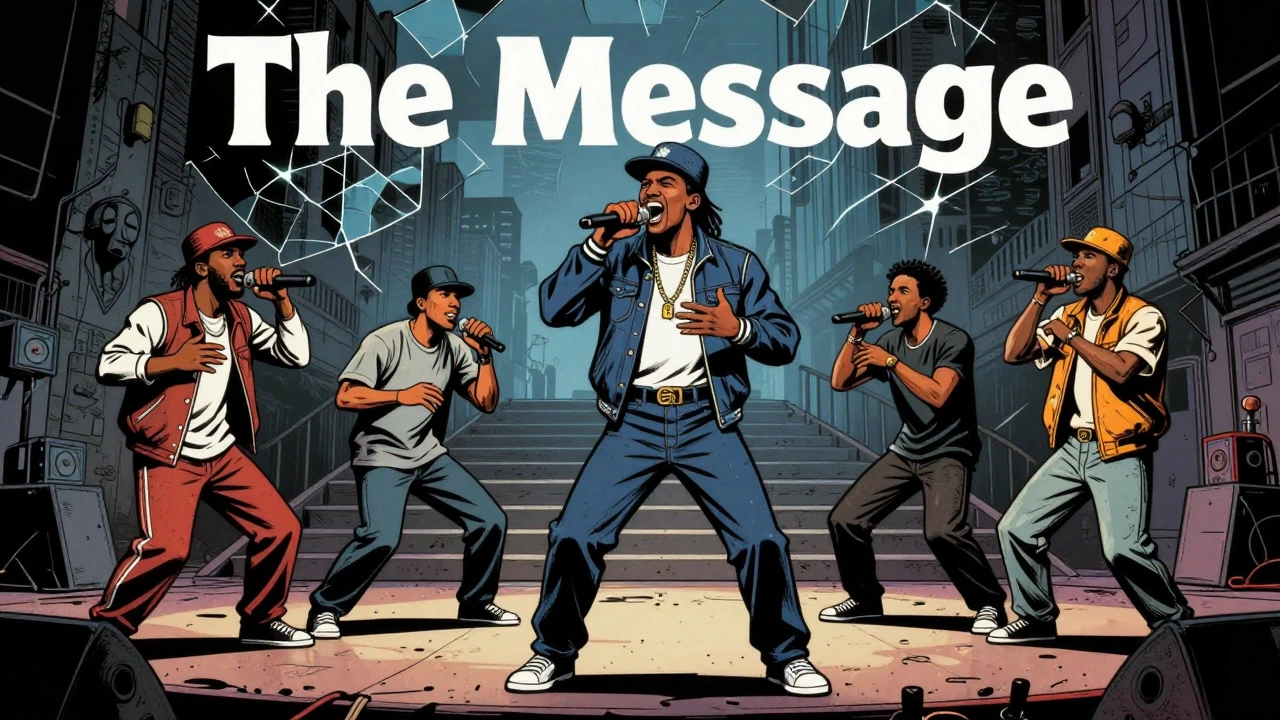
While Flash was engineering the sound, the Furious Five was redefining the words. Early hip hop, exemplified by the Sugarhill Gang’s "Rapper’s Delight," was largely about having fun, boasting, and getting the crowd hyped. It was party music. Then came Melle Mel (Melvin Glover), the lead MC of the Furious Five. Mel brought a different energy. He was interested in storytelling and reality. In 1982, he collaborated with producer Duke Bootee to write and record "The Message." This single is widely considered the first major hip hop song to address the harsh realities of urban life.
Lines like "Broken glass everywhere / People pissing on the stairs, I don't care" painted a picture of the South Bronx that radio stations had ignored. It wasn’t glamorous. It was grim, honest, and relatable to millions of people living in poverty. This shift from braggadocio to social realism was radical. It gave hip hop a conscience. Melle Mel’s delivery was also more complex than his predecessors. He used internal rhymes and multi-syllabic patterns that required careful listening. The Furious Five’s stage shows featured intricate call-and-response routines where each MC had a specific role, turning their performances into theatrical events rather than just freestyle sessions.
This duality defined the group’s legacy. On one hand, you had Flash’s technical wizardry, elevating the DJ to a virtuoso status comparable to a guitarist or pianist. On the other, you had Mel’s lyrical depth, proving that rap could tackle serious subjects. Interestingly, Flash himself doesn’t appear on the recording of "The Message." The track relies entirely on the MCs and the production. This highlighted a growing tension in the industry: as hip hop moved from live parties to recorded albums, the focus shifted toward the rapper’s voice. Yet, without Flash’s earlier innovations in extending breaks and creating consistent rhythmic beds, those raps wouldn’t have had the foundation they needed. The group represented the bridge between the live party era and the commercial album era.
| Artist / Group | Primary Innovation | Key Technique or Style | Landmark Release |
|---|---|---|---|
| DJ Kool Herc | Discovered the "break" | Using two turntables to extend drum breaks for dancers | Live Parties (1973-1975) |
| Grandmaster Flash | Systematized DJing | Quick Mix Theory, slipmat, cutting, backspinning | "The Wheels of Steel" (1981) |
| Sugarhill Gang | Commercial viability | Narrative party anthems, pop-friendly structures | "Rapper's Delight" (1979) |
| Furious Five (Melle Mel) | Social consciousness | Gritty lyricism, multi-MC choreography | "The Message" (1982) |
| Afrika Bambaataa | Electro fusion | Incorporating synthesizers and drum machines | "Planet Rock" (1982) |
From Block Parties to the Billboard Charts
The transition from local fame to global recognition wasn’t smooth. Grandmaster Flash and the Furious Five signed with Sugar Hill Records in 1980, hoping to capitalize on the label’s success with the Sugarhill Gang. However, the business side of hip hop was chaotic. Contracts were unclear, royalties were disputed, and creative control was often lost to producers. Despite these challenges, their music resonated. "Freedom" reached number 19 on the Billboard Hot Soul Singles chart in 1980, proving that extended DJ/MC grooves could sell. But it was "The Message" that truly broke through culturally, even if its chart performance was modest (peaking at number 62 on the Hot 100). Its impact was measured in influence, not just sales. It inspired a generation of artists, from Public Enemy to N.W.A, to use rap as a tool for political expression.
The group’s internal dynamics also reflected the growing pains of the industry. By the mid-1980s, legal battles over the name "Grandmaster Flash and the Furious Five" fractured the lineup. Keef Cowboy, one of the original members, passed away in 1989, a tragic loss that underscored the dangers of the environment they had documented in their songs. Yet, their early work remained untouched by these later disputes. The recordings from 1979 to 1983 stand as a coherent body of work that documents the birth of hip hop as a sophisticated art form. They showed that you could be technically brilliant and socially aware at the same time.
Why Their Techniques Still Matter Today
If you walk into any record store or browse a streaming playlist today, you’ll see the DNA of Grandmaster Flash and the Furious Five everywhere. Digital Audio Workstations (DAWs) allow producers to loop samples with a click, but the aesthetic of that loop-the emphasis on the drum break, the need for a tight, repetitive groove-comes directly from Flash’s Quick Mix Theory. When a producer chops a sample in Ableton or FL Studio, they are doing digitally what Flash did manually with a slipmat and a crossfader. The difference is speed, not concept.
Similarly, the tradition of conscious rap is alive and well. Artists like Kendrick Lamar and J. Cole owe a debt to Melle Mel’s willingness to discuss poverty, police brutality, and systemic inequality. The idea that rap should reflect the listener’s reality, rather than just provide an escape, was solidified by "The Message." Even in trap music, where the focus might seem to be on production and flow, the underlying structure often relies on the same four-bar loops that Flash perfected. The technology has changed, but the fundamental language of hip hop remains rooted in the innovations of the early 1980s.
Learning these techniques today is less about necessity and more about appreciation. Many modern DJs still study Flash’s methods to understand timing and rhythm. Practicing backspinning teaches you to feel the beat physically, a skill that software can’t replicate. It grounds you in the music. For aspiring MCs, studying the Furious Five offers lessons in clarity and purpose. Their rhymes weren’t just fast; they were clear. Every word counted. In an era of auto-tune and mumbled flows, that level of articulation is a refreshing reminder of what rap can achieve.
Legacy and Recognition
Recognition for Grandmaster Flash and the Furious Five came slowly but surely. In 2007, they became the first hip hop act inducted into the Rock and Roll Hall of Fame. This wasn’t just a nice gesture; it was an acknowledgment that hip hop was a legitimate, enduring genre. Flash himself received the Polar Music Prize in 2019, becoming the first hip hop artist to win that prestigious award. Critics and fans alike continue to rank "The Message" among the greatest songs ever written. Rolling Stone placed it at number 51 on its list of the 500 Greatest Songs of All Time, a testament to its lasting power.
However, their legacy isn’t just about awards. It’s about the toolkit they left behind. They taught us that the turntable is an instrument. They taught us that rap can be poetry and protest. They taught us that innovation comes from understanding the mechanics of your craft and pushing past the limits of existing technology. Whether you’re a historian, a musician, or just a fan, understanding Grandmaster Flash and the Furious Five is essential to understanding modern music. They didn’t just ride the wave of hip hop; they built the boat.
What exactly is Quick Mix Theory?
Quick Mix Theory is a systematic approach to DJing developed by Grandmaster Flash. It involves marking records to identify four-bar musical phrases and using precise hand movements to loop these sections seamlessly. By counting the rotations of the vinyl (usually six counter-clockwise turns for a four-bar phrase), Flash could extend short drum breaks indefinitely, creating a continuous beat for dancers without relying on digital sampling.
Did Grandmaster Flash actually rap on "The Message"?
No, Grandmaster Flash does not appear on the recording of "The Message." The track features the vocals of Melle Mel, the Furious Five, and collaborator Duke Bootee. Flash’s contribution was primarily in the realm of DJing and production concepts, but this specific song highlights the shift in hip hop where the MC’s lyrics took center stage over the DJ’s technical display.
How did the slipmat change DJing?
Before the slipmat, turntables had rubber mats that gripped the vinyl tightly, making it difficult to stop the record without stopping the motor. Grandmaster Flash invented the felt slipmat, which sits between the record and the platter. This allows the DJ to hold the record stationary while the motor continues to spin underneath, enabling precise cueing, scratching, and looping without damaging the equipment.
Why is "The Message" considered so important?
"The Message" is important because it shifted hip hop from lighthearted party music to serious social commentary. Released in 1982, it described the harsh realities of inner-city life, including poverty and decay. This introduced "grim realism" to the genre, paving the way for future conscious rap artists and proving that hip hop could address complex societal issues.
Who were the key members of the Furious Five?
The original lineup included Melle Mel (lead MC), Kidd Creole, Keef Cowboy, Mr. Ness/Scorpio, and Rahiem. Melle Mel was particularly influential due to his lyrical style and role in writing "The Message." Keef Cowboy was a founding member who tragically died in 1989. The group evolved over time, but these members were central to their early 1980s innovations.
How does Flash's work compare to DJ Kool Herc's?
DJ Kool Herc discovered the "break"-the instrumental part of a song that dancers loved-and used two turntables to extend it. Grandmaster Flash refined this by adding precision. Flash’s Quick Mix Theory allowed for tighter, more consistent loops and introduced techniques like cutting and backspinning. While Herc laid the groundwork, Flash systematized the art, turning the DJ into a technical virtuoso.
What was "The Adventures of Grandmaster Flash on the Wheels of Steel"?
Released in 1981, this track is often cited as the first commercially successful record built entirely from a DJ’s live mixing of existing songs. It combined elements from Queen, Chic, and other artists into a seamless collage. It demonstrated that DJing itself could be a standalone musical composition, influencing future sample-based production.
When were they inducted into the Rock and Roll Hall of Fame?
Grandmaster Flash and the Furious Five were inducted into the Rock and Roll Hall of Fame in 2007. They were the first hip hop act to receive this honor, recognizing their pivotal role in establishing the genre’s technical and cultural foundations.