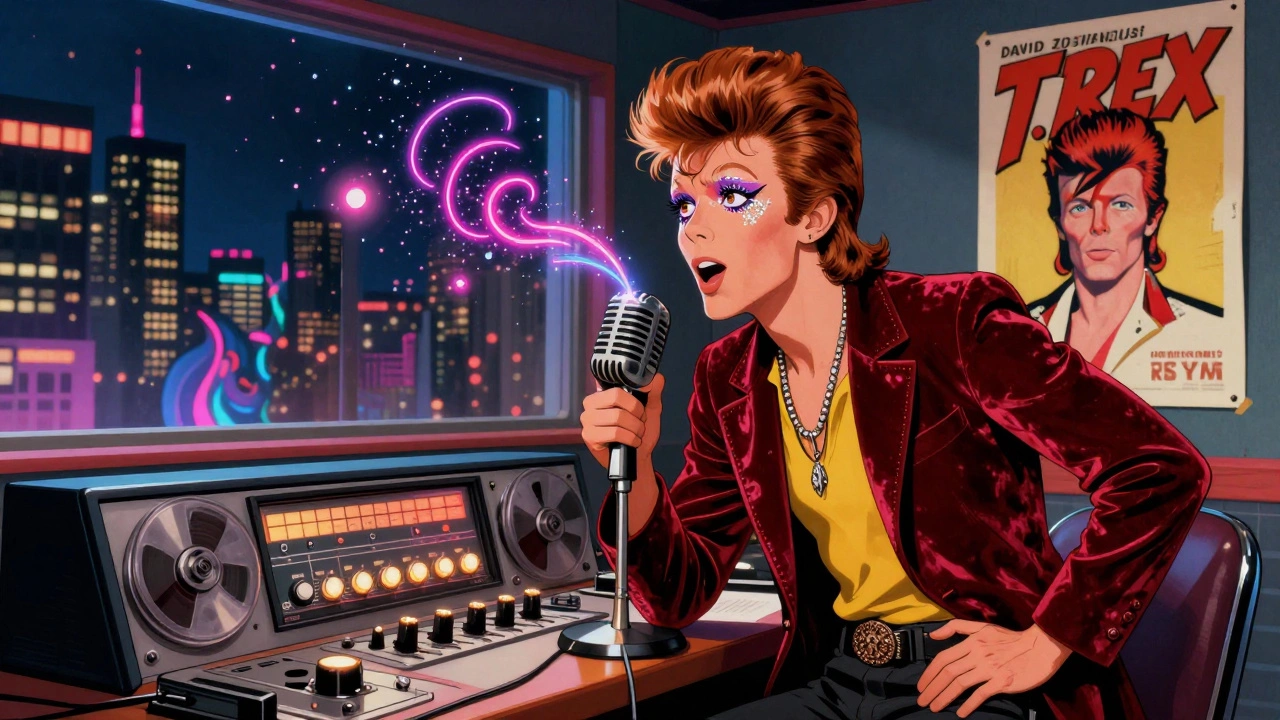

Back in the early 1970s, radio wasn’t just playing music-it was putting on a show. While AM stations stuck to Top 40 hits and news updates, FM radio became the wild, unfiltered stage where glam rock exploded into living rooms across America and the UK. This wasn’t just about the songs. It was about the glitter, the platform boots, the androgynous makeup, and the sheer audacity of artists like David Bowie, T. Rex, and Slade turning rock into theater. And FM stations? They didn’t just play it-they celebrated it.
FM Radio Was the Perfect Stage
Before FM radio, most stations were tightly controlled, following strict playlists and avoiding anything too weird. AM radio wanted clean, radio-friendly hits. But FM stations, especially those in college towns and big cities, had more freedom. They were newer, less regulated, and run by DJs who actually loved music-not just charts. These DJs weren’t just reading cue cards. They were fans. And when they heard a song like "Bang a Gong (Get It On)" by T. Rex or "Jeepster" by Marc Bolan, they didn’t just play it. They introduced it like a movie premiere.
Imagine a DJ in Portland or Chicago, wearing a velvet jacket, leaning into the mic with a grin, saying: "You’re listening to the man who made boys cry in platform boots. This is David Bowie’s "Starman," and he’s coming down to Earth tonight." That wasn’t just hype. That was storytelling. And it made listeners feel like they were part of something secret, something rebellious.
The DJs Were the Real Stars
Forget the musicians for a second. The real glam rock ambassadors were the radio personalities. Stations like WBCN in Boston, KMET in Los Angeles, and BBC Radio 1 in London didn’t just play glam rock-they built cult followings around their DJs. Names like John Peel, Dave Fanning, and Wolfman Jack became as iconic as the artists they played. Peel, for example, didn’t care about sales numbers. He played what moved him. He put on Sweet, Gary Glitter, and even the obscure glam acts from Manchester and Bristol. His shows were like late-night salons for kids who felt out of place in school or at home.
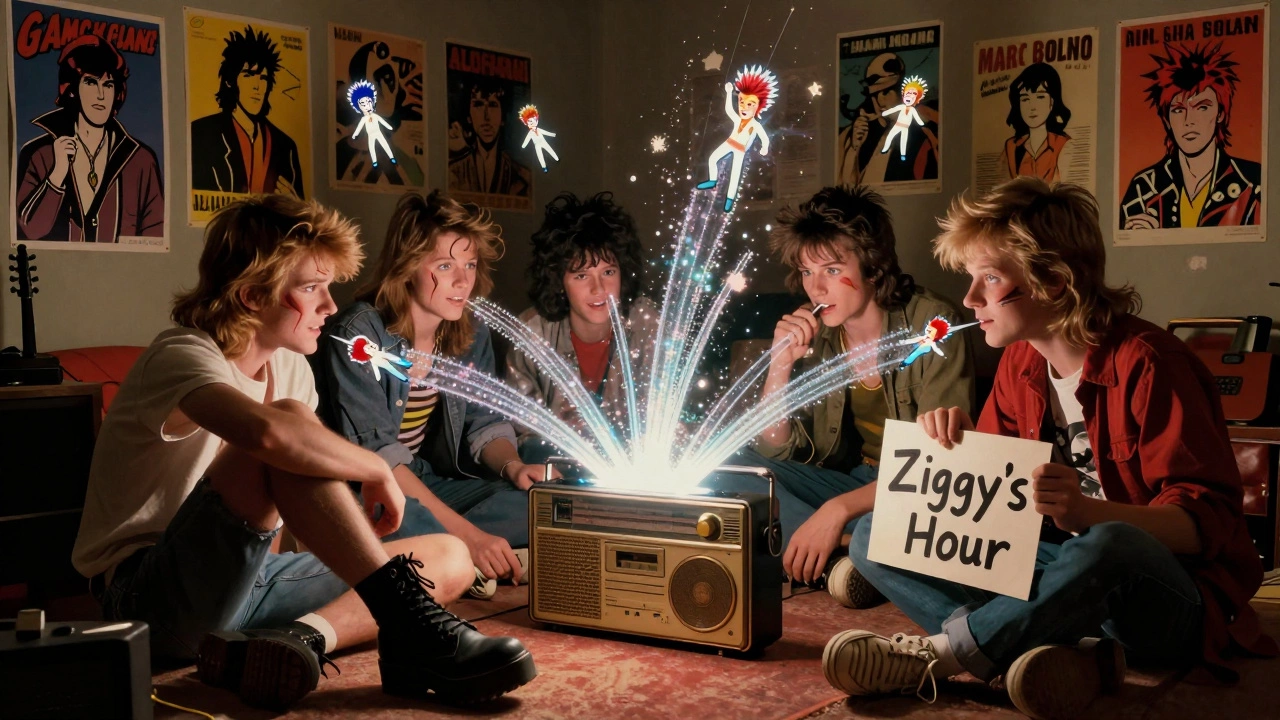
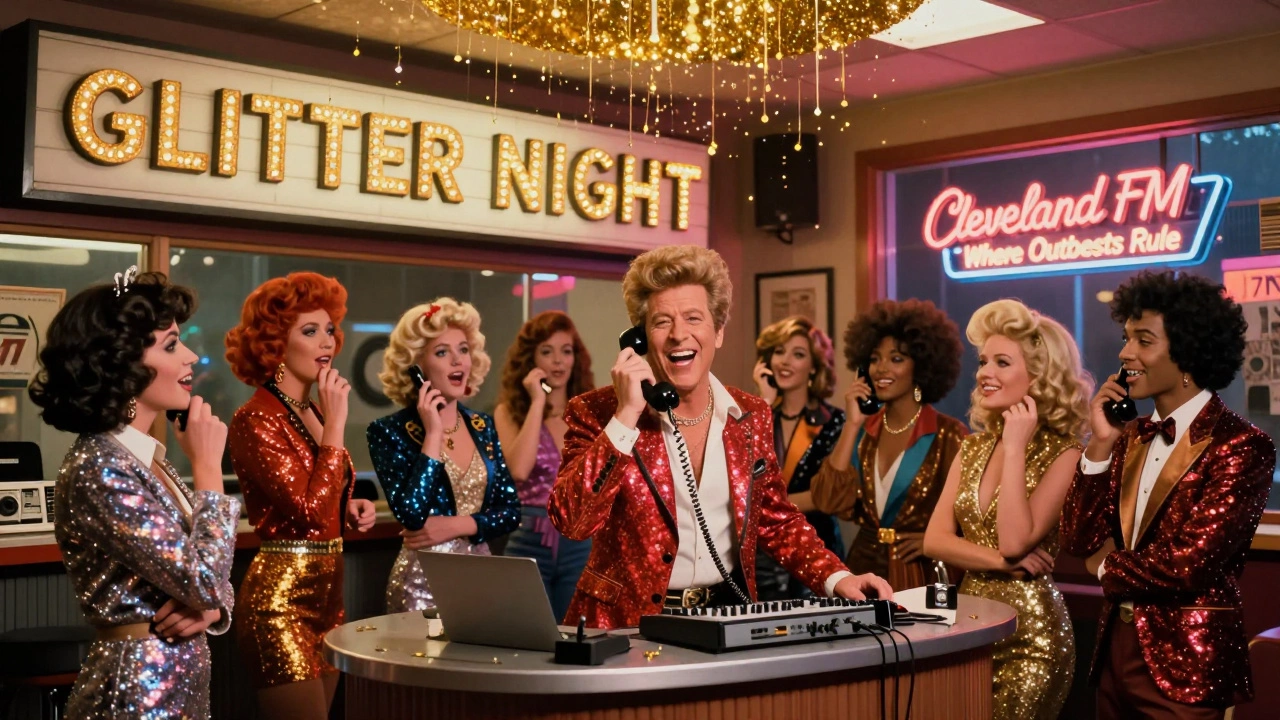
DJs didn’t just play songs. They created rituals. They’d dedicate entire hours to glam rock on weekends. They’d call it "Glitter Night" or "Ziggy’s Hour." They’d play interviews with artists who showed up in full costume. Some DJs even wore glitter themselves on air. One listener in Detroit remembered tuning in on a Friday night and hearing a DJ say: "Tonight, we’re not just listening to glam-we’re becoming it." That kind of energy didn’t come from record labels. It came from the radio.
How Stations Chose What to Play
Record labels tried to push glam rock onto FM stations the same way they pushed pop songs: with press kits and free tickets. But glam rock didn’t fit the mold. It was too loud, too flashy, too queer, too weird. So stations developed their own rules. They didn’t care if a song charted. They cared if it made you feel something. If a track had a stomping beat, a soaring chorus, and lyrics that sounded like a fairy tale written by a punk poet, it got airtime.
One key factor? The album cut. While AM stations stuck to singles, FM stations played full albums. That’s how "The Rise and Fall of Ziggy Stardust" became a cult classic-not because it had a hit single, but because DJs played it from start to finish. Listeners would sit through all 10 tracks, mesmerized. Stations started tracking which tracks got the most call-ins. "Starman," "Suffragette City," "All the Young Dudes"-these weren’t just songs. They were anthems that fans begged to hear again.
Glitter on the Airwaves
There was no formula. No focus groups. No algorithm. Just DJs and listeners building a movement together. Stations in the Midwest, where rock was still mostly blues-based, started playing glam rock because kids wrote letters asking for it. A station in Cleveland got 200 letters in one week demanding "Bang a Gong." The program director played it twice that night-and every night after.
Some stations even created listener contests. "Dress like your favorite glam star and call in." Winners got backstage passes, vinyl records, or just a shout-out on air. One girl from Minneapolis called in dressed as Queen’s Freddie Mercury. The DJ played "Bohemian Rhapsody" live on air and said: "That’s what rock and roll looks like when it doesn’t care what you think." That moment went viral-not online, but through word of mouth. Teens taped the broadcast and passed it around like contraband.
Why FM Radio Was the Only Place It Worked
TV didn’t get it. MTV didn’t exist yet. Newspapers called glam rock "silly" and "dangerous." But FM radio? It gave glam rock a home. It didn’t sanitize it. It didn’t explain it. It just let it be wild. And that’s why it stuck. Glam rock wasn’t just music. It was identity. For kids who felt like outsiders, hearing a DJ say, "This is for the ones who don’t fit in," was life-changing.
By 1975, over 120 FM stations in the U.S. had regular glam rock segments. In the UK, nearly every regional station had a "Glam Hour." Record sales didn’t tell the whole story. The real metric? Call-in requests. In 1973, T. Rex’s "Get It On" had 17,000 requests on just three stations. That’s more than any pop song that year. It wasn’t about radio play-it was about resonance.
The Legacy Lives On
By the early 1980s, FM radio shifted. New wave, punk, and later hair metal took over. But the DNA of glam rock stayed. Stations that played Poison, Mötley Crüe, or Bon Jovi in the 80s were following the same playbook: drama, spectacle, and emotional intensity. The difference? Now they had music videos. But back then? It was just sound, voice, and imagination.
Today, you can find glam rock on internet stations like Glam FM or SiriusXM’s Hair Nation. But those are archives. They play the songs. They don’t bring the magic. The real magic happened when a DJ in a dusty studio in Cleveland, wearing glitter eyeliner, leaned into the mic and said: "This one’s for the kids who look in the mirror and don’t recognize themselves. Turn it up."
That’s what FM radio did. It didn’t just promote glam rock. It gave it a soul.


