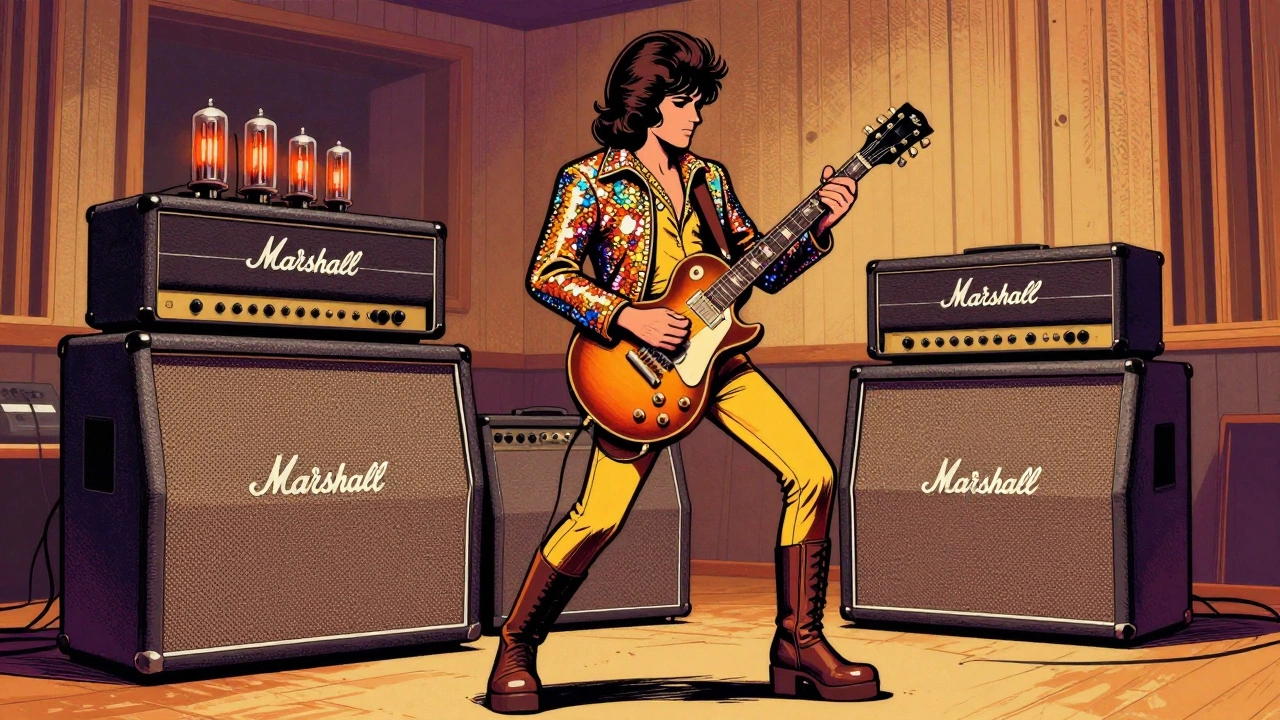

That shimmering, huge sound you hear on classic glam rock records isn't just volume. It is a specific recipe of medium-gain crunch, wide stereo chorus, and heavy room reverb that defined the 1970s studio aesthetic. If you are trying to nail that sound today, you might be chasing high-gain distortion or expensive vintage gear. But the secret lies in how engineers pushed tube amps into power-tube saturation, used early analog chorus pedals to double tracks, and let the room itself become part of the instrument.
We will break down exactly how artists like Queen and bands from the glam era built these textures. You will learn the specific amp settings, the role of the Roland JC-120 and Boss CE-1, and how to replicate this orchestral guitar sound in your own mix without needing a stadium-sized budget.
The Anatomy of Glam Crunch
Glam crunch is not metal distortion. It sits in a sweet spot between clean surf tones and the compressed heaviness of late-80s hard rock. The goal is articulation with grit. In the 1970s, this sound came primarily from cranking high-wattage tube heads, like Marshall stacks, until the power tubes broke up. This created a dynamic response where your pick attack controlled the amount of distortion.
To get this tone on modern rigs, you need to focus on the midrange. Here is the practical approach:
- Amp Gain: Keep it moderate. On a Marshall-style head or model, set gain around 9 to 12 o’clock. You want saturation, not mush.
- EQ Shape: Boost the high mids. Slightly scoop the 800 Hz to 1 kHz range to avoid boxiness, but keep the presence knob just above noon for cut.
- Tighten the Low End: Use an overdrive pedal at the front of your chain (like a Tube Screamer) with drive near minimum and level high. This cuts low-end flub and pushes the amp harder for a tighter crunch.
- Filtering: In the mix, high-pass filter rhythm guitars at 80-100 Hz and leads at 150-200 Hz. This clears space for the kick drum and bass while keeping the crunch forward.
This method mimics the way 1970s engineers overloaded console preamps and tape machines to get harmonic complexity without losing note definition.
The Role of Chorus and Stereo Width
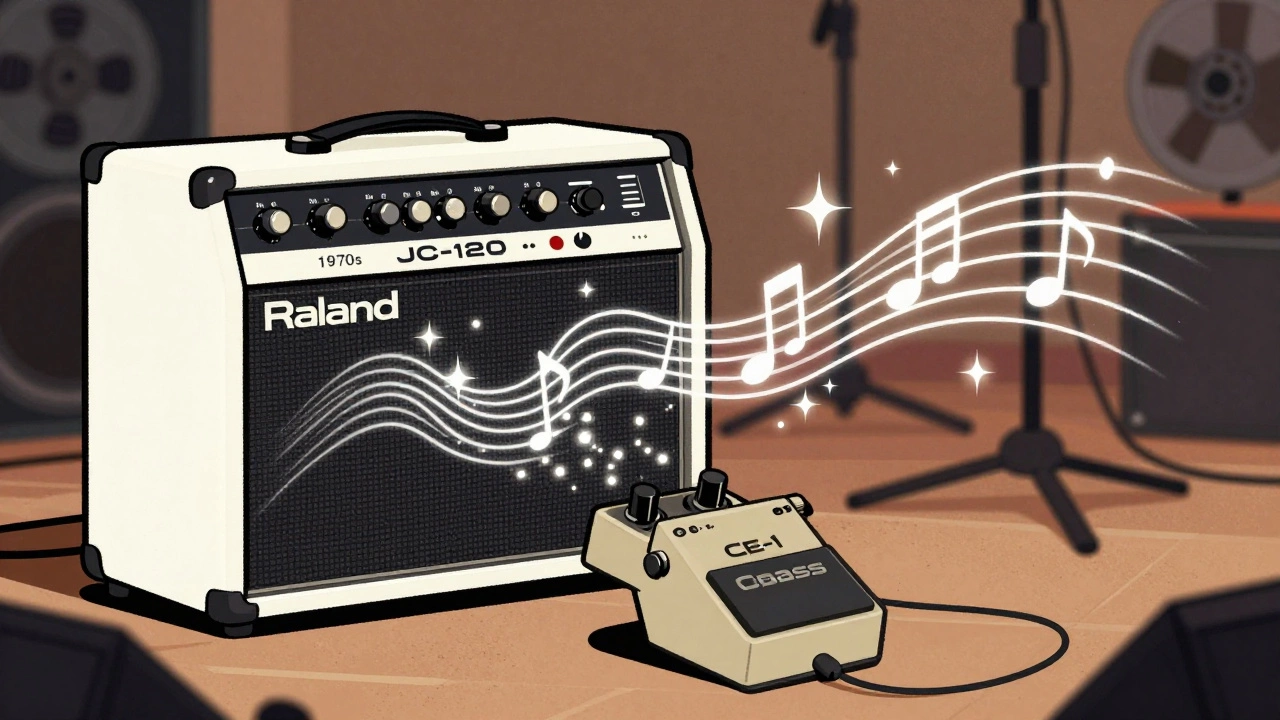
If crunch provides the body, chorus provides the width. Before the mid-1970s, doubling guitar parts meant recording them twice. That was time-consuming and prone to timing errors. Then came the Roland JC-120 Jazz Chorus, released in 1975. It was one of the first widely available amplifiers with a built-in lush chorus effect. It offered a clean, high-headroom sound with an explicit stereo spaciousness that became central to the glam palette.
Soon after, Boss released the CE-1 Chorus Ensemble pedal in 1976. Designed by extracting the circuit from the JC-120, the CE-1 allowed guitarists to carry that studio-style doubling into live rigs. Its analog transistor circuitry provided a "velvety" saturation when driven, adding harmonic richness that mirrored tape overload.
| Feature | Roland JC-120 Amp | Boss CE-1 Pedal |
|---|---|---|
| Release Year | 1975 | 1976 |
| Primary Use | Clean tones, jazz, funk, glam cleans | Portable chorus, studio doubling |
| Output | Stereo (L/R channels) | Mono In / Mono or Stereo Out |
| Sonic Character | Lush, wide, crystal clear | Warm, rich, slight preamp saturation |
| Impact on Glam | Defined the clean/shimmer texture | Enabled live stereo widening |
For clean or semi-clean glam parts, use a healthy amount of reverb and an unhealthy amount of chorus. This transforms thin signals into huge, modulated soundscapes reminiscent of plate-reverb-rich studios.
Studio Techniques: Tape, Bleed, and Room Sound
The 1970s studio aesthetic wasn't just about effects; it was about the environment. Producers aimed for expansive production but often worked with lower budgets than major pop acts. They relied on real room reflections, large vintage drum sounds, and bleeding microphones rather than heavy post-processing.
Key techniques include:
- Natural Bleed: Instead of isolating every instrument, let the guitar mic pick up the drums and vice versa. This creates a cohesive glue that digital plugins struggle to replicate perfectly.
- Plate Reverb: Use long decay times on plate reverbs to mimic the big, ambient envelopes of 1970s studios. Avoid short, slapback delays unless you are going for a specific surf vibe.
- Console Overdrive: Push your input channels until they clip slightly. This adds dense, harmonically rich distortion that feels organic compared to digital clipping.
These practices yield a signature glam tone profile: crunchy mids from saturated amps, wide stereo chorus tails, and a conspicuous ambient envelope from plates and rooms.
Case Study: Brian May’s Orchestral Approach
No discussion of 1970s glam-adjacent tones is complete without looking at Brian May of Queen. His sound exemplifies the blend of crunchy midrange and quasi-orchestral timbres. May built his iconic Red Special guitar with his father in 1963, using Burns Tri-Sonics pickups that prioritized sustain and sensitivity to pick attack.
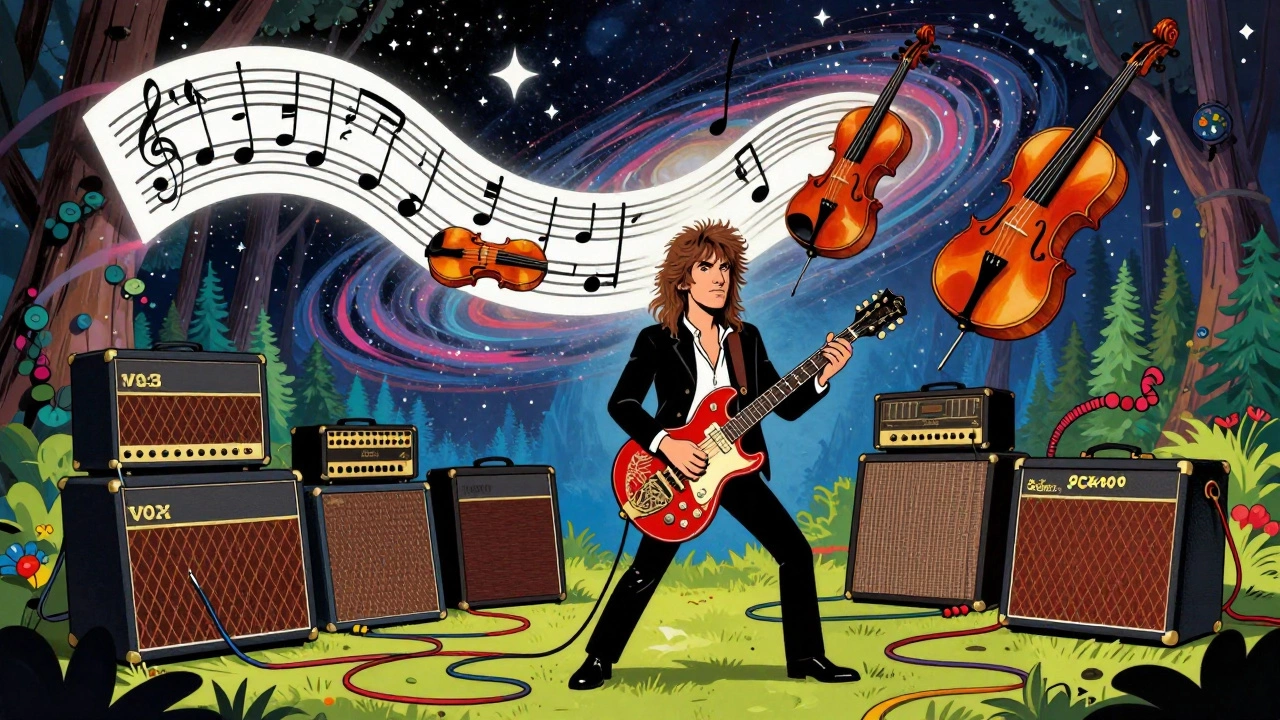
May achieved symphonic textures by recording multiple identical guitar parts and harmonies across three amplifiers. He used treble boosters to enhance higher overtones before splitting the signal to chorus, delay, and harmonizer chains. For songs like "Bohemian Rhapsody," he used dual digital delay settings of approximately 800 ms and 1600 ms to create orchestral depth.
His rig often included:
- Vox AC30 and Deacy Amp: A custom compact amp built by John Deacon, providing warm, vocal-like "brown sound" characteristics.
- Treble Booster: To sharpen the mild-sounding Red Special before hitting the amps.
- Boss CE-1 Chorus: Used alongside phasers and tape echoes to build layered textures.
- Multi-Amp Splitting: On stage, May sometimes used between 9 and 12 amps, exploiting room air and stage acoustics so that chorus and delay interacted naturally.
This approach shows that glam tones were as much about layering and orchestration as they were about single-note distortion.
Recreating the Tone Today
You don’t need a warehouse full of vintage amps to get this sound. Modern modeling amps and plugins can replicate these circuits effectively if you follow the right workflow.
- Start with the Guitar: Use a dual-humbucker guitar, like a Les Paul, for fullness. Set your volume knob high to push the signal.
- Shape the Crunch: Load a Marshall JCM 800-style model. Add a Tube Screamer-style overdrive at the front with drive low and level high. Cut lows below 100 Hz.
- Add the Shimmer: Insert a CE-1-inspired chorus pedal or plugin. Set it to stereo output if possible. Route left and right channels to separate amp sims or speakers for true width.
- Build the Space: Add a plate reverb with a 2-3 second decay. Blend it so it sits behind the dry signal but fills the background.
- Layer Parts: Record your main riff. Then record a harmony part an octave higher or lower, running through the same chain but with more chorus and less gain. Pan them hard left and right.
This workflow captures the essence of the 1970s glam studio aesthetic: controlled saturation, artificial doubling, and immersive ambience.
Frequently Asked Questions
What amp settings give the best glam rock crunch?
Aim for medium gain (9-12 o'clock), boosted high mids, and slightly scooped 800Hz-1kHz frequencies. Use a low-drive overdrive pedal at the front to tighten the low end and push the amp into power-tube saturation without losing articulation.
Why is the Boss CE-1 important for glam tones?
Released in 1976, the Boss CE-1 brought the lush, stereo chorus sound of the Roland JC-120 amplifier into a portable pedal. Its analog circuit provided warm doubling and subtle preamp saturation, essential for creating the wide, shimmering textures found in 1970s glam productions.
How did Brian May achieve his orchestral guitar sound?
Brian May layered multiple guitar tracks using his Red Special guitar, Vox AC30, and custom Deacy amp. He utilized treble boosters, dual delays (800ms and 1600ms), and chorus effects, panning parts across the stereo field to create a symphonic texture rather than relying on a single distorted line.
Can I get a 1970s glam tone with modern digital amps?
Yes. Modern modelers accurately replicate Marshall JCM 800 circuits and Boss CE-1 chorus algorithms. Focus on EQ shaping (high mids, tight lows) and using stereo outputs for chorus to achieve the authentic width and crunch of the era.
What type of reverb works best for glam guitar?
Plate reverb is the standard for glam guitar tones. It provides a smooth, long-decay wash that mimics the large studio spaces of the 1970s. Pair it with generous amounts of chorus on clean parts for maximum impact.


