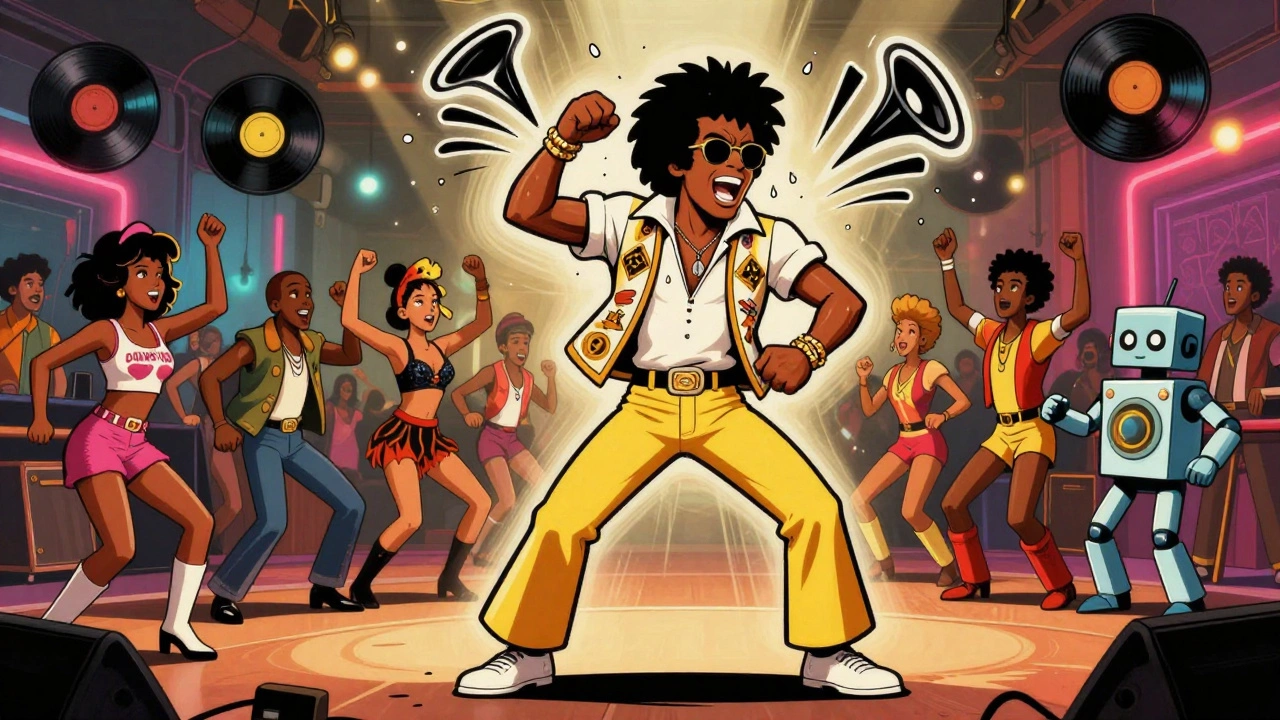

When James Brown dropped that bassline on "Get Up (I Feel Like Being a) Sex Machine," he didn’t just make a song-he started a body conversation. The way his horns cut, the way the drums slapped, the way the bass locked in like a hinge-it all demanded a response. Not just clapping. Not just nodding. Funk demanded movement. And the world answered.
Funk music didn’t just play in clubs. It lived in them. It lived in the sweat on the floor, the spin of a hip, the sudden freeze of a body mid-step. The groove wasn’t something you listened to. It was something you felt in your spine. And once you felt it, your body had no choice but to react. That’s why funk and dance choreography aren’t separate things. They’re two halves of the same pulse.
The Groove That Made Bodies Move
Before funk, music was often about melody or harmony. Funk flipped that. It stripped everything down to rhythm. The bass wasn’t just playing notes-it was locking into a pocket, holding it like a secret. The drums didn’t keep time-they created a conversation between snare and kick. And the horns? They didn’t sing. They shouted. Call. Response. Call. Response.
This wasn’t background music. It was a command. You didn’t just hear it. You had to move to it. That’s where the dances came from-not choreographers in studios, but people in basements, in parking lots, in corner clubs. The Funky Chicken. The Bump. The Robot. These weren’t taught in classes. They were invented in real time, one person copying another, then adding their own twist. A shoulder shrug became a full-body wiggle. A foot tap became a full spin. The music gave the rhythm. The body gave the meaning.
Locking, Popping, and the Birth of Street Styles
By the 1970s, funk had cracked open a whole new language of movement. Don Campbell, a dancer from Oakland, started doing something wild: he’d freeze mid-motion, lock his limbs like a robot, then snap back into motion. That was locking. It wasn’t about being smooth. It was about being sharp. Unexpected. Playful. It matched the staccato hits in Parliament-Funkadelic’s songs. You could hear the bassline stop-and then you’d see the dancer stop too, holding a pose like a statue, then exploding into motion again.
Meanwhile, down in Compton, dancers were doing the opposite. Instead of locking, they were popping. A sharp contraction of the chest. A ripple down the arm. A quick pulse in the thigh. Popping wasn’t about big gestures. It was about control. It was about making your body sound like a record scratch-click, pop, zing. You didn’t need a big stage. You just needed a beat. And funk gave them that beat. Zapp’s "More Bounce to the Ounce"? That wasn’t just a song. It was a dance instruction manual.
These styles didn’t come from dance schools. They came from block parties. From street corners. From young people who didn’t have money for lessons but had everything they needed: rhythm in their bones and a speaker in their trunk.
Funk’s Hidden Legacy: Breaking and the Rise of Hip-Hop
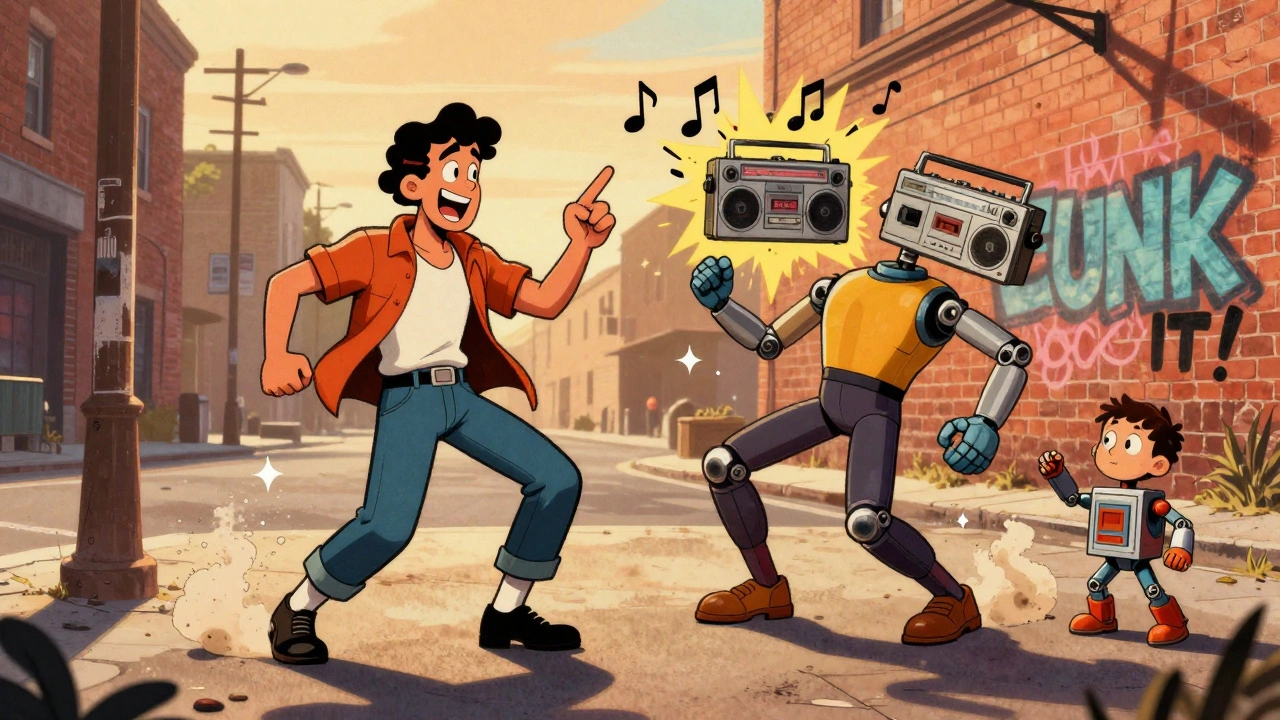
When breaking exploded in the 1980s, people thought it was a new thing. But the roots were all there. The top rock? That’s just funk footwork with flair. The windmill? That’s body control honed by years of isolating muscles to the beat. The freeze? That’s locking’s cousin, frozen in mid-air like a dancer mid-pulse.
Breaking didn’t replace funk-it carried it forward. The same syncopation. The same emphasis on the downbeat. The same joy in making your body do something impossible because the music told you to. You could hear a funk track and know exactly what move a breaker would hit next. The music and the movement were still talking to each other.
And then came electro-funk. Synths. Drum machines. The Boogaloo. The Electric Slide. Suddenly, funk wasn’t just live instruments-it was electronic. But the groove? Still there. Still demanding movement. Still making people sway, shuffle, slide. The body didn’t care if the beat came from a bass guitar or a Roland TR-808. It just wanted to move with it.
Jazz Funk: When the Street Met the Stage
By the 1990s, funk had moved out of the streets and into the spotlight. MTV was playing music videos. Record labels wanted dancers who could move with precision, not just energy. That’s where jazz funk came in.
Jazz funk wasn’t born from jazz music or funk music. It was born from choreographers trying to make street dance look polished for TV. They took popping’s isolations. They took locking’s sharpness. They added ballet lines, jazz turns, and the theatrical flair of waacking. The result? A style that looked wild but was tightly controlled. Every move had a count. Every gesture had a purpose. It was funk, but rehearsed. It was street, but on a stage.
Look at Paula Abdul’s "Straight Up" video. Or Janet Jackson’s "Rhythm Nation." Or Beyoncé’s "Single Ladies." Those aren’t just dance routines. They’re funk in a suit. The same body rolls. The same shoulder pops. The same sudden stops. But now, they’re synchronized. Now, they’re in formation. Now, they’re on a global stage.
The Fly Girls on In Living Color didn’t just dance. They made funk mainstream. They turned street moves into icons. And suddenly, every kid with a YouTube account wanted to learn how to do it. Studios popped up in every major city. Classes on "jazz funk technique" became as common as yoga. The groove was still there. It just had a new uniform.
Funk Is Still Moving
Today, you can hear funk in house music. In neo-soul. In the bassline of a TikTok trend. The rhythm might be smoother. The beat might be digital. But the rule hasn’t changed: if the groove hits right, your body will move before your brain catches up.
Modern dancers still use the same tools: isolations. Body rolls. Sharp hits. Sudden freezes. They layer them with new styles-krump, house, even ballroom-but the core? Still funk. The same energy. The same joy. The same demand that you respond, not just watch.
That’s the secret. Funk never died. It just changed clothes. It went from a sweat-soaked basement to a stadium. From a boombox to a streaming playlist. But the heartbeat? Still the same. The groove still speaks. And as long as it does, people will keep moving to it.
Why This Matters
Funk isn’t just music. It’s not just dance. It’s a system. A way of connecting sound to motion. A way of saying: "This beat is alive. And so are you."
When you learn a funk move, you’re not just learning steps. You’re learning how to listen with your body. How to feel rhythm in your shoulders, your hips, your knees. How to make your body speak the same language as the music.
That’s why funk endures. Because it doesn’t ask you to be perfect. It asks you to be present. To feel the beat. To let it move you. And that’s something no app, no tutorial, no studio can teach you. You can only learn it by dancing.
What’s the difference between locking and popping?
Locking is all about sudden stops and exaggerated, playful gestures-like freezing mid-dance and pointing at the crowd. It’s theatrical, fast, and full of personality. Popping is the opposite: sharp, controlled muscle contractions that make your body jerk or "pop" to the beat. It’s more mechanical, more about precision than showmanship. Both came from funk, but they speak different languages.
Is jazz funk the same as hip-hop dance?
No. Hip-hop dance started as freestyle, raw, and street-based. Jazz funk took those moves and turned them into choreographed routines for TV, music videos, and stage shows. It added ballet lines, jazz turns, and tighter formations. Think of it this way: hip-hop is the original beat. Jazz funk is the remix.
Can you dance funk without knowing the history?
You can. But you’ll miss the point. Funk isn’t just steps-it’s attitude. It’s playfulness. It’s confidence. It’s knowing that the groove doesn’t care if you’re perfect. It just wants you to feel it. Learning the history-James Brown’s stabs, Parliament’s basslines, the block parties of Oakland-gives you the soul behind the moves. Without it, you’re just copying. With it, you’re dancing.
Why is funk still relevant in pop music today?
Because it works. Funk’s rhythm is designed to make people move. Modern pop uses it because it’s infectious. Beyoncé’s "Break My Soul"? That’s a funk bassline. Dua Lipa’s "Levitating"? The groove is pure funk. Even TikTok dances rely on that same syncopated beat. Funk’s DNA is in the music you hear every day. You just might not recognize it.
Do you need to be a professional to dance funk?
No. Funk was never meant for professionals. It was made for people who didn’t have a stage but had a beat. You don’t need a studio. You don’t need a mirror. You just need a song that makes your foot tap. Then you let your body do the rest. That’s the whole point.


