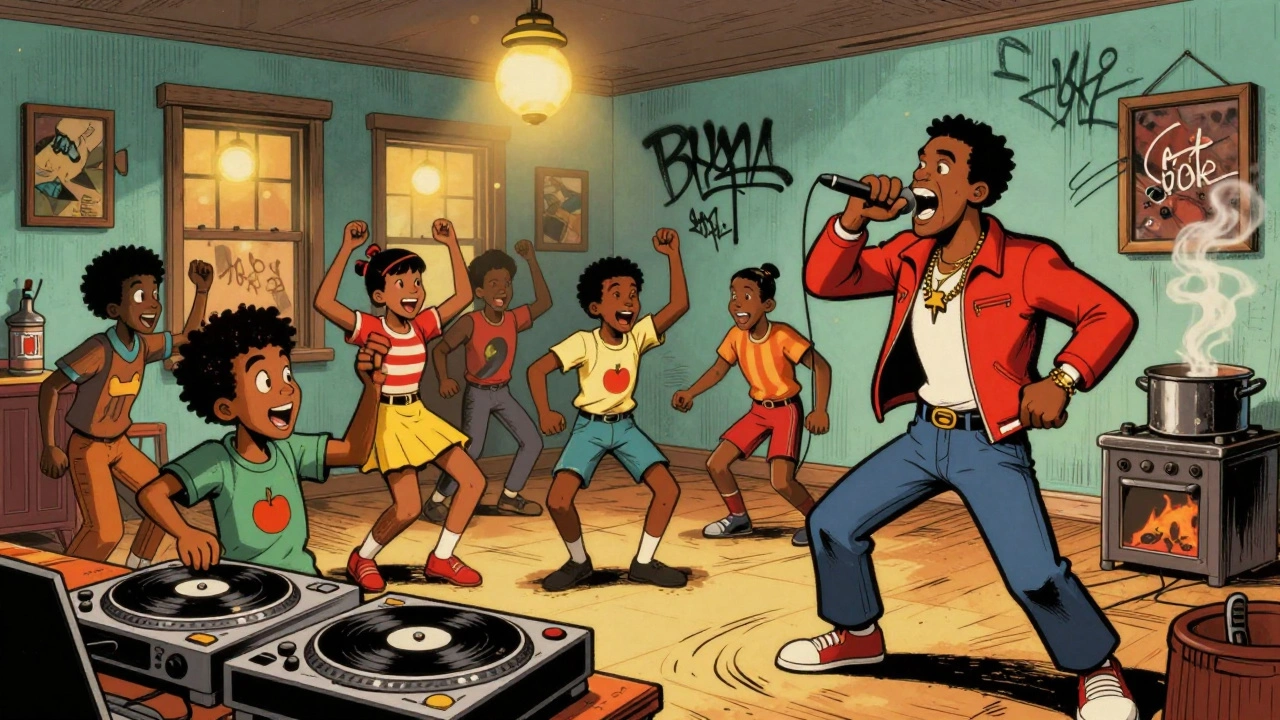

On August 11, 1973, in a Bronx apartment building, a 18-year-old Jamaican immigrant named DJ Kool Herc spun two turntables, isolating the breakbeat of James Brown’s "Give It Up or Turnit a Loose." Around him, kids danced, shouted, and moved in ways they’d never seen before. His friend Coke La Rock stepped up to the mic and started talking rhythmically over the music-not singing, not chanting, but speaking like a street poet with a beat. No one called it hip-hop then. It was just a party. But that night changed everything.
The Party Was the Point
In the early 1970s, the Bronx was falling apart. Factories closed. Fires burned whole blocks. The city didn’t care. But young people? They built something anyway. They didn’t need fancy studios or record deals. They had block parties, school gyms, and park rec centers. Music wasn’t about fame. It was about survival. About connection. About turning pain into movement.DJing was the engine. Kool Herc didn’t invent the breakbeat-he perfected it. He’d find the part of a song where the drums exploded, loop it, and stretch it out. Suddenly, dancers had a new playground. The break became sacred. B-Boys and B-Girls responded with headspins, footwork, and freezes. Graffiti artists tagged subway cars with bold, colorful names. And MCs? They didn’t rap to win a contest. They talked to keep the crowd alive. "Yo, this is your boy, Coke La Rock, and we’re gonna bring the heat!" That was the whole point: keep the party going.
There was no name for this. People didn’t say "I’m going to a hip-hop show." They said, "I’m going to the break." Or "Let’s go off." It was just life. Music, dance, art, talk-all mixed together like a pot of stew on a hot stove. And it worked.
The First Crack in the Wall
In 1979, everything changed. "Rapper’s Delight" by the Sugar Hill Gang hit the radio. It was 15 minutes long. Radio stations cut it in half. Suddenly, people who’d never set foot in the Bronx were dancing to lines like, "I said a hip hop, a hippie, a hippie to the hip hip hop, you don’t stop."It wasn’t deep. No one was talking about poverty or police. It was about cars, girls, and being cool. But here’s the thing-it worked. For the first time, a rap song made the Top 40. Suddenly, record labels noticed. They saw money. And they wanted in.
That’s when the shift began. The party wasn’t gone. But now, there was a new audience. One that didn’t live in the Bronx. One that didn’t know what it meant to lose your home to a landlord who stopped fixing the heat. These new listeners didn’t care about the struggle. They just wanted the beat. So artists started giving them what they asked for: flashy lyrics, slick delivery, and big dreams.
The Golden Age: When the Mic Became a Weapon
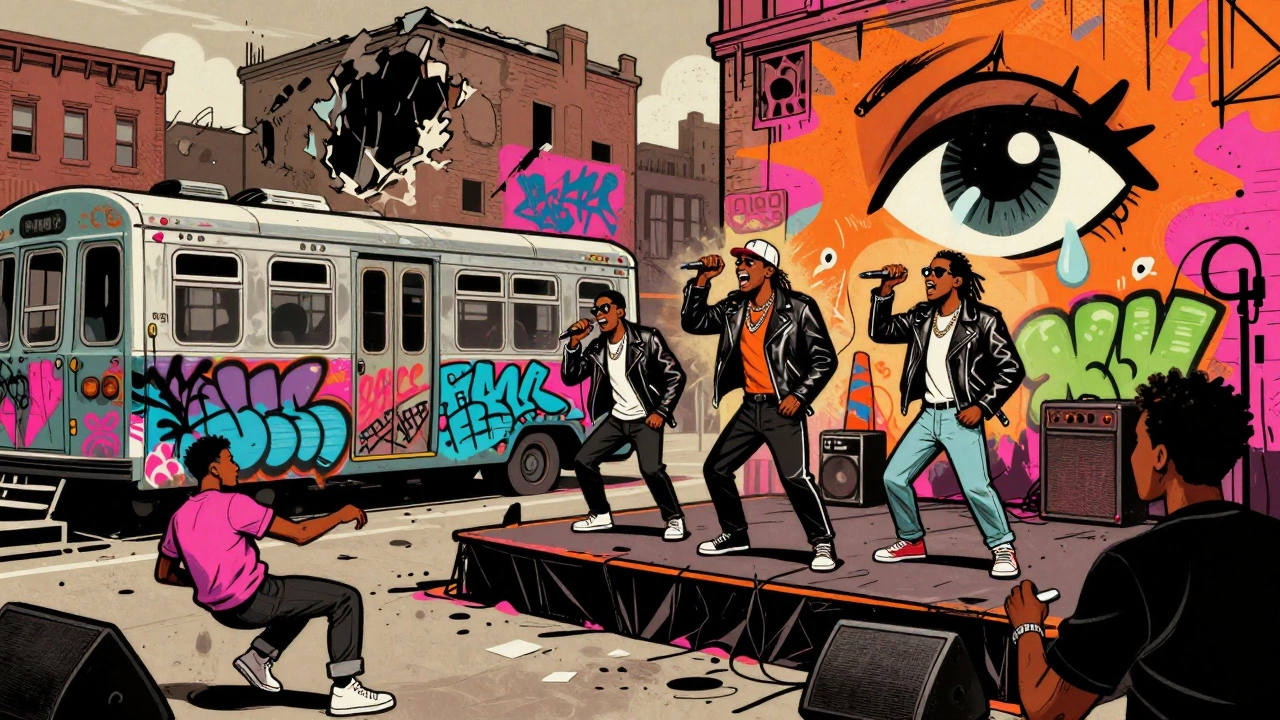
By the mid-1980s, something shifted. The party was still there, but now, it had a purpose. Run-D.M.C. came out in leather jackets and Adidas, no gold chains, no fluff. They didn’t talk about their sound system-they talked about being real. LL Cool J rapped about growing up alone. And then came the beats. Not just sampled funk, but original drum patterns, layered horns, and raw bass. Beatboxing wasn’t a gimmick anymore. Biz Markie and Doug E. Fresh turned their mouths into machines.Artists weren’t just performing. They were documenting. In 1982, "The Message" by Grandmaster Flash and the Furious Five dropped like a bomb. "Don’t push me ‘cause I’m close to the edge / I’m trying not to lose my head." No one had heard rap like this. No one had heard Black life this raw on the radio. It wasn’t about dancing. It was about crying out.
This was the Golden Age. And it wasn’t just about music. It was about truth. Tupac, years later, called it "the ghetto CNN." Before smartphones, before Twitter, before YouTube-hip-hop was how people told their stories. When the news ignored your neighborhood, your cousin got shot, or your mom worked three jobs and still couldn’t pay rent-you turned up the volume and let the lyrics speak.
It’s Not Just Music. It’s a Mirror
Scholars compare hip-hop to the Harlem Renaissance. Not because it looks the same-but because it does the same thing. In the 1920s, Langston Hughes wrote poems about Black workers, lovers, and dreamers. Zora Neale Hurston told stories of Southern Black life without apology. Hip-hop does that now. Tupac’s "Changes" isn’t just a song-it’s a eulogy. Kendrick Lamar’s "The Blacker the Berry" isn’t just a verse-it’s a protest.There’s no other art form in modern America that carries so much weight and still moves so many people. You can dance to it. You can cry to it. You can scream it at a protest. You can whisper it in your room when no one else understands. That’s why it’s art.
The Smithsonian didn’t just archive hip-hop. They called their exhibit "(R)Evolutions." Not just evolution. Not just revolution. Both. Because it didn’t just grow. It broke open. It forced the world to listen.
It’s Still a Party. But Now It Has Meaning
Some people say hip-hop lost its soul when it went mainstream. That’s not true. It didn’t lose anything. It expanded. You can still hear party tracks today-Drake, Cardi B, Lil Nas X. But you can also hear Noname, J. Cole, or Saba talking about trauma, healing, and community. The two aren’t opposites. They’re part of the same story.Hip-hop didn’t abandon its roots. It grew them. The same people who danced to "Rapper’s Delight" now raise their kids on Nas’s "Illmatic." The same block parties still happen-but now, they’re livestreamed. The same graffiti tags are still on walls-but now, they’re in museums.
The transition wasn’t from party to art. It was from party to art. And that’s why it lasts.
Why This Matters
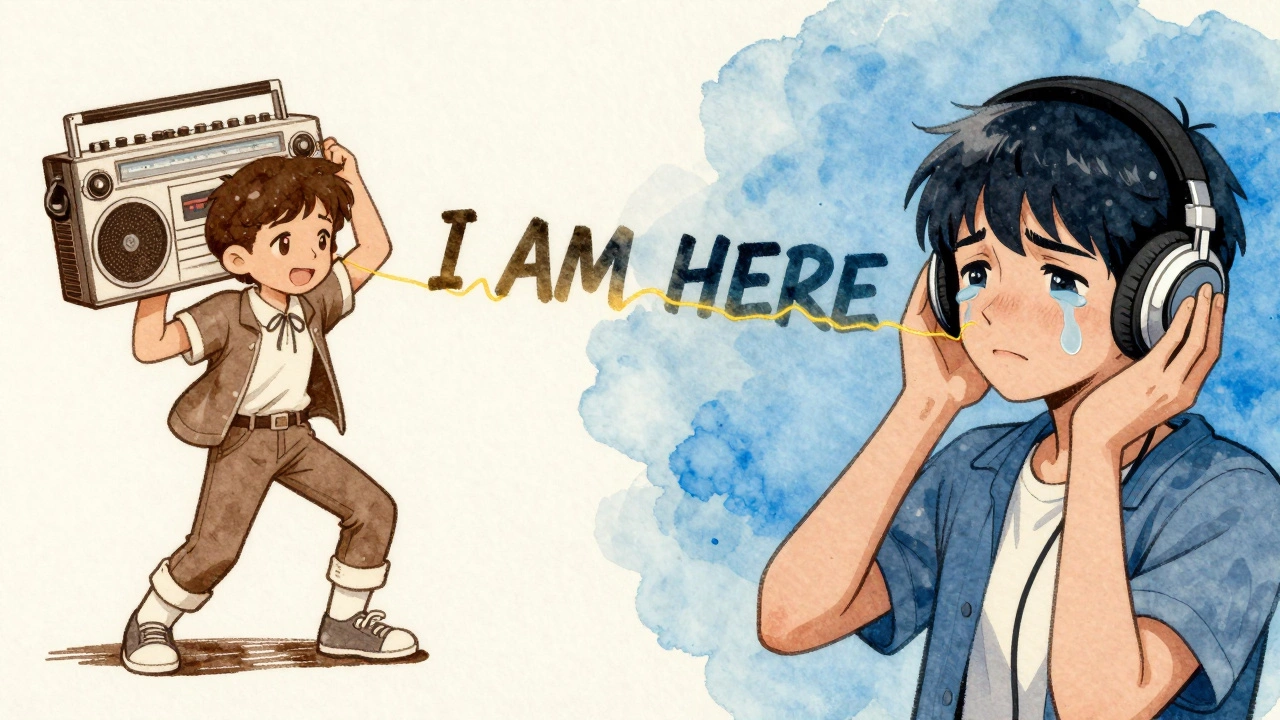
Hip-hop didn’t become art because it got polished. It became art because it got honest. When a 14-year-old in Compton writes a verse about losing his brother to a drive-by, and a 16-year-old in Tokyo hears it and feels seen-that’s power. That’s not entertainment. That’s connection.It’s not about selling records. It’s about saying: "I’m here. This happened. I’m not silent." And that’s why, 50 years later, hip-hop isn’t just music. It’s memory. It’s resistance. It’s home.
When did hip-hop stop being just party music?
Hip-hop never fully stopped being party music, but the turning point came in the early 1980s with songs like Grandmaster Flash’s "The Message" in 1982. That track broke the mold-it didn’t brag about DJs or parties. It talked about poverty, police, and despair. After that, artists began using rap to document real life, not just entertain. The Golden Age of hip-hop (mid-80s to early 90s) cemented this shift, with artists like Public Enemy, KRS-One, and Rakim turning the mic into a tool for truth-telling.
Who started hip-hop, and where?
Hip-hop started in the Bronx, New York, on August 11, 1973, at a house party hosted by DJ Kool Herc. He used two turntables to extend the breakbeats of funk and soul records, creating a new sound that made people dance. His friend, Coke La Rock, became the first MC, speaking rhythmically over the music. Together, they laid the foundation for what would become DJing, MCing, breakdancing, and graffiti-the four pillars of hip-hop culture.
Why is hip-hop considered art and not just music?
Hip-hop is considered art because it combines music, poetry, dance, and visual expression into a single cultural movement that documents lived experience. Unlike pop music that often focuses on romance or partying, hip-hop has consistently given voice to marginalized communities-telling stories of racism, poverty, police violence, and resilience. Institutions like the Smithsonian and the National Museum of African American History and Culture now preserve hip-hop as a historical and artistic record, not just entertainment.
How did the 1990s change hip-hop?
The 1990s made hip-hop mainstream, but also deepened its role as social commentary. Artists like Tupac Shakur and The Notorious B.I.G. brought raw storytelling to national audiences, blending street narratives with poetic depth. Tupac’s "Changes" and B.I.G.’s "Juicy" didn’t just sell records-they became cultural touchstones. This era also saw the rise of conscious rap (A Tribe Called Quest, Common) and gangsta rap (N.W.A., Ice-T), showing hip-hop could be both personal and political. The genre’s diversity exploded, proving it wasn’t one sound-it was many voices.
Is hip-hop still relevant today?
Yes-and more than ever. Today’s artists like Kendrick Lamar, J. Cole, and Noname continue the tradition of using rap to address systemic issues: mental health, police brutality, economic inequality. At the same time, trap and drill music carry the party energy of early hip-hop. The genre’s power lies in holding both: the beat that makes you move and the lyric that makes you think. Global movements from Brazil to South Korea use hip-hop to speak truth to power. It’s not just music-it’s a global language of resistance and identity.


