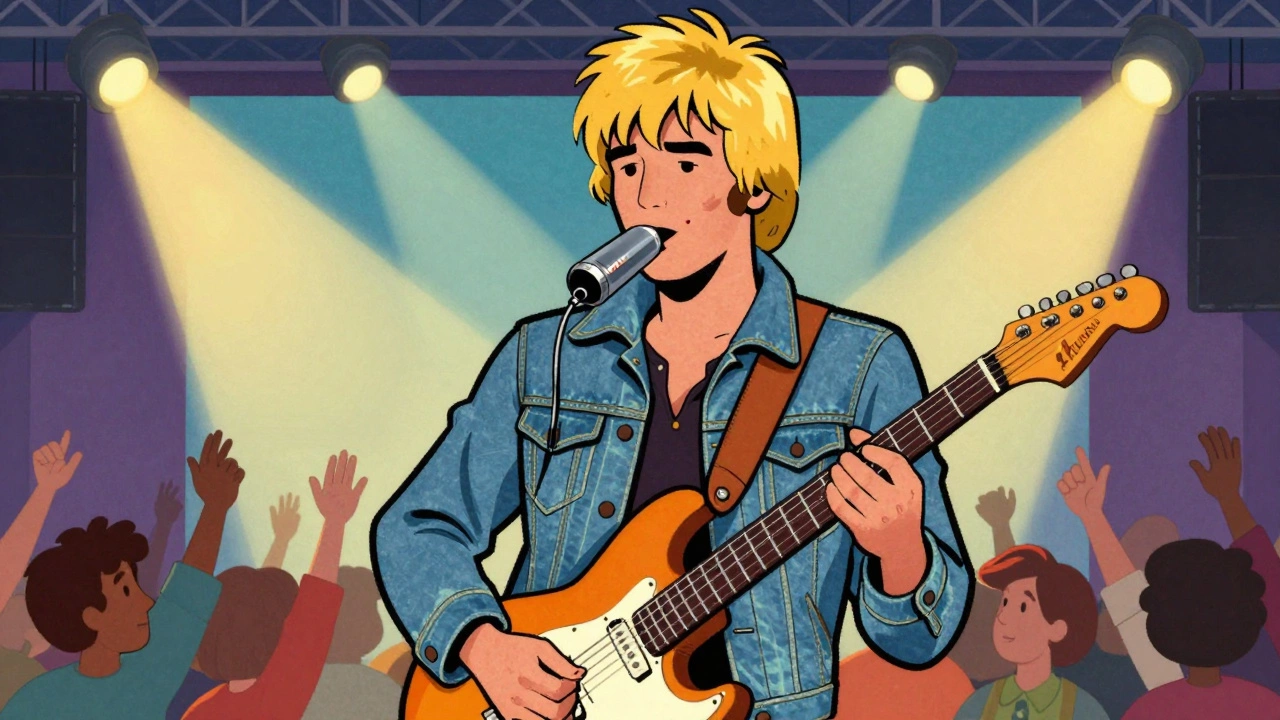

Imagine spending four years releasing studio albums that barely dent the charts. You have a loyal fan base, but you’re not exactly a household name. Then, your record label hands you a mobile recording truck and tells you to capture your next tour on tape, mostly as a way to fulfill a contract obligation. That was the situation for Peter Frampton, an English guitarist whose career seemed stuck in neutral until January 6, 1976.
The result? Frampton Comes Alive!, a double live album that didn’t just break records; it shattered the industry’s understanding of what a live record could be. It spent ten non-consecutive weeks at number one on the Billboard 200, sold over 8 million copies in the U.S. alone, and eventually moved more than 11 million units worldwide. But beyond the staggering sales figures, this album proved something crucial to labels and artists alike: a well-recorded concert could outperform a polished studio session every time.
The Accidental Breakthrough
Before Frampton Comes Alive!, live albums were often treated as afterthoughts. They were "contract fillers" or souvenir items for die-hard fans who had already bought every studio release. Labels rarely invested serious money in them. A&M Records, Frampton’s label, wanted to capitalize on his strong reputation as a performer, but they weren’t banking on it becoming their biggest seller ever.
The recordings took place during Frampton’s 1975 U.S. tour. The team captured shows at iconic venues like the Winterland Ballroom in San Francisco and the Marin Veterans’ Memorial Auditorium. Engineer-producer Eddie Kramer, famous for his work with Jimi Hendrix and Led Zeppelin, oversaw the technical side. They used analog multitrack tape and mobile recording trucks to capture the raw energy of the performances. The goal was simple: document the show. What they got was a cultural phenomenon.
The album reached number one in April 1976 and stayed there through October. By 1993, the Recording Industry Association of America (RIAA) certified it 8× Platinum. This wasn’t just a hit; it was a commercial earthquake that forced the music business to rethink its strategy regarding live recordings.
Capturing the Sound: Technology and Technique
Why did this specific live album sound so different from others? Part of the magic lies in the technology and the meticulous production choices. Kramer and Frampton recorded the band using close-miked drums and multiple guitar feeds. Crucially, they also placed microphones throughout the audience to capture the "arena roar." This balance between instrument clarity and crowd noise created an immersive experience that made listeners feel like they were in the room.
Then there was the talk box. If you know the album, you know the voice-like guitar solo on “Show Me the Way.” This effect comes from the Heil Talk Box, a device designed by Bob Heil. Here is how it works: the guitar signal is routed through a plastic tube into the performer’s mouth. The musician shapes their mouth to form vowels, modulating the sound, which is then picked up by a vocal microphone. Frampton had been experimenting with this in the early 1970s, but by 1975, he had refined it into a signature sonic identity.
The mixing process happened at Electric Lady Studios in New York. Using standard outboard gear of the era, like Urei compressors and EMT plate reverbs, Kramer and Frampton balanced the tracks. They kept overdubs to a minimum. While some minor fixes were made, the core performances are genuinely live. This honesty resonated with audiences tired of overly sterile studio productions.
| Aspect | Detail |
|---|---|
| Producer | Eddie Kramer & Peter Frampton |
| Recording Locations | Winterland Ballroom (SF), Marin Veterans’ Memorial Auditorium, Long Island Arena |
| Key Equipment | Analog multitrack tape, Heil Talk Box, Wally Heider mobile unit |
| Mixing Location | Electric Lady Studios, New York |
| Band Lineup | Peter Frampton, Bob Mayo, Stanley Sheldon, John Siomos |
From Contract Filler to Commercial Engine
The success of Frampton Comes Alive! changed the economics of the music industry. Before this, recording a live album was risky. Afterward, it became a viable strategy for artist development. Here is why labels started taking live records seriously:
- Cost-Effectiveness: Once a mobile rig was hired for a tour, capturing multiple nights of multitrack recordings cost a fraction of a full studio residency. Artists could get several hours of material for the price of one day’s setup.
- Catalog Revival: The album featured songs from Frampton’s previous four studio albums, which had sold modestly. The live versions breathed new life into these tracks. A&M’s marketing plan leveraged the live album’s success to drive sales of the older studio records, resulting in significant spikes in catalog revenue.
- Radio Viability: Live singles could compete with studio hits. “Show Me the Way” reached number 6 on the Billboard Hot 100, while “Baby, I Love Your Way” hit number 12. This proved that AM and FM radio would play concert recordings if the production quality was high enough.
This shift influenced other artists significantly. Bob Seger’s Live Bullet and Cheap Trick’s At Budokan both followed this model. Both bands cited Frampton’s success as proof to their labels that live albums could be major releases rather than niche items. Even Kiss, whose Alive! was released months before Frampton’s, saw its sales surge in the wake of the trend, though Frampton’s album ultimately outsold it domestically.
The Cultural Impact and Critical Divide
You cannot talk about Frampton Comes Alive! without addressing its ubiquity. In the late 1970s, the album was everywhere. Car radios played it, dorm rooms displayed the gatefold sleeve, and parties spun the vinyl. It defined the sound of FM rock for a generation. However, this massive popularity created a divide in critical opinion that persists today.
Mainstream critics and fans loved the energy. AllMusic’s Stephen Thomas Erlewine rated it 4.5 out of 5 stars, praising the sequencing and the way the live versions rescued underperforming studio tracks. The dCS Audio retrospective highlights the clarity of the guitar tone and the balance between performance and polish. For many listeners, the call-and-response sections and extended solos created an emotional connection that studio recordings couldn’t match.
On the other hand, some rock purists criticized the album for being "too slick." Robert Christgau gave it a lukewarm B- rating, arguing it lacked the raw improvisational risk found in jazz-influenced live records like The Allman Brothers Band’s At Fillmore East. Scholars like Simon Frith argued that blockbuster live albums like Frampton’s helped standardize a controlled arena-rock sound, reducing the diversity of live aesthetics. Many acts began chasing this same polished, safe formula, prioritizing consistency over spontaneity.
User feedback reflects this generational split. On community platforms like RateYourMusic, the album holds a solid but not elite rating, with comments praising the "perfect 70s vibe" while criticizing perceived overexposure. Younger listeners often find the material pleasant but generic compared to more complex instrumental acts. Yet, on guitar forums, Frampton’s talk-box technique remains the gold standard, keeping the album relevant for musicians interested in tone and performance.
Legacy: The Definitive Live Version
Fifty years later, Frampton Comes Alive! remains a case study in music history. It crystallized the template for the arena-rock live album: careful recording, dynamic pacing, crowd interaction, and high-fidelity production. More importantly, it established the concept of the "definitive live version." For many songs, including “Show Me the Way” and “Do You Feel Like We Do,” the live rendition has superseded the studio original in collective memory.
Modern producers still reference this album when discussing crowd mic techniques and the balance between authenticity and post-production. While digital technology has made capturing live shows easier, creating a singular, era-defining live album that dominates sales is harder in the fragmented streaming era. Frampton’s achievement stands as a peak moment where technology, performance, and market timing aligned perfectly.
As Frampton himself noted in his memoir, the appeal lay in the honesty of the performances. Despite the polish, the bulk of what you hear was performed on stage, in front of thousands of people, with no safety net. That energy is what turned a contract filler into one of the best-selling live albums in rock history.
Why was Frampton Comes Alive! so commercially successful?
The album succeeded because it combined high-quality production with raw performance energy. It captured the emerging arena-rock aesthetic, including crowd noise and extended solos, which resonated with audiences. Additionally, it served as a cost-effective way for A&M Records to revitalize sales of Frampton's back catalog, turning previously overlooked songs into mainstream hits.
What is the Heil Talk Box and how does it work?
The Heil Talk Box is a vocal processing device that routes a guitar signal through a plastic tube into the performer's mouth. The musician shapes their mouth to form vowels, modulating the sound, which is then captured by a vocal microphone. This creates a distinctive, voice-like guitar tone, famously used by Peter Frampton on "Show Me the Way."
How did this album change the music industry's view on live recordings?
Before Frampton Comes Alive!, live albums were often seen as low-priority contract fillers. Its massive success proved that live records could be major commercial engines, rivaling studio albums in sales and radio play. This encouraged labels to invest in high-quality live recordings for other artists, leading to hits like Kiss's Alive! and Cheap Trick's At Budokan.
Who produced Frampton Comes Alive!?
The album was produced by Peter Frampton and legendary engineer Eddie Kramer. Kramer is known for his work with Jimi Hendrix and Led Zeppelin. They recorded the performances using analog multitrack tape and mobile recording trucks during Frampton's 1975 U.S. tour.
Is Frampton Comes Alive! considered a good album by critics?
Opinions vary. Mainstream critics and fans praise its energy, sequencing, and sonic clarity, with AllMusic giving it 4.5/5 stars. However, some rock purists argue it is too polished and lacks the improvisational risk of other live classics like The Allman Brothers' At Fillmore East. Despite this, it remains a highly influential and beloved record.