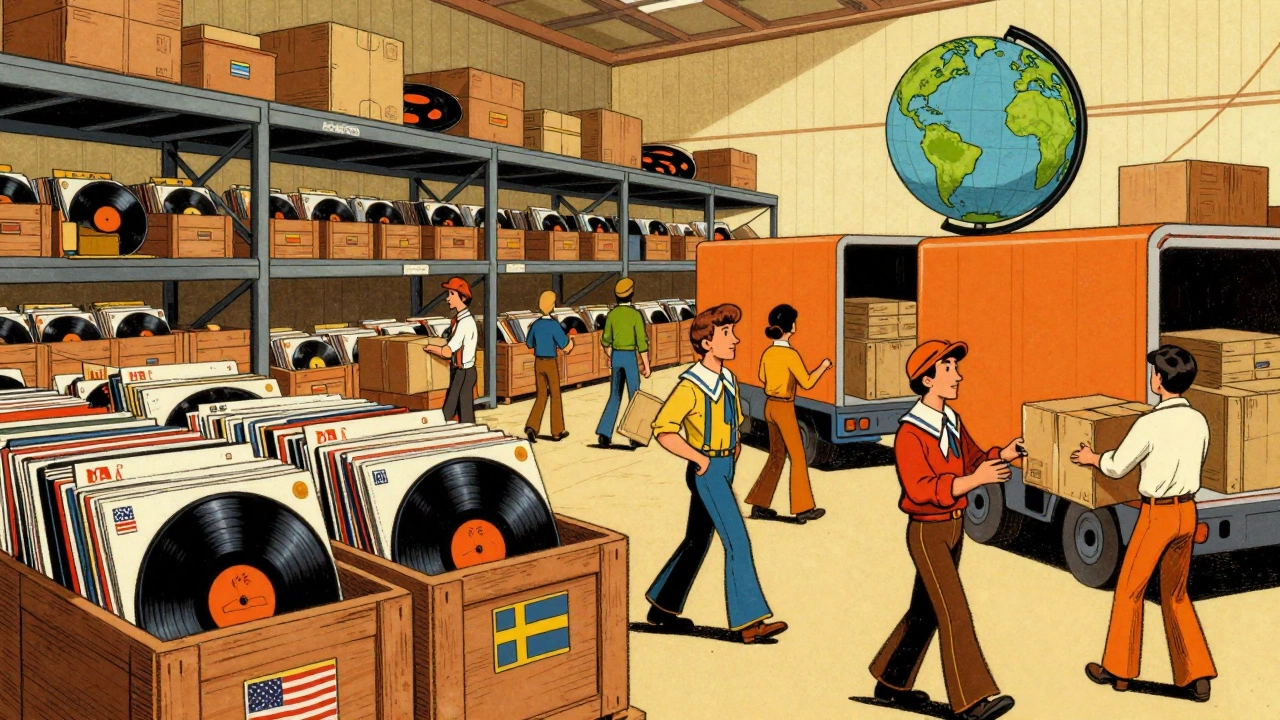

It’s easy to assume that the internet made music truly global. We stream K-pop in Seoul, Afrobeats in Lagos, and indie rock in Portland instantly. But look back at the 1970s. That decade didn’t just have hits; it built the entire machinery for turning local songs into worldwide commodities. Before digital algorithms decided what you heard, physical records, massive corporate mergers, and cultural movements like disco forced the world to listen to the same playlists.
The 1970s were not a time when borders simply vanished. Instead, they were a period of intense industrial consolidation. A handful of countries-primarily the United States, the United Kingdom, Sweden, Canada, Finland, and New Zealand-dominated the export market. Economists analyzing trade data from this era found that these nations consistently controlled disproportionate shares of world music trade. For instance, Sweden’s normalized export share averaged 3.2 times its GDP share, while Canada’s was 2.2 times. This wasn't accidental. It was the result of decades of infrastructure building by multinational labels that treated music as a high-volume export business.
The Corporate Giants Behind the Hits
You can’t talk about 1970s export success without talking about the companies that shipped the vinyl. By the end of the 1960s, CBS Records was widely ranked as the leading global label, with Warner Bros., RCA Victor, Capitol, and MCA close behind. These weren't just record stores; they were vertically integrated empires with pressing plants, publishing arms, and distribution networks across North America, Western Europe, Latin America, and parts of Asia.
In the early 1970s, this oligopoly deepened through massive mergers. The most significant was the creation of Polygram. Formed by combining Germany’s Polydor (owned by Deutsche Grammophon) and the Netherlands’ Phonogram (owned by Philips), Polygram united European and American operations. They bought Mercury Records in the US and coordinated release schedules so that blockbuster acts could hit charts in London, New York, Tokyo, and Paris within weeks. This was a sharp contrast to the early 1960s, where an album might take months to reach international shelves. They pressed localized editions, translated liner notes, and synchronized marketing campaigns. This efficiency turned artists like The Beatles-who generated over $180 million in inflation-adjusted international revenues by 1963-into templates for future global superstars.
Disco: The First Truly Global Dance Floor
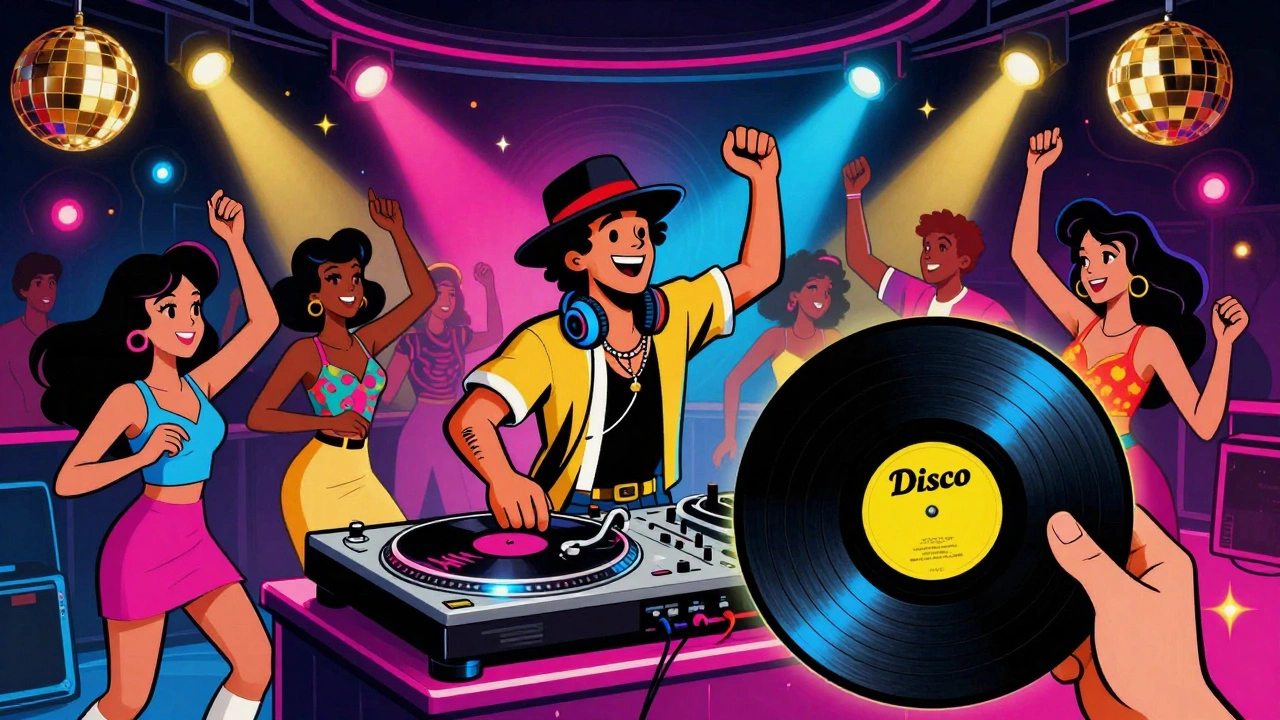
If rock was the dominant sound of the late 60s, disco was the export engine of the 70s. Emerging from African American, Latino, and LGBTQ club scenes in Philadelphia and New York, disco offered something rock couldn't: a universal language of rhythm. DJ and historian Tim Lawrence estimates that techniques developed in these clubs account for around 90% of today’s DJ methods. Beatmatching, slip-cueing, and seamless segues allowed DJs to keep crowds moving for hours.
Disco’s breakthrough into a global export happened visibly in 1977. Two events solidified its status: the opening of Studio 54 in New York and the December release of the film "Saturday Night Fever." The soundtrack, dominated by the Bee Gees, sold tens of millions of copies worldwide. But the real innovation was the 12-inch single. Introduced for DJ use, this format allowed for extended, high-fidelity mixes that sounded incredible on the massive sound systems in clubs from New York to Paris to Lagos.
By 1978, disco was outselling rock in the United States. This alarmed rock-focused radio programmers, but it demonstrated how a genre rooted in marginalized communities had become the decade’s dominant export-ready sound. The BBC notes that disco repopularized social dancing internationally after partner dancing faded in the late 60s. It promoted a freer, individualistic style that clubgoers in cities like Tokyo and London could adopt without formal training.
| Driver | Impact on Globalization | Example |
|---|---|---|
| Corporate Consolidation | Standardized release schedules and distribution | Polygram merging European and US operations |
| Technology | Extended play formats for clubs | 12-inch singles enabling disco mixes |
| Film Soundtracks | Synchronized visual and audio marketing | "Saturday Night Fever" boosting Bee Gees sales |
| DJ Innovation | Creation of continuous dance experiences | Beatmatching techniques spreading globally |
Local Scenes, Global Echoes
We often think of music exports as a one-way street from the US and UK to the rest of the world. The reality was much messier and more interesting. While Anglo-American dominance was strong, regional scenes adapted and hybridized these sounds.
In Italy, producers like Giorgio Moroder used synthesizers at Munich-based Musicland Studios to create Italo disco, which influenced electronic music worldwide. In Eastern Europe, state media embraced disco. Bulgaria developed a domestic star system around performers like Mimi Ivanova and Rossitsa Kirilova, creating a vibrant scene that only declined after the collapse of communist regimes in 1989. In Nigeria, disco intersected with Afrobeat and highlife. Despite heavy trade restrictions limiting imported records, local musicians drew on American trends filtered through informal channels, creating unique blends that circulated on small pressings.
Asia also saw the rise of local export powerhouses. In Hong Kong, Cantopop evolved from television soap opera themes combined with British soft rock influences. By the late 1970s, it had become the territory’s primary cultural export, spreading through Chinese-speaking communities across Southeast Asia and diaspora populations in North America. Japan maintained a thriving domestic market that incorporated Western rock and soul, laying the groundwork for J-pop’s later global impact.
The Punk Counter-Model
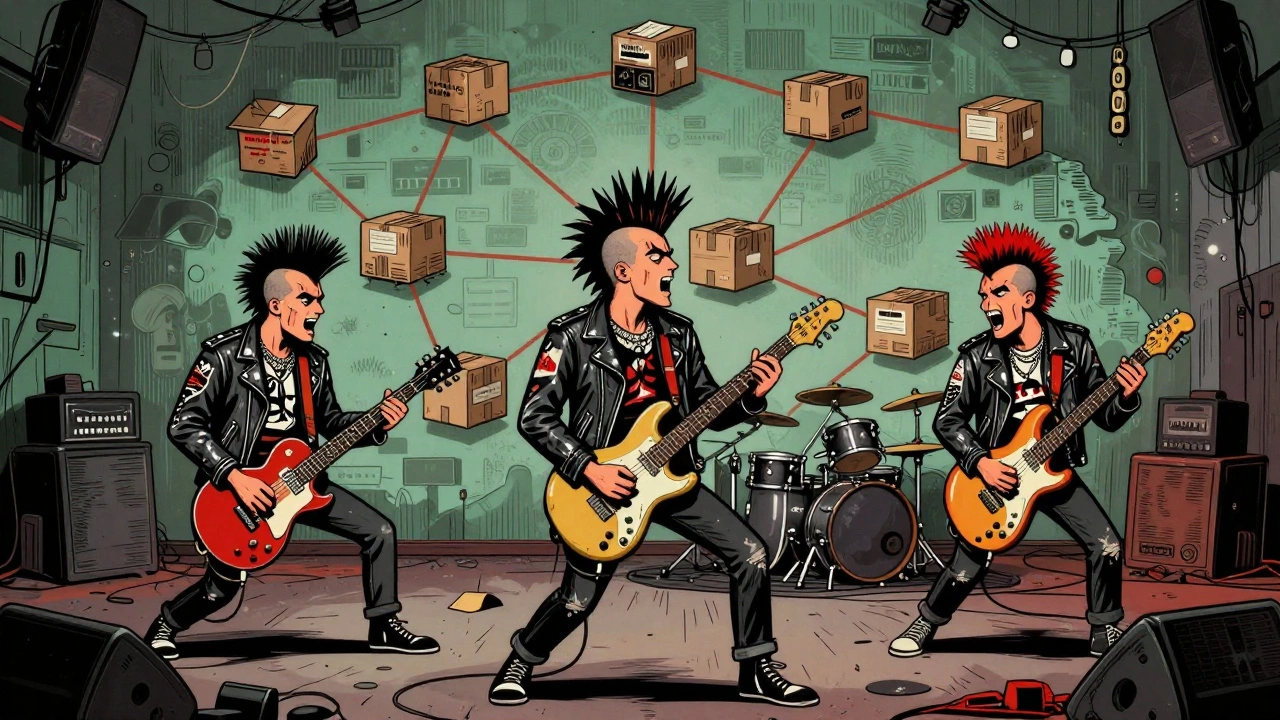
Not all export success relied on billion-dollar corporations. The punk movement provided a counter-model based on DIY ethics and independent distribution. Emerging in mid-1970s New York (with bands like the Ramones) and London (with the Sex Pistols and The Clash), punk challenged mainstream aesthetics with short, aggressive songs and low-cost production.
In the UK, the independent label movement grew rapidly. Companies like Rough Trade, Backs Records, and Red Rhino formed the 'Cartel,' a cooperative distribution network. This allowed small labels to get releases into shops nationwide and abroad without relying on majors. Rough Trade’s release of Stiff Little Fingers’ album "Inflammable Material" in 1979 became the first independently released LP to sell more than 100,000 copies and reach the UK Top 20. This proved that substantial sales and cross-border influence were possible outside the major-label system, relying instead on licensing deals, small distributors, and committed management building networks over years.
Why It Matters Today
The structures built in the 1970s still dominate the industry. Today’s three major music groups-Universal Music Group, Sony Music Entertainment, and Warner Music Group-trace their lineages directly back to 1970s entities like Polygram, CBS, and Warner Bros. They control the majority of worldwide recorded-music revenues.
Moreover, the cultural practices established then persist. The centrality of the DJ, the use of extended mixes, and the norm of diverse crowds dancing together prefigured today’s festival-centered global dance culture. When modern producers sample 1970s tracks from Nigeria, Suriname, or Bulgaria, they are tapping into a global network of creativity that was forged decades ago. The 1970s didn't just give us great songs; they gave us the blueprint for how music travels across borders, proving that while technology changes, the human desire to share rhythm remains constant.
Which countries dominated music exports in the 1970s?
The United States, United Kingdom, Sweden, Canada, Finland, and New Zealand consistently controlled disproportionate shares of world music trade. Sweden, for example, had a normalized export share averaging 3.2 times its GDP share, illustrating how smaller nations could punch above their economic weight in cultural exports.
How did disco become a global phenomenon?
Disco spread globally through the introduction of the 12-inch single, which allowed for extended mixes suitable for large club sound systems. Key moments included the opening of Studio 54 in 1977 and the release of the "Saturday Night Fever" soundtrack, which synchronized visual and audio marketing across continents.
What role did independent labels play in 1970s music exports?
Independent labels, particularly in the UK, created cooperative distribution networks like the 'Cartel' (involving Rough Trade, Backs Records, and Red Rhino). This allowed them to bypass major labels, reduce export costs, and achieve significant sales, such as Stiff Little Fingers' "Inflammable Material" reaching the UK Top 20.
Did 1970s music exports lead to total cultural homogenization?
No. Studies of chart data show a complex pattern of increased Americanization coexisting with rising national diversity and persistent local repertoires. Regional genres like Italo disco, Bulgarian disco, Nigerian Afrobeat-disco hybrids, and Hong Kong Cantopop adapted global trends to local contexts rather than simply copying them.
How do 1970s music industry structures relate to today's market?
Today’s three major music groups-Universal, Sony, and Warner-trace their corporate lineages back to 1970s entities like Polygram, CBS, and Warner Bros. The vertical integration of A&R, manufacturing, and distribution established in the 70s continues to define the global music economy.