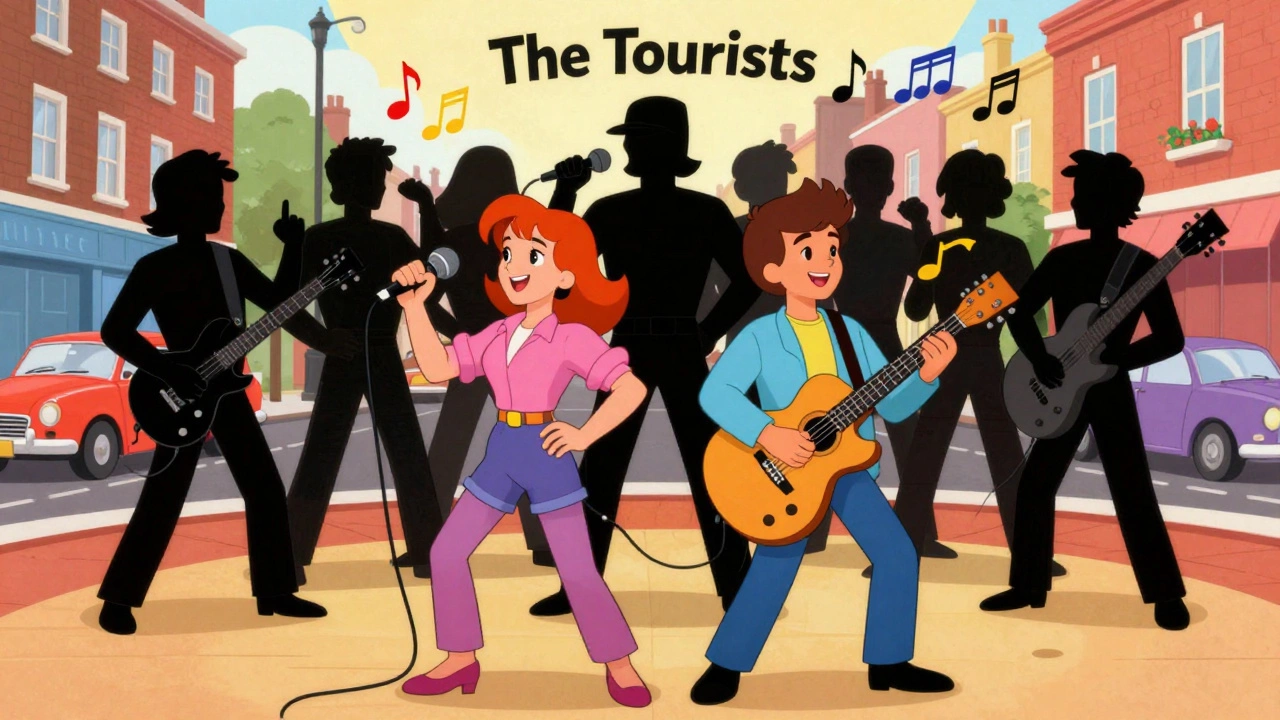

Pop music in the early 1980s was a chaotic mix of disco hangovers and punk energy, but two people stood out by creating something entirely different. Eurythmics is a British new wave duo formed in London in 1980 by Scottish vocalist Annie Lennox and English guitarist Dave Stewart. They didn't just follow trends; they invented a sound that blended cold electronic beats with warm, soulful vocals. If you grew up in the 80s or love retro pop, you know their work. But do you really understand how they pulled it off?
From Tourists to Legends: The Origin Story
Before they were global superstars, Annie Lennox and Dave Stewart were part of a band called The Tourists. This post-punk group had some success in the UK, notably with a cover of Dusty Springfield’s "I Only Want to Be with You" in 1979. However, the band fell apart in late 1980 due to financial stress and personal tensions. Instead of going separate ways, Lennox and Stewart-who were also romantic partners at the time-decided to start fresh.
They chose the name Eurythmics from "Dalcroze Eurhythmics," a system of music education focused on movement and rhythm. It was a clever nod to their musical roots. They signed with RCA Records in 1981 and headed to Cologne, West Germany, to record their debut album, In the Garden. Working with producer Conny Plank (who worked with Kraftwerk), they created an experimental, dark sound. Unfortunately, the public wasn't ready for it. The album barely charted, and singles like "Never Gonna Cry Again" fizzled out. Many thought the duo was a one-album wonder.
The Breakthrough: Sweet Dreams Are Made of This
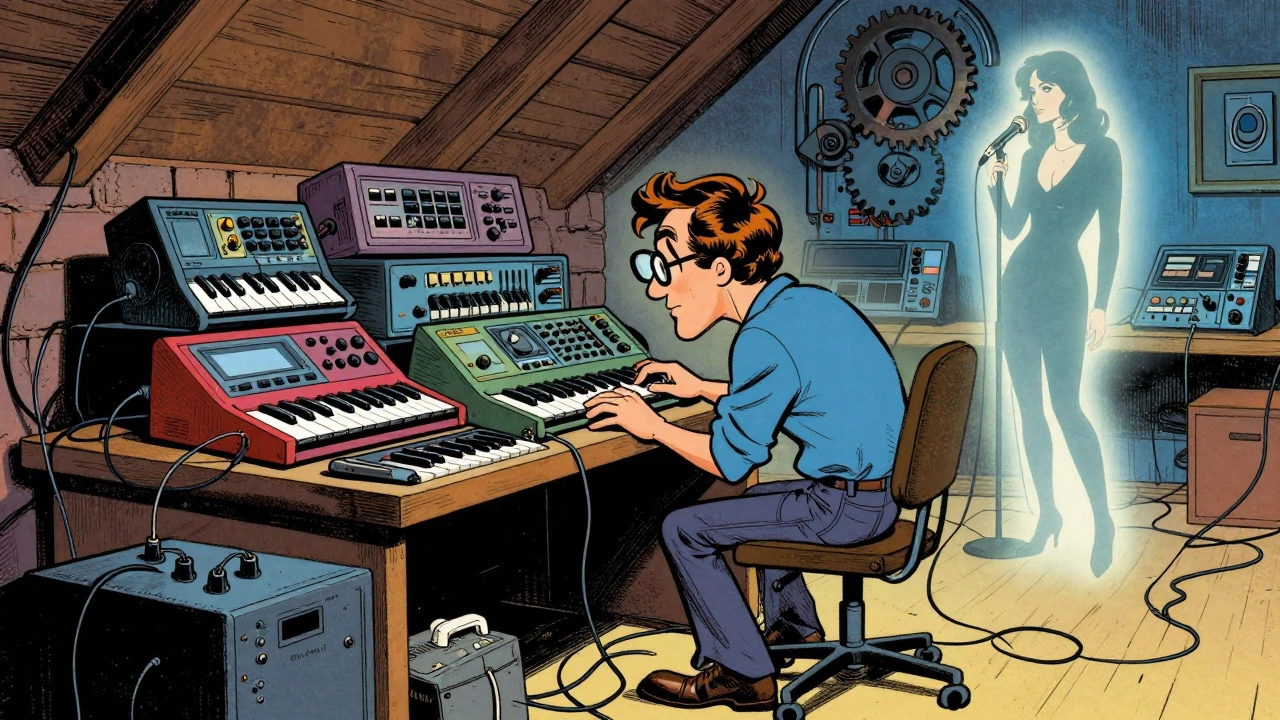
Things changed dramatically in 1982. Dave Stewart was recovering from a collapsed lung and decided to build a small home studio in a converted loft in Chalk Farm, London. He invested about £5,000 of his own money into cheap analog synthesizers and drum machines. This low-budget setup became the birthplace of their biggest hit.
Stewart built the track "Sweet Dreams (Are Made of This)" using a Movement Systems Drum Computer, a Roland SH-101, and an Oberheim OB-X. The result was a hypnotic, minimalist groove. Lennox added her cool, multi-tracked vocals, creating a stark contrast between the mechanical beat and her human emotion. Released in January 1983 in the UK, the song slowly climbed the charts. By September 1983, it hit No. 1 on the US Billboard Hot 100. It stayed on the chart for over 20 weeks, turning Eurythmics into MTV-era icons overnight.
Visual Identity: Defying Gender Norms
You can't talk about Eurythmics without talking about Annie Lennox's look. In 1983, female pop stars typically wore dresses, makeup, and long hair. Lennox did the opposite. She appeared in the "Sweet Dreams" video with cropped orange hair and a men's business suit. This androgynous image was shocking at the time. It challenged traditional gender roles and corporate subversion themes present in their lyrics.
This visual boldness continued through videos like "Love Is a Stranger" and "Who's That Girl?", where Lennox played multiple characters, including male alter-egos. Critics and fans alike noted that this fearless exploration of identity influenced later artists like Madonna, Lady Gaga, and Pink. Lennox proved that you could be powerful and popular without conforming to beauty standards.
Evolution of Sound: Beyond Synth-Pop
After the success of Sweet Dreams (Are Made of This), many expected more of the same. Eurythmics surprised everyone. Their next album, Touch (1983), topped the UK Albums Chart and included hits like "Here Comes the Rain Again." While still rooted in synth-pop, it showed greater musical depth.
By 1984, they released 1984 (For the Love of Big Brother), a soundtrack to the film adaptation of George Orwell's novel. This album returned to darker, experimental textures, featuring the track "Sexcrime (Nineteen Eighty-Four)." It demonstrated their ability to tackle political themes through electronic music.
In the mid-to-late 80s, Eurythmics broadened their sound further. Albums like Be Yourself Tonight (1985) and Revenge (1986) incorporated live guitars, horns, and R&B influences. They collaborated with legends like Aretha Franklin on "Sisters Are Doin' It for Themselves" and Stevie Wonder. This shift helped them reach wider audiences but also drew criticism from purists who preferred their earlier, colder synth style.
| Album Title | Release Year | Key Tracks | Chart Performance (UK/US) |
|---|---|---|---|
| Sweet Dreams (Are Made of This) | 1983 | "Sweet Dreams", "Love Is a Stranger" | No. 3 / No. 15 |
| Touch | 1983 | "Here Comes the Rain Again", "The Miracle of Love" | No. 1 / Top 10 |
| 1984 (For the Love of Big Brother) | 1984 | "Sexcrime (Nineteen Eighty-Four)" | Top 10 / Not released as single |
| Be Yourself Tonight | 1985 | "Would I Lie to You?", "There Must Be an Angel" | No. 2 / Top 10 |
| Savage | 1987 | "Missionary Man", "Soulman" | No. 1 / Top 10 |

Legacy and Influence
Eurythmics sold tens of millions of records worldwide during the 80s alone. Their impact goes beyond sales numbers. They redefined what a pop duo could be. Unlike bands with full lineups, they operated as a creative partnership, with Stewart handling production and instrumentation while Lennox provided the vocal power and lyrical vision.
Their influence is evident in modern pop music. Artists today still cite Lennox's vocal range and Stewart's production techniques as inspirations. In 2022, the Rock & Roll Hall of Fame inducted Eurythmics, recognizing their role in "redefining synth-pop with soul and political bite." This induction highlighted their lasting importance in music history.
Even though they entered a hiatus in 1990, their catalog remains relevant. Reissues and compilations keep their music accessible to new generations. For anyone interested in 80s culture, understanding Eurythmics is essential. They weren't just musicians; they were cultural pioneers who broke barriers and set new standards for artistic expression.
Why They Matter Today
In an era dominated by streaming algorithms and short attention spans, Eurythmics remind us of the power of cohesive artistry. Each album told a story. Each video made a statement. They didn't chase trends; they created them. Whether you're a casual listener or a music historian, their work offers endless insights into creativity, collaboration, and courage.
If you haven't explored their full discography yet, start with Sweet Dreams and Touch. Then move to Be Yourself Tonight and Savage. You'll discover a world of sound that continues to resonate decades later. Eurythmics may have started as a side project, but they ended up shaping the landscape of popular music forever.
When did Eurythmics form?
Eurythmics formed in London in 1980, emerging from the breakup of their previous band, The Tourists.
What is Eurythmics' most famous song?
Their most famous song is "Sweet Dreams (Are Made of This)," which reached No. 1 on the US Billboard Hot 100 in 1983.
Did Annie Lennox write the lyrics for Eurythmics songs?
Yes, Annie Lennox wrote the majority of the lyrics for Eurythmics, often addressing themes of gender, politics, and personal relationships.
Were Eurythmics inducted into the Rock & Roll Hall of Fame?
Yes, Eurythmics were inducted into the Rock & Roll Hall of Fame in 2022, recognizing their significant contribution to music.
What instruments did Dave Stewart use in early Eurythmics tracks?
Dave Stewart used analog synthesizers like the Roland SH-101 and Oberheim OB-X, along with drum machines such as the Movement Systems Drum Computer.
How did Eurythmics influence fashion and gender norms?
Annie Lennox's androgynous appearance, including men's suits and short hair, challenged traditional gender roles in pop music and inspired future artists.
Did Eurythmics release any albums after the 1980s?
Yes, they released We Too Are One in 1989 and reunited briefly in 1999 for the album Peace.
What genre of music did Eurythmics play?
Eurythmics played new wave, synth-pop, rock, and R&B, evolving their sound throughout the 1980s.


