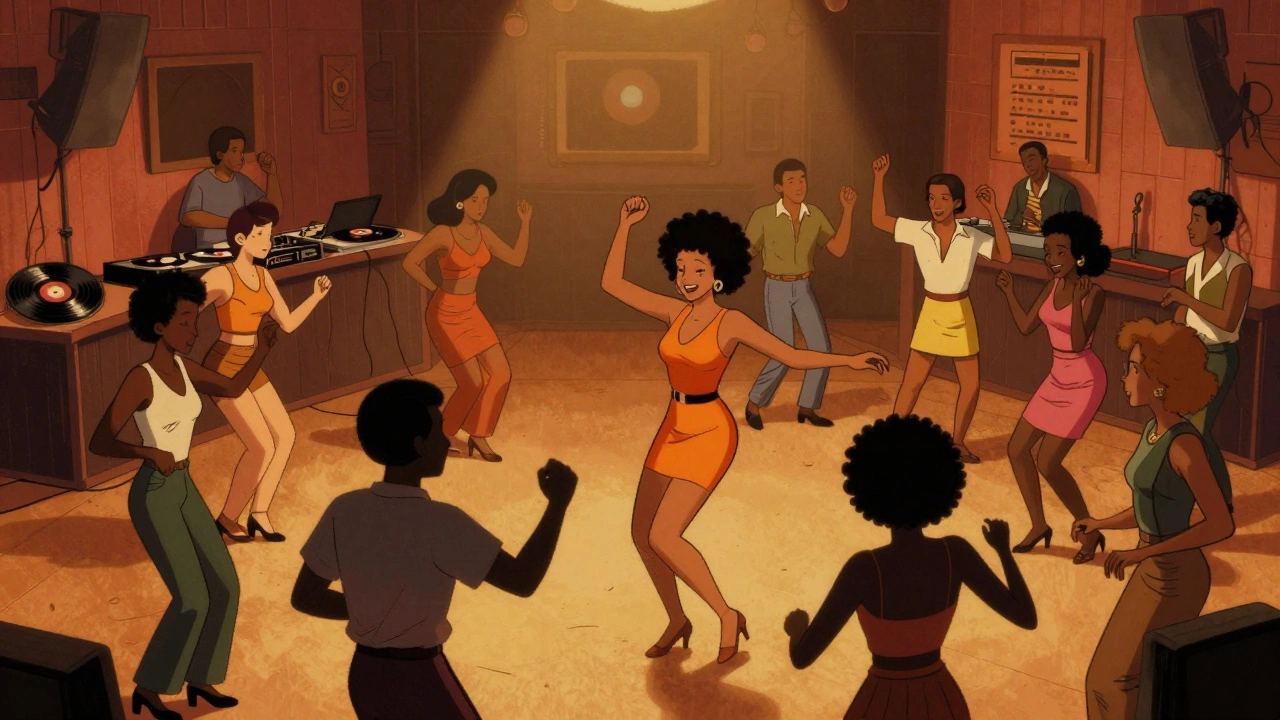

Imagine a room where the band doesn't play live instruments. There are no guitars screaming solos or drummers keeping time on stage. Instead, the heartbeat of the night comes from two spinning discs and a pair of hands manipulating knobs behind a glass booth. This wasn't just a change in entertainment; it was a revolution in how we socialize, dance, and experience music together. The 1970s disco era didn't just give us catchy pop songs; it invented the modern nightclub.
Before the mid-1970s, going out usually meant sitting at a table while a live band played for an audience. But in New York City, a different kind of space was emerging. These were places where recorded music-specifically soul, funk, and Latin records-became the main event. The DJ stopped being someone who just changed records and became the central performer, curating energy and emotion through seamless transitions. This shift created a new social contract: you came to dance, not to watch. You came to lose yourself in the rhythm with strangers who felt like family. That is the birth of modern club culture.
The Roots: Safe Havens in Post-Stonewall New York
To understand why discotheques exploded in popularity, you have to look at who needed them first. The late 1960s and early 1970s were turbulent times for marginalized communities in America. Following the Stonewall uprising of 1969, gay liberation politics were gaining momentum, but safe spaces for LGBTQ+ individuals, as well as African American and Latino communities, were still scarce. Mainstream bars often turned these groups away or treated them poorly.
In response, underground venues began to pop up in Manhattan and its surrounding boroughs. These weren't commercial enterprises at first; they were sanctuaries. David Mancuso’s The Loft, which started as house parties in the early 1970s, is a prime example. It was invitation-only, egalitarian, and focused entirely on the quality of the music and the safety of the dancers. There were no alcohol sales to drive profit margins; the goal was community building. Mancuso and other pioneers realized that if you provided high-fidelity sound, clean bathrooms, and a welcoming atmosphere, people would come back every week. This model prioritized the dancer's experience over the owner's wallet, setting a standard that many clubs still try (and often fail) to meet today.
These early spaces allowed people to express themselves freely without judgment. For gay men, Black dancers, and Latinos, the dance floor became a political statement. It was a place where bodily freedom was celebrated rather than suppressed. This social foundation is crucial because it explains why disco culture was so intense and communal. It wasn't just about having fun; it was about survival and visibility.
The Technology Behind the Magic: How DJs Changed Everything
You can’t talk about disco without talking about the technology that made it possible. Before the 1970s, DJs were mostly radio announcers or jukebox operators. They didn't mix records. In the discotheque, however, the DJ needed a new toolkit to keep the party going for hours without silence.
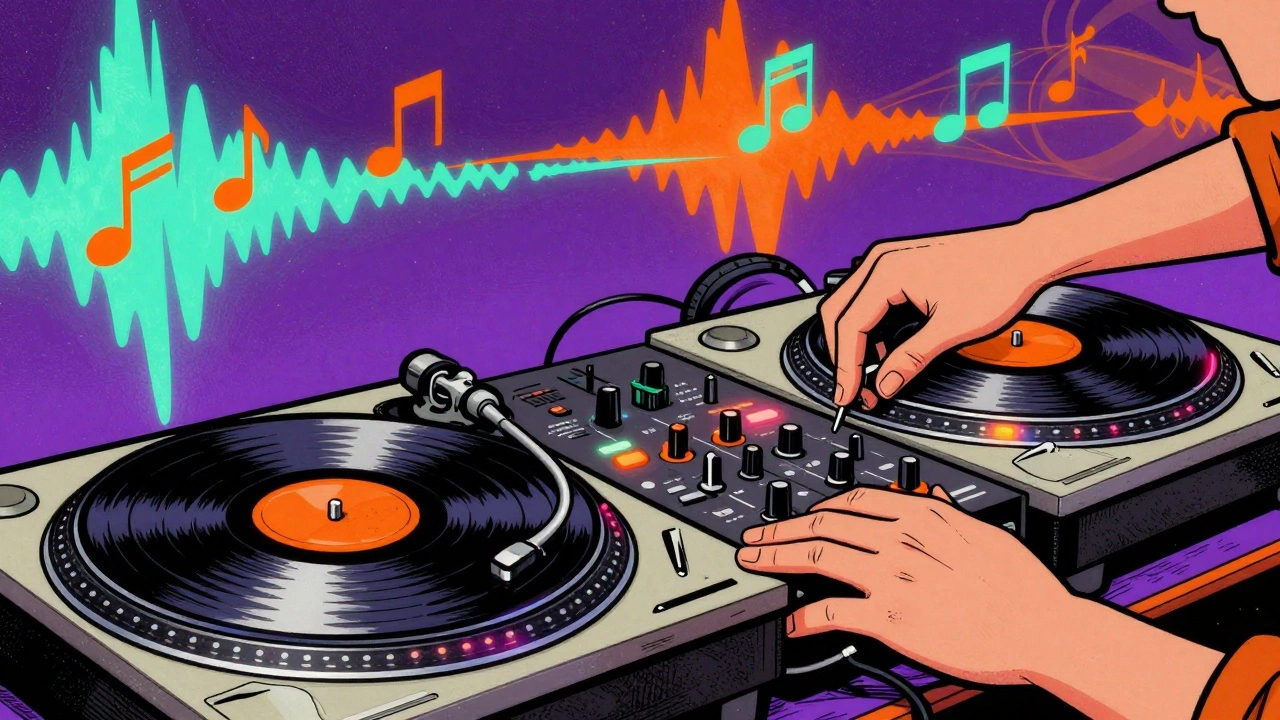
The core setup consisted of two turntables, a mixer, headphones, and a powerful sound system. This might seem simple now, but at the time, it was revolutionary. Here is how it worked:
- Beat-matching: The DJ would listen to the next record in their headphones while the current one played over the speakers. By adjusting the speed of the second turntable, they could match the tempo (beats per minute) of both records perfectly.
- Slip-cueing: Using a technique called slip-cueing, the DJ would hold the record still while the platter spun underneath. On the exact beat, they would release the record, allowing it to drop into the mix seamlessly.
- Crossfading: With a mixer, the DJ could slowly fade one song out while fading another in, creating a continuous flow of music known as a "mix."
This technical skill transformed the DJ from a background figure into a creative artist. They weren't just playing songs; they were crafting a narrative. A good set could last six to ten hours, moving through different moods and energies. This approach required immense stamina and knowledge. DJs had to know thousands of records, understanding which tracks had the right basslines, horns, or strings to keep the crowd moving. This practice laid the groundwork for all future electronic dance music (EDM), hip-hop, and house music DJing.
Iconic Venues: From Underground Lofts to Glamorous Temples
As the culture grew, so did the venues. What started in basements and apartments moved into larger, more elaborate spaces. Three names stand out as defining this era:
| Venue Name | Location | Key Characteristics | Cultural Impact |
|---|---|---|---|
| The Loft | New York City | Invitation-only, no alcohol, focus on sound quality and equality | Established the template for respectful, dancer-centric clubbing |
| Studio 54 | New York City | Exclusive door policy, celebrity sightings, extravagant decor | Brought disco into the mainstream media spotlight and global consciousness |
| Paradise Garage | New York City | Located in a church basement, intimate vibe, Larry Levan as resident DJ | Pioneered the emotional, spiritual connection between DJ and dance floor |
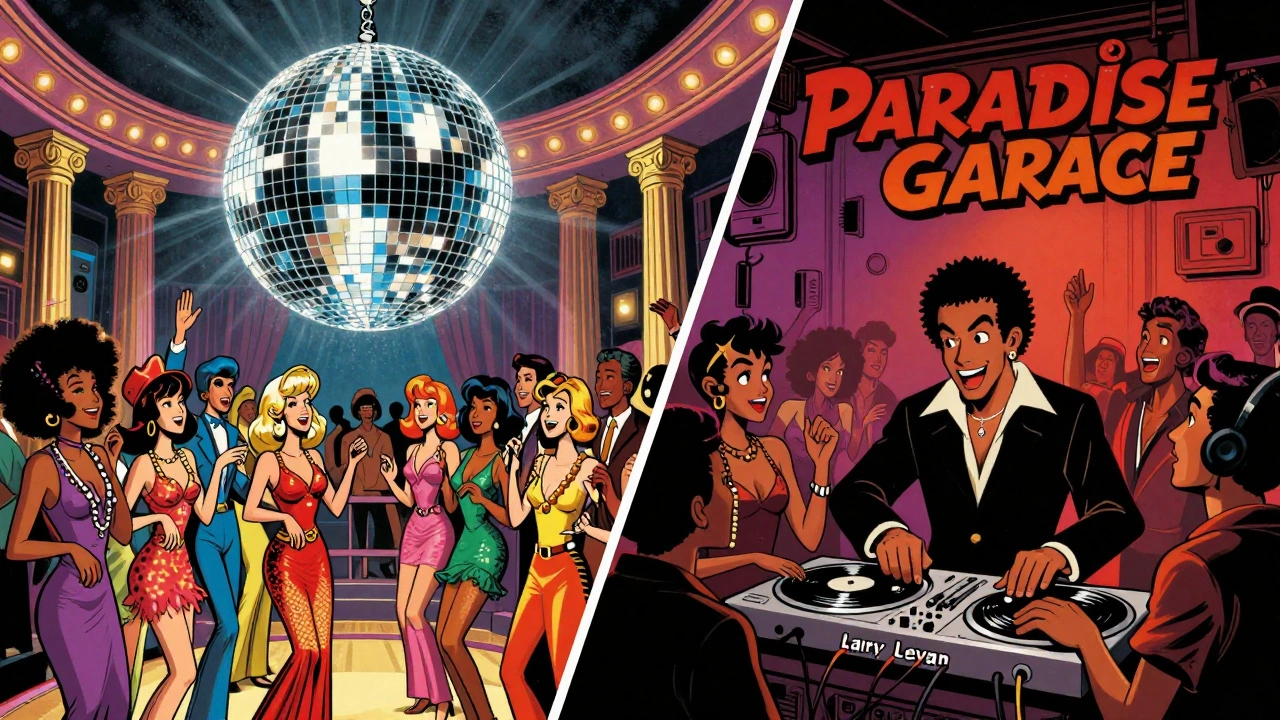
Studio 54, which opened in 1977, represents the commercial peak of disco. Located in the former CBS Studios on Eighth Avenue, it was famous for its exclusive door policy. Getting in was harder than getting into Harvard for some. Inside, you’d find celebrities, models, and socialites dancing under a massive disco ball. While it brought disco to the masses, it also diluted the inclusive spirit of the earlier underground scene. The contrast between Studio 54’s glamour and Paradise Garage’s intimacy shows the duality of disco culture: it was both a mass-market phenomenon and a deeply personal sanctuary.
At Paradise Garage, resident DJ Larry Levan was revered almost like a priest. He understood that the dance floor was a place of transcendence. His mixes were long, slow-burning journeys that built tension and released it in waves. Patrons didn't just dance; they experienced a collective euphoria. This spiritual aspect of clubbing is something that has been carried forward into modern rave and festival cultures.
The Sound of the Era: Music Designed for Dancing
Disco music itself was engineered for the club environment. Unlike rock songs, which often varied in tempo and structure, disco tracks were built on a steady "four-on-the-floor" beat-a kick drum hitting on every quarter note. This consistent pulse, usually between 110 and 130 beats per minute, made it easy for dancers to stay in sync.
Record labels quickly caught on to this demand. They began releasing extended versions of songs, known as 12-inch singles. These tracks could be five to eight minutes long, giving DJs plenty of room to mix and extend breaks. Orchestral arrangements with soaring string sections and brass horns added drama and emotion. The music was lush, rhythmic, and designed to fill a large room with sound. Artists like Donna Summer, Gloria Gaynor, and the Bee Gees became superstars not just because of their voices, but because their records worked perfectly in the club context.
This musical style drew heavily from African American and Latino traditions, particularly funk and salsa. It was a fusion that reflected the diverse makeup of the disco audience. The result was a genre that was universally appealing yet rooted in specific cultural expressions. When Billboard launched its "Disco Action" chart in 1974, it acknowledged that this wasn't just a niche interest; it was a dominant force in popular music.
Legacy: Why the 1970s Still Matter Today
By the end of the 1970s, a backlash against disco emerged in the United States, symbolized by events like "Disco Demolition Night" in 1979. Many people dismissed disco as shallow or overly commercial. However, this backlash missed the point. The infrastructure created during this decade-the DJ booth, the sound system design, the concept of the continuous mix, the importance of the dance floor-remains the backbone of nightlife today.
Modern EDM festivals, house music clubs, and even hip-hop cyphers owe their existence to the innovations of 1970s discotheques. The idea that a single person with turntables (or later, CDJs and laptops) can control the energy of thousands of people is a direct descendant of those early New York nights. Moreover, the emphasis on inclusivity and safe spaces continues to resonate. Contemporary movements for LGBTQ+ rights and racial justice in nightlife often reference the pioneering work of disco clubs as examples of what community-centered spaces can achieve.
When you go to a club today, notice the layout. Is the DJ elevated? Are the lights focused on the dance floor? Is the music mixing seamlessly from one track to the next? You are experiencing the legacy of the 1970s disco revolution. It wasn't just a trend; it was the birth of a global culture that values connection, rhythm, and shared joy above all else.
What is the difference between a discotheque and a modern nightclub?
While the terms are often used interchangeably today, a traditional discotheque specifically referred to a venue where recorded music was played for dancing, typically featuring a large dance floor and elaborate lighting. Modern nightclubs may include live performances, karaoke, or gaming areas, and often rely on digital technology rather than vinyl records. However, the core concept of a DJ-curated dance environment remains the same.
Who were the most influential DJs of the 1970s?
Key figures include David Mancuso (The Loft), Larry Levan (Paradise Garage), Frankie Knuckles (The Warehouse), and Nicky Siano (The Gallery). These pioneers developed the techniques of beat-matching and long-form mixing that defined the era. Their influence extends beyond disco into house, techno, and hip-hop.
Why was the 12-inch single important to disco culture?
The 12-inch single allowed for longer track durations, typically ranging from 5 to 8 minutes. This gave DJs more flexibility to mix songs seamlessly and extend instrumental breaks, which were crucial for maintaining energy on the dance floor. Standard 7-inch singles were too short for effective mixing in a club setting.
How did disco impact LGBTQ+ culture?
Discotheques provided some of the first safe, inclusive spaces for LGBTQ+ individuals, particularly after the Stonewall uprising. Clubs like The Loft and Paradise Garage fostered a sense of community and acceptance, allowing gay men and women to express themselves freely. This role as a sanctuary helped solidify the connection between dance music and queer culture.
What happened to disco after the 1970s?
Although mainstream popularity declined due to a cultural backlash, the elements of disco evolved into new genres. House music in Chicago and techno in Detroit directly inherited disco's rhythmic structures and DJ techniques. The spirit of disco lives on in contemporary electronic dance music and club culture worldwide.