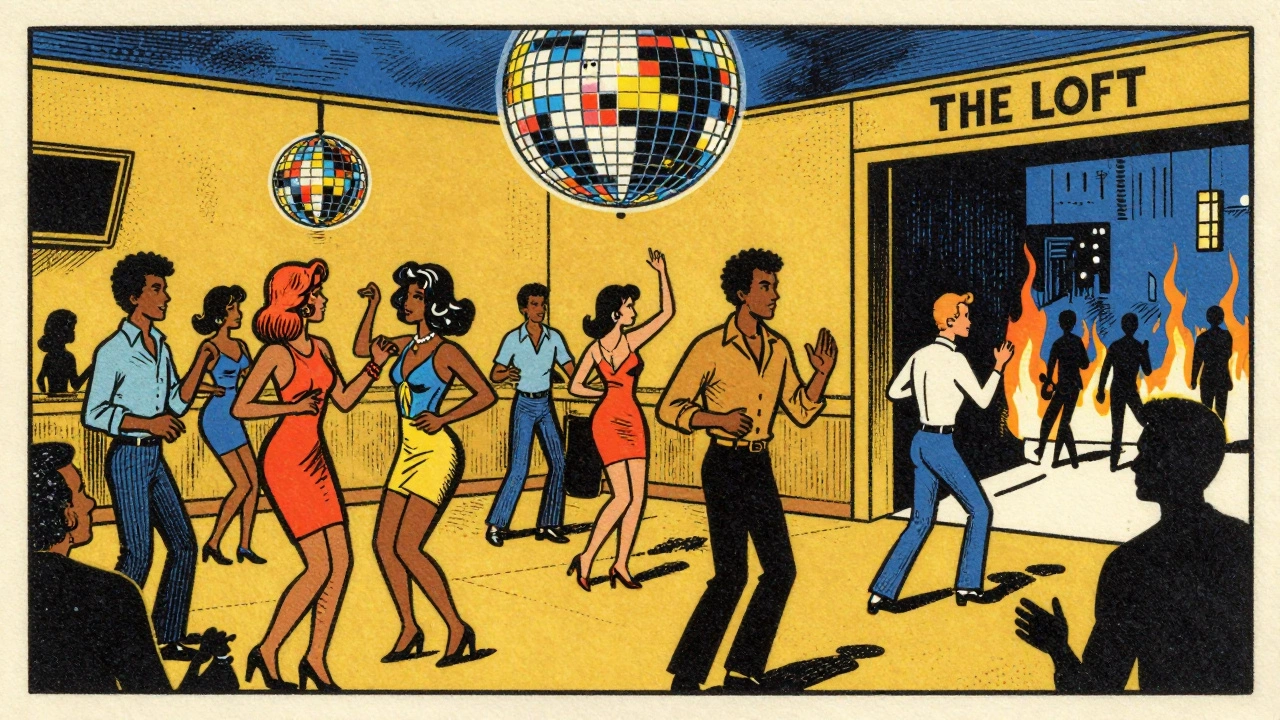

Imagine standing in a crowded room where the air hums with tension, sweat, and electricity. Outside the door, the world is falling apart. Cities are burning, the economy is choking on inflation, and the government lies about everything from wars to water-gate bathrooms. Inside, though? It’s just a kick drum beating against your chest. This was the reality of Disco is a genre of dance music which emerged in the 1970s as a cultural phenomenon providing psychological and social relief during turbulent times. Also known as Disco Music, it wasn't just background noise; it was a sanctuary. For millions of Americans caught in the storm of the 1970s, the dance floor offered something rare: a place to breathe freely.
To understand why this music became such a vital lifeline, you have to look at what was happening outside the club walls. The decade started with the ghosts of assassinations still haunting the country. The murders of Martin Luther King Jr. and John F. Kennedy had already shattered the public trust in leadership. By the time disco took hold in earnest, the Vietnam War was winding down but hadn't healed the wounds it tore through society. Then came the Watergate scandal, exposing the highest offices in the land to corruption. People weren't just angry; they were disillusioned. They felt powerless. In this climate of national crisis, the rhythm of the dance floor became a way to reclaim control. When the beat drops, you decide when you move your body. That simple act of agency was revolutionary.
The Birthplace of Refuge
The story of this escape movement officially began on Valentine’s Day 1970. On February 14th, David Manusco opened The Loft, a private parties venue in New York City that marked the formal beginning of the transformative cultural movement. This wasn’t a commercial nightclub; it was a gathering space designed for connection. While mainstream America remained deeply segregated, The Loft created an oasis. It brought together three distinct communities that rarely intersected in polite society: African American soul lovers, Latino dancers, and the gay urban party scene. These groups were marginalized in their daily lives. They faced systemic discrimination, racial prejudice, and homophobia. But in these underground venues, they found a shared language of movement.
Inside Studio 54 is an iconic nightclub in Manhattan that became popular among celebrities and served as a hub for the mainstream disco scene. First opened in 1977, it represented the peak of this phenomenon where New York City became the epicenter of nightlife culture. Within these walls, trans women and drag queens were not tolerated; they were celebrated. The DJ booth became a pulpit where the disc jockey held the power of the crowd. By manipulating lights and sounds, they created an atmosphere of liberation. For LGBTQ+ individuals facing legal persecution, these clubs were the first places they could express themselves authentically. For minorities facing job discrimination, these spaces offered economic mobility through the art of mixing. This fusion of Latino partner dancing traditions and African American musical genres created a sonic architecture of self-actualization.
The Sound of Relief
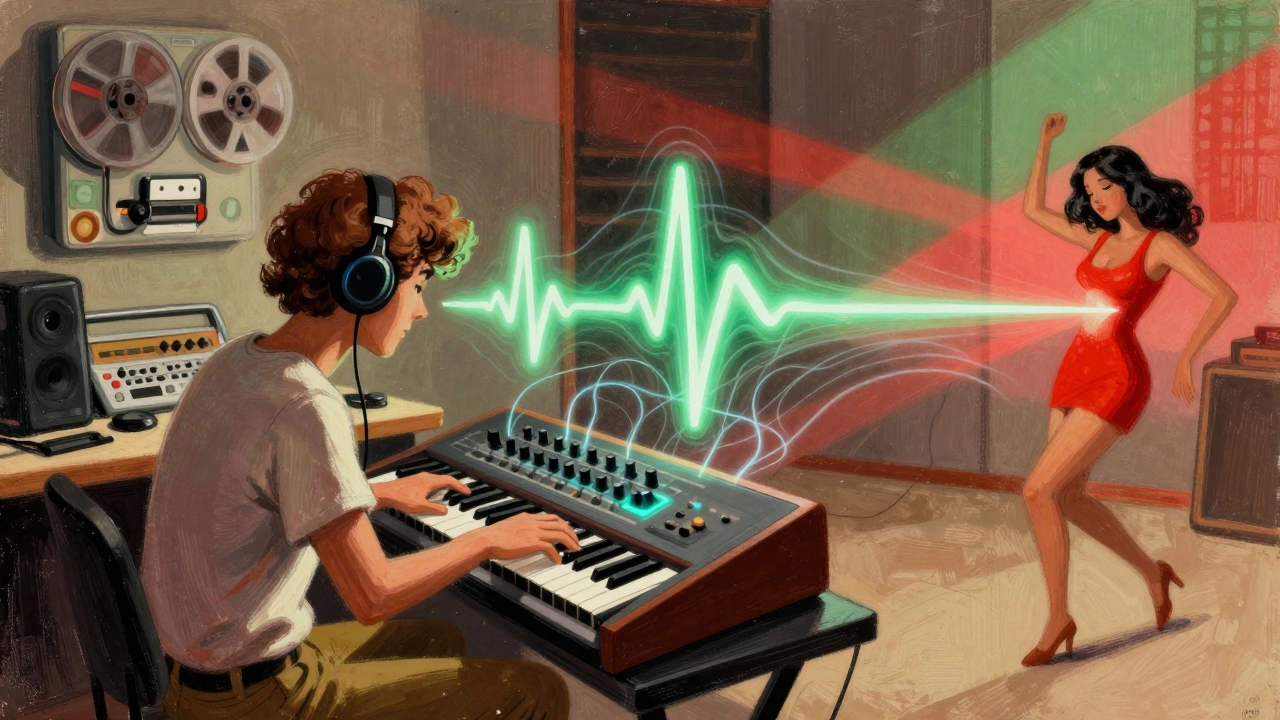
The music itself was engineered for release. You cannot ignore the role of record producers in developing this escapist sound. By the mid-70s, the studio wizard was often more important than the singer. Figures like Giorgio Moroder worked with disco superstar Donna Summer to craft high-tempo tracks that physically pushed listeners to shed their stress. He utilized synthesizers and sequencers to create a relentless, driving four-on-the-floor beat. This rhythm mimics a racing heart, channeling anxiety into kinetic energy. Nile Rodgers founded the supergroup Chic, producing legends in their own right who defined the polished, bass-heavy aesthetic of the era. These men understood that people weren't listening to lyrics; they were listening for a way out.
For years, this movement remained largely underground, thriving in clubs scattered across Philadelphia, Brooklyn, and Harlem. It was a subculture of necessity. Cultural scholars argue that the frequent references to fire and heat in disco songs served as metaphors for the era's destruction. American cities were literally burning down en masse due to urban decay and civil unrest. Yet, the "heat" on the dance floor felt like warmth rather than danger. This duality captured the essence of the time perfectly. The music acknowledged the pain of the streets while offering a temporary reprieve from it. The dance floor became a sanctuary where marginalized communities could experience freedom, transcending the inequities of the wider society for exactly two hours on a Saturday night.
Crossing Over to Mainstream
The underground nature of this refuge changed abruptly in late 1977. A film called Saturday Night Fever was released in December 1977 featuring actor John Travolta and the music of the Australian band Bee Gees. This movie signaled disco's crossover from primarily Black and gay audiences into mainstream white, middle-class consciousness. Suddenly, the demographic shifted. The movement peaked in 1978-79 when the audience had become predominantly white, heterosexual, urban, and suburban. Most major U.S. cities developed thriving scenes, and the number of clubs exploded thirty-fold.
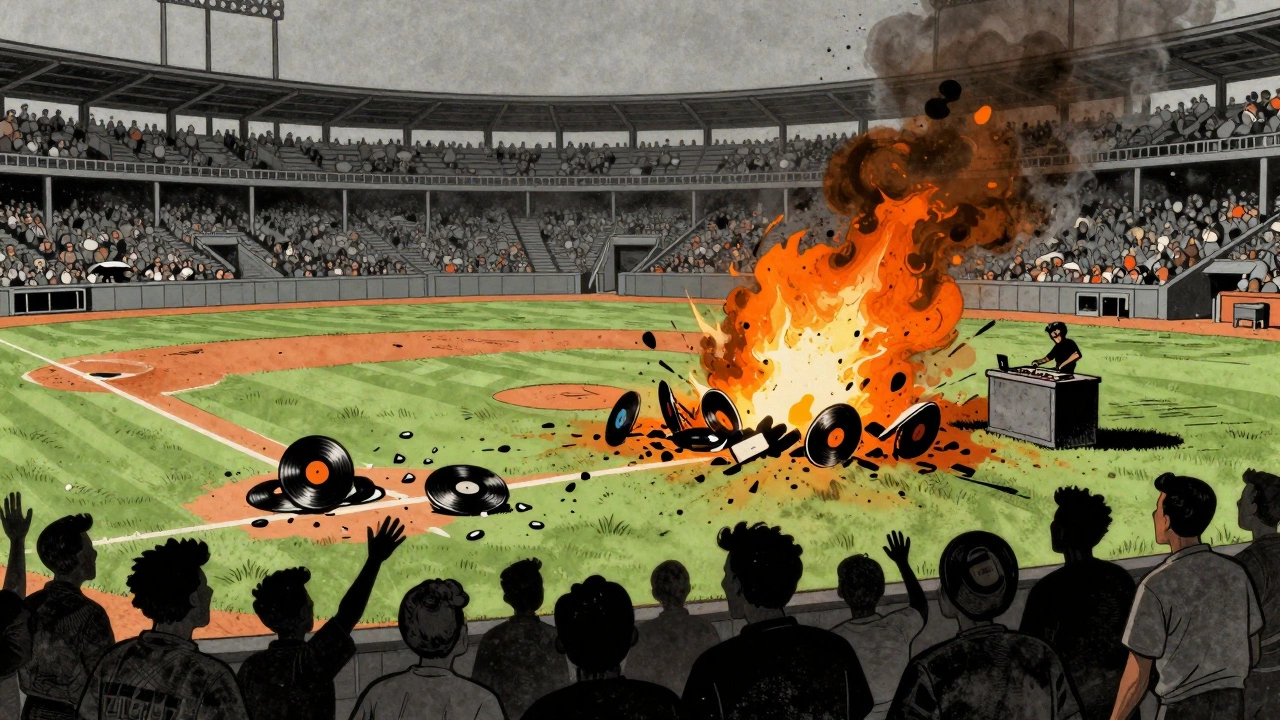
This success triggered a violent reaction. Heterosexual white men, feeling displaced by the dominance of a genre rooted in minority culture, rallied behind slogans like "Disco Sucks." Rock radio announcers viewed the rise of the beat as a direct threat to rock music's cultural supremacy. The conflict reached its boiling point on July 12, 1979, at Comiskey Park in Chicago. An event hosted by DJ Steve Dahl organized what became known as Disco Demolition Night. Thousands of fans threw vinyl records onto the field to be destroyed by explosives. It wasn't just about music; it was a symbolic rejection of the racial and sexual minorities the genre represented. It was an explosion of pent-up resentment disguised as a music preference debate.
The Quiet End of an Era
The backlash was significant, but the final blow to the genre came from a far more tragic source. The eruption of HIV/AIDS in the early 1980s decimated the very communities that sustained disco. Referred to then as "gay cancer," the virus caused a wave of deaths among DJs and club owners. The carnage intensified stigmatization of homosexuals, making many people uncomfortable dancing in those spaces again. Critics also noted that the music itself had begun to suffer from commercial fatigue. The lack of originality combined with rising racism and homophobia directed at the club culture caused the genre to fade rapidly by 1980. Despite this short reign-rarely does a dance movement fit so precisely within a decade-the cultural impact remains profound.
| Year | Event | Impact |
|---|---|---|
| 1970 | Opening of The Loft | Formal start of disco culture in NYC |
| 1977 | Release of Saturday Night Fever | Massive mainstream crossover |
| 1978-79 | Peak Popularity | Shift to white, suburban demographics |
| 1979 | Disco Demolition Night | Symbolic backlash against the genre |
| Early 1980s | HIV/AIDS Outbreak | Community loss and decline of club culture |
Legacy in Modern Sounds
Even though the specific craze faded, the foundation didn't disappear. Contemporary artists like Blondie, The Police, and the Pretenders incorporated disco influences into their post-disco punk and new wave sounds. More importantly, the rhythmic foundations remain audible in electronic dance music today. The techniques pioneered by Moroder and others laid the groundwork for house, techno, and hip-hop production. But for the millions who lived through the decade, the primary function remains the truth. It provided an essential escape from war, political turmoil, economic hardship, and the general malaise of American life during one of the nation’s most troubled decades. The dance floor proved that even in the darkest times, rhythm could offer a form of salvation.
When did the disco era officially begin?
While elements existed earlier, the official start is widely marked by the opening of The Loft by David Manusco on Valentine's Day, February 14, 1970, in New York City. This event consolidated the genre as a formal cultural movement.
Who originally listened to disco music?
Originally, the subculture flourished from 1970 to 1977 among marginalized communities, specifically fusing the gay urban party scene, Latino communities, and African American musical genres including soul, R&B, and funk.
What was Disco Demolition Night?
It was an event on July 12, 1979, at Comiskey Park in Chicago, hosted by Steve Dahl. Thousands destroyed disco records in stadium explosions, symbolizing a violent backlash rooted in racism and homophobia against the genre's minority roots.
How long did disco last as a dominant trend?
The movement was extremely short-lived, peaking between 1978 and 1979. It faded rapidly in 1980, becoming one of the briefest major dance movements in music history.
Did disco influence modern music?
Yes, despite its short duration, disco made a powerful lasting impact on music production. Its rhythmic foundations remain audible in contemporary electronic dance music and were incorporated by artists like Blondie and The Police.


