
Digital Tape and Early ADAT: Late-1980s Recording Advances
Key Takeaways
- The late 1980s marked the critical transition from expensive professional analog tape to accessible digital formats.
- Sony DASH and other pro digital formats existed but remained prohibitively costly for most musicians.
- Alesis ADAT democratized multitrack recording in the early 1990s using affordable S-VHS tapes.
- The Lightprotocol introduced with ADAT became a lasting industry standard for digital audio transmission.
- While tape formats eventually faded, ADAT changed how project studios operated permanently.
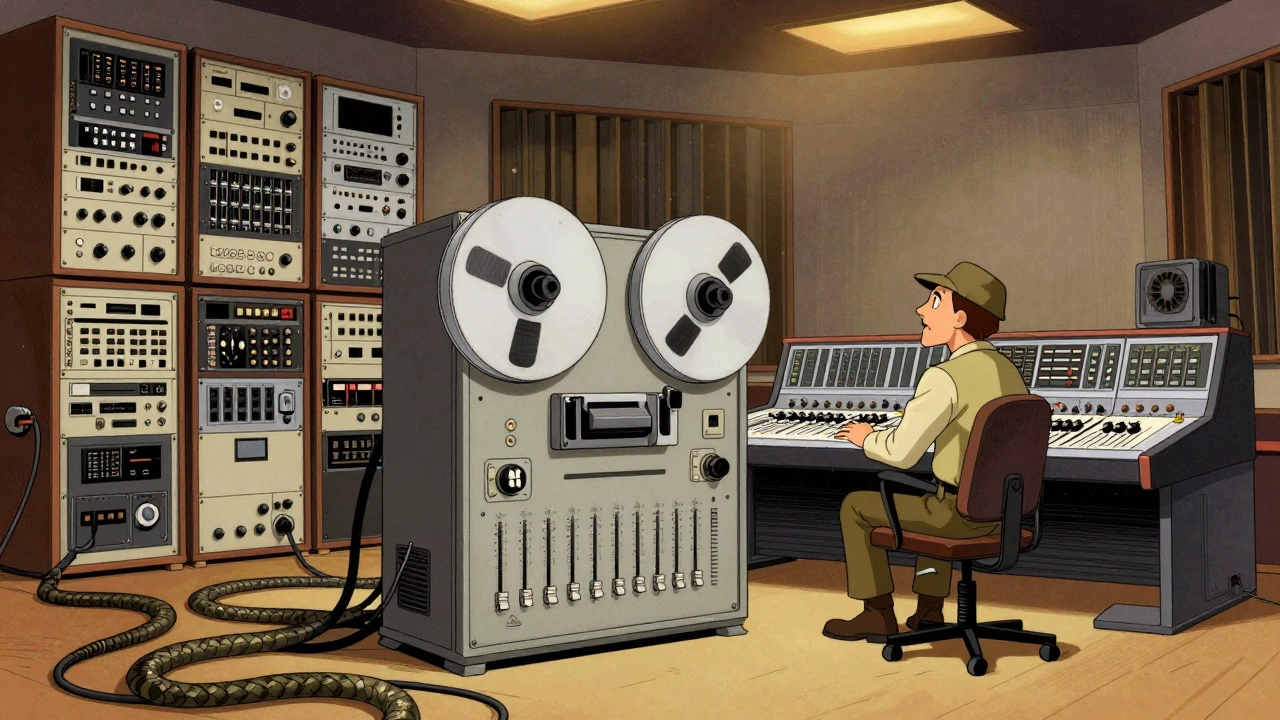
Imagine walking into a professional recording studio in 1988. The walls were lined with massive racks of gear, and right there in the control room sat a Studer A820, described as a pinnacle of analog engineering. This machine alone could cost upwards of $150,000. It was the gold standard for sound quality, utilizing 2-inch magnetic tape to capture up to 24 tracks of pristine audio. However, that price tag meant only the wealthy superstars and major labels could afford to record on such equipment. If you were an independent artist or running a small project studio, your options were extremely limited, usually restricted to 4-track cassette recorders or noisy portable devices.
This landscape began to fracture in the late 1980s due to a technological shift often overlooked in modern histories. While everyone talks about the arrival of the CD player in 1982, the story of Digital Audio Tape is where the real revolution started brewing. We aren't just talking about recording songs for playback; we are discussing the ability to build a song piece by piece. Engineers knew digital offered better fidelity and lower noise floors than analog, but the barrier to entry remained astronomical until a few brave companies decided to break the mold. That shift set the stage for what would become the defining tool of the next decade.
The High Cost of Early Digital Perfection
Before Alesis ADATAudio Digital Audio Tape arrived on the scene, professional studios had already begun experimenting with digital open-reel systems. Sony launched the DASH (Digital Audio Stationary Head) format, which allowed up to 48 tracks of audio to be recorded on half-inch tape. Technically, these machines were marvels. They featured error correction so robust that engineers could cut and splice the physical tape just like their old analog reels. For the audiophiles and engineers who grew up with analog warmth, this made the transition much less scary. You didn't have to learn a completely new workflow.
However, the DASH format suffered from a fatal flaw for the average creative: price. A single 24-track digital machine was easily priced over $100,000. When linked with mixing consoles and other necessary hardware, the investment could surpass $200,000. Meanwhile, formats like Digital Audio Tape (DAT) were emerging for stereo use, typically found in consumer boomboxes or simple overdubbing systems. Sony pushed R-DAT (Rotating Head DAT) because it allowed higher data density compared to stationary heads, but it struggled to adapt for true multitrack production needs initially. The market was split between "too expensive" professional systems and "not useful enough" consumer units. This vacuum created a massive opportunity for something that could sit comfortably in the middle ground.
How the ADAT Changed the Game
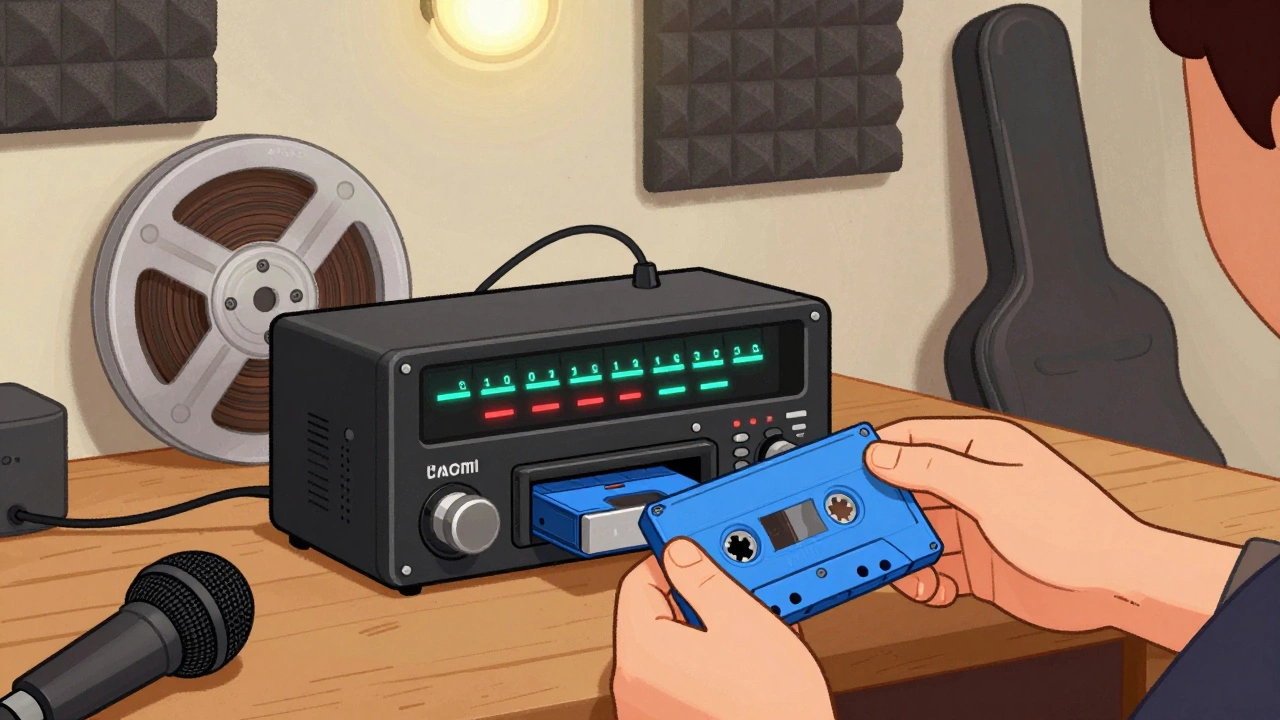
The answer came from California-based company Alesis, which announced the ADAT concept at the 1991 NAMM Show, with actual units shipping in early 1992. They took a seemingly unorthodox approach that looked like a compromise at first glance. Instead of custom proprietary tape reels, they utilized standard S-VHS tapes-the same plastic cartridges used for playing VHS movies in living rooms. To the untrained eye, using a video tape for professional audio sounded risky. Yet, this decision was brilliant economics. S-VHS tapes were incredibly cheap and readily available at any electronics store, whereas specialized 2-inch tape reels required ordering from specialty distributors and carried a premium price per minute of recording time.
The ADAT unit itself sold for approximately $3,995 when launched. While still a significant sum for a musician in 1992, it was roughly 5% of the cost of a comparable professional Sony DASH setup. Suddenly, a project studio could buy four ADATs, link them together, and have a fully functional 32-track digital recording environment for under $20,000 total. Compare this to the alternative of upgrading to a large-format console, which would have easily doubled that cost just for the transport machines. This affordability meant that bands who had previously rehearsed in garages could now record demos with professional-quality dynamics directly onto digital media.
| Format Type | Typical Track Count | Media Cost (Approx.) | Price per Unit |
|---|---|---|---|
| Analog 24-Track | 24 Tracks | $High Specialized Reel | $150,000+ |
| Professional DASH | 24-48 Tracks | $Very High Half-Inch | $100,000+ |
| ADAT (Single Unit) | 8 Tracks | $Low Consumer Cassette | $3,995 |
| TASCAM DA-88 | 8 Tracks | $Specialized DAT Cartridge | $~$5,500 |
Scaling Power with Lightpipe
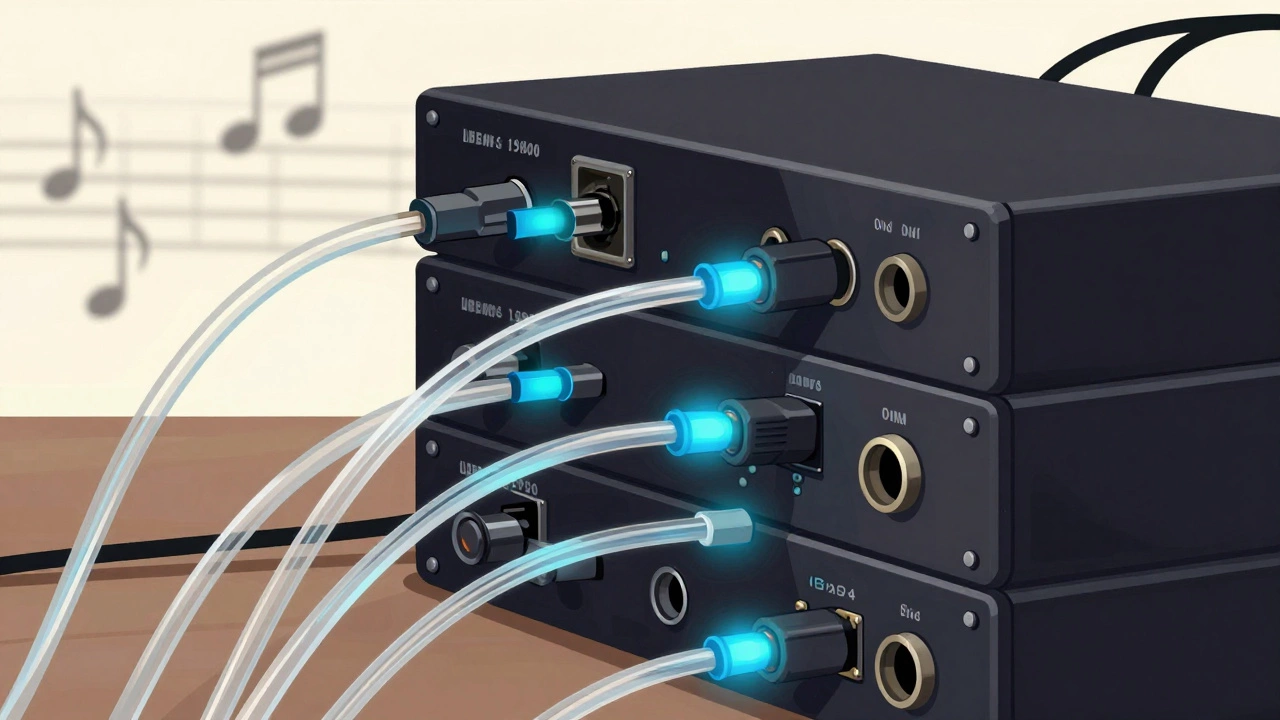
The real magic wasn't just the price or the tape media; it was the connection method known as Lightpipea fiber-optic digital audio protocol. Before Lightpipe, expanding your track count meant buying more discrete machines and patching them together with bulky AES digital cables or sync pulses that were prone to jitter and dropouts. ADAT introduced Toslink connectors-thin, fragile-looking plastic jacks that routed data as light through glass fibers. These cables were immune to electrical interference and hum, a constant plague in analog setups.
What made this revolutionary was the daisy-chaining capability. Two ADATs connected via Lightpipe could operate as a cohesive 16-track unit with sample-accurate timing. You could chain up to 16 machines theoretically, though practical limits usually capped around 64 tracks due to mechanical alignment constraints. In a typical workflow, if a song required more space than eight tracks, you simply plugged in another deck. There was no need to sell your old gear. The modular nature of this system meant studios could grow with their budget. Over time, you might buy one deck, then another later, without ever needing to replace your existing investment. This scalability cemented ADAT as the de facto standard for project studios throughout the 1990s.
Competition and Cultural Shift
ADAT did not exist in a vacuum. Competitors quickly recognized the potential of the low-cost digital recorder market. TASCAM released the DA-88, which used a similar concept but relied on custom DAT cassettes rather than generic S-VHS tapes. The DA-88 was technically superior in reliability and offered a slightly quieter signal path, earning it an Emmy award for technical excellence. Despite these advantages, it failed to displace the ADAT in terms of popularity. Why? Because the ADAT ecosystem built around the S-VHS tapes created a massive inventory advantage. Any video rental store had stock of blank tapes, making media acquisition instantaneous.
Culturally, this technology shifted power away from the traditional "Big Three" studios in cities like New York, LA, and London. Independent producers could rent out their home basements equipped with four chained ADATs and offer "digital tracking" services at prices major studios wouldn't touch. This democratization accelerated the rise of genres that thrived outside the mainstream pop sphere, particularly Grunge and Hip Hop, which relied heavily on layering vocals and beats on top of raw tracks. The grit of the format-even the slight compression inherent in its 16-bit converters-became part of the sonic signature of the era. Bands wanted that "digital punch" without the hiss of analog tape.
The Decline and Lasting Legacy
As the turn of the millennium approached, another shift occurred. Computer processing power exploded, and hard drive recording software like Digidesign's Pro Tools became viable alternatives to tape. Hard drives offered instant random access editing without the mechanical latency or wear-and-tear of spinning reels. By 2000, selling new tape-based recorders made little financial sense to manufacturers. Alesis even produced the ADAT HD24, a hard drive version, to extend the brand's life, signaling that the medium had changed while the philosophy remained.
However, saying ADAT died would be inaccurate. The physical tape format has largely been retired, replaced by computer files. Yet, the Lightpipe standard remains alive and well. Modern audio interfaces and synthesizers often include optical ports labeled as "ADAT" outputs simply to maintain compatibility. It is a rare case of a proprietary standard becoming open source through sheer adoption. The TEC Awards even inducted the original ADAT into their Hall of Fame in 2004, recognizing it for beginning a revolution of affordable tools. Today, collectors still hunt for the "blackface" models, valuing not just their utility, but their place in the timeline of musical history.
Why did ADAT use S-VHS tapes instead of standard DAT?
S-VHS tapes were chosen primarily for cost availability. Generic video tapes were mass-produced and cheap to find anywhere. DAT tapes required special manufacturing for the specific audio carrier shell and were significantly more expensive, keeping the barrier to entry too high for the budget-conscious project studio market.
Can I still use ADAT machines in modern studios?
Yes, legacy ADAT units are often used today. Many modern interfaces feature optical "ADAT" inputs allowing users to connect vintage gear. Additionally, the optical cable standard remains a common way to add 8 channels of digital input or output to a workstation.
What was the main disadvantage of ADAT compared to DASH?
The primary downsides were the dynamic range and resolution. ADAT was limited to 16-bit depth and sometimes exhibited audible distortion at higher frequencies compared to the cleaner converters found in high-end open-reel digital machines like Sony DASH.
How many ADAT machines could be linked together?
Technically, up to 16 units could be synchronized using the master/slave clock relationship established through the Lightpipe connection, offering a theoretical maximum of 128 tracks, though stability was best maintained with fewer units.
Is the Lightpipe standard still used today?
Yes, Lightpipe is effectively the industry standard for 8-channel digital audio transmission via optical fiber. Even non-Alesis gear uses "ADAT Optical" ports interchangeably with the term Lightpipe to describe the same connector functionality.
In retrospect, the late 80s and early 90s were a bridge period. We moved from the heavy, warm, and expensive world of analog toward the cold, precise, and accessible future of digital storage. Machines like the Studer A820 laid the groundwork for fidelity, but systems like the ADAT ensured that every bedroom producer could participate. As we look back from 2026, it is clear that while file formats have shifted again to cloud and server-based workflows, the core idea remains: accessibility drives creativity. The ADAT proved that high-fidelity recording wasn't a privilege reserved for the elite, but a tool for anyone willing to plug in the cables.


