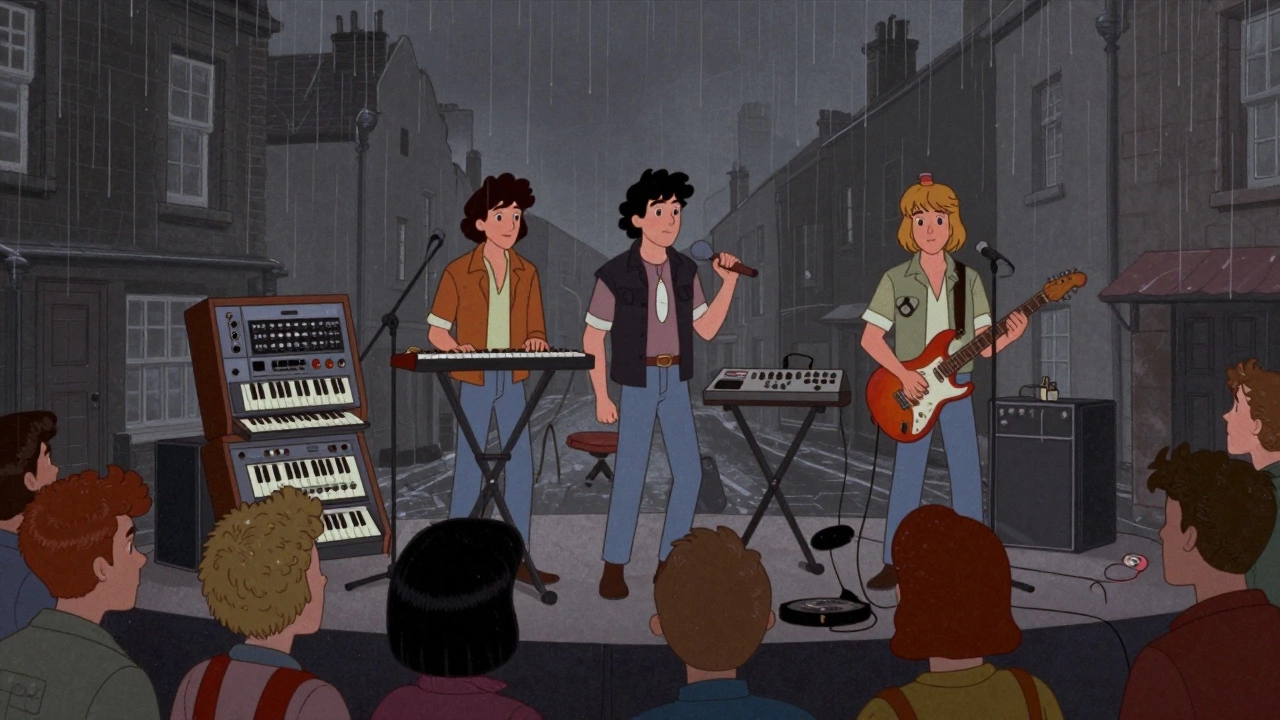

Imagine a room full of people in 1980, staring at a few guys behind a wall of plastic keyboards. At first glance, it looks static, maybe even boring. But that's how Depeche Mode is an English electronic band that transformed the landscape of synth-pop through a blend of industrial sounds and deep emotional longing started. They didn't have a massive light show or pyrotechnics in the early days; they had melodies that felt like a rainy Tuesday in Basildon and a level of intensity that eventually turned these concerts into religious experiences for thousands of fans.
The Early Days: From Composition of Sound to the Stage
Before they were global icons, they were just kids called Composition of Sound. When they transitioned to the name Depeche Mode, they hit the road fast. Their first official tour kicked off on May 31, 1980, and wrapped up by December. It was a raw, experimental time. With only 19 concerts on the books, they were essentially figuring out how to move electronic music from a studio environment to a live venue without it sounding like a karaoke night.
Back then, the gear was temperamental. They weren't using the streamlined digital workstations we see today. They relied on early synthesizers-machines that were prone to drifting out of tune if the room got too hot. This fragility actually added a layer of tension to the shows. Every note felt like a gamble, and that unpredictability mirrored the nervous energy of the New Wave movement. If you look at the archival recordings from 1980, you can hear that transition from a fledgling pop act to a band that actually understood how to command a room using nothing but oscillators and a drum machine.
Expanding the Horizon: The See You and Construction Tours
By 1982, the band wasn't just playing local pubs. The See You Tour saw them crossing oceans, hitting iconic spots like The Ritz in New York and stepping into the BBC Paris Studio in London. This was the moment the "devotion" part of the equation started to click. They weren't just playing songs; they were building a community of outsiders who felt seen by the band's brooding atmosphere.
The 1983 Construction Time Again Tour pushed the sonic boundaries even further. They started incorporating industrial samples-the sound of metal hitting metal-which shifted the mood from "catchy pop" to something more oppressive and mechanical. Playing venues like the Ulster Hall in Belfast or Colston Hall in Bristol, they proved that electronic music could feel heavy and physical, not just ethereal. This was a crucial pivot. They stopped trying to sound like a radio hit and started trying to sound like the modern world: cold, metallic, and slightly anxious.
| Tour / Era | Core Sound | Key Characteristic | Scale |
|---|---|---|---|
| 1980 Debut | Pure Synth-pop | Experimental & Raw | Small Venues |
| See You (1982) | Melodic Electronic | International Growth | Mid-sized Clubs |
| Construction Time (1983) | Industrial/Sampling | Found Sound Integration | Theater Halls |
| Some Great Reward (1984-85) | Dark Wave/Industrial | Atmospheric Tension | Global Arenas |
| 1986 Intensive Period | Polished Electronic | High-Frequency Touring | Major Arenas |
The Peak of 80s Darkness: Some Great Reward
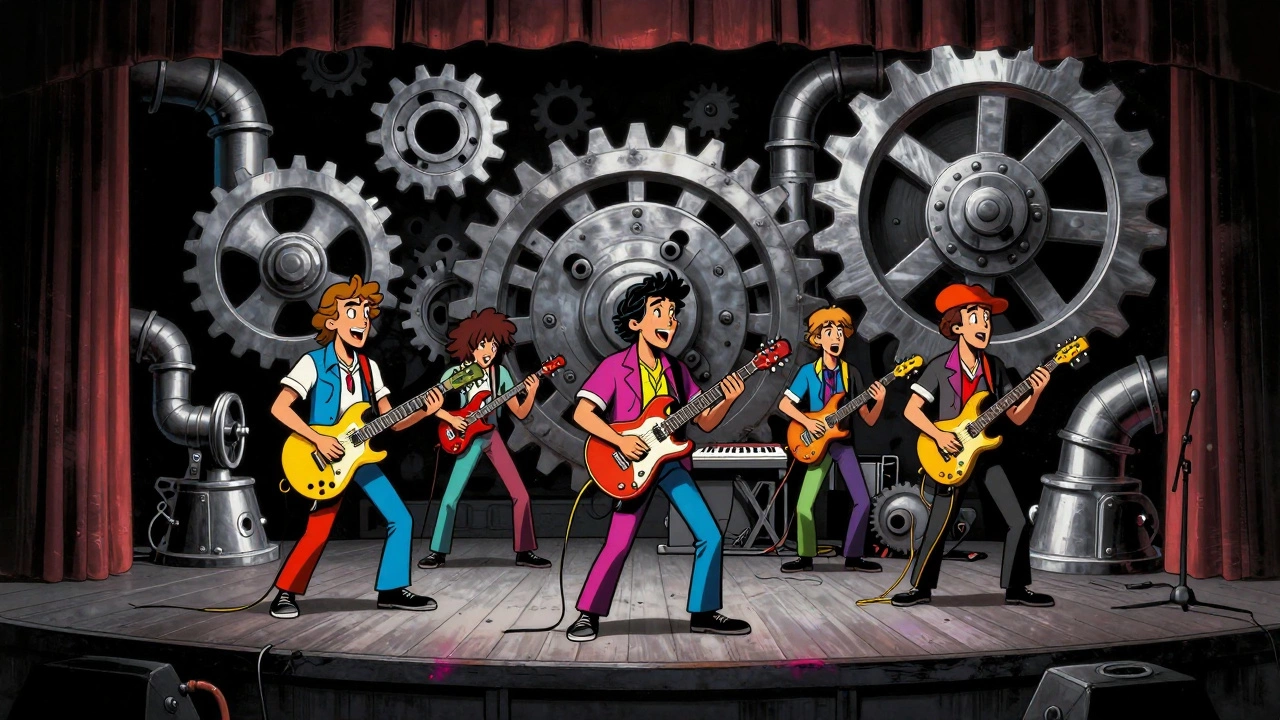
If the early 80s were about discovery, the 1984-1985 Some Great Reward Tour was about domination. This was a marathon of a tour, lasting ten months and spanning 81 shows. When they played the Apollo Manchester or the Barrowlands Glasgow, the vibe had completely shifted. The "darkness" wasn't just a lyrical theme; it was an aesthetic. The lighting became moodier, the shadows longer, and the sound more aggressive.
This era cemented the relationship between the band and their fans. It wasn't just a concert anymore; it was a gathering of the disillusioned. The music explored themes of power, obsession, and faith, which resonated deeply with a youth culture caught between the neon gloss of the 80s and a growing sense of internal alienation. The use of sequencers allowed them to create relentless, driving rhythms that felt like a heartbeat speeding up during a panic attack. It was exhilarating and terrifying all at once.
1986: The Industrial Machine
By 1986, the band was essentially a touring machine. They played a staggering 84 concerts in a single year. This level of intensity forced them to refine their live setup. Performances at the Arènes de Bayonne in France and the legendary Wembley Arena in London showed a band that had mastered the art of the electronic spectacle. They knew exactly how to balance the cold precision of the machines with the raw, human emotion of the vocals.
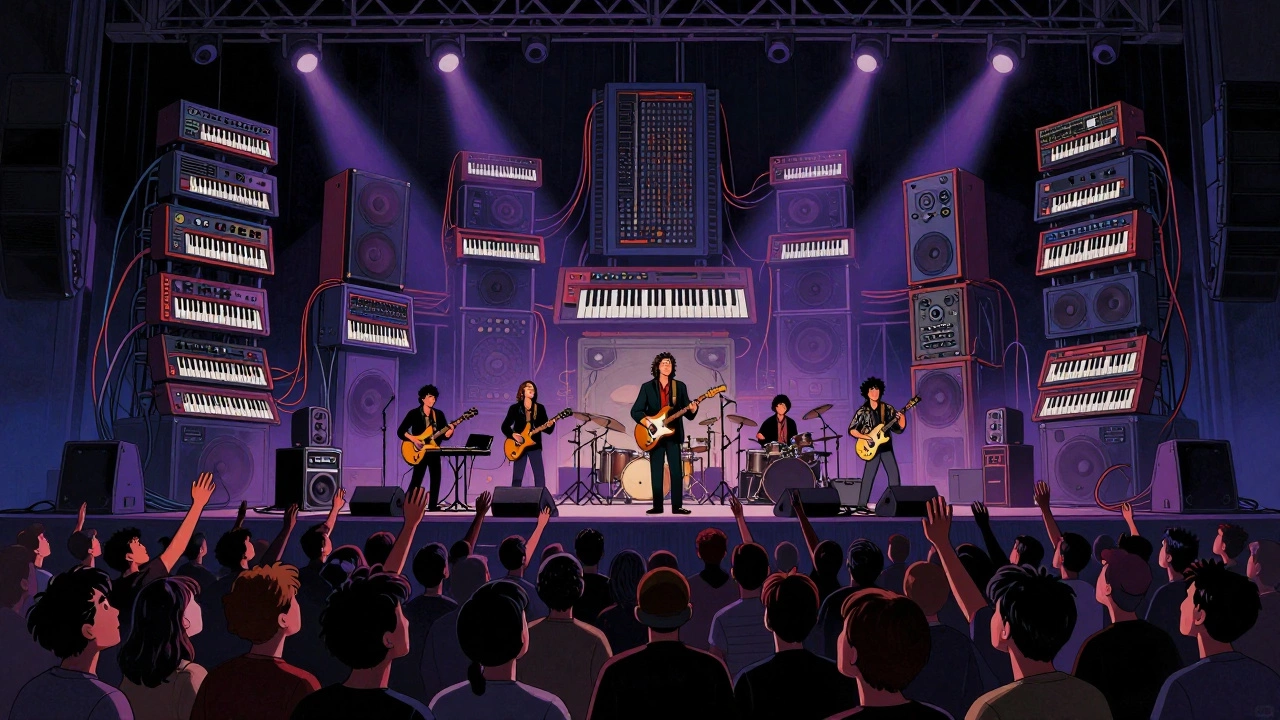
At Wembley, you could feel the scale of the production. The sound didn't just fill the room; it vibrated through the floor. They had moved beyond the simple "three guys and some keyboards" setup to a sophisticated sonic architecture. They used layers of synthesis to create a wall of sound that could pivot from a whisper to a scream in a fraction of a second. This precision is what made their 1980s run so influential; they proved that electronic music didn't have to be sterile-it could be visceral.
The Gear That Built the Gloom
You can't talk about these shows without talking about the tools. While the band kept some of their secrets, the 80s were defined by the move from analog to digital. The early days were dominated by analog synthesizers, which gave them that warm, slightly unstable glow. As the decade progressed, the introduction of digital sampling allowed them to bring real-world noises-clanging pipes, steam whistles, and heavy machinery-directly into their setlists.
This technical evolution is what enabled the "darkness" to feel authentic. They weren't just playing a "scary" chord; they were using the actual sounds of urban decay. By the time they reached the late 80s, their setup was a hybrid of cutting-edge tech and intuitive songwriting. They used these machines not as replacements for instruments, but as extensions of their own psychological states.
Why the Devotion Lasts
Why do people still talk about these 80s shows in 2026? Because Depeche Mode tapped into something that transcends the era of big hair and shoulder pads. They captured the feeling of being an outsider in a world that demands conformity. Whether it was a small club in 1980 or a packed arena in 1986, the core energy was always about the connection between the performer and the fan through the medium of electronic sound.
They turned the synthesizer-a tool often criticized for being "souless"-into a vehicle for profound human emotion. When you listen to the bootlegs from the 1980s, you don't just hear music; you hear a movement. It was the sound of a generation finding a way to be alone together in the dark, driven by a beat that refused to stop.
Did Depeche Mode use real drums in their 80s live shows?
For the vast majority of their 1980s run, the band relied on electronic drum machines and sequencers. This gave them their signature precise, mechanical drive. It wasn't until later in their career that they fully integrated organic drumming into their primary live sound.
Which 1980s tour was the most influential?
The Some Great Reward Tour (1984-1985) is often cited as a turning point. It shifted the band's image from synth-pop stars to architects of a darker, industrial-influenced sound and expanded their reach into massive international arenas.
What happened to the band's original name?
Before they were Depeche Mode, they performed and recorded demos under the name Composition of Sound. They changed it shortly before their first official tour in 1980 to better reflect the "depeche" (dispatch) style of communication and the "mode" of their music.
Are there any recordings available from the 1980 tour?
Yes, although they are rare. Only about three dates from the original 1980 tour period have recordings that remain available for archival study and fan collections.
How did their sound change between 1980 and 1986?
They moved from a bright, melodic synth-pop style in 1980 toward a much heavier, more atmospheric sound by 1986. This involved incorporating industrial samples, deeper bass frequencies, and more complex thematic lyrics focused on religion and obsession.


