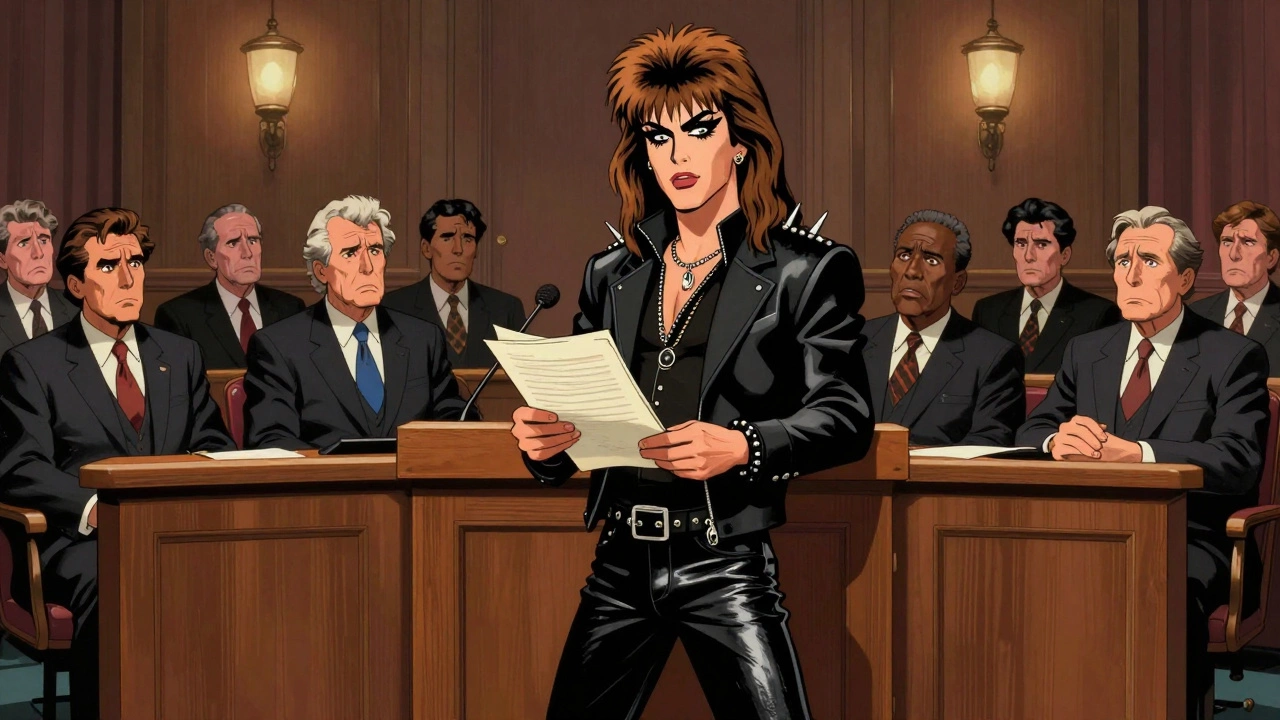

Imagine walking into a government hearing wearing heavy eyeliner, leather pants, and a spiked collar. You’re there to defend your right to make loud music while senators stare at you like you’ve just walked off a spaceship. That was the reality for Dee Snider, frontman of the American heavy metal band Twisted Sister, on September 19, 1985. He wasn’t there to perform. He was there to fight.
This wasn’t just a rock star’s ego trip. It was the climax of a massive cultural war over what children should be allowed to hear. On one side stood the Parents Music Resource Center (PMRC), a Washington D.C.-based advocacy group co-founded by Tipper Gore. On the other stood the entire heavy metal community, with Twisted Sister as its unlikely spokesperson. The outcome changed how we buy music forever, creating the black-and-white "Parental Advisory" sticker that still appears on albums today.
The Spark: "We’re Not Gonna Take It" and the Filthy Fifteen
To understand why Twisted Sister became the face of this battle, you have to look at their biggest hit. Released in 1984, "We’re Not Gonna Take It" was an anthem of teenage rebellion. The music video showed a teenager rebelling against an authoritarian father. To fans, it was a fun, energetic protest song about standing up to bullies or oppressive bosses. To the PMRC, it looked like something else entirely.
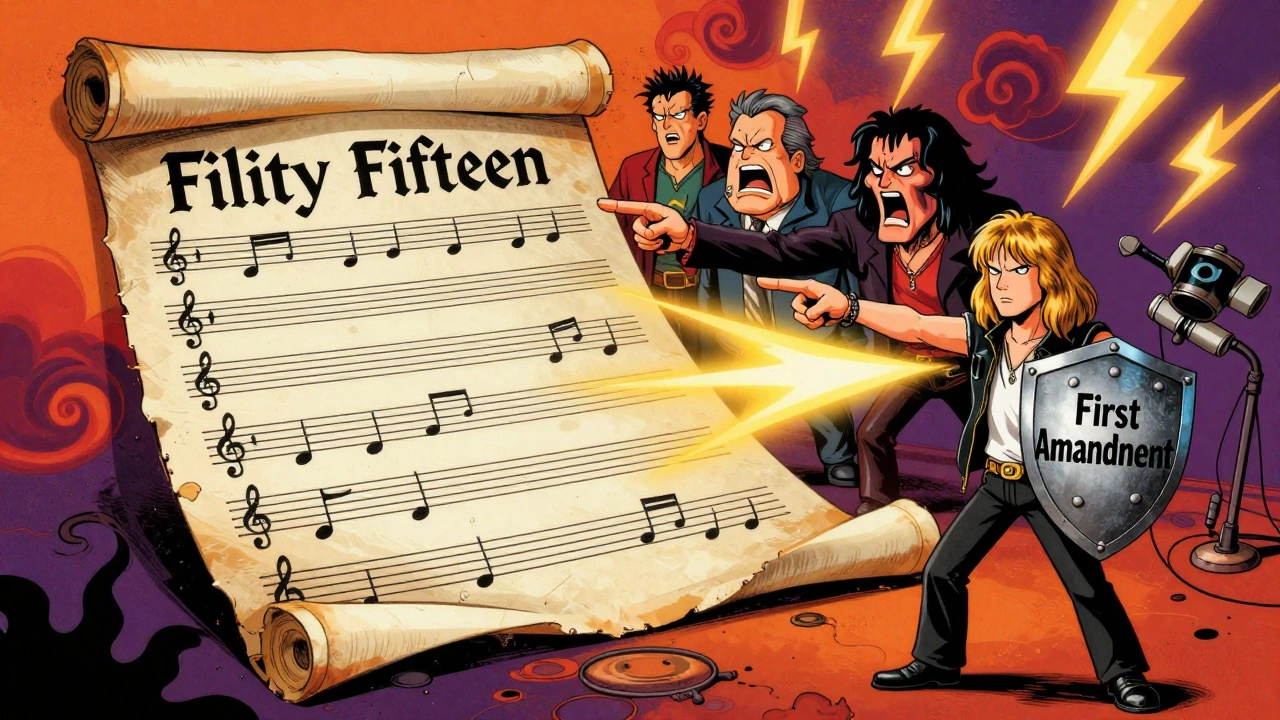
In early 1985, the PMRC compiled a list known as the Filthy Fifteen, a list of 15 songs deemed particularly offensive by the Parents Music Resource Center. This list targeted songs with sexual, violent, or drug-related lyrics. Twisted Sister’s "We’re Not Gonna Take It" landed on it, alongside tracks by Mötley Crüe and Judas Priest. The PMRC argued these songs encouraged disrespect for parental authority and promoted harmful behavior.
The problem? The PMRC members had never talked to the artists. They interpreted lyrics based on their own fears and stereotypes about heavy metal. For example, they claimed another Twisted Sister song, "Under the Blade," referenced sadomasochism and bondage. In reality, Snider wrote it about a bandmate’s anxiety before undergoing surgery. The disconnect between artistic intent and public perception was huge, and it set the stage for a direct confrontation.
The Hearing: "Dee Goes to Washington"
The pressure mounted throughout 1985. Record labels were being lobbied hard to implement warning labels. Before any final decision was made, the United States Senate Committee on Commerce, Science, and Transportation scheduled a public hearing on "porn rock." The committee invited three musicians to testify against the PMRC’s proposals: Frank Zappa, John Denver, and Dee Snider.
Snider’s appearance on September 19, 1985, is now legendary. He arrived not as a wild biker, but as a prepared, articulate witness. He brought a written statement and dressed in his signature glam metal attire, which immediately challenged the senators’ preconceived notions. Many expected a drug-addled hooligan; instead, they got a practicing Christian who didn’t drink or use drugs.
During the testimony, Snider dismantled the PMRC’s arguments point by point. He explained the true meaning behind "Under the Blade," proving that the PMRC had imposed their own meanings onto the lyrics without consulting the creator. He argued that taking lyrics out of context was dangerous and that parents, not the government, should decide what their children listen to. His calm demeanor and detailed rebuttals stunned the room. As many commentators later noted, he effectively exposed the logical flaws in the censorship campaign.
The Result: The Birth of the Parental Advisory Label
Despite Snider’s powerful defense, the PMRC achieved its immediate goal. The political pressure was too strong for the recording industry to ignore. In August 1985, nineteen major record companies agreed in principle to place warning labels on albums with explicit content. By November 1, 1985, the Recording Industry Association of America (RIAA) finalized the system.
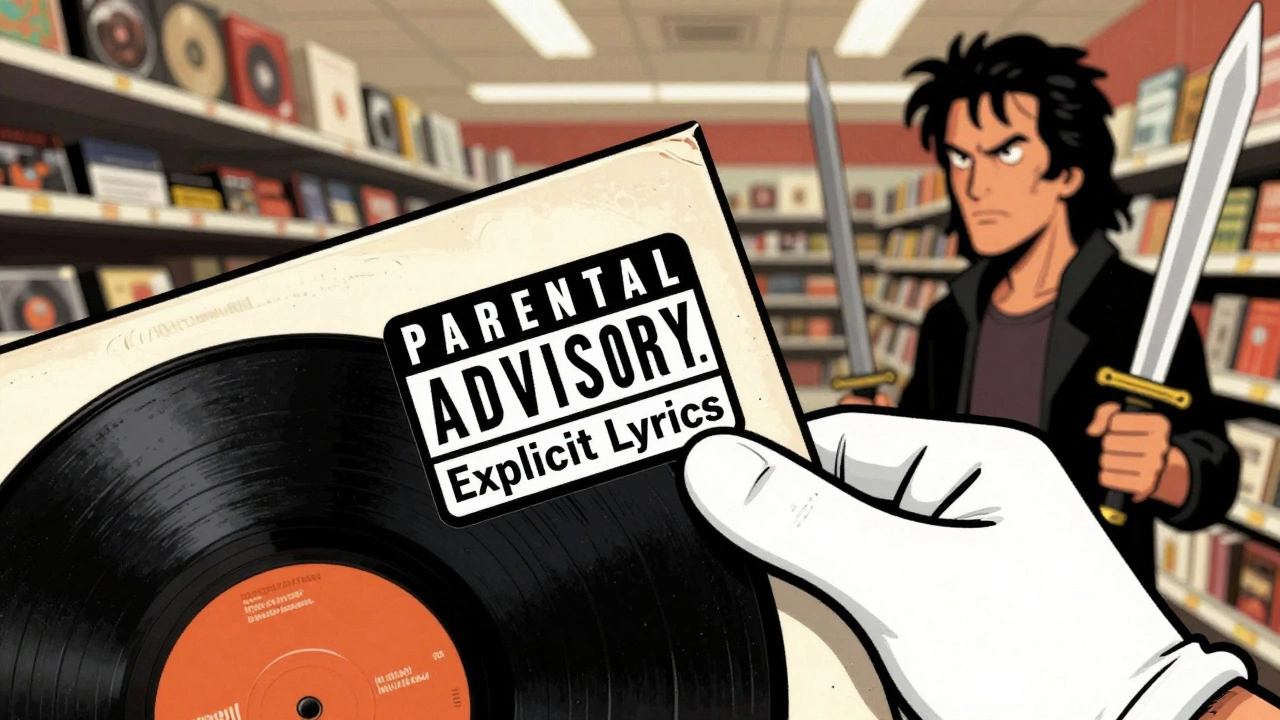
Instead of detailed warnings for sex, violence, or drugs, the industry adopted a generic Parental Advisory: Explicit Lyrics label. This decision was a compromise. It avoided legal mandates for specific categories but created a standardized visual cue for consumers. The PMRC’s work led directly to the widespread adoption of this sticker, which became an industry standard throughout the late 1980s and 1990s.
| Entity | Role | Primary Goal |
|---|---|---|
| PMRC | Advocacy Group | Implement warning labels and restrict access to explicit music |
| Tipper Gore | Co-founder | Protect children from perceived harmful lyrical content |
| Twisted Sister | Targeted Artist | Defend artistic freedom and First Amendment rights |
| RIAA | Industry Body | Create a voluntary labeling system to avoid government regulation |
The Hidden Cost: Retail Blacklists and Economic Censorship
Here’s where things get tricky. The label was supposed to be informational, helping parents make choices. But in practice, it became a tool for economic censorship. Major retail chains, most notably Wal-Mart, refused to carry albums with the Parental Advisory sticker. Other stores limited sales to adults only.
This created a massive distribution barrier for artists. If you got labeled, you lost access to millions of potential customers. It wasn’t a law banning your music; it was a market penalty. For heavy metal bands, this was devastating. The genre was already marginalized, and the label reinforced the stigma that metal was dangerous or inappropriate. The PMRC’s victory wasn’t just symbolic; it had real financial consequences for musicians who challenged social norms.
Legacy: Free Speech vs. Moral Panic
Decades later, historians view the 1985 hearings as a pivotal moment in American culture wars. Dee Snider’s testimony is often cited as a heroic defense of free speech. He proved that heavy metal musicians could be intelligent, responsible, and articulate. He shifted the narrative from "parents vs. musicians" to "free expression vs. moral panic."
The precedent set by the PMRC extended beyond music. The concept of rating systems influenced other media, including the creation of the Entertainment Software Rating Board (ESRB) for video games in the 1990s. While ratings help parents navigate content, they also raise ongoing questions about who gets to define what is "explicit" or "offensive."
Twisted Sister continues to commemorate "Dee Goes to Washington" every year. Fans see it not just as a music history event, but as a civil liberties milestone. It reminds us that art can be provocative without being harmful, and that context matters. The black-and-white sticker remains on albums today, a permanent scar from a battle fought in a Senate hearing room by a man in makeup and leather.
Why was Twisted Sister targeted by the PMRC?
Twisted Sister was targeted because their hit song "We’re Not Gonna Take It" was included on the PMRC's "Filthy Fifteen" list. The PMRC interpreted the song's themes of rebellion as encouraging disrespect for parents, despite the band's intent to create a general protest anthem against oppression.
What did Dee Snider say at the Senate hearing?
Dee Snider testified that he did not use drugs or alcohol, was a practicing Christian, and that the PMRC misinterpreted his lyrics. He argued that parents should control what their children hear, not the government, and warned that voluntary labeling could lead to de facto censorship through retail boycotts.
Did the PMRC succeed in censoring music?
The PMRC succeeded in establishing the "Parental Advisory: Explicit Lyrics" label, which became an industry standard. However, they failed to ban any music. The label often resulted in economic censorship, as retailers like Wal-Mart refused to sell labeled albums, limiting their distribution.
Who else testified at the 1985 Senate hearing?
Alongside Dee Snider, composer Frank Zappa and singer-songwriter John Denver testified against the PMRC's proposals. All three argued that the campaign represented a threat to free speech and artistic integrity.
What is the "Filthy Fifteen"?
The Filthy Fifteen was a list of 15 songs released by the PMRC in 1985. These songs were singled out as containing particularly offensive sexual, violent, or drug-related lyrics. Twisted Sister's "We’re Not Gonna Take It" was one of the tracks on this list.