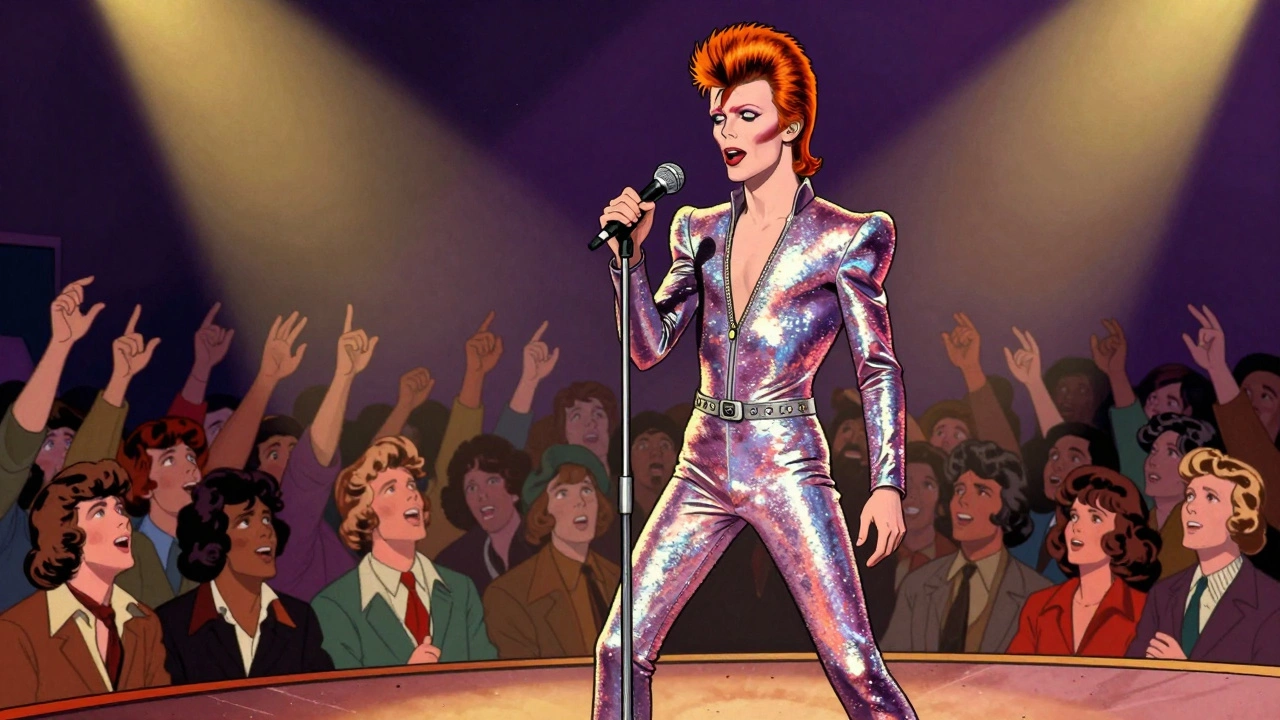

Imagine a world where the dominant fashion is denim, the music is mellow folk-rock, and rebellion looks like wearing tie-dye. Now imagine someone standing on stage in a glittering, figure-hugging jumpsuit with orange hair, singing about being an alien messiah from Mars. That was Ziggy Stardust, a bisexual alien rock star persona created by David Bowie that revolutionized visual presentation and gender norms in rock music. This wasn't just a costume change; it was a calculated cultural earthquake.
When David Bowie, English musician born David Robert Jones who pioneered artistic reinvention through multiple personas debuted this character in 1972, he didn't just create a hit album. He invented a new language for rock performance. Today, we see artists constantly shifting their image, but back then, it was radical. Bowie showed us that a rock star could be a constructed theatrical entity, not just a guy with a guitar. Let’s break down how this icon was built, why it mattered, and how it still shapes music today.
The Birth of a Post-Modern Rebel
To understand Ziggy, you have to look at what came before. In the late 1960s, the hippie movement dominated culture. It was all about naturalism, peace, love, and lots of denim. By 1971, Bowie and his circle in London were exhausted by it. They felt the era was dead, and they wanted something fresh-something postmodern.
Bowie has said he was "fed up with denim and the hippies." He saw an opportunity to create something entirely different. He wasn't looking to fit into the existing rock mold; he wanted to shatter it. This mindset led him to explore Japanese kabuki theater, mime, and the concept of the "plastic" rock star. He wanted to define the archetype of the messiah rock star, someone who could channel the anxieties of a generation facing an impending apocalyptic disaster.
The idea took shape during the recording sessions for his fourth studio album, Hunky Dory. But it fully exploded with his fifth album, The Rise and Fall of Ziggy Stardust and the Spiders from Mars, 1972 concept album by David Bowie featuring the fictional narrative of an alien rock star. Released in June 1972, this record wasn't initially planned as a tight concept album. Bowie admitted later that some songs didn't fit the story perfectly. However, the loose narrative of an alien messenger sent to Earth five years before its destruction became compelling enough to hold the whole project together.
Crafting the Alien Messiah
Ziggy wasn't pulled from thin air. Bowie drew inspiration from several real-life figures and artistic movements. One key influence was Vince Taylor, a failed rocker Bowie met in the mid-1960s. Taylor was obsessed with Jesus Christ and aliens, which Bowie found fascinatingly unhinged. Other musical heroes like Lou Reed, Marc Bolan, and Iggy Pop also shaped the sound and attitude.
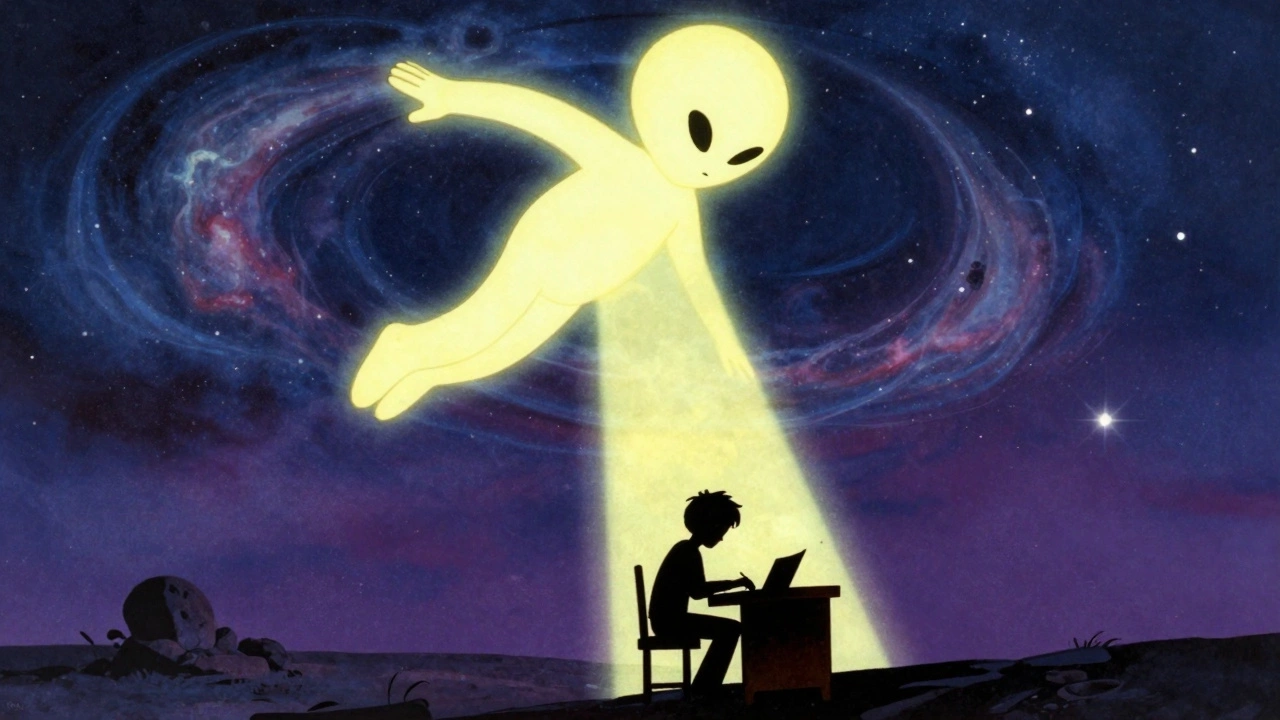
But the core of Ziggy was the character itself. According to the lore, Ziggy received a dream message from "the infinites" (black-hole jumpers) to write the song "Starman." This track became the beacon of hope for humanity. The album tells the story of Ziggy’s rise to fame, his struggle with the corrupting power of celebrity, and his eventual self-destruction in the closing track, "Rock 'n' Roll Suicide."
This narrative arc was crucial. It wasn't just about partying; it was about the danger of idol worship. Bowie used Ziggy to explore how fans project their desires onto stars, often destroying both the star and themselves in the process. This depth gave the glam rock aesthetic a serious intellectual backbone.
The Sound and the Look
You can't talk about Ziggy without talking about Mick Ronson, British guitarist and multi-instrumentalist who co-created the sonic signature of Ziggy Stardust. Ronson provided the electric guitar riffs, piano parts, and backing vocals that defined the album's sound. His work on tracks like "Moonage Daydream" and "Suffragette City" gave the music a raw, powerful edge that balanced Bowie's theatricality.
Visually, Ziggy was a shock. Bowie combined elements of raw sexuality and power through glittering outfits and outrageous makeup. He described himself as creating a "totally credible, plastic rock 'n' roll singer." Unlike the Monkees, who were seen as manufactured pop acts, Bowie embraced the artificiality. He made the "plastic" aspect intentional and cool. This look challenged traditional gender roles, presenting a rock star who was androgynous, fluid, and unapologetically dramatic.
The breakthrough moment came in July 1972 when Bowie performed "Starman" on the BBC's Top of the Pops. With his distinctive orange mullet and shimmering outfit, he captivated millions. The album quickly climbed the charts, and Bowie’s appearance became a symbol of liberation for many young people who felt constrained by societal norms.
The Death of Ziggy
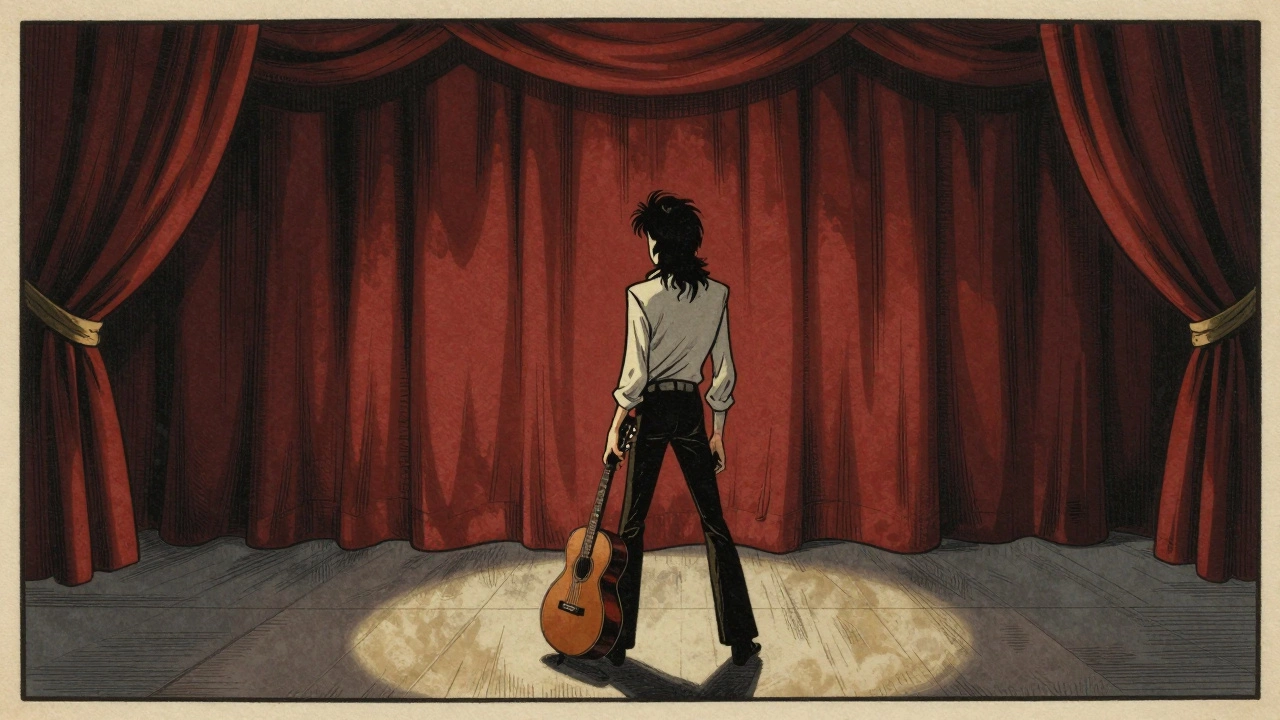
Perhaps the most brilliant move Bowie made was killing off Ziggy. On July 3, 1973, at London's Hammersmith Odeon, Bowie announced to the crowd, "This will be the last show that we'll ever do." He retired the character at the peak of its popularity. Why? Because he was bored. More importantly, he understood that keeping Ziggy alive would dilute his impact. By ending it abruptly, he preserved the myth.
This decision reflected Bowie’s broader artistic philosophy: constant reinvention. He refused to stay static. After Ziggy, he evolved into Aladdin Sane, Halloween Jack, Major Tom, and the Thin White Duke. Each persona allowed him to explore different themes and sounds without being trapped by past successes.
Lasting Cultural Impact
The influence of Ziggy Stardust extends far beyond 1970s rock. The character opened doors for visual and musical experimentation across genres. Artists like Lady Gaga, Kanye West, Depeche Mode, Nine Inch Nails, and Joy Division have all cited Bowie’s work as a major influence. Whether it’s the theatricality of pop performances or the blending of gender identities in music, Ziggy paved the way.
Today, fifty years later, Ziggy remains one of the most recognizable icons in music history. He demonstrated that rock music could be conceptual, androgynous, and visually striking while maintaining commercial appeal. For anyone interested in how art intersects with culture, Ziggy Stardust is a masterclass in creative risk-taking.
| Element | Description | Impact |
|---|---|---|
| Visual Style | Glittering jumpsuits, orange hair, androgynous makeup | Challenged gender norms in rock |
| Narrative Arc | Alien messiah rises and falls due to fame | Added depth to glam rock aesthetics |
| Musical Collaboration | Work with Mick Ronson and Spiders from Mars | Created iconic guitar-driven sound |
| Cultural Rebellion | Rejection of hippie/denim culture | Defined post-modern rock identity |
Frequently Asked Questions
Who is Ziggy Stardust?
Ziggy Stardust is a fictional rock star persona created by David Bowie. He is portrayed as a bisexual alien from Mars who comes to Earth to deliver a message of hope before an apocalyptic disaster.
What album features Ziggy Stardust?
The primary album is "The Rise and Fall of Ziggy Stardust and the Spiders from Mars," released in 1972. It serves as a rock opera telling the story of the character's rise and fall.
Why did David Bowie retire the Ziggy persona?
Bowie retired Ziggy in 1973 because he felt bored with the concept and wanted to avoid being typecast. He believed in constant artistic reinvention and feared that keeping Ziggy alive would diminish its impact.
How did Ziggy Stardust influence modern music?
Ziggy influenced countless artists across genres, including Lady Gaga, Kanye West, and Depeche Mode. He normalized theatricality, gender fluidity, and conceptual albums in popular music.
Who played guitar on the Ziggy Stardust album?
Mick Ronson was the lead guitarist for the Spiders from Mars, Bowie's backing band. His guitar work is central to the sound of the Ziggy Stardust album.
Is Ziggy Stardust based on a real person?
While Ziggy is fictional, Bowie drew inspiration from various sources, including failed rocker Vince Taylor, Lou Reed, and Marc Bolan. The character synthesizes these influences into a unique archetype.