

Imagine you are a cult hero. You have sold out art-rock albums, confused critics with avant-garde experiments, and built a loyal but niche fanbase. Then, in 1982, you decide you want to be the biggest star on the planet. Not just respected-ubiquitous. That was David Bowie’s move. He didn’t just release an album; he engineered a cultural takeover. Let’s Dance is the 1983 studio album that transformed David Bowie from an artistic enigma into a global pop superstar. It remains his best-selling record to this day.
This wasn’t an accident. It was a calculated collision of two masterminds who needed each other. Bowie had the fame but lacked a current hit formula. Nile Rodgers is the legendary guitarist and producer known for creating the 'Chic sound' with tight funk rhythms and disco grooves. Rodgers had the formula but needed a major rock star to validate his transition from disco to mainstream rock. Together, they created the definitive soundtrack of the early 1980s, blending rock guitars with dance-floor beats in a way that changed how we listen to music forever.
The Perfect Storm: Why Bowie Needed a Hit
To understand why Let’s Dance matters, you have to look at where Bowie stood before it. In the late 1970s, he moved to Berlin and released experimental albums like Low and Heroes. These were critical darlings but commercially modest. By 1982, Bowie was 35 years old. He had recently divorced Angie Bowie, settled legal disputes with his former manager Tony DeFries, and realized he owned his own publishing rights for the first time. Suddenly, making money meant something different. It wasn’t about survival; it was about empire-building.
Bowie approached Nile Rodgers in New York City. Both men were temporarily without record deals. They hit it off immediately. Bowie told Rodgers he wanted to make "the decade’s defining soundtrack." This was a bold statement. The early 1980s were dominated by MTV, which launched in August 1981. Cable TV was exploding. If you weren’t on MTV, you didn’t exist. Bowie knew this. He didn’t just want songs; he wanted visuals. He wanted a package that would dominate radio, clubs, and television screens simultaneously.
Nile Rodgers’ Production Magic
Nile Rodgers didn’t just produce the album; he shaped its DNA. Recording took place in December 1982 at The Power Station in Manhattan. This studio was famous for its live room acoustics, used by Bruce Springsteen and Talking Heads. But Rodgers brought something else: precision. His signature style involved playing rhythm guitar on the upbeats-a technique called "comping"-which created a relentless, driving groove.
Think about the title track, "Let’s Dance." It starts with a simple bass line and a four-on-the-floor drum beat. It’s methodical. It’s hypnotic. Rodgers layered vocal harmonies and gated reverb on the drums to give them a punchy, modern sound. This wasn’t loose rock jamming; it was surgical pop construction. Rodgers had previously worked with Sister Sledge and Diana Ross, bringing R&B sensibilities to white rock audiences. With Bowie, he bridged that gap completely. The result was a sound that felt both familiar and revolutionary.
| Artist | Role | Impact on Album |
|---|---|---|
| David Bowie | Vocals, Songwriter | Focused solely on singing, marking a shift from his multi-instrumentalist past. |
| Nile Rodgers | Producer, Rhythm Guitar | Created the tight funk-rock groove that defined the album's commercial success. |
| Stevie Ray Vaughan | Lead Guitar | Added blues-rock credibility and fiery solos, especially on the title track. |
| Tony Thompson | Drums | Provided the precise, powerful drum patterns essential for dance-rock fusion. |
| Carmine Rojas | Bass | Laid down the melodic bass lines that anchored the rhythmic structure. |
Stevie Ray Vaughan: The Secret Weapon
If Rodgers provided the groove, Stevie Ray Vaughan is the Texas blues guitarist who brought raw rock energy to the polished production of Let’s Dance. At 28 years old, SRV was largely unknown outside of blues circles. Bowie heard him play and invited him to the sessions. SRV’s contribution is subtle but vital. Listen to the solo on "Let’s Dance." It’s not over-the-top shredding; it’s emotional, controlled, and perfectly placed. It gave the album a rock edge that prevented it from sounding like pure disco.
This collaboration was mutually beneficial. For SRV, being on Bowie’s biggest hit opened doors to a massive audience. For Bowie, having a legitimate blues-rock virtuoso validated the album’s rock credentials. Critics often dismissed Let’s Dance as too commercial, but SRV’s presence ensured it retained musical integrity. It showed that pop accessibility and technical skill could coexist.

The Singles Strategy: Dominating Charts
Bowie and Rodgers didn’t just release an album; they unleashed a barrage of singles. The strategy was clear: keep the momentum going. First came "Let’s Dance" in March 1983. It hit number one in the UK and the US. Then "China Girl," a reworked version of a song Bowie wrote with Iggy Pop in 1977. The original was gritty and explicit; the new version was glossy and radio-friendly. It reached the top five in multiple countries.
Next was "Modern Love," an upbeat anthem with nihilistic lyrics wrapped in major-key melodies. Finally, "Without You" offered a softer, more romantic side. Having four top-10 or top-20 hits from one album was rare in the rock world. It kept Bowie in the public eye for months. The album topped the UK Albums Chart and spent 69 weeks on the US Billboard chart. It became EMI America’s fastest-selling release since The Beatles’ Sgt. Pepper’s Lonely Hearts Club Band.
MTV and the Visual Revolution
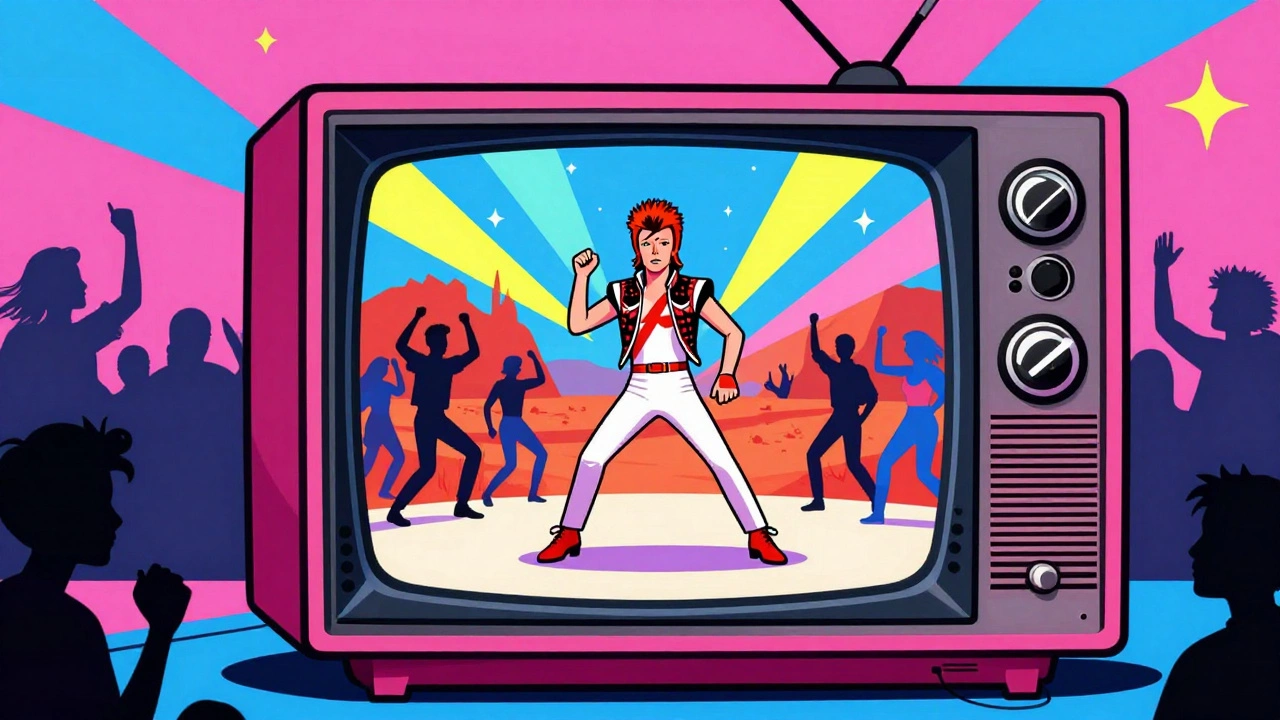
You cannot talk about Let’s Dance without talking about MTV. The music video for the title track, directed by David Mallet, was shot in New South Wales, Australia. It featured Bowie dancing in red shoes, juxtaposed with images of Aboriginal Australians and urban alienation. It was visually striking and culturally conscious. MTV played it constantly. This exposure introduced Bowie to millions of young viewers who had never heard of Ziggy Stardust or Aladdin Sane.
Bowie understood the power of image. He challenged MTV executives about their lack of diversity, pushing for more Black artists to get airplay. This stance added depth to his persona. He wasn’t just selling records; he was using his platform to influence culture. The videos for "China Girl" and "Modern Love" followed similar high-production values, cementing Bowie’s status as a visual artist as well as a musician. This era marked the beginning of the modern music industry, where the video is as important as the song.
Critical Reception vs. Commercial Success
Not everyone loved Let’s Dance. Upon release, some critics called it overly slick and commercial. They missed the experimental textures of Bowie’s Berlin period. Fans were divided too. Some felt betrayed by the pop direction, while others welcomed the accessibility. However, the numbers don’t lie. The album sold between 8.7 million and 10.7 million copies worldwide. It was nominated for Album of the Year at the Grammys in 1984, losing only to Michael Jackson’s Thriller.
Over time, perception has shifted. Today, historians view Let’s Dance as a masterpiece of reinvention. It proved that an artist could evolve without losing their identity. It influenced countless bands in the 1990s and 2000s, from INXS to alternative dance acts. Joe Lynch of Billboard noted that the album provided a template for fusing rock guitars with funk rhythms, a formula that still works today. The controversy around its commercialism has faded, replaced by appreciation for its craft.
Legacy: The Gateway to Bowie
For many listeners born in the late 1970s and early 1980s, Let’s Dance was their introduction to David Bowie. It was the gateway drug. Once they hooked onto "Let’s Dance" or "China Girl," they dug deeper. They discovered "Space Oddity," "Starman," and "Heroes." The album served as a bridge between generations. It kept Bowie relevant during a turbulent decade in rock music.
The Serious Moonlight Tour, which supported the album, was Bowie’s largest and most successful tour at the time. It ran for nine months and included 96 shows. Videos from these concerts show a confident, charismatic performer fully embracing his pop star status. The tour reinforced the album’s impact, turning songs into anthems sung by thousands in stadiums worldwide.
Decades later, Let’s Dance remains a fixture on playlists and compilations. Nile Rodgers & Chic still perform the title track live, keeping the groove alive. Streaming data shows that while older fans may prefer earlier work, new audiences continue to discover Bowie through this album. It stands as a testament to the power of collaboration, timing, and artistic courage. Bowie didn’t sell out; he bought in-to the future of music itself.
Why did David Bowie hire Nile Rodgers to produce Let’s Dance?
Bowie wanted to create a commercially successful album that would appeal to a mainstream audience. Nile Rodgers was renowned for his hit-making ability with Chic and other artists, specializing in tight funk and disco grooves. Bowie sought Rodgers' expertise to craft songs that would work on dance floors and radio stations alike, aiming to reach a broader demographic than his previous art-rock releases.
Did David Bowie play any instruments on Let’s Dance?
No, Bowie did not play any instruments on the album. This was a deliberate choice to focus entirely on his vocals. He delegated instrumental duties to Nile Rodgers, Stevie Ray Vaughan, and other session musicians. This approach aligned with 1980s pop production trends, where the frontperson's image and voice were prioritized over band instrumentation.
How many copies of Let’s Dance were sold worldwide?
Estimates vary, but sources cite sales between 8.7 million and 10.7 million copies worldwide. It remains David Bowie’s best-selling album. The discrepancy in figures often comes from different methodologies in tracking certifications versus actual unit sales, but all data confirms it as his commercial peak.
What role did Stevie Ray Vaughan play on the album?
Stevie Ray Vaughan played lead guitar on much of the album, including the iconic solo on the title track "Let’s Dance." His blues-rock style added a layer of authenticity and energy to the polished pop production, helping to balance the funk elements with rock credibility.
Was Let’s Dance critically acclaimed upon release?
Reception was mixed. While the singles were hugely popular and praised for their production quality, some critics labeled the album overly commercial compared to Bowie’s innovative 1970s work. Over time, however, it has been reassessed as a masterclass in pop reinvention and a crucial moment in 1980s music history.
How did MTV influence the success of Let’s Dance?
MTV was rapidly growing in 1983, and music videos became essential for stardom. Bowie embraced this medium with high-quality videos for "Let’s Dance," "China Girl," and "Modern Love." Constant rotation on MTV introduced him to millions of new fans, particularly younger audiences, significantly boosting album sales and solidifying his status as a global icon.