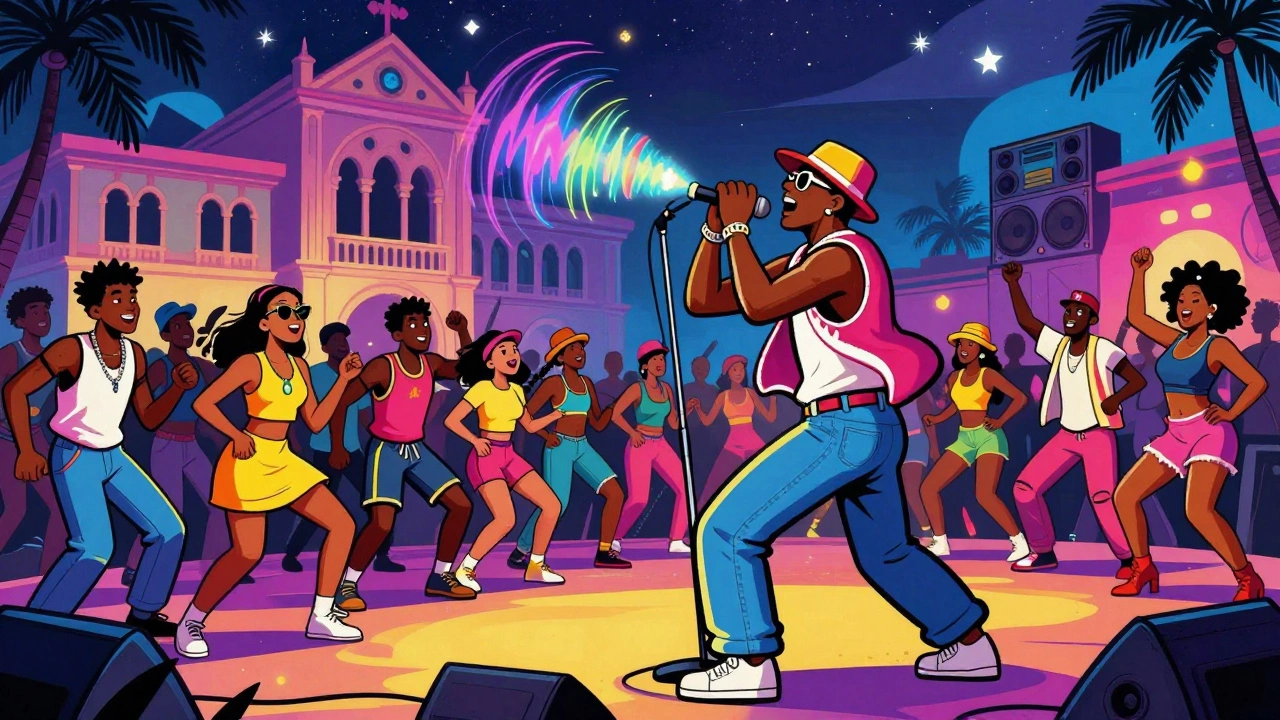

There is a specific sound that defined the streets of Kingston in the 1990s, a sound so potent it eventually cracked the Billboard Hot 100 and dominated radio waves from London to New York. This was not just music; it was a cultural takeover driven by hard-edged riddims, charismatic deejays, and a wave of international hits. If you grew up listening to Jamaican music or follow the lineage of modern pop, you know this era as the "prime" or "golden" age of dancehall. But what exactly made the 1990s so distinct? It wasn't just the lyrics; it was the technology, the competition, and the sheer volume of versions released on single instrumental tracks.
The Digital Revolution: How Technology Built the Sound
To understand the 1990s dancehall explosion, you have to look at the tools. By 1990, the analog instruments of earlier reggae styles were largely replaced by affordable drum machines and digital keyboards in Kingston studios. Producers didn't need full bands anymore. They needed tight 4/4 kick patterns, usually sitting between 90 and 100 BPM, off-beat snares, and those iconic syncopated keyboard stabs. This shift created a cleaner, punchier sound with prominent sub-bass that cut through the noise of outdoor sound-system clashes.
This digital revolution allowed for rapid production. A producer could craft a riddim a rhythmic pattern and backing track used by multiple artists in a day and then send it out to dozens of vocalists. The result was a competitive marketplace where a single instrumental could support anywhere from 10 to 40 different songs. If a riddim caught fire, it would dominate dances and radio for weeks. This efficiency meant that the decade’s sonic identity was built on a relatively small set of foundational instrumentals-perhaps only 20 to 40 core riddims underpinned hundreds of notable records.
The Core Riddims That Defined the Decade
If you want to hear the heartbeat of 1990s dancehall, you need to listen to the most-used riddims of the era. Databases like riddim-id.com track these rhythms, revealing which tracks became the industry standards. Here are the heavy hitters that shaped the decade:
| Riddim Name | Year Released | Key Characteristics / Notable Versions |
|---|---|---|
| Giggy | 1991 | Ranked #1 most-used riddim of the 90s; known for its aggressive, minor-key melody. |
| Bam Bam / Murder She Wrote | 1992 | Iconic rhythm that remains a staple in DJ sets; featured in numerous mega-mixes. |
| Top Ten | 1992 | Frequently paired with confrontational or battle-oriented lyrics due to its hard edge. |
| Pepperseed | 1994 | Produced by Madhouse Music; a canonical mid-decade track with a catchy, chant-friendly hook. |
| Corduroy | 1994 | Versatile riddim supporting both hardcore and crossover-oriented tracks. |
| Joy Ride | 1996 | Smother, more melodic tone often used for romantic or crossover material. |
| Ak Special | Mid-90s | Part of the core toolkit for selectors; still widely used in contemporary 90s-style sessions. |
These riddims were not just background music; they were the infrastructure. When you hear a 90s dancehall mix today, whether it's a YouTube throwback or a modern compilation on Spotify, you are hearing variations of these same digital blueprints. The emphasis on versioning meant that fans weren't just buying songs; they were collecting different vocal takes on the same rhythm, creating a deep, layered musical ecosystem.
The Rise of the Deejay: Voices Behind the Beats
In dancehall terminology, a deejay a rapper or toaster who performs over instrumental tracks is not the person spinning records but the vocalist riding the beat. The 1990s saw the emergence of deejays whose careers were built on mastering these riddims. Artists like Shabba Ranks, Super Cat, Buju Banton, Beenie Man, and Lady Saw defined the era’s output. Their vocal styles varied wildly-from gruff baritones to high-pitched, rapid-fire deliveries-but they all shared one trait: the ability to command a crowd through lyrical improvisation and energy.
Lyrically, the decade was diverse. You had "slackness," which focused on explicit sexuality and bravado, particularly pushed into the mainstream by female artists like Lady Saw and Patra. Then there was "gun talk" and social commentary, where deejays addressed street realities and violence. As the decade progressed, many artists, including Buju Banton and Capleton, shifted toward Rastafari-inflected spirituality, reflecting broader societal debates in Jamaica about morality and global image. The choice of riddim often signaled the song’s mood: harder, minor-key riddims like Fed Up suited battle lyrics, while smoother ones like Joy Ride lent themselves to romance or crossover appeal.
Dancehall Goes Global: International Hits and Chart Success
The 1990s were not just a local phenomenon in Jamaica; they were the decade when dancehall repeatedly crossed into pop and hip-hop charts worldwide. This wasn't accidental. It was the result of strategic collaborations, remixes, and the undeniable catchiness of the genre's hooks. Let's look at some of the biggest international moments:
- Snow - "Informer" (1993): Produced with heavy dancehall influence and toasting-style verses, this single reached No. 1 on the Billboard Hot 100 in the U.S., holding that position for seven weeks. It proved that dancehall-derived vocals could dominate American mainstream radio.
- Ini Kamoze - "Here Comes the Hotstepper" (1994): With a slinky, dancehall-compatible beat and chant-style chorus, this track also hit No. 1 on the Billboard Hot 100 and stayed on the chart for over 20 weeks, exposing global audiences to Jamaican cadences.
- Shaggy - "Oh Carolina" (1993): Reaching No. 1 on the UK Singles Chart, this reworking of a Folkes Brothers rhythm marked one of the earliest times a dancehall-styled track topped a major European chart.
- Shaggy - "Boombastic" (1995): Built around a reggae/dancehall groove, this album won the Grammy Award for Best Reggae Album in 1996 and hit the Top 3 in the UK, cementing Shaggy’s status as a global superstar.
- Shabba Ranks - "Mr Loverman" (1993): Drawing heavily on the deejay tradition, this track charted in both the UK and the U.S., showcasing the commercial viability of authentic dancehall sounds in Western markets.
Even when tracks didn't crack the Top 10 of national pop charts, they became staples in clubs across London, New York, and Toronto. Songs like Beenie Man’s "Who Am I (Sim Simma)" and Mr. Vegas’s "Heads High" thrived in diasporic scenes and on pirate radio, blending with emerging hip-hop and R&B sounds. This cross-pollination introduced riddims to listeners who might not have recognized the original Jamaican releases by name but loved the vibe.
The Industry Engine: Labels and Distribution
Behind the hits was a complex interplay between Jamaican producers, local labels, and international distributors. Kingston-based labels such as Madhouse Music, Penthouse, Digital-B, and Shocking Vibes supplied a constant flow of 7-inch singles. These were then compiled and licensed by overseas companies like VP Records in New York and Greensleeves Records in London. This pipeline ensured that music made in Kingston reached shelves in Miami and Manchester within weeks.
By the late 1990s, major record companies like Virgin, Sony, and Atlantic began signing or licensing dancehall artists directly. Shaggy’s deal with Virgin and later MCA reflected a growing perception that dancehall could consistently generate six- or seven-figure sales globally when paired with strategic marketing. This industrial support allowed the genre to scale beyond niche audiences, turning local stars into international icons.
Legacy: Why the 90s Still Matter Today
Fast forward to 2026, and the 1990s dancehall sound is more alive than ever. Curated packs like Regime Radio’s "90s Dancehall & Reggae Riddim Pack" label this period as the "prime era," grouping together riddims like AK Special, Answer, Armstrong, and Back Way for contemporary DJs. These packs aren't just nostalgia; they are practical resources. Selectors use them to mix 1990s vocal cuts with new recordings, blurring temporal boundaries while maintaining the characteristic punchy kicks and bright snares of the decade.
Streaming platforms have further democratized access. Compilations like the 2016 "90’s Dancehall Riddim" album on Apple Music, featuring artists like Billy Wonda and Jah Ghatti, show how the decade’s sonic template is repackaged for new generations. YouTube mixes titled "90s Dancehall Anthems" garner millions of views, with comments describing the music as "real dancehall" and "the sound that ran the streets." This community discourse frames the 1990s not just as history, but as a benchmark of authenticity against which later eras are measured.
The legacy of 1990s dancehall is measurable in several domains: the enduring circulation of its riddims, the continued touring careers of its deejays, and the persistent sampling in genres like reggaeton and Afrobeats. For anyone interested in music history, understanding this decade provides insight into how digital technology, grassroots culture, and global distribution can converge to create a lasting cultural impact.
What is a riddim in dancehall?
A riddim is the instrumental backing track in dancehall music. Unlike a typical song structure, a riddim is often released independently, and multiple artists will record their own vocal versions over the same instrumental. In the 1990s, a single riddim could support dozens of different songs, creating a competitive and dynamic musical environment.
Who were the biggest dancehall deejays of the 1990s?
Key figures included Shabba Ranks, who won Grammys in 1992 and 1993; Super Cat; Buju Banton; Beenie Man; Bounty Killer; Capleton; Lady Saw; Patra; and Shaggy. These artists defined the decade through their unique vocal styles and massive international hits.
How did dancehall become popular internationally in the 1990s?
Dancehall gained international traction through crossover hits like Snow’s "Informer" and Ini Kamoze’s "Here Comes the Hotstepper," which topped the US Billboard Hot 100. Additionally, artists like Shaggy and Chaka Demus & Pliers achieved success in the UK and Europe, while major record labels began signing Jamaican artists, facilitating wider distribution and marketing.
Why is the 1990s considered the golden era of dancehall?
The 1990s are often called the golden era because of the perfect storm of digital innovation, prolific production, and global breakthrough. The introduction of affordable drum machines created a distinct, punchy sound, while the riddim system allowed for rapid release cycles. This period produced some of the genre's most iconic tracks and artists, establishing a standard of authenticity and energy that fans still celebrate today.
What are some essential 90s dancehall riddims to listen to?
Essential riddims include Giggy (1991), Joy Ride (1996), Corduroy (1994), Frog (1994), Top Ten (1992), Fed Up, Pepperseed (1994), and Bam Bam/Murder She Wrote (1992). These instrumentals formed the foundation for hundreds of songs and remain staples in DJ sets and compilations today.