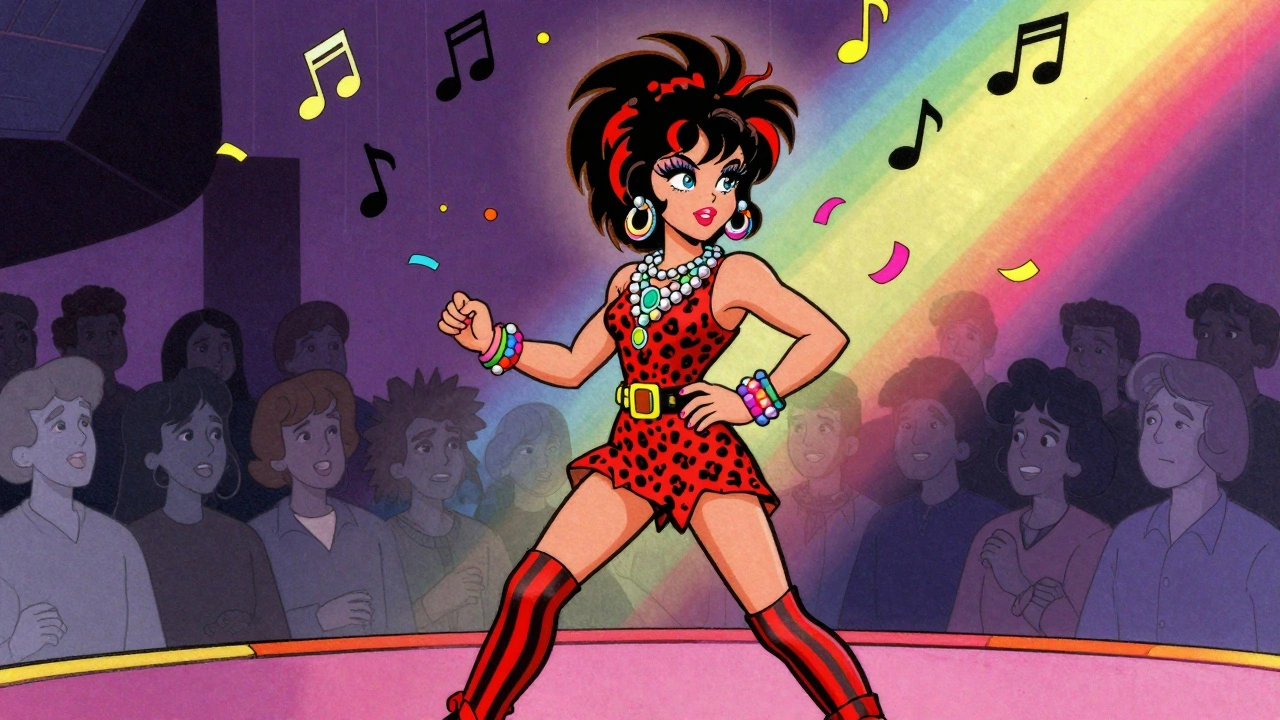

When Cyndi Lauper stepped onto the stage in 1983, she didn’t just sing - she shouted. Not with volume, but with color. Her debut album, She's So Unusual, wasn’t just a musical breakthrough. It was a visual explosion. And that was the point. Her fashion wasn’t an afterthought. It wasn’t costume. It was the loudest part of the song.
She Didn’t Wear Clothes - She Wore Courage
Cyndi Lauper didn’t grow up with stylists or designers. She grew up in Queens, getting picked on for wearing mismatched patterns, bright socks, and too much glitter. By the time she hit the stage, those same clothes weren’t mistakes. They were armor. Every striped tights, every stacked bracelet, every wild streak of red in her hair was a middle finger to anyone who ever told her to be quieter, smaller, more normal.
Her look in 1983 was unmistakable: one rolled-down nylon over spray-painted tights, a hot red cheetah-print dress, chunky plastic jewelry, and enough eyeliner to make a rainbow jealous. She didn’t follow trends. She invented them. While others were trying to look sleek and minimalist, Lauper went all-in on chaos. And it worked. People didn’t just notice her - they remembered her.
The Details That Made a Movement
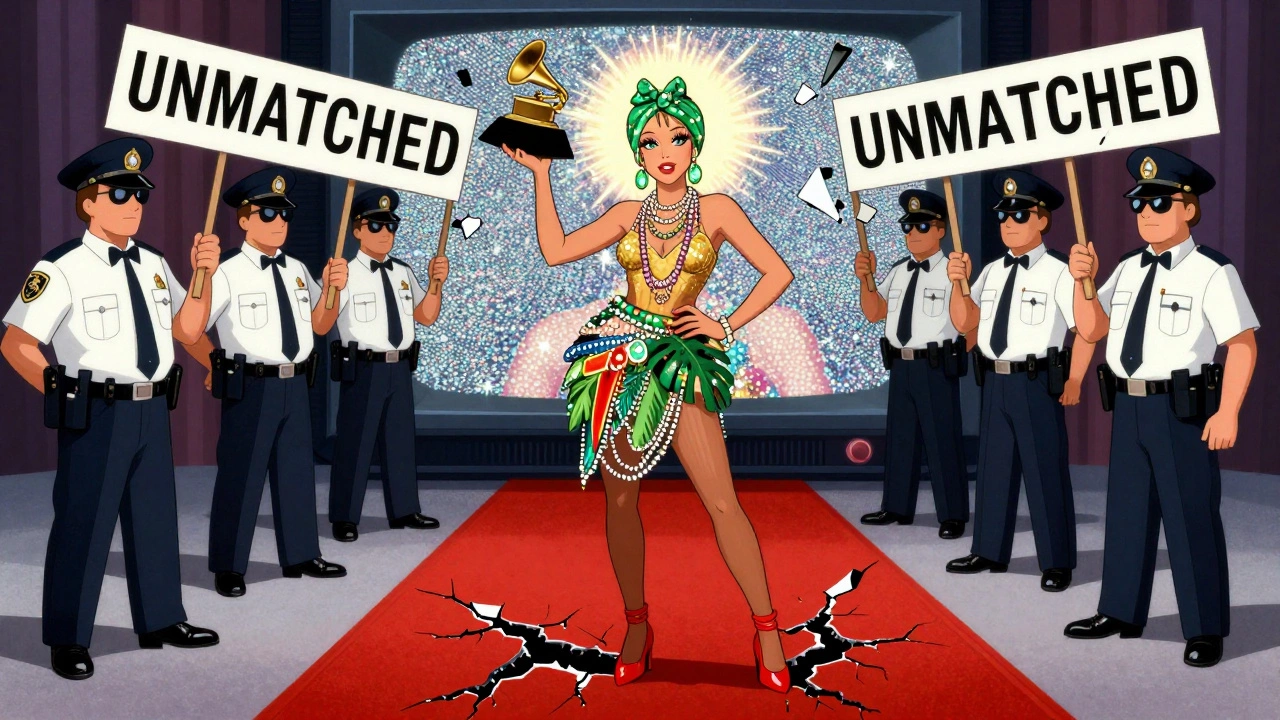
Look closer at her 1984 Grammy outfit - a beaded skirt with a tropical print, a green headscarf, gold top, and red shoes that didn’t match the tights. That wasn’t a mistake. That was strategy. Every piece was chosen to clash, to spark, to demand attention. She didn’t care if it "worked" in a fashion magazine. She cared if it made her feel like herself.
Her accessories weren’t decorative. They were declarations. Stacked necklaces so thick they blurred into her dress. Earrings so big they could double as wind chimes. A single mismatched sock on The Tonight Show? That wasn’t a slip-up. That was the whole point. She was saying: "I don’t need to look put together to be powerful."
Her hair? Teased, sprayed, streaked - never tamed. She didn’t do "hairstyles." She did "statements." And in a time when women were expected to look polished and passive, Lauper looked like a hurricane in a sequin top.
Music and Style Were the Same Thing
Her album cover for She's So Unusual showed her mid-stride in a red dress, hair on fire, eyes locked forward. That image wasn’t just promotion - it was the thesis. The music was bold. The lyrics were raw. And the look? It screamed the same thing: "I’m not asking for permission."
When "Girls Just Want to Have Fun" dropped, the video wasn’t just fun. It was revolutionary. She and her friends all wore cat-eye sunglasses - not because they were trendy, but because they felt like power. That moment didn’t just go viral. It became a template. Later artists like Lady Gaga and Pink didn’t just borrow her style - they inherited her attitude. "Look at me, I’m weird, and I’m proud" became a mantra, and Lauper wrote the first verse.
Evolution Without Compromise
Her style didn’t stay frozen in 1984. It grew. By 1986, she swapped the cheetah prints for bubble skirts and punk-inspired silhouettes. In 1988, she mixed primary colors like a painter on a spree. And when she released True Colors in 1986, her look softened - velvet, metallics, flowing fabrics - but never lost its edge. She wasn’t selling out. She was evolving.
Even in the 1990s, when minimalism ruled, she kept her flair. Matching her feather boa to her hair color? That wasn’t vanity. It was control. She still owned every inch of her image. And when she wore a Vivienne Westwood corset to the Emmys in 1995, it wasn’t a fashion upgrade - it was a collaboration between two rebels.
Legacy in Every Stitch
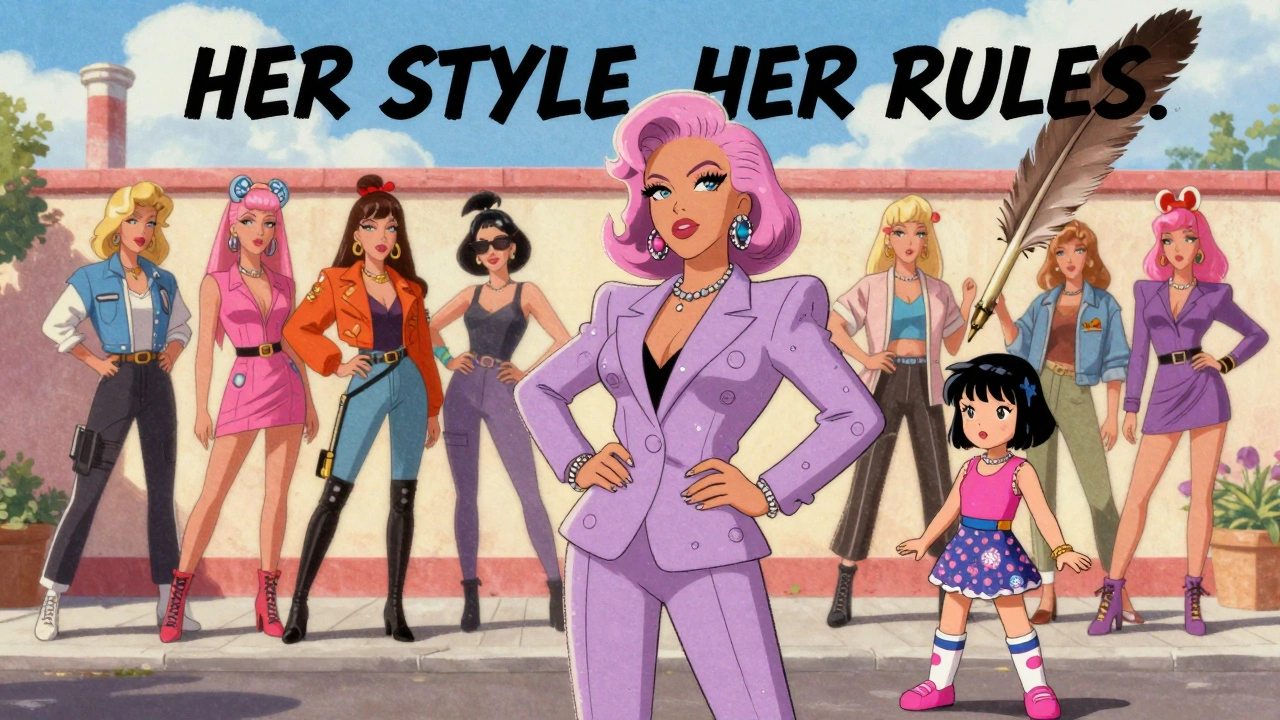
Fast forward to 2018, and she’s at the Grammys in a lilac-print suit, matching the color of her hair. In 2016, she wore wide-leg pants - long before Gen Z made them cool. In 2017, she showed up in leopard print again, like it was her uniform. She never stopped. She never apologized.
Designers today still pull from her archive. Labels like Chopova Lowena and Collina Strada build entire collections around her "mix everything, match nothing" philosophy. She didn’t just influence fashion - she gave it permission to be messy, joyful, and unapologetic.
Why It Still Matters
Lauper’s fashion didn’t exist to sell records. It existed to say: "You don’t have to be perfect to be powerful."
Her music gave voice to the unheard. Her style gave visibility to the ignored. And together, they created something rare: a woman who refused to shrink, even when the world told her to.
Today, when someone throws on mismatched patterns, stacks ten necklaces, or wears red socks with black heels - they’re not just being quirky. They’re channeling Cyndi Lauper. And that’s not nostalgia. That’s legacy.
Did Cyndi Lauper have a stylist in the 1980s?
No. Cyndi Lauper designed her own look from scratch. She shopped at thrift stores, mixed pieces herself, and refused to follow industry norms. Her style was entirely self-made, born from years of being bullied for dressing differently. She didn’t need a stylist - she was the one setting the rules.
How did her fashion connect to her music?
Her fashion and music were two sides of the same coin. The lyrics of "Girls Just Want to Have Fun" were about freedom and rebellion. Her outfit in the video - mismatched colors, bold accessories, wild hair - visually screamed the same message. She didn’t sing about being yourself. She lived it. Her style made the music feel real, not just heard.
What made her 1980s style different from other pop stars?
Most pop stars in the 80s used fashion to look glamorous or sexy. Cyndi used it to look like herself - messy, loud, and full of heart. While Madonna played with personas, Lauper never changed who she was. Her look wasn’t a character. It was her identity. That authenticity made her stand out.
Did her fashion influence modern artists?
Absolutely. Lady Gaga, Pink, Chappell Roan, and even Billie Eilish have cited her as an influence. Her fearless mixing of patterns, bold color choices, and refusal to conform became a blueprint for artists who want to express individuality through fashion. Modern brands like Chopova Lowena and Collina Strada still build collections around her "more is more" philosophy.
Why is her 1984 Grammy outfit still talked about?
Because it was perfect chaos. A beaded tropical skirt, a green headscarf, gold top, and red shoes that didn’t match the tights? No one else would’ve dared. And that’s why it stuck. It wasn’t just an outfit - it was a statement that fashion didn’t have to be polished to be powerful. It became iconic because it was unapologetically real.


