
Back in the 1980s, a song didn’t just climb one chart-it ruled them all. You could hear it blasting from a pop radio station, then catch it on country radio while driving home, and later see the music video on MTV playing on loop in a friend’s basement. That was the magic of crossover hits. These weren’t just songs that crossed over-they rewrote the rules of what music could be.
What Made a Song a Crossover Hit?
A crossover hit in the 1980s wasn’t just popular. It had to appear on at least two Billboard genre charts at the same time. Think of it like a song wearing multiple hats: one for pop, another for R&B, maybe a third for country or dance. It wasn’t enough to be a hit on the Hot 100. True crossover meant breaking through into audiences that had been kept separate for decades.
The key? A perfect mix of accessibility and authenticity. The song had to sound familiar enough to draw in new listeners, but still carry enough of its original genre’s soul to keep longtime fans from walking away. Take Dolly Parton and Kenny Rogers’ "Islands in the Stream"-a country ballad with a pop sheen, written by the Bee Gees. It hit number one on both the country and pop charts in 1983. It didn’t erase country music; it made it bigger.
MTV: The Secret Weapon Behind the Crossover
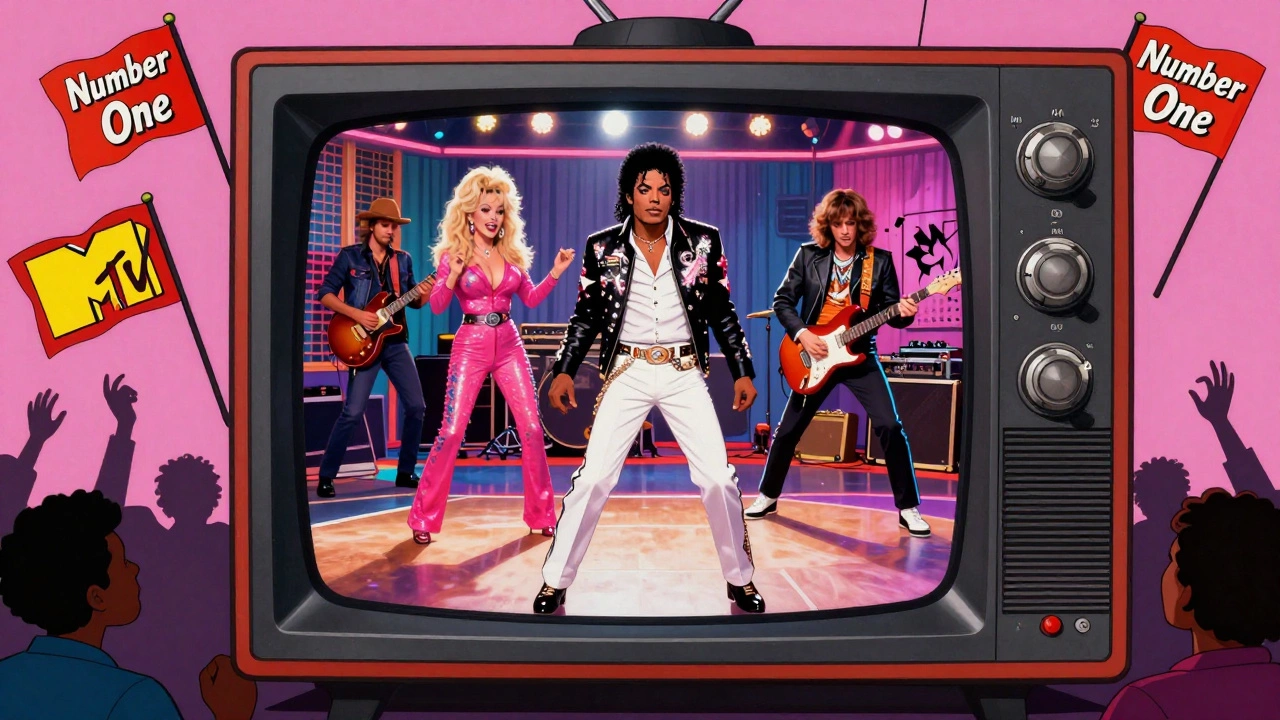
If radio was the door, MTV was the floodlight. Launched in 1981, MTV didn’t just play music-it sold a lifestyle. Suddenly, how an artist looked, moved, and dressed mattered as much as how they sounded. A song that might’ve been ignored on a country radio station could explode if its video showed a charismatic performer dancing in a neon-lit studio.
Michael Jackson’s "Billie Jean" was one of the first videos to break the color barrier on MTV. Before that, the network rarely played Black artists. But when "Billie Jean" hit number one on the Hot 100 and stayed on the dance chart for months, the network had no choice. Jackson’s success didn’t just make him a star-it proved that Black artists could dominate pop culture. And once MTV opened the door, others followed: Prince, Lionel Richie, and later, Run-DMC.
The Country-Pop Explosion
Country music had always had a loyal fanbase, but in the 1980s, it started talking to everyone else. Dolly Parton and Kenny Rogers didn’t just make a hit-they built a blueprint. "Islands in the Stream" was pure country storytelling, but with a pop rhythm and polished production. It worked because it didn’t try to be something it wasn’t. It just let the melody speak louder than the genre label.
Other artists followed. Olivia Newton-John, already a pop star, crossed over into country with "Physical" and later "I Honestly Love You," proving that a voice could bridge continents and charts. Even John Denver, known for folk and soft rock, found himself on the country charts with songs like "Annie’s Song." The formula was simple: strong vocals, emotional lyrics, and production that cleaned up the rough edges without losing the heart.
Latin Music Breaks Through
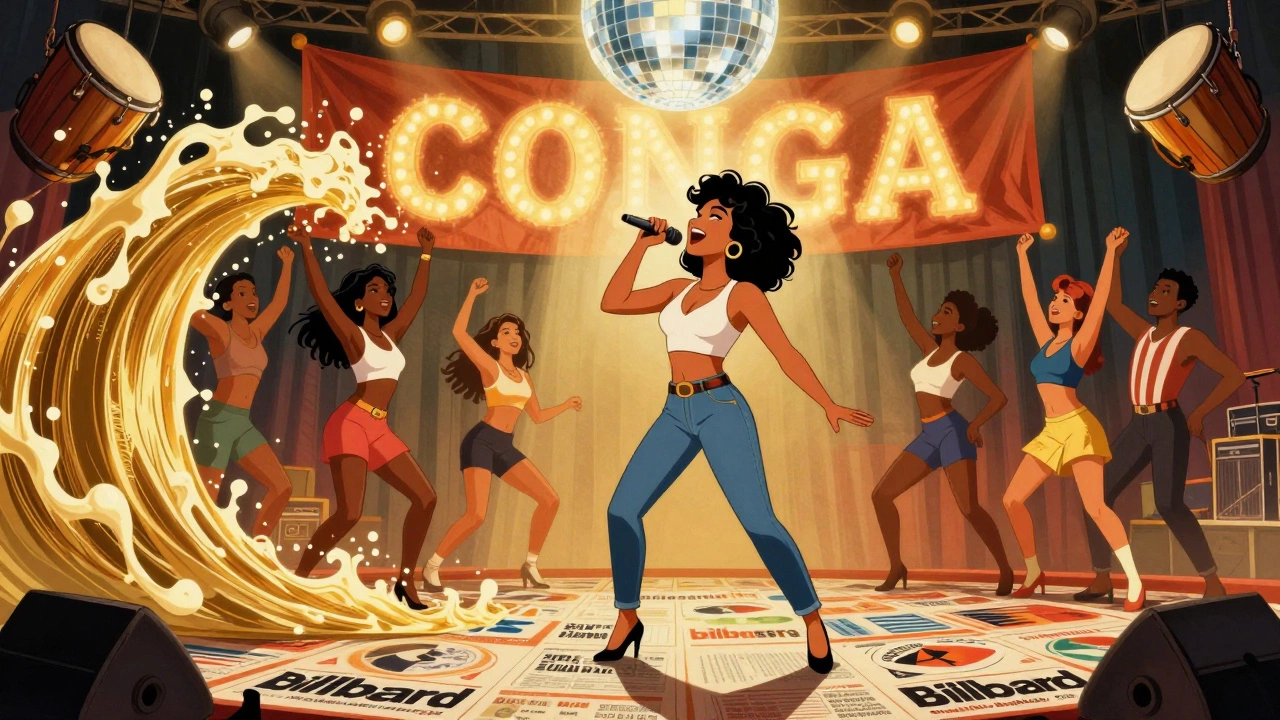
Before Gloria Estefan and the Miami Sound Machine, Latin music in the U.S. was mostly confined to Spanish-language radio and niche markets. Then came "Conga" in 1985. The song had a beat you couldn’t ignore, lyrics you could hum even if you didn’t speak Spanish, and a video that showed a whole crowd dancing like they’d known the rhythm their whole lives.
Estefan didn’t abandon her roots-she amplified them. She sang in English, but kept the Cuban rhythms, the percussion, the energy. "Conga" hit number one on the dance chart and cracked the top ten on the Hot 100. It wasn’t just a hit-it was a cultural moment. By 1987, her album "Let It Loose" went platinum, and suddenly, record labels were scouting Latin artists not as exotic curiosities, but as mainstream stars.
Rap Meets Rock: The Run-DMC and Aerosmith Revolution
In 1986, something unthinkable happened: a rock band and a hip-hop group teamed up. Aerosmith, once kings of 70s rock, had fallen out of favor. Run-DMC, the pioneers of hip-hop, were rising fast. Their collaboration on "Walk This Way" wasn’t just a cover-it was a handshake across a cultural divide.
The video showed Run-DMC smashing through a wall into Aerosmith’s recording studio. It was theatrical, bold, and perfect for MTV. The song hit number four on the Hot 100 and topped the rap chart. More than that, it showed that hip-hop wasn’t a fad-it could own a stadium, not just a block party. This wasn’t just crossover. It was fusion. And it opened the door for every rap-rock collaboration that came after-from Limp Bizkit to Linkin Park.
The Rise of Classical Crossover
Classical music? On the pop charts? In the 1980s, it happened. Record companies started using the term "classical crossover" to describe artists who blended orchestral arrangements with pop melodies. It wasn’t just violins over a drum machine-it was emotion made accessible.
Artists like Sarah Brightman and Andrea Bocelli didn’t become huge until the 90s, but the groundwork was laid in the 80s. Record labels began marketing symphonic versions of pop songs, and artists with classical training started recording pop ballads with lush string arrangements. It was the beginning of a genre that would later have its own Billboard chart. The idea? That beauty doesn’t need a label.
Why Some Crossovers Failed
Not every attempt worked. Some artists tried to cross over by stripping away their roots-removing the twang from country, silencing the drums in hip-hop, or making Latin rhythms sound "softer." Those songs felt hollow. Listeners could tell when an artist was trying to be everything to everyone instead of being something real to someone.
There was also backlash. Critics accused crossover hits of diluting culture. When white artists covered songs originally made by Black musicians-cleaning up the lyrics, softening the edge-it felt like exploitation. The music industry was still wrestling with who got to own a sound, and who got to profit from it.
But the best crossover acts didn’t erase their roots-they honored them. That’s why Dolly Parton’s voice still sounded like Nashville. Why Run-DMC’s flow stayed sharp. Why Gloria Estefan’s "Conga" still made you want to move.
The Legacy of 1980s Crossover
Today, genre-blending is the norm. A song can be pop, trap, reggaeton, and indie rock all at once. But it started here. In the 1980s, when MTV played music videos on repeat, when radio stations didn’t know what to play next, and when artists dared to mix what was "supposed" to stay separate.
The crossover hits of the 80s didn’t just sell records. They changed how music was made, marketed, and consumed. They proved that audiences didn’t care about labels-they cared about feeling something. And that’s why, decades later, you still hear "Billie Jean" in a gym, "Conga" at a wedding, and "Walk This Way" in a car with friends.
It wasn’t magic. It was strategy. It was courage. And it was music that refused to stay in its box.
What was the first major crossover hit of the 1980s?
While crossover happened throughout the decade, "Islands in the Stream" by Dolly Parton and Kenny Rogers (1983) is often cited as one of the first massive, undeniable crossover hits. It reached number one on both the Billboard Hot Country Singles and Hot 100 charts, proving that country and pop audiences could embrace the same song simultaneously. Its success opened the door for other genre-blending acts.
How did MTV change the music industry?
MTV turned music from something you heard into something you watched. Before MTV, radio playlists were rigid-country stayed with country, R&B stayed with R&B. MTV didn’t care about genre. If a video was catchy, it got played. This forced artists to create visually compelling content and gave crossover acts a platform to reach audiences outside their traditional markets. Michael Jackson’s "Thriller" and Run-DMC’s "Walk This Way" became cultural moments because they were seen, not just heard.
Did crossover hits hurt the authenticity of genres?
Some purists argued yes. Critics claimed that blending genres made music too commercial and diluted its roots. But the most successful crossover acts-like Prince, Dolly Parton, and Gloria Estefan-didn’t abandon their origins. They expanded them. They kept the soul of their genre while adding new layers. The real issue wasn’t crossover itself-it was when artists stripped away cultural context to make music "safe" for mainstream audiences. That’s when authenticity suffered.
Why did Latin music succeed in the 1980s?
Gloria Estefan and the Miami Sound Machine succeeded because they didn’t try to erase their heritage. They kept Cuban rhythms, Spanish phrasing, and dance energy, but wrapped them in English lyrics and polished pop production. "Conga" and "1-2-3" didn’t just translate-they transported. The music felt familiar enough to be accessible, but fresh enough to be exciting. It showed that language barriers could be overcome with rhythm and charisma.
Are crossover hits still a thing today?
More than ever. Today’s charts are full of genre-blending hits-think Bad Bunny mixing reggaeton with pop, or Lil Nas X blending country with hip-hop. But the 1980s set the template. Back then, crossing over was revolutionary. Now, it’s expected. The tools have changed-streaming, TikTok, YouTube-but the goal is the same: make music that moves people, no matter where they’re from or what they usually listen to.


