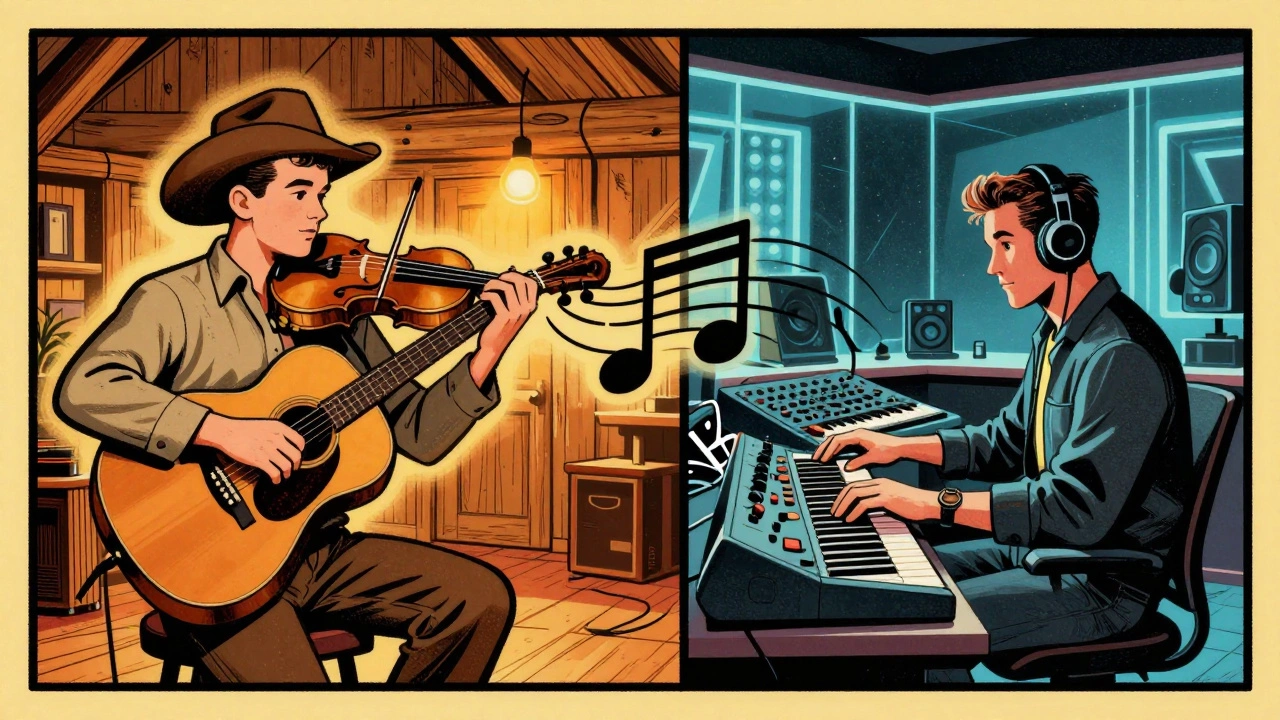

There is a specific moment in every country song that decides its fate. It’s the split second when you hear whether there’s enough pedal steel to satisfy the purists in Texas, but enough polished drum programming to get it played on Top 40 radio in New York. This balancing act-keeping the "twang" while chasing mainstream appeal-isn’t just an artistic choice; it’s the engine of the modern music industry. From Patsy Cline in the 1960s to Beyoncé in 2024, the artists who master this blend don’t just cross over; they redefine what country music is allowed to be.
If you are looking at how to make a record that hits both the Billboard Hot 100 and the Hot Country Songs chart, you aren’t starting from scratch. You are stepping into a lineage of calculated sonic hybridity that has evolved over six decades. The goal isn’t to erase your roots, but to translate them for a wider audience without losing the soul that made people fall in love with you in the first place.
The Blueprint: How the Nashville Sound Engineered Crossover
To understand where we are, we have to look at who built the road. In the late 1950s and early 1960s, producers like Chet Atkins and Owen Bradley realized that the raw, honky-tonk sound of traditional country was hitting a ceiling with younger, urban listeners. Their solution became known as the Nashville Sound. They didn’t change the lyrics-they kept the heartbreak and the storytelling-but they swapped out the fiddles and steel guitars for orchestral strings and background vocal choirs.
This wasn’t accidental smoothing; it was strategic engineering. When Patsy Cline released "Crazy" in October 1961, written by Willie Nelson, it sounded like a pop ballad to ears outside the South. It peaked at No. 2 on the Hot 100 in March 1962, spending 21 weeks on the chart. That track set the template: keep the narrative depth and a hint of vocal inflection, but modernize the sonic palette so pop programmers feel comfortable adding it to their rotation. Jim Reeves’ "He’ll Have to Go" (No. 2 Hot 100, 1960) followed the same playbook, proving that authenticity could coexist with accessibility if the production was right.
The Arena Rock Era: Shania, Faith, and the Power Ballad
Fast forward to the 1990s, and the stakes got higher. The "New Country" boom brought arena-rock dynamics into the fold. Garth Brooks sold over 100 million albums in the U.S., blending rock energy with country themes, though his singles rarely cracked the pop Hot 100 due to chart rules and promotion strategies. But then came Shania Twain.
Twain’s album Come On Over, released in November 1997 and produced by Robert John "Mutt" Lange, is widely considered the commercial apex of country-pop. Certified 20× Platinum (2× Diamond) by the RIAA, it sold an estimated 40 million copies worldwide. The secret weapon? Dual mixes. Twain released distinct versions for U.S. country radio and remixed, pop-centric versions for international and Top 40 markets. Her single "You’re Still the One" peaked at No. 2 on the Hot 100 in 1998 while still topping country charts. She smoothed her accent relative to hardcore honky-tonk singers but retained enough Southern inflection to stay credible. Faith Hill did something similar with "Breathe," which finished as the No. 1 song on the 2000 Billboard Year-End Hot 100 thanks to sustained airplay across pop and adult contemporary formats.
The Digital Shift: Taylor Swift and the Producer Takeover
In the 2000s and early 2010s, the crossover strategy shifted from dual mixes to gradual evolution. Taylor Swift is the prime case study here. Her song "Love Story," released in September 2008, started on country radio with fiddle and mandolin. To crack pop radio, it was remixed with pop drums and electric guitars compressed for loudness. It hit No. 4 on the Hot 100. By the time she released 1989 in 2014, working with pop producers Max Martin and Shellback, she had largely removed the twang markers entirely, signaling a full transition to the pop universe.
Meanwhile, other artists found success by leaning into rock or pop structures while keeping country narratives. Carrie Underwood’s "Before He Cheats" used crunchy rock guitars but delivered a classic country revenge story, selling over 7 million digital copies. Lady Antebellum’s "Need You Now" won four Grammys in 2011, including Record of the Year, by using piano-led, mid-tempo pop ballad aesthetics with only light pedal steel. The lyrics about late-night drunk dialing resonated universally, allowing the song to dominate both country and pop charts simultaneously.
Bro-Country, EDM, and the Streaming Revolution
The 2010s introduced new textures: hip-hop beats and electronic dance music (EDM). Florida Georgia Line’s "Cruise," especially the remix with Nelly, reached No. 4 on the Hot 100 and spent 24 weeks at No. 1 on Hot Country Songs. Produced by Joey Moi, the track featured programmed drums and rap-style cadences layered over banjo. It was controversial among purists, but it worked commercially. Sam Hunt’s "Body Like a Back Road" pushed boundaries further with R&B-leaning melodies and snap tracks, peaking at No. 6 on the Hot 100.
Then came the internet era. Lil Nas X’s "Old Town Road" blended trap beats with cowboy imagery. After Billboard removed the original version from the country charts in March 2019, citing insufficient country elements, the remix with Billy Ray Cyrus went on to spend 19 consecutive weeks at No. 1 on the Hot 100-the longest reign in chart history. This sparked a massive debate about racial gatekeeping and genre definitions. Critics argued that white artists using hip-hop elements were accepted while Black artists faced exclusion, highlighting the complex social dynamics behind musical categorization.
Streaming changed the game again. Artists like Morgan Wallen and Zach Bryan achieved organic crossover through sheer volume of streams. Wallen’s "Last Night" spent 16 non-consecutive weeks at No. 1 on the Hot 100 and 20 weeks at No. 1 on Hot Country Songs. Luminate’s 2023 report noted that country music streams grew 20-23% year-over-year, outpacing overall streaming growth. Wallen alone generated over 5% of all U.S. country on-demand audio streams in mid-2023, proving that you don’t always need a pop remix if you have a dedicated fanbase that listens repeatedly.
Production Secrets: Balancing Twang and Polish
So, how do you actually balance these elements in the studio? It comes down to instrumentation, vocals, and structure.
- Instrumentation: Keep one or two core country instruments-acoustic guitar, banjo, pedal steel, or fiddle-but surround them with pop textures. For example, "Need You Now" layers pedal steel subtly behind piano and atmospheric electric guitar. "Cruise" uses banjo riffs but foregrounds programmed drums and sub-bass. This ensures country radio hears tradition, while pop programmers get the sonic punch they expect.
- Vocals: Vocal delivery is a key authenticity marker. Musicologist Nadine Hubbs notes that nasal timbre, elongated vowels, and region-specific diction denote rural Southern identity. Many crossover hits moderate but do not eliminate twang. Shania Twain and Faith Hill smoothed their accents but used occasional Southern inflections. When artists nearly eliminate twang, like Taylor Swift on "Style," the songs are often no longer marketed as country.
- Song Structure: Follow mainstream pop structures: intro, verse, pre-chorus, big chorus, bridge, and final double chorus. Aim for radio-friendly lengths around 3:00-3:45 minutes. Tempo often sits between 70-110 BPM, suitable for both country two-step and pop formats. Harmonically, rely on simple progressions like I-V-vi-IV, minimizing dissonance for quick listener recognition.
- Loudness: Modern crossover records are mastered around −8 to −9 LUFS integrated, comparable to Top 40 pop tracks. This creates a powerful, compressed sound that stands out on streaming platforms and radio, differing from the dynamic range of earlier country recordings.
The Risks: Authenticity vs. Commercial Success
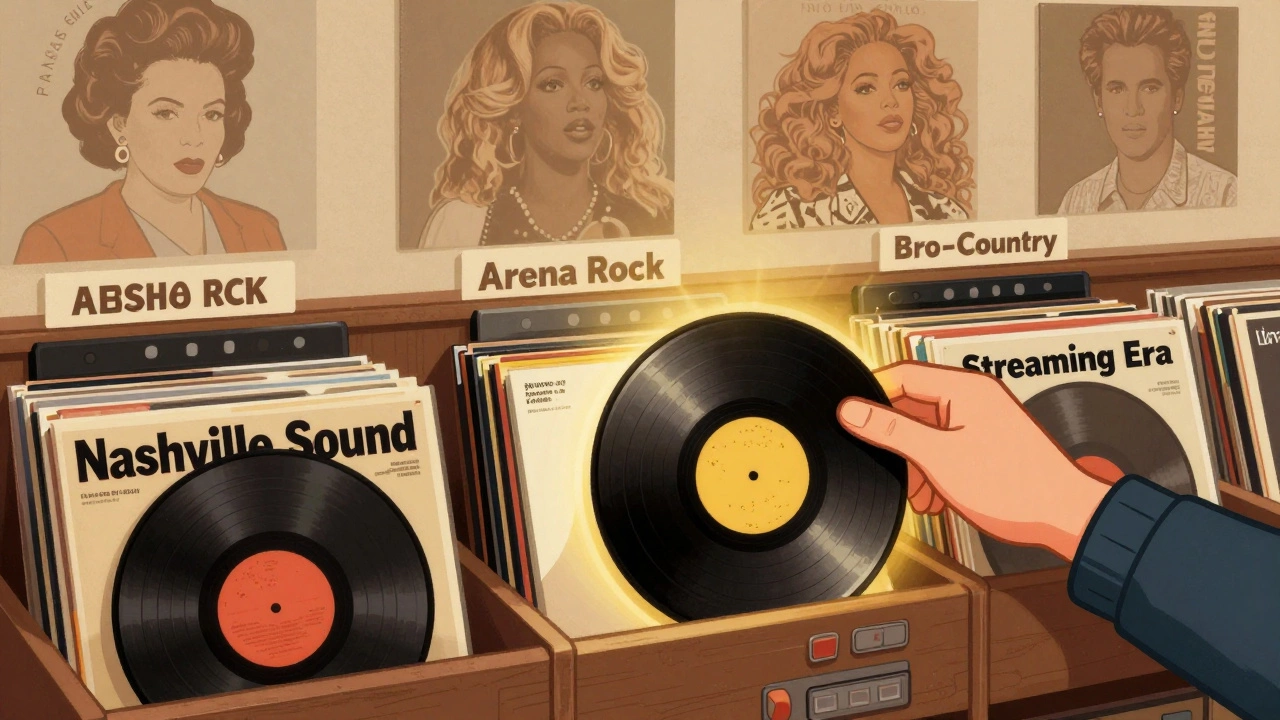
The upside of crossover is clear: expanded audience, higher performance fees, and global touring opportunities. Shania Twain’s Come On Over generated tens of millions in sales; Taylor Swift’s transition to pop coincided with tour revenues exceeding $250 million. However, the downside is backlash from core country audiences and industry gatekeepers concerned about genre dilution.
Critics like Jody Rosen famously criticized "bro-country" in 2013, arguing that acts like Florida Georgia Line were turning country into "mindless tailgate rock." Fans frequently complain on forums that songs like "Meant to Be" are "just pop with a southern accent." The removal of "Old Town Road" from country charts highlighted accusations of racially coded gatekeeping. There is also the risk of alienating your base too early. Labels often pursue a phased approach: build a country foundation with 1-2 albums, then introduce pop elements gradually, as Swift did with Fearless before Red and 1989.
Future Outlook: Genre Fluidity and Diversity
Looking ahead, several trends are shaping the next decade of country-pop crossover. First, increased participation by mainstream pop and hip-hop artists in country collaborations, such as Post Malone with Morgan Wallen on "I Had Some Help" (No. 1 Hot 100, May 2024). Second, more visible contributions by Black, Latino, and queer artists re-inscribing country’s multi-ethnic history, exemplified by Beyoncé’s "Texas Hold ’Em" and album Cowboy Carter (2024). Third, continued platform-driven discovery via TikTok, where short, hooky, genre-fluid snippets often outperform traditional songs. Finally, a growing split between roots-oriented Americana circuits and polished mainstream country-pop touring circuits.
The risks include potential genre fatigue if too many songs converge on similar formulas, backlash from heritage fans, and overreliance on viral moments. Yet, the history from Patsy Cline to Beyoncé shows that crossover country-pop has persisted for over 60 years, continually reinventing how much "twang" is needed for credibility while chasing mainstream exposure. As long as Nashville remains tied to commercial radio, streaming, and global touring economics, this strategic balancing act will remain central to the genre’s most visible hits.
| Era | Key Artists | Production Style | Crossover Mechanism |
|---|---|---|---|
| 1950s-1960s | Patsy Cline, Jim Reeves | Nashville Sound: Strings, choirs, smooth vocals | Pop ballad arrangements with country lyrics |
| 1990s | Shania Twain, Faith Hill | Power ballads, dual mixes (country/pop) | International marketing, radio format separation |
| 2000s-2010s | Taylor Swift, Lady Antebellum | Pop-rock guitars, piano-led, minimal steel | Gradual reduction of twang, pop remixes |
| 2010s | Florida Georgia Line, Sam Hunt | Bro-country, EDM, snap tracks, hip-hop beats | Genre-blending features, streaming algorithms |
| 2020s | Morgan Wallen, Beyoncé, Lil Nas X | Trap-influenced, minimalist, viral hooks | TikTok virality, streaming dominance, diversity focus |
What makes a country song crossover to pop?
A country song crosses over to pop when it retains identifiable country markers like storytelling lyrics or subtle twang but adopts pop production techniques such as polished drum programming, universal chord progressions, and radio-friendly structures. Successful crossovers often feature dual mixes for different radio formats or leverage streaming platforms to reach broader audiences beyond traditional country demographics.
How does the Nashville Sound influence modern country-pop?
The Nashville Sound, pioneered by Chet Atkins and Owen Bradley in the 1950s, established the template for crossover by replacing traditional instruments like fiddles with orchestral strings and smoother vocals. This approach allowed country songs to appeal to pop audiences while maintaining emotional storytelling, a strategy still used today by balancing acoustic elements with polished production.
Why did Billboard remove Old Town Road from the country charts?
Billboard removed the original version of Lil Nas X's "Old Town Road" from the Hot Country Songs chart in March 2019, stating it lacked sufficient country musical composition. This decision sparked debates about genre boundaries and racial gatekeeping, as white artists using hip-hop elements were often accepted while Black artists faced stricter scrutiny.
What are the risks of pursuing a country-pop crossover?
The main risks include backlash from core country fans who view pop elements as inauthentic, potential loss of credibility within the country industry, and alienation of your initial fanbase if the transition happens too quickly. Artists must carefully balance commercial ambition with artistic integrity to avoid being perceived as abandoning their roots.
How has streaming changed country crossover success?
Streaming has democratized crossover success by allowing songs to gain traction through playlists and viral moments rather than relying solely on radio play. Artists like Morgan Wallen and Zach Bryan have achieved massive crossover hits through organic streaming growth, demonstrating that dedicated fanbases can drive a song to the top of all-genre charts without traditional pop radio support.
Who are some iconic examples of country-pop crossover artists?
Iconic examples include Patsy Cline, Shania Twain, Taylor Swift, Garth Brooks, Faith Hill, and more recently, Morgan Wallen and Beyoncé. Each artist balanced country authenticity with pop appeal in unique ways, from dual mixes and gradual transitions to genre-blending collaborations and viral streaming strategies.
What production techniques help balance twang and pop appeal?
Key techniques include retaining one or two core country instruments like pedal steel or banjo, using pop-friendly song structures with simple chord progressions, moderating vocal twang without eliminating it entirely, and mastering tracks to competitive loudness levels (-8 to -9 LUFS) to ensure they stand out on radio and streaming platforms.
Is bro-country still relevant in today's music landscape?
While bro-country peaked in the early 2010s, its influence persists in the use of hip-hop beats and party anthems in country music. However, the current trend favors more diverse sounds, including trap influences, minimalist production, and greater representation of Black and Latino artists, moving beyond the beer-and-truck tropes associated with bro-country.
How do labels decide when an artist should go pop?
Labels typically use a phased approach, building an artist's foundation with country-focused albums before introducing pop elements. They monitor radio performance, streaming data, and fan engagement to determine the right timing. Transitioning too early can alienate the core country audience, while waiting too long may limit commercial potential.
What role does TikTok play in modern country crossovers?
TikTok plays a crucial role by amplifying short, hooky, genre-fluid snippets that can go viral globally. Songs like Walker Hayes' "Fancy Like" and Lil Nas X's "Old Town Road" leveraged TikTok challenges to gain massive exposure, demonstrating that social media can bypass traditional radio gatekeepers and drive crossover success directly through user engagement.


