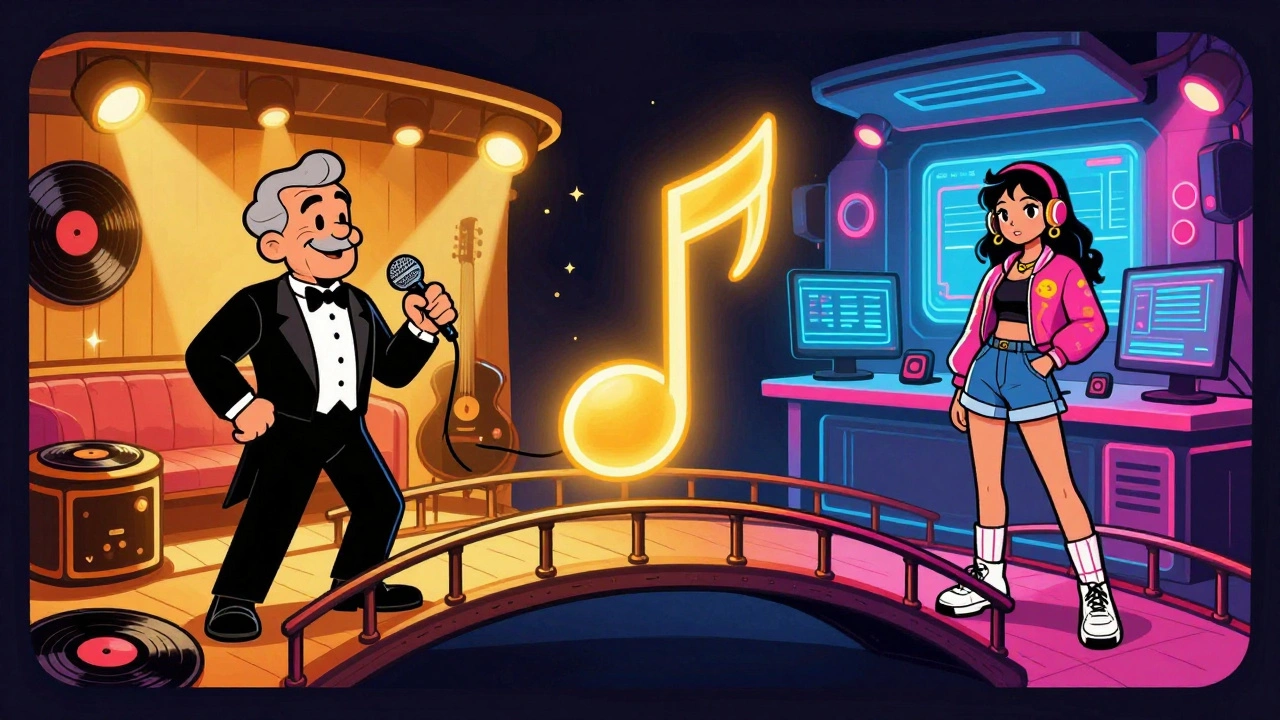

There is a specific kind of magic that happens when a voice from the 1970s meets a beat from the 2020s. It’s not just nostalgia; it’s a calculated, emotional, and commercial powerhouse that has reshaped the modern music landscape. We are talking about cross-generational collaborations, the strategic partnerships between veteran artists with decades of history and contemporary stars who dominate streaming charts. These aren't random guest verses or one-off charity gigs. They are carefully engineered bridges between eras, designed to transfer credibility, expand audiences, and create something neither artist could achieve alone.
If you look at the charts over the last few years, this trend isn't a fluke. It is a dominant force. From jazz legends reclaiming their throne to rock icons finding new life in dance halls, these pairings are proving that age is no longer a barrier to relevance-it is an asset. But why does this work? And more importantly, how do labels and artists pull it off without it feeling like a gimmick?
The Anatomy of a Successful Pairing
To understand why these collaborations succeed, we have to look at what each side brings to the table. It is rarely about equal footing in terms of current fame; it is about complementary strengths. The veteran artist offers "wizened vulnerability"-a weathered timbre, lyrical gravitas, and a catalog that carries weight. The modern star brings "confident power"-technical agility, social media dominance, and access to younger demographics.
This dynamic creates a unique emotional register. When you hear a collaboration, you are hearing a dialogue between two different times. It feels authentic because the contrast is stark. If two young pop stars sing together, they often sound similar. If two older legends team up, they might appeal to the same shrinking demographic. But when you mix them, you get tension and resolution. You get the safety of the familiar mixed with the excitement of the new.
| Attribute | Veteran Artist Contribution | Modern Star Contribution |
|---|---|---|
| Credibility | Historical legitimacy and institutional respect (Grammys, Hall of Fame) | Cultural currency and trend-setting status |
| Audience Reach | Loyal, older fanbase with high purchasing power | Massive Gen-Z and Millennial streaming audience |
| Production Style | Analog warmth, live instrumentation, traditional phrasing | Digital precision, playlist-optimized mastering, viral hooks |
| Marketing Value | Media narratives about legacy and mentorship | Social media virality and short-form video engagement |
Labels love this model because it de-risks investment. A solo album by a legacy act might sell steadily but quietly. A debut single by a new artist might flop if the timing is off. But combine them, and you create a news event. You get press coverage that spans multiple generations of readers. You get radio play on both classic hits stations and Top 40 pop channels. It is a win-win scenario that maximizes the return on every dollar spent on production and promotion.
Case Study: Tony Bennett and Lady Gaga
No discussion of this trend is complete without looking at the gold standard: Tony Bennett and Lady Gaga. Their collaboration on the album "Cheek to Cheek", released in September 2014, was a masterclass in bridging the gap. Bennett, then 88, had been recording since 1949. Gaga, 28, had just cemented her status as a global pop icon. On paper, it seemed mismatched. In practice, it was explosive.
The album debuted at number 1 on the Billboard 200 with 131,000 equivalent units sold in its first week. This made Bennett the oldest living artist to top the chart with a newly recorded album. But the numbers only tell half the story. The cultural impact was profound. Gaga didn't just sing backup; she immersed herself in the Great American Songbook. She adopted Bennett’s phrasing and respected the acoustic band formats he preferred. In return, Bennett leaned into Gaga’s theatricality, bringing a fresh energy to standards like "Anything Goes" and "I Can’t Give You Anything but Love."
This wasn't a one-off stunt. It led to a second album, Love for Sale, in 2021, and multiple touring cycles. The tour itself was a logistical marvel. Gaga’s drawing power-she had generated over $191 million in North American tour revenue by 2021-meant they could play stadiums. These were venues where a traditional jazz concert would never sell out. Gaga brought her fans to see Bennett, and many of those fans stayed for the music. They discovered a whole new world of jazz standards they had never explored before.
The institutional validation followed quickly. The album won the Grammy Award for Best Traditional Pop Vocal Album in 2015. This signaled to the industry that cross-generational projects weren't just commercially viable; they were artistically significant. Bennett later told Gaga to remain committed to jazz, framing their partnership as part of his mission to keep the songbook alive for younger listeners. That sense of purpose elevated the project beyond mere commerce.
Case Study: Elton John and Dua Lipa
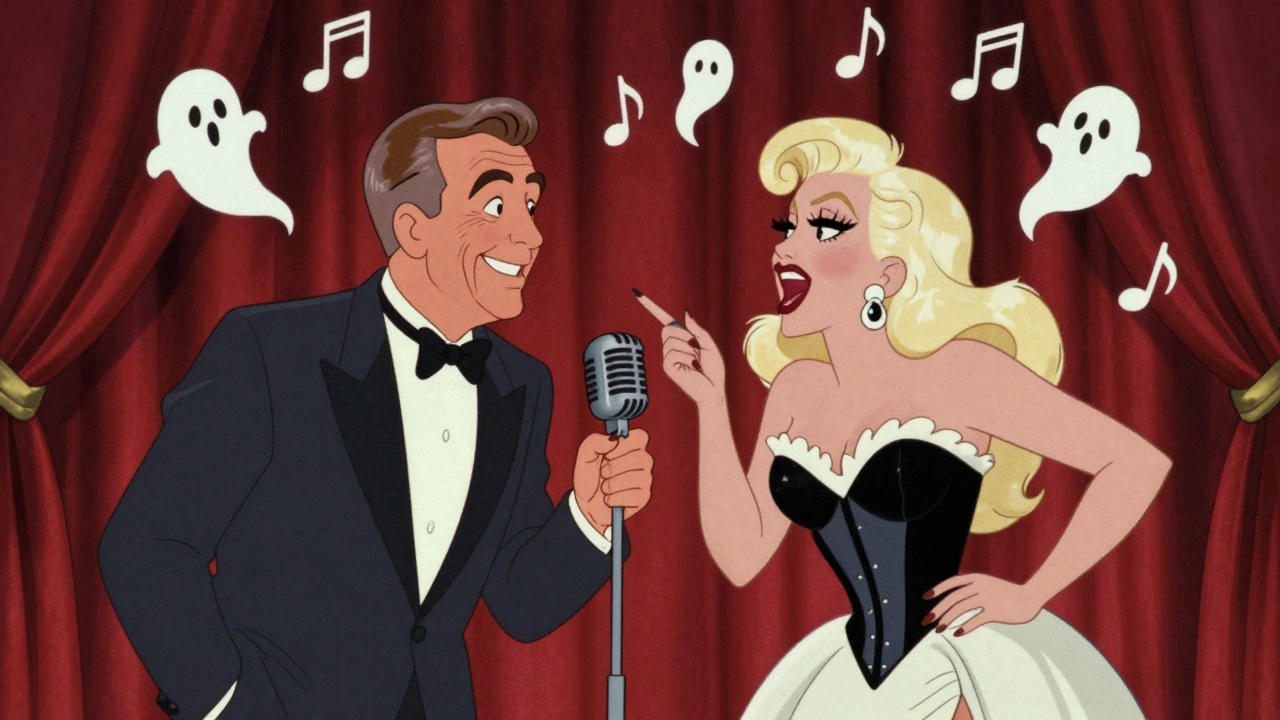
If Bennett and Gaga represented the analog-meets-digital bridge in jazz and pop, then Elton John and Dua Lipa showed how to do it in the realm of electronic dance music. Their hit "Cold Heart (Pnau Remix)", released in August 2021, became a global phenomenon. It fused melodic elements from Elton John’s catalog-including "Rocket Man," "Sacrifice," and "Kiss the Bride"-with a house and nu-disco arrangement produced by the Australian trio Pnau.
The results were staggering. "Cold Heart" topped the UK Singles Chart, giving Elton John his first number-one single there in over a decade. It also reached number 1 on Billboard’s Hot Dance/Electronic Songs chart and spent 47 consecutive weeks in the Top 40 of the Billboard Hot 100. More impressively, it joined the APRA AMCOS "Billion Streams" club, meaning it was streamed over one billion times across platforms. For a track built largely on archival stems from the 1970s and 1980s, this level of engagement was unprecedented.
What made "Cold Heart" work was its construction. It was explicitly designed for the digital age. The four-on-the-floor beat was perfect for TikTok-style short-form videos and playlist circulation. Yet, it reintroduced melodies from Elton John’s past to a generation that had never heard them in their original form. Fans who discovered the song through Dua Lipa’s name often went backward, exploring the original versions of "Sacrifice" and "Rocket Man." This created a longitudinal listening path, integrating historical musical knowledge into contemporary consumption habits.
The visual component amplified this effect. The official music video and their live performance at Dodger Stadium in November 2022 dramatized the handoff between generations. Seeing a 74-year-old rock legend and a 25-year-old pop headliner share the stage before tens of thousands of fans turned a studio mashup into a symbolic moment of unity. It proved that even in a fragmented media landscape, shared musical experiences can still unite massive, diverse audiences.
The Psychology Behind the Appeal
Why do audiences respond so positively to these pairings? Research suggests it goes deeper than just catchy tunes. Studies in music therapy and intergenerational programming show that collaborative musical experiences improve cross-age attitudes. A 2018 peer-reviewed study found that structured programs pairing older adults with youth in creative music-making led to statistically significant improvements in well-being and more positive attitudes toward aging among younger participants.
In mainstream culture, these high-profile duets act as models for respectful interaction. In a society often polarized by political and economic debates that frame age groups as competitors, seeing artists from different cohorts perform together offers a counter-narrative. It presents aging not as decline, but as a source of wisdom and beauty. It presents youth not as disrespectful, but as energetic and capable of learning from the past.
Psychologically, this reduces anxiety about aging for older listeners and provides a sense of rootedness for younger ones. When a teenager hears Elton John’s voice blended with Dua Lipa’s, they don't just hear a song; they hear a connection to history. They feel included in a lineage. Conversely, when an older listener hears Tony Bennett harmonizing with Lady Gaga, they feel validated. Their tastes are not obsolete; they are being celebrated by the most relevant voices of the day.
Strategic Lessons for Artists and Labels
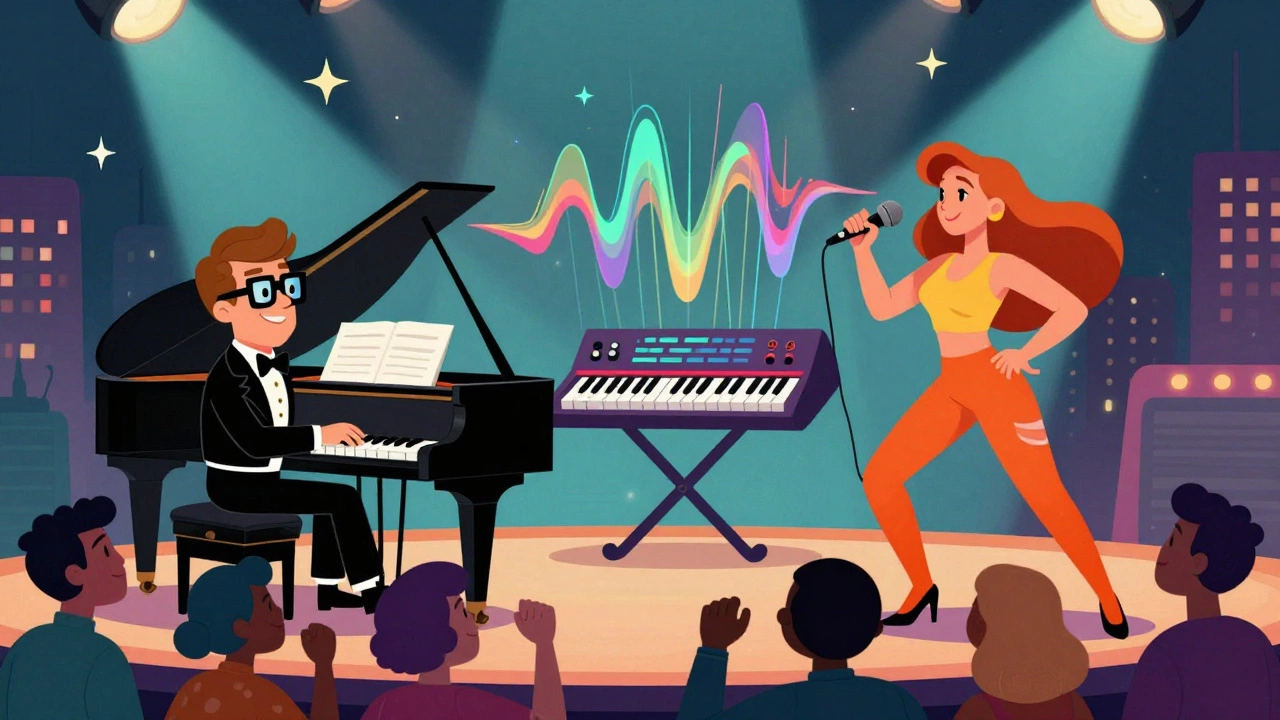
For those looking to replicate this success, there are clear best practices. First, approach the partnership with humility and curiosity. The veteran should avoid dismissing newer styles as inferior, while the younger artist should recognize the business and lyrical experience of their elder counterpart. Both sides must actively seek co-writing and joint tours rather than treating the collaboration as a transactional feature.
Second, prioritize high-bandwidth communication. Remote file-based collaboration can lead to disconnects. The most successful pairs, like John Mayer and Bob Weir, or Tal Wilkenfeld and Jeff Beck, build sustained relationships through in-person rehearsal and performance. This allows for mutual stylistic education. Gaga learned jazz phrasing from Bennett; Bennett learned to embrace Gaga’s theatrical flair. This exchange enriches the final product.
Third, design live shows that highlight, rather than conceal, age differences. Trade verses or solos that contrast styles. Let the veteran take the ballad and the modern star drive the tempo. This showcases the unique strengths of each performer and gives the audience a reason to watch the live event rather than just streaming the track. Use the older artist’s established touring infrastructure and the younger artist’s social media reach to maximize cross-promotion. This minimizes marketing costs per new listener acquired.
Finally, consider the production timeline. Full albums like "Cheek to Cheek" require months of preparation and large-scale promotion. Singles like "Cold Heart" offer a lower-risk, high-reward template using archival material and contemporary vocals. Labels should assess which model fits their roster and goals. Both have proven effective, but they require different resources and strategies.
The Future of Intergenerational Music
As population aging accelerates and digital catalogs make music from the 1960s onward continuously accessible, cross-generational collaborations will likely increase in frequency and economic importance. Legacy artists are leveraging them to secure late-career chart success, while younger stars use them to differentiate themselves in a saturated market. It is a sustainable strategy that benefits all parties involved.
We are already seeing this trend expand beyond pop and jazz. Hip-hop, once criticized for an "age-related disconnect," is increasingly embracing collaborations between veteran rappers and newer talent. Rock bands are inviting younger guitarists to join their lineups. The common thread is the recognition that generational difference is a creative asset, not a barrier. By building bridges between eras, the music industry is creating a richer, more inclusive cultural landscape.
For listeners, this means a future where the boundaries between decades blur. You might hear a 1970s melody reimagined with 2020s production, or a classic lyric delivered with fresh urgency. These collaborations remind us that music is timeless, but its expression is always evolving. And in that evolution, we find common ground.
What defines a cross-generational collaboration in music?
A cross-generational collaboration is a partnership between a veteran artist whose career began 25-40+ years ago and a contemporary star who emerged in the last 10-15 years. These projects typically span an age gap of 30-50 years and combine distinct genre, technological, and cultural eras to create a unique artistic and commercial outcome.
Why did Tony Bennett and Lady Gaga's "Cheek to Cheek" succeed?
The album succeeded because it combined Bennett’s historical legitimacy and jazz expertise with Gaga’s massive pop appeal and touring infrastructure. It debuted at #1 on the Billboard 200, won a Grammy, and introduced jazz standards to a younger audience through Gaga’s endorsement and performance style.
How did Elton John and Dua Lipa's "Cold Heart" perform on the charts?
"Cold Heart" reached #1 on the UK Singles Chart and Billboard’s Hot Dance/Electronic Songs chart. It spent 47 consecutive weeks in the Top 40 of the Billboard Hot 100 and surpassed one billion streams globally, demonstrating the power of remixing vintage catalog tracks for modern streaming platforms.
What are the psychological benefits of intergenerational music?
Research shows that collaborative musical experiences improve cross-age attitudes and psychosocial well-being. For listeners, these collaborations model respectful interaction between generations, reducing age-related stereotypes and providing a sense of continuity and shared cultural heritage.
How can labels maximize the ROI of cross-generational projects?
Labels should leverage the veteran’s established touring infrastructure and the younger artist’s social media reach. Designing live shows that highlight contrasting styles and prioritizing in-person collaboration over remote file-sharing helps create authentic connections that resonate with diverse audiences.


