
Remember the last time you held a piece of history in your hands? Not a digital file or a streaming link, but something physical that smells like old paper and plastic. That’s the thrill of collecting glam rock memorabilia, a hobby centered on the glitter-soaked era of roughly 1971 to 1976. This wasn’t just about music; it was a visual revolution led by icons like David Bowie, T. Rex, and Roxy Music. Today, thanks to a massive vinyl revival, these artifacts are more valuable-and more sought after-than ever before.
The market for vintage music is booming. In 2023 alone, US vinyl record revenues hit about $1.4 billion, up 17% from the previous year. But glam rock holds a special place in this resurgence. Why? Because glam artists treated every element of their career-from album sleeves to stage costumes-as part of a "total art project." When you buy a poster or a pressing from this era, you aren’t just buying a song; you’re buying into a cultural moment that changed fashion, gender norms, and rock aesthetics forever.
Understanding the Glam Era: What Defines the Collection?
To collect effectively, you first need to know what you’re looking at. The classic glam period is often pinned to specific dates: starting with Marc Bolan’s glitter-dusted appearance on *Top of the Pops* in March 1971 and ending with David Bowie retiring Ziggy Stardust at London’s Hammersmith Odeon in July 1973. However, the aesthetic influence stretched well into the late 1970s with bands like Queen and Slade.
This era produced three main types of collectibles:
- Vinyl Pressings: Original LPs (12-inch), singles (7-inch), and rare test pressings.
- Paper Ephemera: Concert posters, tour programs, ticket stubs, and fan club newsletters.
- Promotional Material: In-store posters, press kits, and promo photos.
Unlike later genres, glam relied heavily on intense touring schedules. T. Rex played over 100 UK dates between 1971 and 1973, while Bowie’s Ziggy tours covered around 190 shows globally. This meant local venues printed thousands of posters and programs. Most were thrown away, which creates the scarcity we see today. Finding an original 1972 gig poster in good condition is harder than finding a Beatles bootleg because survival rates for paper items from that decade are surprisingly low.
Hunting for Vinyl: First Pressings vs. Reissues
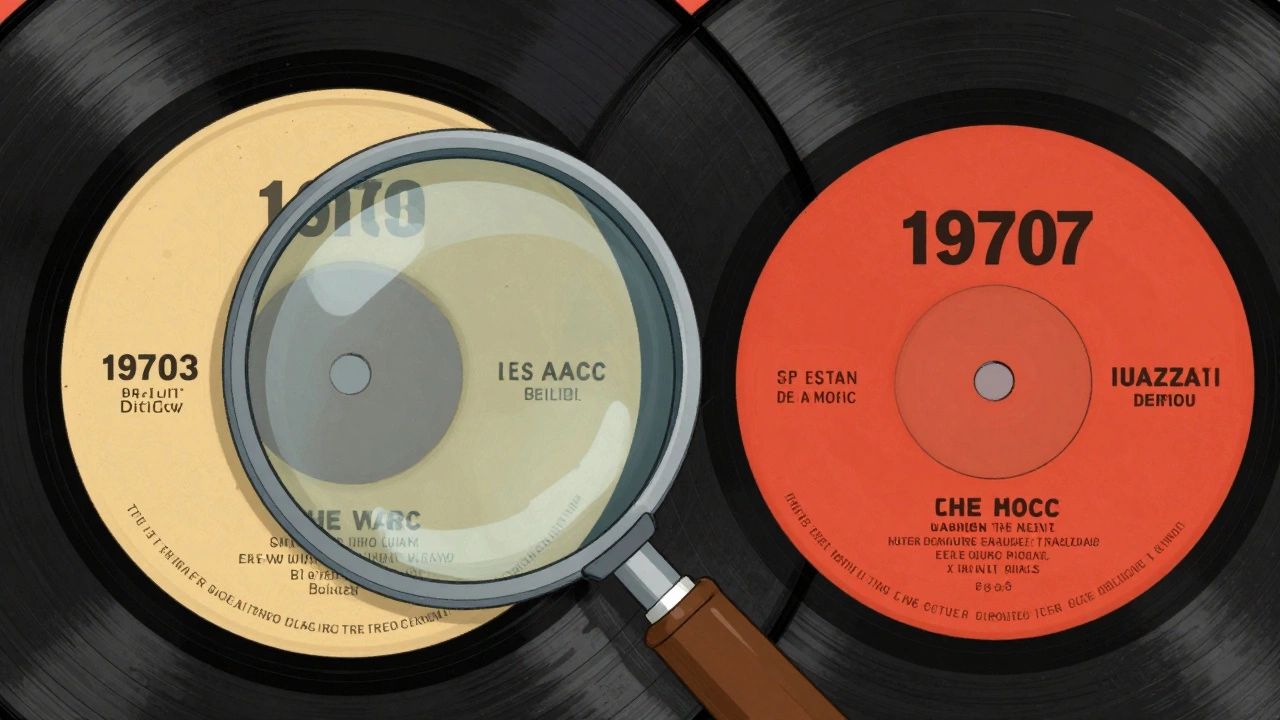
If you walk into any record store today, you’ll see reissues of *Ziggy Stardust* everywhere. But serious collectors hunt for original first pressings. These are the copies made directly from the master tapes using the original stampers. They sound different-often with a wider dynamic range and less inner-groove distortion than modern remasters.
How do you spot them? You have to look at the details.
| Feature | Original First Pressing (1970s) | Later Reissue (1980s+) |
|---|---|---|
| Label Design | Period-specific typography, correct logo colors (e.g., RCA Victor red/black). | Updated logos, simplified fonts, or generic label designs. |
| Matrix Numbers | Etched in the deadwax (run-out groove); unique codes like "1E/1E" for Bowie. | Different matrix numbers indicating later manufacturing runs. |
| Sleeve Details | Original printing credits, textured cardstock, specific publishing info (e.g., Titanic Music). | Glossy finishes, updated copyright dates, missing original inserts. |
| Sound Quality | Warmer analog tone, higher peak-to-average ratio. | Can be brighter or compressed depending on the mastering source. |
Take David Bowie’s *The Rise and Fall of Ziggy Stardust*. A clean UK first pressing with the correct "BGBS 0864-1E" matrices can sell for $200-$500 in Near Mint condition. A common 1980s reissue? Maybe $25. The difference isn’t just nostalgia; it’s provenance. Similarly, T. Rex’s *Electric Warrior* on Fly Records with "Bilbo" mastering credits commands a premium over later EMI pressings.
Don’t ignore singles either. Promo-only 7-inch singles, stamped "Not For Sale," were distributed in small runs (500-2,000 copies) to radio stations. These are significantly rarer than commercial singles and often come in unique picture sleeves that add to their value.
The Paper Trail: Posters, Programs, and Stubs
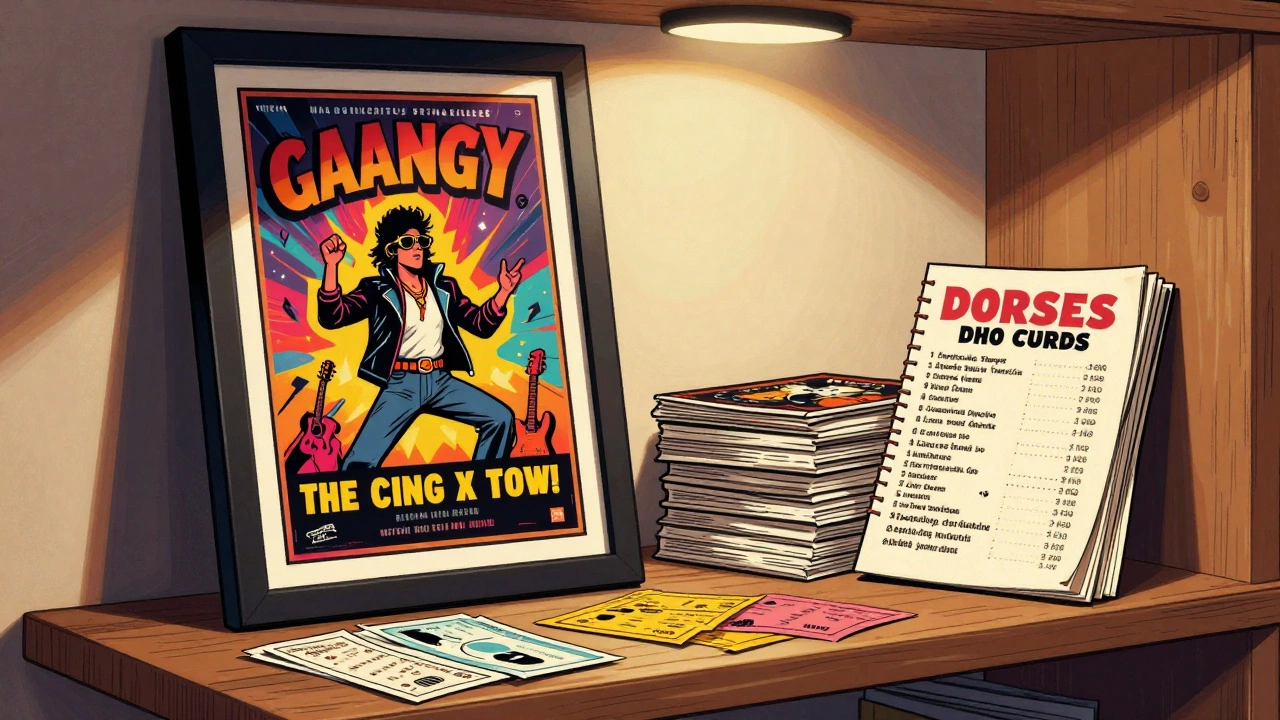
Vinyl gets all the glory, but paper ephemera tells the real story of where the music happened. Glam rock concert posters are highly collectible because they capture the visual language of the era-bold fonts, psychedelic colors, and iconic photography by legends like Mick Rock.
When evaluating a poster, condition is everything. A 1972 UK poster for Bowie at the Rainbow Theatre in Excellent (EX) condition might fetch £1,500-£3,000. The same poster with pinholes, tears, or heavy folding could drop to £300. Here’s how to tell if a poster is genuine:
- Paper Stock: Original offset prints from the 70s usually weigh 80-120 gsm. Modern reprints often use thinner, glossy paper.
- Printer Credits: Look for text at the bottom like "Printed by MacNeill Press, London 1972." If it’s missing, be skeptical.
- UV Light Test: Post-1980 paper often contains optical brighteners that glow under black light. Genuine 1970s stock has a more subdued reaction.
- Aging Patterns: Natural aging looks like slight yellowing or patina. Artificial "tea-staining" is a red flag for fakes trying to look old.
Tour programs are another goldmine. These 16-32 page booklets included exclusive photos, biographies, and setlists. A signed program from Bowie’s 1973 Ziggy tour can increase in value by 2-5 times, provided the signature is authenticated by services like PSA/DNA or JSA. Without authentication, a signature is just ink. With it, it’s a verified piece of history.
Grading Your Collection: The Goldmine Standard
You can’t talk about value without talking about grading. The industry standard is the Goldmine grading system. It applies to both vinyl and paper, though the criteria differ slightly.
For vinyl, grades range from Mint (M) to Poor (P). Most originals you find will fall between Very Good Plus (VG+) and Near Mint (NM). Here’s the catch: prices scale exponentially, not linearly. An NM copy of a rare glam LP might be worth $300. A VG+ copy isn’t half that price-it might only be worth $150. A VG copy could drop to $80. Collectors pay a huge premium for pristine copies because they hold their value better and sound better.
For posters, flaws are deadly. Pinholes, tape marks, and center folds can reduce value by 10-30% each. If you’re buying online, ask for high-resolution photos of the back and edges. Sellers who hide the reverse side often have something to conceal.
Where to Buy and How to Avoid Fakes
The best places to start are specialized auction houses like Omega Auctions, Bonhams, and Sotheby’s, which regularly feature glam rock collections. Online platforms like Discogs and eBay offer accessibility, but they require vigilance. Counterfeit vinyl, especially of high-value Bowie albums like *Hunky Dory*, is a growing problem. Bootlegs may have lighter vinyl weight (110-120 grams vs. the standard 140-160 grams) or incorrect label fonts.
Pro tip: Build relationships with dealers. Shops like MusicGoldmine and eil.com provide certificates of authenticity (COAs) for higher-value items. When in doubt, buy one Near Mint example of a $200 LP rather than four Very Good copies at $50 each. The resale market rewards quality, not quantity.
Caring for Your Artifacts
Once you’ve bought the goods, you need to protect them. Vinyl should be stored vertically in a cool, dry environment (ideally 18-21°C and 40-50% relative humidity). Use anti-static inner sleeves ($0.30-$0.50 each) to prevent sleeve ring wear. Clean records regularly with a carbon-fiber brush or a vacuum cleaning machine.
Posters and programs need acid-free sleeves and backing boards. Light is the enemy of paper memorabilia. If you frame a poster, use UV-blocking glass and reversible mounting methods. Professional conservation framing costs $150-$400 per item, but it preserves value for decades. Consider insuring your collection if it exceeds $5,000 in value; annual premiums typically run 1-3% of the declared amount.
Building a Focused Collection
New collectors often make the mistake of buying everything. Instead, specialize. Focus on one artist (like T. Rex), one label (RCA glam output), or one format (7-inch picture sleeves). Set a realistic budget-perhaps $50-$200 per month-and stick to it. Start with widely available classics like Roxy Music’s debut or Slade’s *Slayed?* to learn the ropes of matrix numbers and condition grading before chasing "white whales" like test pressings or signed Hammersmith Odeon tickets.
Glam rock collecting is more than hooring objects; it’s curating a narrative. By pairing a first-press *Aladdin Sane* with a period tour poster and a ticket stub, you create a tangible connection to the past. As long as new generations discover the glitter and guitar riffs of the 1970s, these artifacts will remain relevant, valuable, and deeply personal.
What is the most valuable glam rock record?
While values fluctuate, David Bowie’s UK first pressing of *The Man Who Sold the World* with the original "dress cover" artwork is among the most valuable, often fetching over $5,000 in top condition. Rare test pressings and acetates by Marc Bolan or early Bowie can also reach the $2,000-$4,000 range when accompanied by documentation.
How can I tell if a glam rock poster is fake?
Check the paper weight (originals are usually 80-120 gsm), look for printer credits at the bottom, and examine the ink saturation. Modern reprints often have brighter, sharper colors and lack the natural aging patina of originals. Using a black light can help detect optical brighteners found in post-1980 paper stocks.
Is it worth collecting glam rock memorabilia as an investment?
Top-tier items like prime Bowie and T. Rex first pressings and authenticated signed memorabilia tend to appreciate moderately (3-7% annually). However, common items may see flat prices. Collect primarily for passion and historical interest, viewing financial gain as a secondary benefit of careful curation and preservation.
What are matrix numbers on vinyl records?
Matrix numbers are etchings found in the "deadwax" area (the space between the last groove and the label). They identify the specific stamper used to press the record. Collectors use these codes to distinguish between first pressings, later reissues, and different manufacturing plants, which directly impacts the record's rarity and value.
Where is the best place to buy authentic glam rock memorabilia?
Reputable sources include major auction houses like Sotheby’s and Omega Auctions, specialized dealers like MusicGoldmine and eil.com, and curated sections on Discogs. Always look for sellers who provide detailed condition reports, provenance, and certificates of authenticity for high-value items.