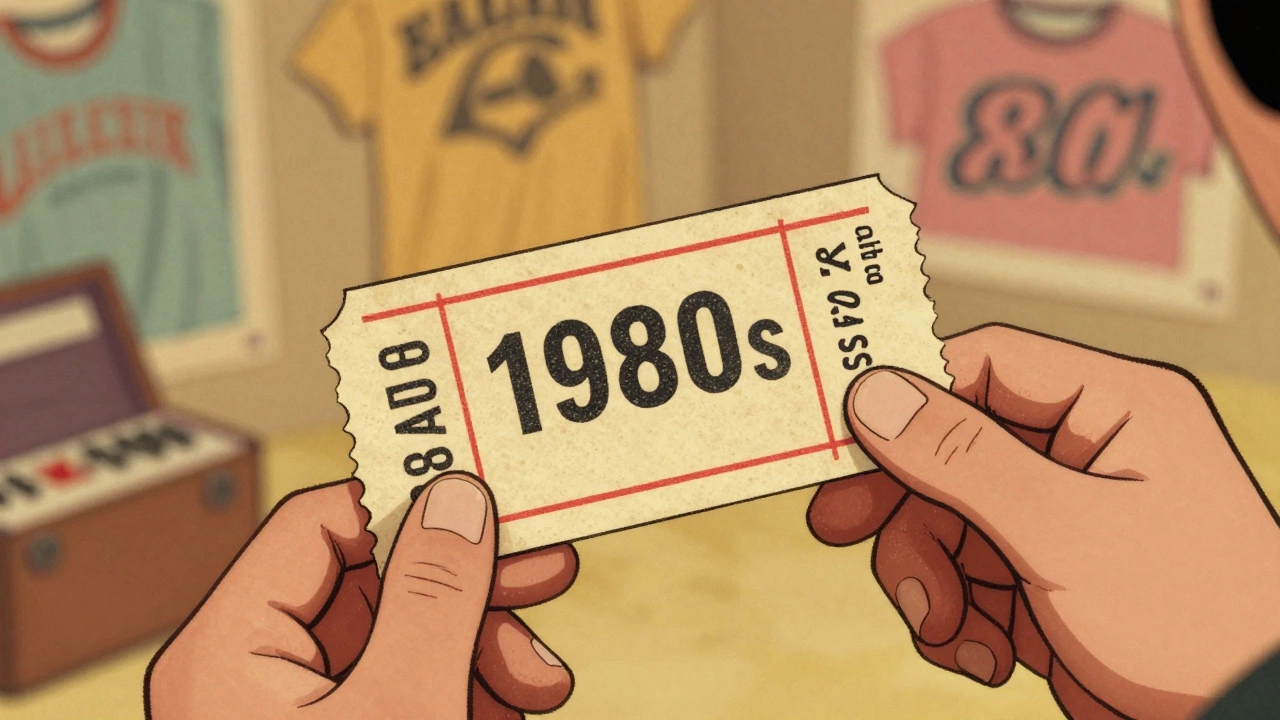

There is a specific feeling you get when you hold an original ticket stub from 1985. The paper is thin, slightly brittle, and smells like old dust and faint traces of sweat. It’s not just a piece of trash; it’s a time machine. For collectors, the 1980s offer a goldmine of tangible memories-band tees with cracked screen prints, movie posters with bold neon typography, and those tiny rectangular proofs that you were actually there.
But here is the catch: the market is flooded with reproductions. A quick search online will show you 'vintage' items that are brand new, printed on modern cotton or glossy paper. If you want to build a real collection of 1980s memorabilia, you need to know how to separate the genuine artifacts from the nostalgic decor. Let’s look at what makes these items valuable, how to spot the fakes, and where to start your own archive.
The Three Pillars of 80s Collecting
Most serious collections revolve around three main categories: T-shirts, posters, and ticket stubs. Each has its own rules for authenticity and value. Understanding these differences helps you decide whether you are buying history or just buying a cool shirt.
| Item Type | Key Authenticity Markers | Common Reproduction Traps | Storage Needs |
|---|---|---|---|
| Vintage T-Shirts | Cracked ink, yellowed tags, heavy cotton fabric | Modern soft blends, crisp logos, generic 'Vintage' tags | Folded flat in acid-free tissue, away from light |
| Ticket Stubs | Perforated edges, punch holes, specific venue fonts | Smooth edges, digital print quality, missing security marks | Plastic sleeves in binders, low humidity |
| Posters | Original lithography, fold lines, period-correct paper stock | Glossy finish, high-resolution digital scans, no wear | Flat storage tubes or archival boxes, no UV exposure |
T-Shirts: Reading the Fabric and Print
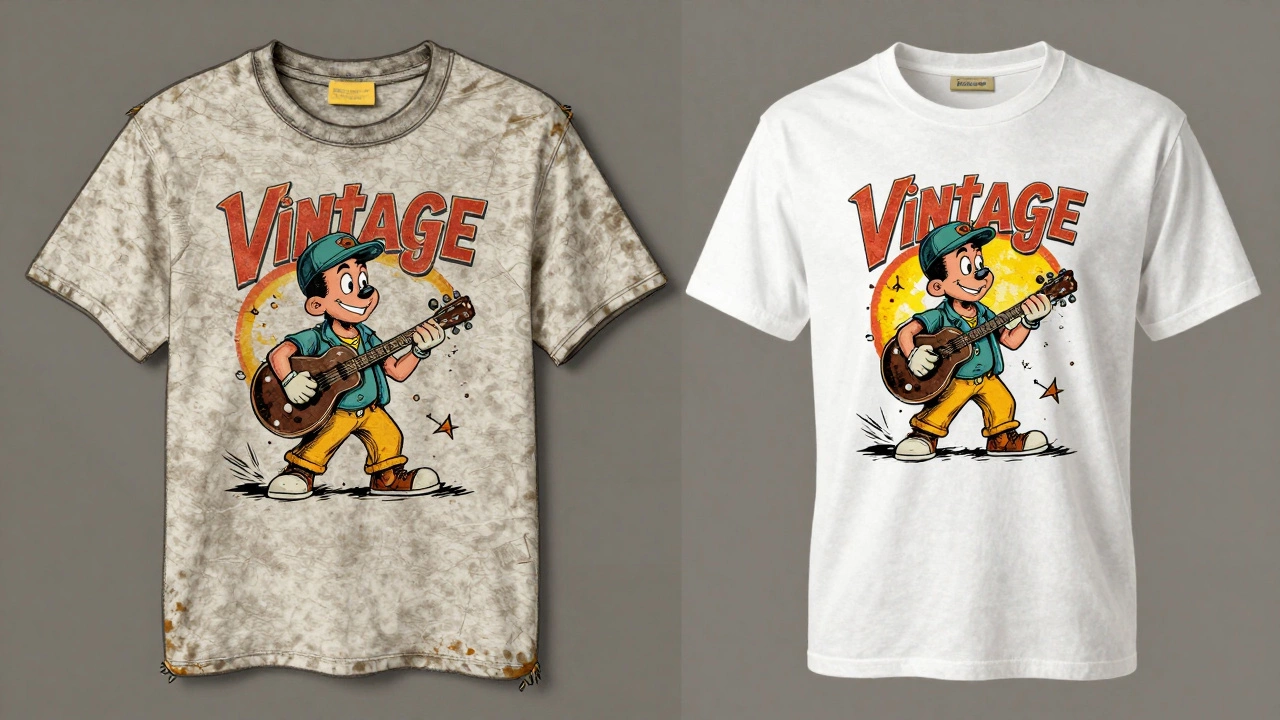
T-shirts are the most visible part of this hobby. You see them everywhere, but spotting an original 1980s band tee requires looking past the logo. In the 80s, shirts were made differently. They were heavier, boxier, and often featured thick, plastisol-based screen printing.
When you look at an original AC/DC or Metallica shirt from 1985, the ink sits on top of the fabric. Over forty years, that ink cracks. These cracks are your friend. They prove age. If the logo looks smooth and vibrant, it’s likely a modern reprint. Check the tag too. Many 80s shirts had woven labels that are now faded or frayed. Some even have safety pin holes near the collar from being worn live at concerts.
Be careful with sites that sell 'retro' tees. Companies like 80sTees, which started in 1999, sell officially licensed designs. These are great if you want to wear the look without the risk of a shirt falling apart. But they are not collectibles. They are new clothes with old graphics. If you are hunting for investment-grade pieces, stick to vintage dealers who specify the year and condition, like Get Lucky Vintage, which pairs shirts with matching ticket stubs to prove provenance.
Ticket Stubs: The Proof of Presence
Ticket stubs are the holy grail for many collectors because they provide undeniable proof of attendance. A poster says a concert happened; a stub says you were there. The value of a stub depends heavily on the artist, the date, and the venue.
Take an Aerosmith ticket from November 21, 1989, at City Hall in Newcastle, UK. This isn’t just any ticket; it’s a specific historical artifact. Collectors catalog these by exact date and location. Notice that dealers distinguish between 'used' and 'unused' stubs. An unused ticket might be cleaner, but a used one with a punch hole tells a story. That punch mark means someone walked through that door.
If you are starting out, don't throw away your current tickets. Start a binder now. One collector shared photos of a binder bursting at the seams with stubs dating back to the mid-80s. Those small pieces of paper accumulate into a massive personal history. When buying old stubs, look for legible text. Faded ink can make a stub worthless because you can't verify the event. Also, check the edges. Original tickets were torn from rolls, so they have rough, perforated edges. Modern reproductions are often cut cleanly by machines.
Posters: Art vs. Artifact
Posters fall into two distinct camps: original promotional art and modern decorative prints. Original 1980s film or concert posters were often printed using offset lithography on thinner, more absorbent paper than today's glossy stocks. They usually have fold lines where they were stored rolled up or folded in pockets.
Today, you can buy 'custom concert ticket stub posters.' These are large-format wall art pieces that mimic the look of a vintage ticket. You type in your favorite band and date, and they print it out. These are fantastic gifts for nostalgia lovers, but they are not collectibles. They are new products designed to evoke memory, not preserve it.
If you are looking for originals, focus on condition. Creases are normal; tears are less so. Look for the specific typography of the era. 80s design was bold, angular, and experimental. If a poster looks too clean, too sharp, or uses a font style that didn't exist until the 90s, walk away. Always ask for close-up photos of the paper texture and any imperfections.
How to Store Your Collection
You can spend thousands on rare items, but if you store them wrong, they will degrade quickly. Paper and fabric are fragile. Here is how to keep your 80s treasures intact:
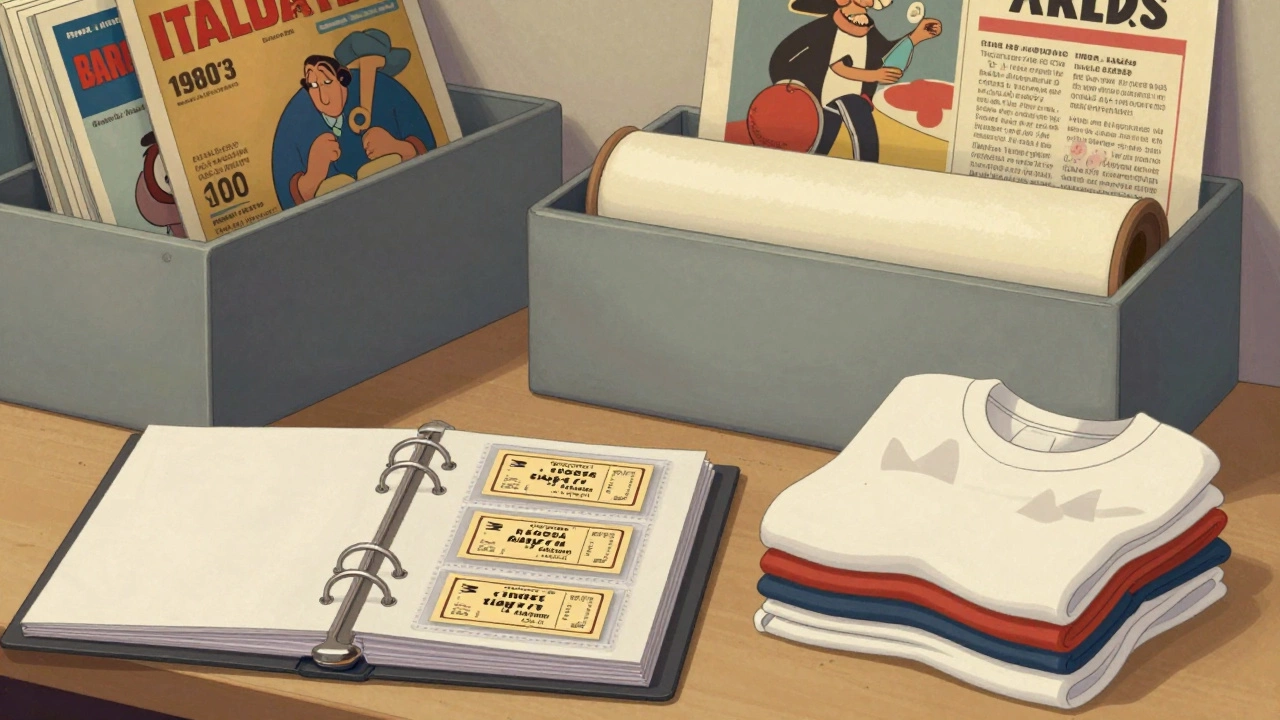
- For Ticket Stubs: Use clear plastic sheet protectors inside a three-ring binder. Keep the binder upright or flat in a dry place. Avoid humidity, which causes mold and sticking.
- For T-Shirts: Wash them only if necessary, using cold water and mild detergent. Never use bleach. Store them folded, not hung, to prevent stretching. Place acid-free tissue paper between folds to reduce creasing.
- For Posters: Store them flat in archival-quality boxes or tubes. Keep them away from direct sunlight, which fades colors rapidly. If framing, use UV-protective glass and acid-free mats.
Where to Buy and What to Avoid
The best places to find authentic items are specialized vintage dealers and estate sales. Online marketplaces like eBay can work, but you must vet sellers carefully. Look for sellers who specialize in music memorabilia, like OIC Vintage, which lists specific details about unused versus used tickets. Generic sellers often bundle random items without verifying dates.
Avoid 'mystery lots' unless you are experienced. You might end up with fifty fake reprints. Also, be wary of items described as 'vintage style' or 'retro inspired.' These are code words for new reproductions. If you want the real deal, the listing should say 'original,' 'vintage,' or 'from the [Year] tour.'
Finally, consider the community aspect. Join forums or social media groups dedicated to 80s collecting. Seeing other people's binders and shelves gives you context. It helps you understand what is rare and what is common. A ticket from a major stadium show might be easier to find than one from a small club gig, depending on the band. Knowledge is your best tool.
How much is an original 1980s concert ticket worth?
Value varies wildly based on the artist, rarity, and condition. Common tickets from huge tours might sell for $10-$50. Rare tickets from obscure bands or significant historical events can fetch hundreds or even thousands of dollars. Unused tickets in perfect condition generally command higher prices than used ones, though some collectors prefer the authenticity of a punched stub.
Can I wash a vintage 1980s T-shirt?
It is risky. Washing can cause the screen-printed ink to crack further or fade. If the shirt is smelly, try freezing it overnight to kill bacteria, then air it out. If you must wash it, turn it inside out, use cold water, a gentle cycle, and hang it to dry. Never use a dryer, as heat damages old fabric and ink.
What is the difference between a reproduction and an original poster?
An original poster was printed during the 1980s for promotion. It will have period-correct paper weight, potential fold lines, and signs of aging like foxing (brown spots) or fading. A reproduction is a modern print, often on thicker, glossier paper, with sharp, clean colors and no natural wear. Reproductions are sold as decor, not collectibles.
Are custom ticket stub posters considered collectibles?
No. Custom ticket stub posters are modern decorative items created to look like vintage tickets. They are personalized art pieces meant for display. They do not hold monetary value as historical artifacts because they were never distributed at actual events.
Where should I store my ticket stubs to preserve them?
Store ticket stubs in acid-free plastic sleeves within a three-ring binder. Keep the binder in a cool, dry place away from direct sunlight. Humidity and heat are the biggest enemies of paper, causing mold and brittleness. Do not staple or tape stubs directly into books, as adhesives damage the paper over time.