

Most people think of Bob Marley and a slow, meditative bassline when they imagine Jamaican music. But if you only listen to roots reggae, you're missing about three-quarters of the story. Jamaica isn't just the home of one genre; it's a sonic laboratory where African rhythms, European structures, and American R&B collided to create a massive family of sounds. From the rustic folk of the 1940s to the high-voltage digital beats of modern clubs, the island's musical evolution is a masterclass in cultural hybridization.
The Foundation: Mento and the Early Fusion
Before the world knew about the "one drop" beat, Jamaica had Mento is a folk style that peaked in popularity during the 1940s and 50s, blending African rhythmic patterns with European instruments. It's essentially the ancestor of everything that followed. Mento wasn't designed for stadiums; it was music for the community, often featuring acoustic guitars, banjos, and rhumba boxes. This era established the blueprint for Jamaican music: taking a foreign instrument or structure and giving it a distinct, local rhythmic twist.
Ska: The High-Energy Bridge to Independence
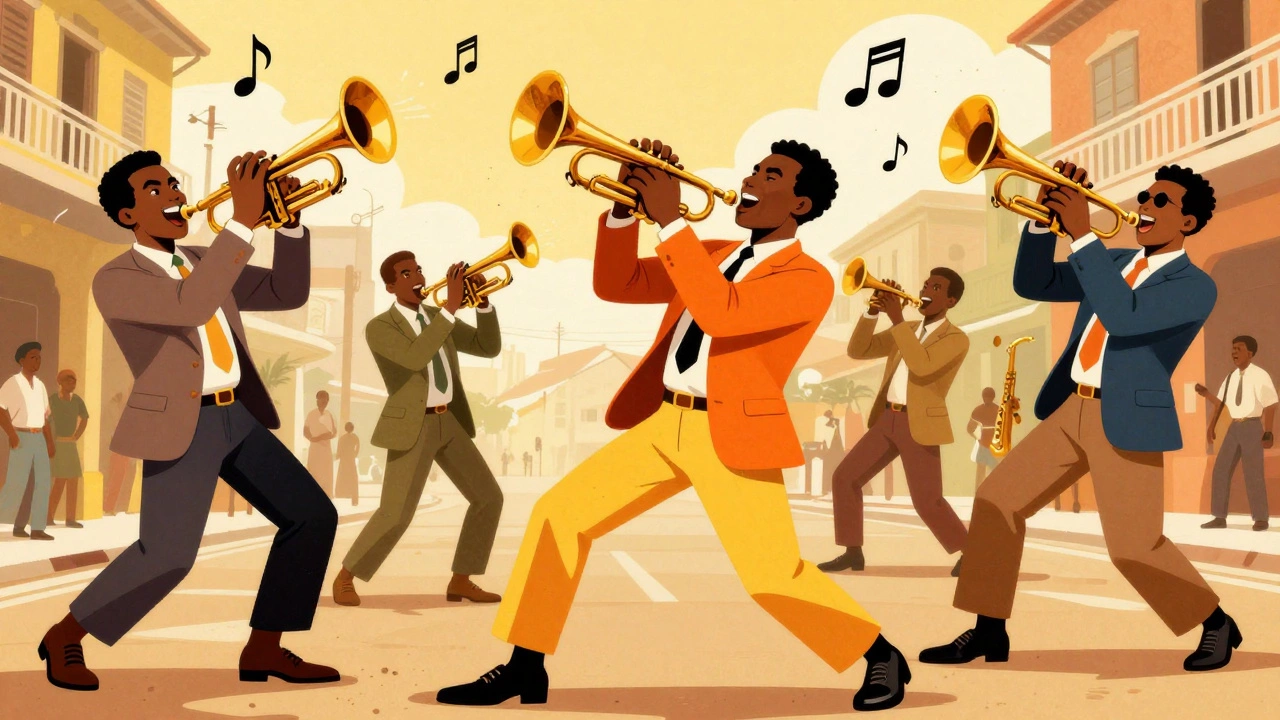
As Jamaica moved toward its independence in 1962, the music sped up. In the 1950s, musicians began experimenting with American rhythm and blues, stripping away some of the heaviness and adding a sharp, upbeat accent. This gave birth to Ska is an upbeat, horn-driven genre characterized by a distinctive off-beat guitar chop and a fast tempo.
If you've ever heard a song that makes you want to jump and dance immediately, it's likely the influence of ska. It combined jazz-style horns with calypso melodies and a walking bassline. This energetic sound mirrored the optimism of a nation finding its own identity, creating a bridge between the folk roots of Mento and the more deliberate groove of reggae.
Rocksteady and the Shift to the Groove
Around the mid-1960s, the frantic pace of ska began to cool down. A legendary heatwave is often cited as a reason why musicians slowed the tempo-it was simply too hot to dance at ska speeds. This transition led to Rocksteady is a short-lived but influential genre that slowed down the ska beat and placed a heavier emphasis on the bass and vocals.
Rocksteady stripped away the big horn sections of ska and focused on a tighter, more soulful sound. This shift was crucial because it moved the music from the feet to the heart, paving the way for the meditative, bass-heavy atmosphere that would eventually define Jamaican music on a global scale.
| Genre | Era | Tempo | Key Feature | Primary Vibe |
|---|---|---|---|---|
| Mento | 1940s-50s | Moderate | Acoustic/Folk | Rustic & Community-led |
| Ska | 1950s-60s | Fast | Walking Bass & Horns | Energetic & Optimistic |
| Rocksteady | Mid-1960s | Slow/Moderate | Heavy Bass/Vocals | Soulful & Smooth |
| Reggae | Late 60s-70s | Slow/Steady | Off-beat Chop | Meditative & Political |
Dub: The Art of the Remix
While reggae was capturing the world's attention, producers in the studio were doing something radical. They started treating the mixing board like an instrument. This gave rise to Dub is an instrumental genre that uses heavy bass, reverb, and echo to remix existing reggae tracks.
In dub, the vocals are often stripped away or reduced to fragments, leaving the listener with a hypnotic landscape of thumping bass and echoing percussion. This wasn't just a sub-genre; it was a revolution in music production. Dub's focus on the "remix" directly influenced the development of electronic dance music (EDM), hip-hop, and jungle in the UK and US. Without the experimentation of Jamaican dub engineers, modern music production would look completely different.
Dancehall: The Digital Revolution
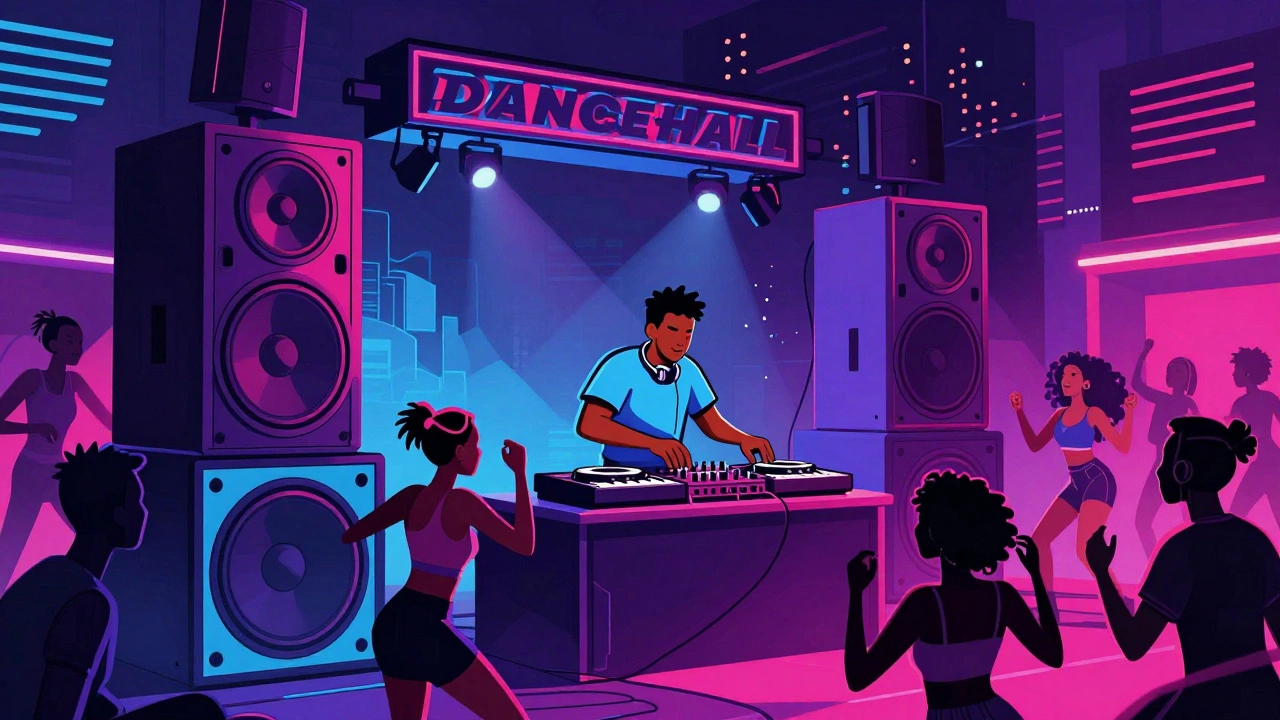
By the late 1970s, a new energy hit the streets of Kingston. While roots reggae was focused on spiritual and political liberation, Dancehall is a high-energy, digitally-driven evolution of reggae that emphasizes quick rhythms, synthesizers, and rhythmic chanting (toasting). emerged as the soundtrack of the urban dancehall parties.
Unlike its predecessors, dancehall embraced the machine. The organic drums and bass were replaced by synthetic drum machines and aggressive synthesizers. The lyrical style shifted from long, melodic songs to "toasting"-a rhythmic, spoken-word delivery that sounds like a precursor to rapping. Dancehall is more stripped-back and accessible, focusing on the immediate physical response of the crowd. While it still carries a thread of political messaging, it's often more focused on street culture, dance, and social competition.
How These Styles Interconnect
It's a mistake to see these genres as separate islands. They are more like a family tree. The off-beat emphasis that started in ska is the DNA found in everything from rocksteady to dancehall. The technical journey went from the acoustic folk of Mento, through the brassy energy of Ska, into the deep bass of Reggae and Dub, and finally into the electronic pulses of Dancehall.
Each transition was a response to the environment. Ska reflected the excitement of independence; Rocksteady reflected a slowing down of the pace; Reggae reflected the social and spiritual struggles of the 70s; and Dancehall reflected the digitalization of the modern era. Together, they create a comprehensive map of Jamaica's cultural history.
What is the main difference between Reggae and Dancehall?
Reggae is generally slower, more organic, and often focuses on spiritual or political themes with a meditative groove. Dancehall is faster, uses electronic synthesizers and drum machines, and focuses more on high-energy beats and rhythmic chanting geared toward dancing and party culture.
Where did the "off-beat" rhythm come from?
The off-beat rhythm, or the "skank," originated primarily during the Ska era. It was a fusion of American jazz and R&B influences combined with traditional Jamaican rhythmic sensibilities and Calypso music.
Is Dub a separate genre or just a style of Reggae?
Dub began as a way of remixing reggae songs, but it evolved into its own distinct genre. It focuses on the sonic architecture-bass and drums-rather than the songwriting or vocals, using studio effects like delay and reverb as primary instruments.
What was Mento's influence on later Jamaican music?
Mento provided the foundational hybrid of African rhythms and European instruments. This willingness to mix disparate cultural influences set the stage for the experimentation that led to Ska and subsequently Reggae.
Why did Ska transition into Rocksteady?
The transition was driven by a shift in taste and environmental factors (including extreme heat), leading musicians to slow down the tempo and focus more on the bassline and vocal harmonies, creating a smoother, more soulful sound.
Next Steps for Music Explorers
If you're new to this world, don't start with a "Best of Reggae" playlist. Instead, try a chronological approach. Start with some old Mento recordings to hear the folk roots, then move into the horn-heavy tracks of the early 60s Ska scene. From there, dive into the deep bass of Dub before finishing with the high-energy riddims of modern Dancehall. You'll start to see exactly how one sound evolved into the next and why the Jamaican musical legacy is so much bigger than just one genre.


