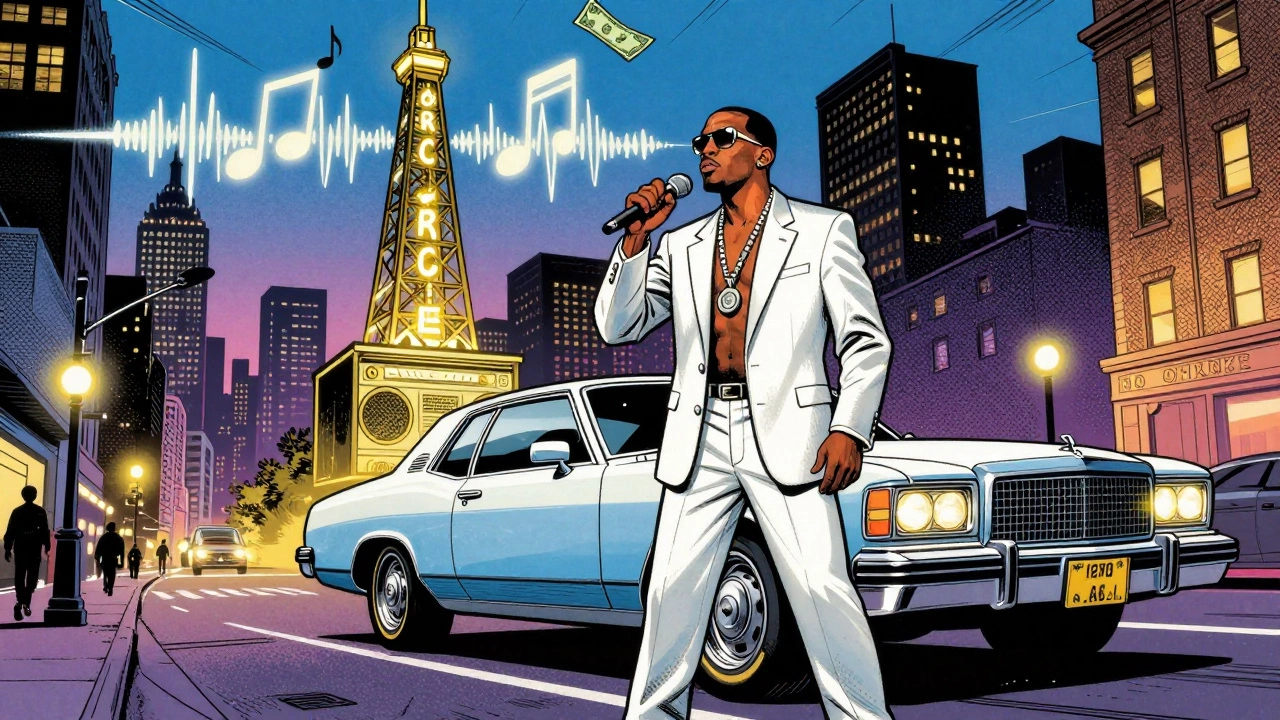

Step back into 1997. You turn on the radio, expecting a quick mix of pop and rock. Instead, you hear a string sample from The Police, followed by a voice that sounds like it’s coming from inside your head. It’s Puff Daddy rapping about being around the world. You switch stations. Same vibe, different track-this time it’s The Notorious B.I.G., also known as Biggie Smalls, delivering bars over a soulful hook. Switch again. Still Bad Boy Records. In the mid-to-late 1990s, this wasn’t just a coincidence; it was a calculated takeover. Bad Boy Records is a New York-based hip-hop and R&B label founded by Sean Combs that dominated urban radio through glossy production and strategic marketing. While West Coast G-funk had ruled the early ’90s, Bad Boy reshaped the sonic landscape of America, proving that rap could be luxurious, radio-friendly, and undeniably catchy.
The Birth of a Brand: From Uptown to Empire
To understand how Bad Boy conquered the airwaves, you have to look at where it started. Sean “Diddy” Combs didn’t emerge from nowhere. He cut his teeth at Uptown Records is an influential R&B and hip-hop label under MCA Records where Sean Combs worked as a talent director before founding Bad Boy. Born in Harlem in 1969, Combs built his reputation by developing acts like Mary J. Blige and Jodeci. But in 1992, he was fired. For many, that would have been the end. For Combs, it was the spark. He incorporated Bad Boy Worldwide Entertainment Group later that year, though the label truly launched as an independent imprint in 1993 after securing distribution deals.
Combs knew something other executives missed: the line between hardcore street rap and mainstream pop R&B was thinner than people thought. At Uptown, he had seen how R&B hooks could soften the edge of hip-hop verses. He took that lesson and doubled down. By signing both rap stars and R&B groups, he created a self-sustaining ecosystem. If a rapper needed a feature, there was an R&B singer on the roster. If an R&B group needed credibility, they collaborated with the hottest MC. This cross-pollination strategy became the backbone of their radio success.
The Face of Bad Boy: The Notorious B.I.G.
No discussion of Bad Boy in the 1990s is complete without Christopher Wallace, professionally known as The Notorious B.I.G. or Biggie Smalls, who was the flagship artist of Bad Boy Records whose debut album Ready to Die established the label's dominance in East Coast hip-hop. Combs signed Biggie after hearing his demo and seeing his profile in *The Source* magazine’s “Unsigned Hype” column. Biggie wasn’t just a rapper; he was a storyteller. His deep, laid-back flow contrasted sharply with the militant, jazz-inflected styles that had defined New York rap in the early ’90s.
His 1994 debut album, Ready to Die, was a masterpiece of narrative and sound. Tracks like “Juicy” and “Big Poppa” weren’t just hits; they were cultural moments. “Juicy,” sampling Mtume’s “So You Wanna Be a Rock ‘n’ Star,” turned Biggie’s rags-to-riches story into an anthem for anyone chasing the American Dream. Combs’s production team, The Hitmen are the in-house production team at Bad Boy Records led by Puff Daddy that crafted beats using samples from 1970s and 80s soul and funk records, surrounded Biggie’s gritty Brooklyn tales with smooth, recognizable samples. This blend made his music accessible to listeners who might have otherwise tuned out hard-edged rap. Biggie became the face of the label, but he was also its engine, driving sales and airplay that funded the rest of the roster.
The Sound of Success: Samples, Hooks, and The Hitmen
Why did Bad Boy songs stick in your head? It wasn’t accidental. The label’s signature sound relied heavily on sampling. The Hitmen dug through crates of 1970s and 1980s soul, funk, and pop records, finding melodies that already resonated with audiences. They chopped these samples, looped them, and layered them with hard-hitting drums. This approach served two purposes. First, it gave the tracks immediate familiarity. Second, it allowed Combs to control publishing rights. By listing himself and his producers as co-writers, Bad Boy captured mechanical and performance royalties every time a song played on the radio or TV.
This production style was distinct from the West Coast’s G-funk, which favored live basslines and synthesizers. Bad Boy’s sound was polished, glossy, and designed for maximum rotation. Combs understood that radio programmers needed songs that fit neatly into tight playlists. By crafting singles with clear hooks and memorable choruses, often sung by R&B artists on the roster, Bad Boy ensured their tracks crossed over from Urban stations to Mainstream Top 40. Songs like “Hypnotize” and “Mo Money Mo Problems” weren’t just rap hits; they were pop culture events.
Radio Dominance: A Strategic Takeover
Bad Boy’s dominance in the late 1990s wasn’t just about having good songs; it was about having too many good songs at once. In 1997, the label executed a masterclass in saturation marketing. Puff Daddy released his debut album, No Way Out, featuring multiple singles. At the same time, Biggie dropped Life After Death. Add in releases from Mase, 112, Total, and Faith Evans, and you had a situation where Bad Boy artists occupied a significant portion of urban radio playlists daily.
Combs leveraged remixes and alternate versions to extend the life of each single. A track might start as a hardcore rap song, then get remixed with an R&B feature for rhythmic radio, and finally receive a cleaned-up version for pop stations. This multi-format strategy meant that no matter what station you listened to, you heard Bad Boy. The ad-libs-“It’s all about the Benjamins,” “Victory!”-became part of the brand identity. Listeners recognized those voices even before the beat dropped. This consistency created a sense of inevitability around Bad Boy’s success. They weren’t just competing for airtime; they were defining it.
The East Coast-West Coast Feud and Its Toll
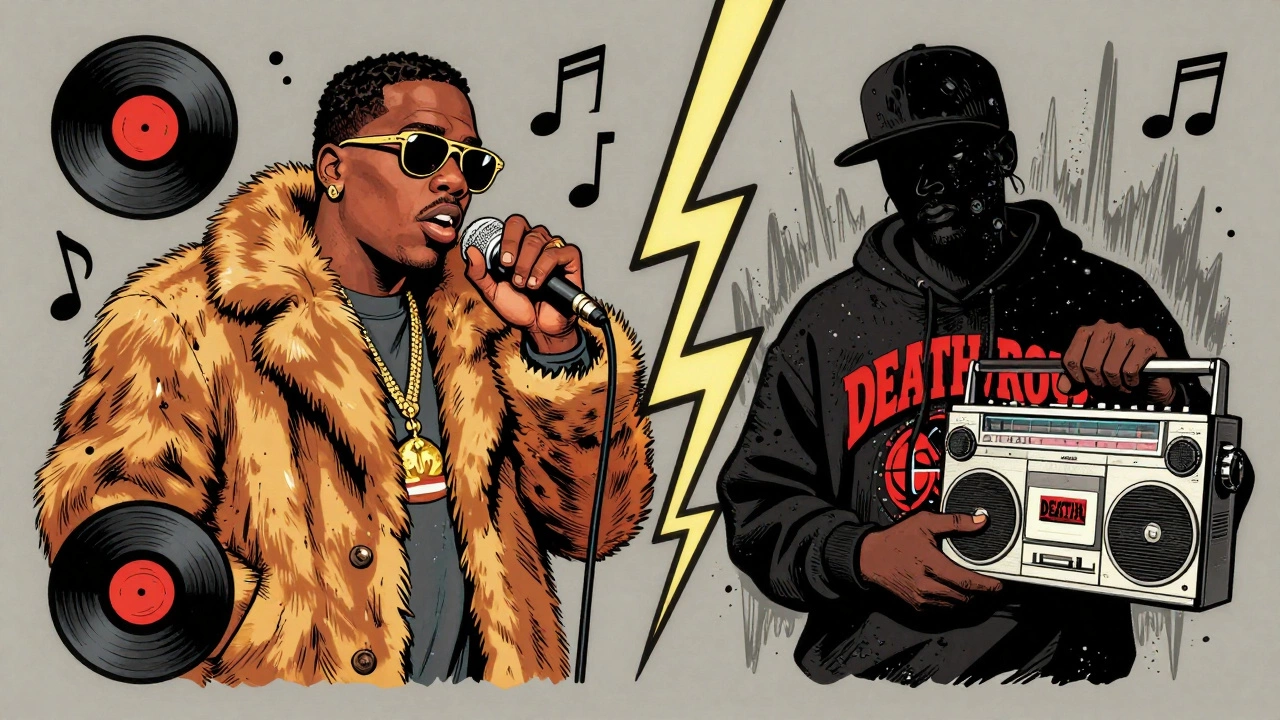
You can’t talk about Bad Boy in the 1990s without addressing the shadow that hung over the era: the East Coast-West Coast feud. As Bad Boy rose, Death Row Records is a West Coast hip-hop label led by Dr. Dre and Suge Knight that rivaled Bad Boy during the mid-1990s East Coast-West Coast feud, dominated the charts with artists like Dr. Dre, Snoop Dogg, and Tupac Shakur. The rivalry wasn’t just musical; it was personal and violent. Diss tracks escalated tensions, culminating in the tragic killings of Tupac in 1996 and The Notorious B.I.G. on March 9, 1997.
Biggie’s death devastated the label. Combs channeled his grief into his music, resulting in No Way Out, which included the tribute hit “I’ll Be Missing You.” The song sampled The Police’s “Every Breath You Take” and featured Faith Evans and 112. It topped charts worldwide, proving that Bad Boy could still generate massive commercial success even in tragedy. However, the loss of Biggie marked a turning point. Without their flagship artist, the label struggled to maintain its cultural centrality. The shiny suits and luxury imagery that had defined the era began to feel hollow to some fans, leading to criticism that the label prioritized commerce over authenticity.
Beyond the Music: Building an Empire
While the music drew the crowds, Combs was building something bigger. Bad Boy wasn’t just a record label; it was a platform for a broader entertainment empire. By the late 1990s, the company had expanded into publishing, management, and merchandising. Combs launched the Sean John clothing line, extending the Bad Boy aesthetic beyond music videos into fashion stores. He also ventured into television, producing shows and appearing as a judge on reality competitions.
This diversification was smart business. It reduced reliance on album sales alone and created multiple revenue streams. However, it also highlighted a tension within the label. Some artists felt overshadowed by Combs’s growing persona. The narrative of the “Bad Boy curse” emerged, suggesting that artists who found initial success on the label often faced legal, financial, or career difficulties afterward. Names like Craig Mack, Black Rob, and G-Dep were frequently cited in these discussions. Whether fair or not, this perception affected how the public viewed the label’s legacy.
| Feature | Bad Boy Records | Death Row Records |
|---|---|---|
| Primary Artist | The Notorious B.I.G. | Tupac Shakur, Dr. Dre |
| Sonic Style | Sample-heavy, glossy, R&B-influenced | G-funk, live bass, synthesizer-driven |
| Visual Aesthetic | Luxury cars, designer suits, glamour | Street gangs, bandanas, gritty realism |
| Radio Strategy | Crossover appeal, multiple formats | Urban focus, limited pop crossover |
| Key Executive | Sean “Puff Daddy” Combs | Suge Knight |
Legacy: Reshaping Hip-Hop and Pop Culture
Looking back, Bad Boy Records in the 1990s did more than sell albums. It changed how hip-hop was perceived. Before Bad Boy, rap was often seen as niche or rebellious. Combs proved it could be glamorous, profitable, and universally appealing. He blurred the lines between street authenticity and mainstream pop, paving the way for future artists to experiment with image and sound. The label’s emphasis on high-budget music videos and celebrity branding set new standards for marketing in the industry.
However, this success came with trade-offs. Critics argue that Bad Boy ushered in the “shiny suit era,” where commercial viability sometimes outweighed lyrical depth. Yet, even those critiques acknowledge the label’s impact. Bad Boy normalized the idea that rap singles could dominate both urban and pop charts simultaneously. It showed that hip-hop could be a vehicle for storytelling, celebration, and even mourning, all while maintaining mass appeal. Today, when we see rappers collaborating with pop stars or launching fashion lines, we’re seeing echoes of the blueprint Bad Boy built in the 1990s.
When was Bad Boy Records founded?
Sean Combs formally incorporated Bad Boy Worldwide Entertainment Group in 1992, but the label launched as an independent imprint in 1993 after he left Uptown Records.
Who was the flagship artist of Bad Boy Records?
The Notorious B.I.G. (Christopher Wallace) was the flagship artist. His debut album, Ready to Die, released in 1994, established the label's dominance in East Coast hip-hop.
What was the "Bad Boy sound"?
The Bad Boy sound was characterized by glossy, sample-heavy production that blended hardcore rap verses with soulful R&B hooks. The in-house production team, The Hitmen, used samples from 1970s and 80s records to create catchy, radio-friendly beats.
How did Bad Boy dominate radio in the 1990s?
Bad Boy dominated radio through a strategic release schedule that saturated playlists with multiple hits simultaneously. They also created remixes and alternate versions of singles to target different radio formats, including Urban, Rhythmic Top 40, and Mainstream Top 40.
What happened to Bad Boy Records after Biggie's death?
After The Notorious B.I.G.'s death in 1997, Bad Boy continued to produce hits, particularly with Puff Daddy's album No Way Out. However, the label gradually lost its cultural centrality as musical tastes shifted and criticism of its commercial image grew. Combs diversified into fashion and television.