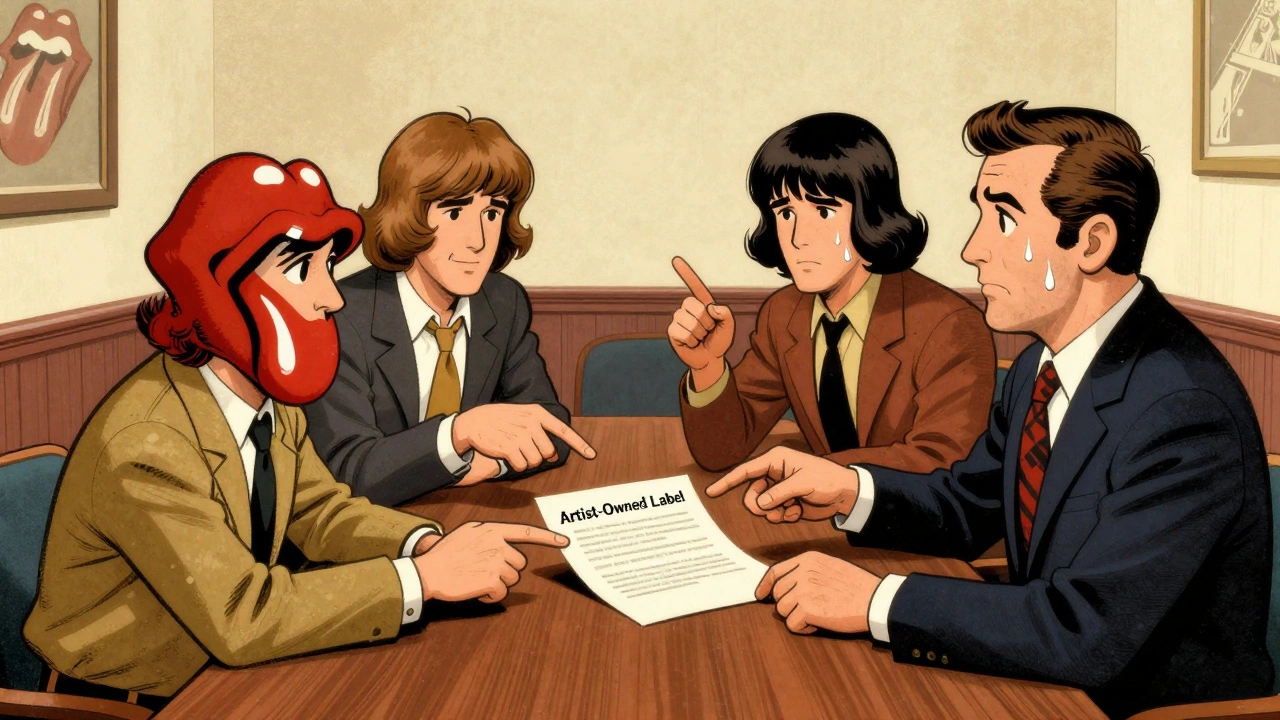

Imagine having enough fame to walk into a boardroom and demand your own office. That’s exactly what The Rolling Stones and Led Zeppelin did in the 1970s. They didn’t just want better royalty checks; they wanted the keys to the kingdom. This era marked a seismic shift in the music industry, moving away from the traditional model where major labels held all the power. Instead, superstar artists launched their own imprints, betting big on creative control and financial autonomy.
But here’s the catch: being a great musician doesn’t make you a great CEO. The 1970s artist-owned label experiment was a high-stakes gamble. Some ventures, like Swan Song Records, founded by Led Zeppelin in 1974, found massive hits with acts like Bad Company. Others, like Rolling Stones Records, established in 1970, struggled to find anyone besides the founders themselves who could carry the weight. These labels weren't just vanity projects; they were pioneering experiments that reshaped how artists interact with the business side of music today.
The Power Vacuum: Why Artists Left the Majors
To understand why these bands started their own labels, you have to look at the landscape they left behind. By the mid-1970s, the music industry was consolidating rapidly. Major conglomerates like Warner Elektra Atlantic (WEA) were forming, creating distribution giants that earned millions annually. CBS, EMI, PolyGram, and RCA dominated the shelves. For an artist, this meant less leverage. You were a small cog in a massive machine.
When The Rolling Stones exited their long-standing contract with Decca in 1970, they didn't go independent in the purest sense. They partnered with Atlantic Records for distribution but kept ownership of their new imprint. This was a strategic move. As noted by industry analysts, this "label services" model allowed them to keep creative control and a larger share of profits while relying on Atlantic’s existing network for manufacturing and retail placement. It was a calculated risk that balanced autonomy with practical reality. They didn't need to build trucks and warehouses; they just needed to sign talent and record albums.
Rolling Stones Records: The Vanity Project?
Rolling Stones Records is often cited as the first major artist-owned label of the decade. But did it deliver? In many ways, no. Aside from the band's own releases, the roster was thin. Peter Tosh, the reggae legend, signed on but reportedly regretted the decision due to a lack of promotional support. Bill Wyman released a couple of solo albums, but that was about it.
Critics at the time called it a "tax shelter with better artwork." And honestly, there’s truth to that. The Stones had little interest in A&R (Artists and Repertoire)-the process of scouting and developing new talent. They wanted the benefits of ownership without the headache of running a business. The label never became a mainstream contender for discovering new stars. However, its existence proved that even if you don't sign other artists, owning your master recordings and publishing rights can be incredibly lucrative. It set a precedent for future generations of musicians to demand ownership of their back catalogs.
Swan Song Records: Success and Shortcomings
If Rolling Stones Records was a quiet experiment, Swan Song Records was a loud declaration. Launched by Led Zeppelin in 1974, it initially faced skepticism. Was it just another vanity project? Then came Bad Company. Their debut album was a smash hit, defiantly proving everyone wrong. Suddenly, Swan Song looked like a serious player.
But success with one act isn't sustainable. Led Zeppelin tried to replicate the Bad Company formula with signings like The Pretty Things, Detective, and Maggie Bell. Most of these albums failed to live up to expectations. The label lacked the deep industry connections and diverse roster that majors like CBS or Warner had. While Paul Rodgers of Bad Company later praised the creative freedom Swan Song provided, fans and critics alike noted that the label got "way too greedy" with royalty structures for some acts.
Still, Swan Song achieved something important: it showed that artist-owned labels could identify and develop talent. They just needed better business acumen. The partnership with Atlantic Records remained crucial, handling the logistics so Led Zeppelin could focus on touring and recording. This hybrid model-artist ownership with major distribution-became the blueprint for the modern industry.
| Label | Founders | Key Signings | Distribution Partner | Outcome |
|---|---|---|---|---|
| Rolling Stones Records | The Rolling Stones | Peter Tosh, Bill Wyman | Atlantic Records | Limited commercial success outside the band; focused on ownership. |
| Swan Song Records | Led Zeppelin | Bad Company, Fleetwood Mac (briefly), Maggie Bell | Atlantic Records | Hit with Bad Company; struggled with roster diversity; closed in 1982. |
| Philadelphia International | Kenny Gamble, Leon Huff | O'Jays, Harold Melvin & The Blue Notes | Sirius Records (Independent/Major partnerships) | Huge success in R&B/Soul; demonstrated niche market viability. |
The Financial Reality: High Stakes, High Costs
Starting a label in the 1970s wasn't cheap. Industry estimates suggest launching a proper imprint with distribution deals required between $500,000 and $1 million in 1970s dollars. Adjusted for inflation, that’s roughly $3.5 to $7 million today. Even for mega-stars, this was a significant risk.
The reward, however, was substantial. By owning the label, artists captured more value from their commercial success. Instead of receiving a standard 15-20% royalty rate, they negotiated terms that gave them a larger slice of the pie. When Bad Company sold millions of records, Led Zeppelin benefited not just from their own sales but from the overhead and profit margins of the label itself. This financial incentive drove the trend. Artists realized that popularity didn't automatically translate to wealth unless they controlled the means of production.
However, the risks included distraction from artistic work. Managing a label requires hiring executives, dealing with legal issues, and making tough A&R decisions. Many artists, including the Stones and Zeppelin, relied on managers and partners to handle the day-to-day operations. Andrew Lauder at United Artists, for example, succeeded because he had his eye on emerging trends like punk, signing Dr. Feelgood and The Stranglers early. Artist-owned labels often lacked this kind of forward-thinking executive talent, leading to missed opportunities.
Niche Markets and Genre Stratification
The 1970s also saw "genre stratification," where different musical styles carved out distinct markets. Rock, soul, country, and the emerging punk scene created specialized audiences. Major labels were slow to address these niches, leaving room for artist-owned imprints to thrive.
Philadelphia International Records, started by Kenny Gamble and Leon Huff in 1971, is a prime example. Unlike the rock-focused Stones or Zeppelin labels, Philadelphia International dominated the R&B and Soul charts. They understood their specific audience deeply and built a roster that resonated with that community. This demonstrated that artist-owned ventures could succeed if they focused on a particular genre rather than trying to compete head-on with the majors across all styles.
This specialization was key. While Swan Song struggled to find a second hit after Bad Company, Philadelphia International consistently delivered hits because they stayed within their lane. They leveraged their cultural credibility to sign authentic talent, something major labels sometimes struggled to do. This lesson remains relevant today: indie labels and artist imprints often win by serving underserved communities rather than chasing mainstream pop trends.
Legacy: Pioneering the Modern Label Services Model
Today, the concept of an artist-owned label is standard practice. Taylor Swift, Beyoncé, and Drake all operate through their own imprints or joint ventures. The groundwork was laid in the 1970s by those brave (or perhaps reckless) pioneers. Industry analyst David Bakula noted that these 1970s labels pioneered the modern "label services" model, where artists maintain ownership while partnering with majors for distribution.
The assets of these old labels have since been absorbed into larger entities. Rolling Stones Records catalog is now under Universal Music Group, and Swan Song’s assets were folded into Atlantic Records. Yet, the commercial value persists. Primary Wave recently acquired Paul Rodgers’ catalog for $20 million, highlighting the lasting worth of music created during this era.
Retrospectively, we see both the triumphs and the flaws. The romantic notion of total artist control often obscured the reality that most of these labels still depended on major label infrastructure. They weren't fully independent; they were sophisticated partnerships. Understanding this nuance helps us appreciate the complexity of the music business. It wasn't just about rebellion; it was about survival and profitability in an increasingly consolidated industry.
What was the main difference between artist-owned labels and major labels in the 1970s?
The main difference was ownership and control. Artist-owned labels allowed musicians to retain rights to their master recordings and have a say in A&R decisions, whereas major labels owned the masters and dictated creative direction. However, artist-owned labels often relied on majors for distribution and manufacturing.
Did Rolling Stones Records sign any successful artists besides The Rolling Stones?
Not really. The most notable signing was Peter Tosh, but his tenure was marked by dissatisfaction with promotional support. Bill Wyman released solo albums, but the label failed to become a hub for new talent, earning it the reputation of a "vanity project."
Why did Swan Song Records fail despite Bad Company's success?
Swan Song struggled to replicate Bad Company's success with other signings like The Pretty Things and Maggie Bell. The label lacked the diverse roster and deep industry connections needed to sustain long-term growth, eventually leading to its closure in 1982 after Led Zeppelin disbanded.
How much did it cost to start a record label in the 1970s?
Industry estimates suggest it cost between $500,000 and $1 million in 1970s dollars, which is approximately $3.5 to $7 million in today's money. This covered setup costs, initial marketing, and distribution partnerships.
What is the legacy of 1970s artist-owned labels?
They pioneered the modern "label services" model, where artists own their masters and partner with majors for distribution. This structure is now common among top-tier artists like Taylor Swift and Beyoncé, allowing for greater creative and financial control.