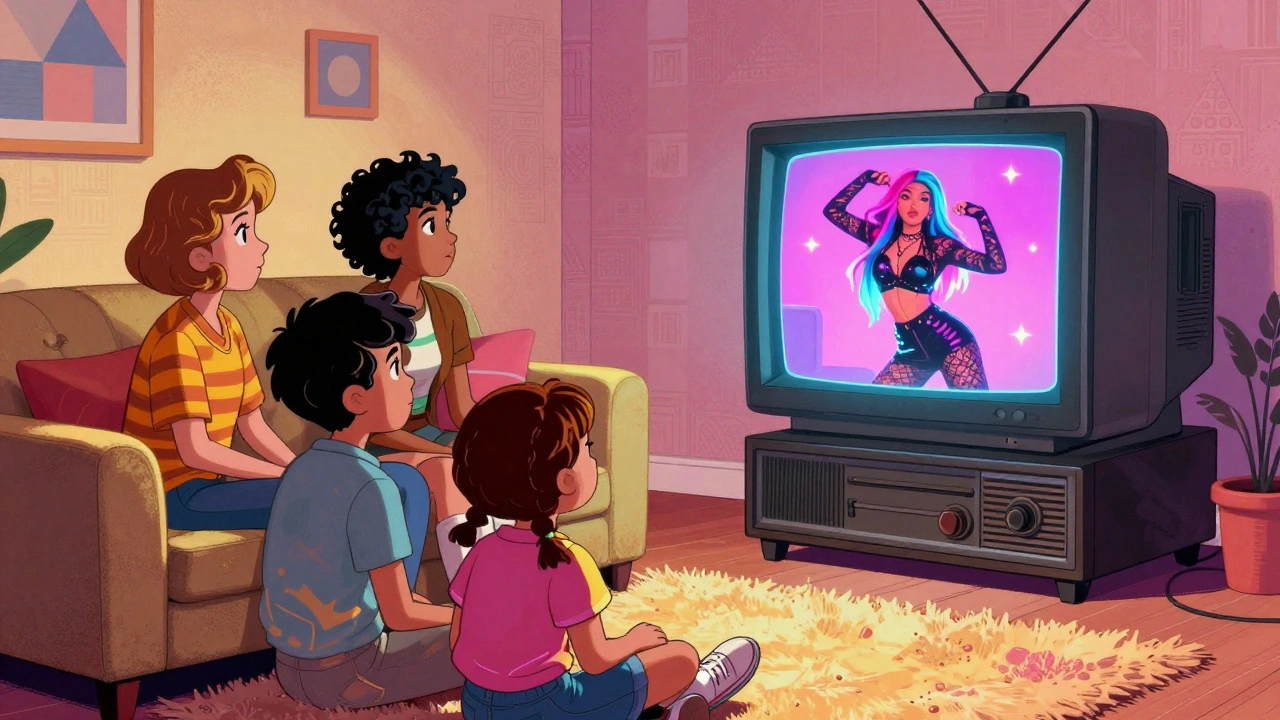

Turn on the television in 1982, and you might have asked yourself a simple question: was that person on screen a man or a woman? It wasn’t just confusion. It was design. The 1980s pop scene didn't just play with gender; it dismantled the wardrobe closet where "men's" and "women's" clothes used to live separately. This wasn't a subtle whisper from the underground. It was a loud, neon-lit shout broadcast globally via MTV, which launched in August 1981 and turned music into a visual medium first and an auditory one second.
Before the '80s, androgyny in rock had its roots in the dandy styles of the 1960s and the glitter of 1970s glam rock. But those were subcultures. In the 1980s, this aesthetic became mainstream marketing strategy. Artists like Prince, Grace Jones, Annie Lennox, and David Bowie didn't just wear makeup or suits. They used these tools to create personas that refused to fit into the binary boxes society expected them to occupy. This shift changed how we see fashion, performance, and identity forever.
The Visual Revolution: MTV and the Second British Invasion
To understand why 1980s androgyny hit so hard, you have to look at the medium. Before MTV, you bought an album for the music. With MTV, you bought it for the image. The channel created a demand for high-gloss, visually striking content. This coincided perfectly with the "Second British Invasion," where UK bands flooded US charts not just with sound, but with style.
Bands like Duran Duran exploited this new platform. They didn't look like the tough, leather-jacket-wearing rockers of the 1970s. Instead, they wore pastel suits, scarves, and meticulously styled hair. They projected a glamorous, stylized masculinity that felt softer, more artistic, and undeniably different. This was a direct response to traditional rock norms. By highlighting grooming and theatrical self-presentation, they destabilized the idea that male musicians had to be rugged or aggressive to be taken seriously.
This visual language didn't stay in London or Los Angeles. It spread through glossy magazines and club scenes. The book *Fade to Grey: Androgyny, Style & Art in 80s Dance Music* documents how late-1970s club culture evolved into this early-80s pop imagery. Gender ambiguity wasn't a footnote here; it was the main event. It was a marketing strategy that said, "Look at us. We are something new."
Key Icons Who Redefined Gender Norms
Several artists stood at the forefront of this movement, each bringing a unique flavor to the androgynous table. Their choices weren't random; they were calculated acts of defiance and creativity.
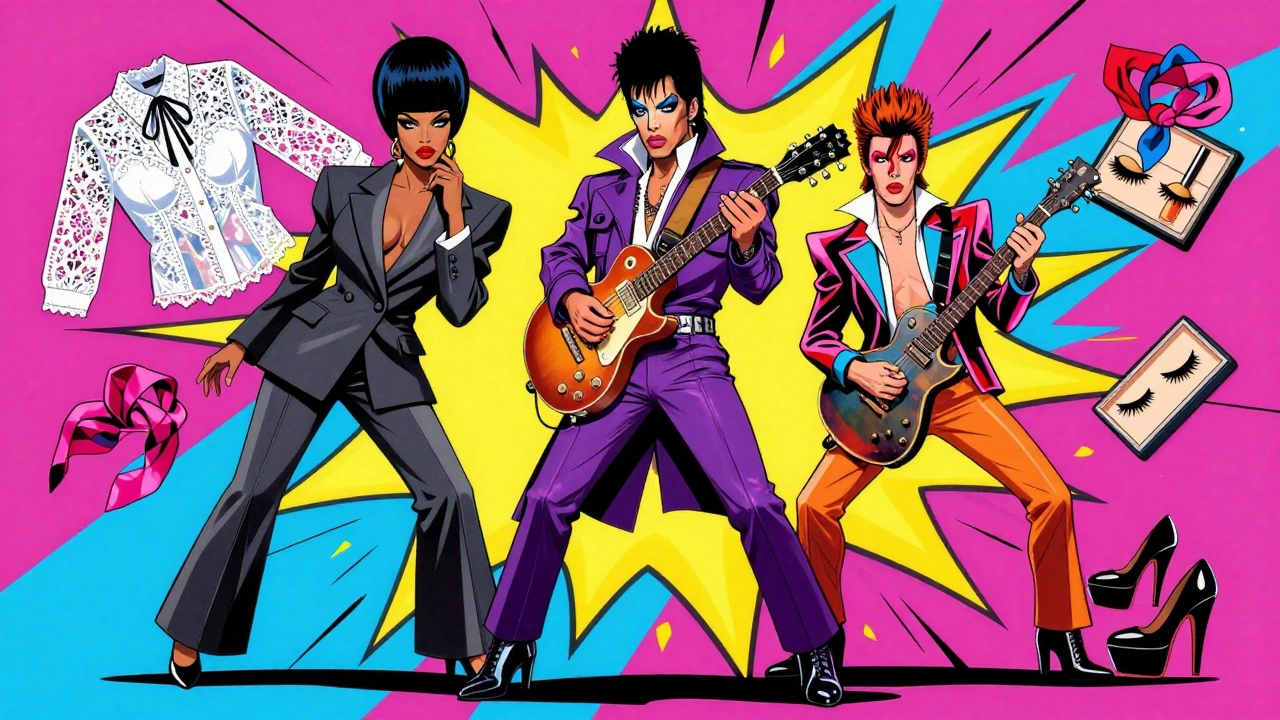
- Prince: Perhaps the most commercially successful androgynous star of the decade. Prince combined high-heeled boots, lace shirts, crop tops, and skin-tight trousers with heavy eye makeup. His Purple Rain era (1983-1985) featured purple trench coats, frilly white shirts, and bikini briefs worn with thigh-high boots. This ensemble was overtly sexual yet impossible to classify strictly as masculine or feminine. He drew from lingerie-like garments while maintaining hyper-sexualized rock star poses.
- Grace Jones: A true icon of the late 70s and early 80s, Jones worked across disco, reggae-influenced pop, and art-fashion photography. Her collaborations with French graphic designer Jean-Paul Goude produced some of the most famous images of the era. Jones’s body was stylized into angular, almost cubist shapes. She sported a flat-top haircut and sharply contoured features. Critics read her as both "masculine" and "alien," a futuristic androgyne who defied earthly categories.
- Annie Lennox: As part of Eurythmics, Lennox rejected the long hair and overtly feminine dresses expected of female singers. She cropped her hair short and wore sharply tailored suits and ties-traditional men’s business attire. However, she paired this with bright eye makeup and bold lipstick. In videos like "Sweet Dreams (Are Made of This)" (1983), she presented a "cool, androgynous executive" figure, contrasting sharply with other female stars of the time.
- David Bowie: While his core glam-rock work was in the 70s, Bowie’s influence persisted throughout the 80s. From the album Scary Monsters to the mid-decade Let’s Dance era, he continued to shape the visual language of pop. Later stars like Madonna, Beyoncé, and Lady Gaga explicitly cite him as an influence, showing how his 80s presence kept the door open for future gender-bending performances.
Deconstructing the Look: Silhouettes and Styling Codes
What exactly made a look "androgynous" in the 1980s? It wasn't just about wearing the opposite sex's clothes. It was about mixing codes in ways that created a new third category. Fashion magazine DAMchic describes the decade as an "androgynous playground" where apparel became experimental space.
Here are the key stylistic components that defined the era:
- Gender-Fluid Tailoring: Oversized jackets, structured shoulders, and mix-and-match suiting were common. Both men and women wore blazers and trousers, but the fit and styling blurred lines. Women wore power suits with masculine cuts, while men wore suits with softer, more fluid fabrics.
- Feminine Details on Men: Male performers incorporated lace, silk, ruffles, and sheer fabrics-items typically associated with womenswear in retail catalogs of the period. Prince’s lace shirts and ruffled blouses are prime examples. These elements added vulnerability and texture to traditionally masculine silhouettes.
- Masculine Cuts on Women: Female performers like Annie Lennox adopted short, cropped hair and sharp suits. This wasn't just practical; it was a rejection of conventional glamour. It signaled authority and seriousness, traits often reserved for men in professional settings.
- Dramatic Makeup: Heavy eyeliner, bright lipstick, and elaborate contouring were worn by both genders. For men, this challenged the notion that makeup was exclusively feminine. For women, it added an edge to their otherwise masculine attire. Grace Jones’s sculptural makeup is a standout example, creating faces that looked carved rather than painted.
- Color Palettes: The era favored bold, saturated colors. Pastels and bright hues were used in suiting and accessories, moving away from the drab tones of previous decades. This vibrancy supported the theatrical nature of the performance.
| Styling Element | Traditional Masculine Code | Traditional Feminine Code | 1980s Androgynous Fusion |
|---|---|---|---|
| Silhouette | Broad shoulders, straight lines | Curves, fitted waists | Oversized blazers on women; soft, draped fabrics on men |
| Hair | Short, neat cuts | Long, flowing styles | Short crops on women (Lennox); teased, dyed, or long hair on men (Bowie) |
| Makeup | None or minimal | Full face, natural tones | Heavy eyeliner and lipstick on all genders; sculptural contours (Jones) |
| Footwear | Boots, loafers | Heels, pumps | High-heeled boots and platform shoes worn by men (Prince) |
| Fabric | Wool, denim, leather | Lace, silk, satin | Lace shirts and satin suits mixed with leather jackets |
From Stage to Street: Cultural Impact and Legacy
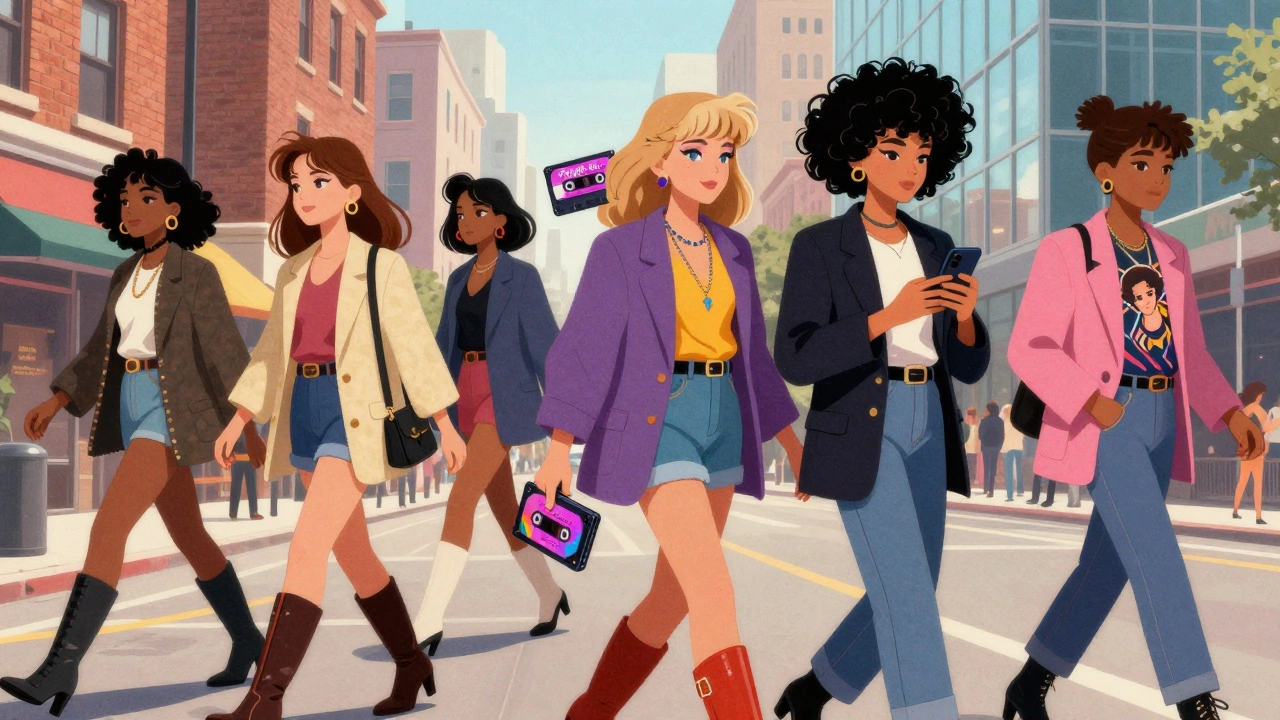
The impact of 1980s pop androgyny extended far beyond concert stages. It echoed throughout the streets. Fans emulated their favorite stars, pushing fashion retailers and designers to cater to the demand for gender-fluid silhouettes. If you could buy a Prince-inspired outfit or a Grace Jones-style jacket, the barrier between celebrity and consumer shrank.
This feedback loop was crucial. As young men experimented with makeup and jewelry, and young women embraced tailored suits, the market responded. Designers began to see androgyny not as a niche trend but as a viable commercial avenue. The bold, gender-fluid aesthetics of rock’s counter-culture reshaped mainstream apparel.
Socially, this shift inspired a new wave of self-expression. While many mainstream artists did not explicitly align themselves with political activism, their imagery resonated with broader movements for personal freedom and authenticity. In conservative regions, appearing on television in makeup or androgynous clothing could still provoke controversy. Yet, the visibility forced conversations about gender identity, sexuality, and the arbitrary nature of dress codes.
Today, the legacy of 1980s androgyny is everywhere. Contemporary streetwear, runway shows, and pop styling continue to borrow from this era. Artists like Harry Styles, Janelle Monáe, and Billie Eilish draw directly from the playbook established by Prince, Bowie, and Lennox. The 1980s proved that clothes don't have gender. They are just fabric, color, and cut. How you wear them is up to you.
Why It Matters Now
We often view the 1980s as a decade of excess and materialism. But beneath the surface, it was also a time of profound cultural experimentation. The androgynous style of 1980s pop challenged us to look closer, think deeper, and accept that identity is complex. It showed that breaking rules can lead to beauty, innovation, and connection.
When you see a modern artist blending masculine and feminine elements, remember the pioneers of the 80s. They paved the way. They defied categories. And in doing so, they expanded the possibilities for everyone who followed.
Who were the biggest androgynous icons of the 1980s?
The most prominent figures include Prince, Grace Jones, Annie Lennox, and David Bowie. Each used fashion and makeup to blur gender lines, influencing millions of fans and setting trends that persist today.
How did MTV contribute to the rise of androgyny in pop?
MTV made music visual. Artists needed striking images to stand out on screen. This encouraged the use of bold, gender-fluid fashion as a key differentiator, turning androgyny into a mainstream marketing strategy rather than a subcultural experiment.
What specific clothing items defined 1980s androgynous style?
Key items included oversized blazers, tailored suits, high-heeled boots, lace shirts, crop tops, and platform shoes. Makeup like heavy eyeliner and bright lipstick was also essential for both men and women.
Did 1980s androgyny have political implications?
While not always explicitly political, the style challenged rigid gender norms and inspired greater self-expression. It resonated with queer communities and broader movements for personal freedom, helping to normalize diverse gender expressions in mainstream culture.
How does 1980s androgyny influence modern fashion?
Modern fashion continues to draw from 1980s codes, with gender-fluid runway shows and pop stars adopting similar blends of masculine and feminine elements. The era established that clothing has no inherent gender, a concept now widely accepted in contemporary style.


