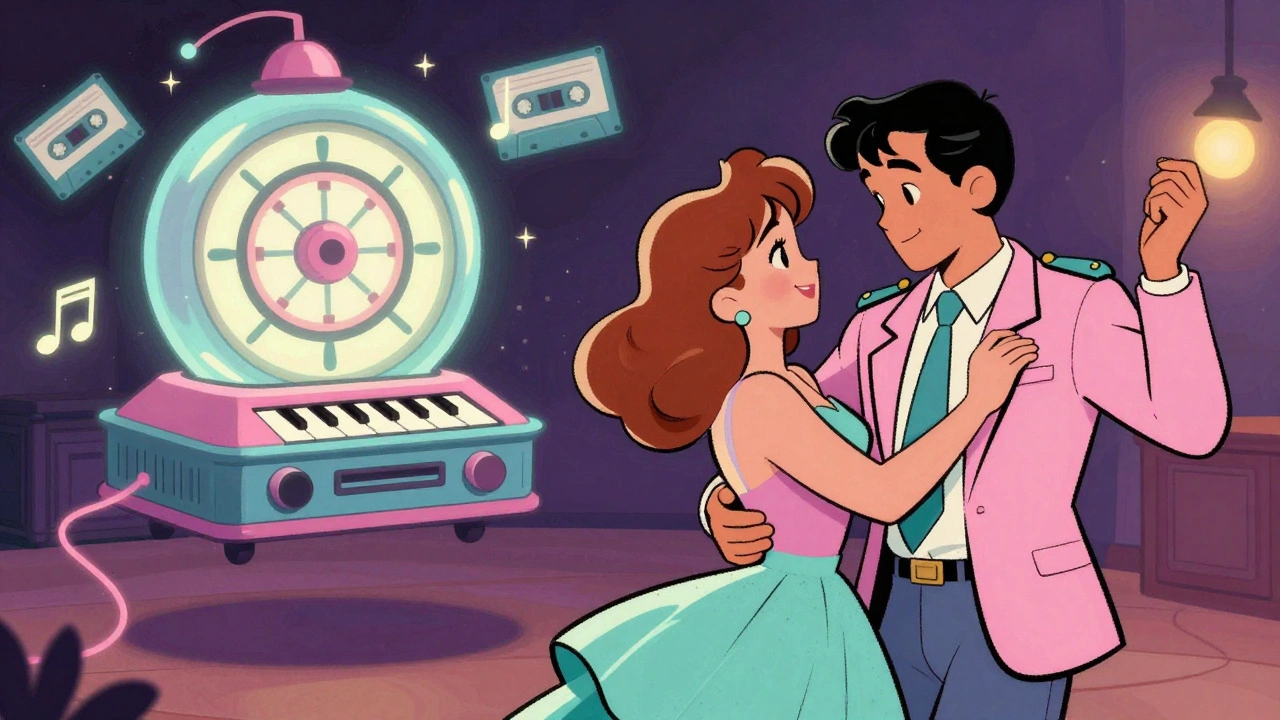

Put on your best blazer. Dim the lights. Cue that shimmering synthesizer intro. You know exactly where you are. You’re not just listening to a song; you’re stepping into a time machine built from analog circuits and teenage anxiety. Forever Young is a 1984 synth-pop ballad by the German band Alphaville that has become the definitive anthem for 1980s nostalgia. It’s the track that plays at every prom scene in movies since 1990. It’s the background music for graduation slideshows. It’s the song that makes grown adults pause their workout because they suddenly remember what it felt like to be eighteen and terrified of the future.
But here’s the thing most people miss when they hum along to the chorus: this isn’t just a fluffy love song about staying young. It’s a Cold War panic attack wrapped in a beautiful melody. To understand why Forever Young still hits us hard forty years later, we have to look past the retro fashion and dig into the specific sound, the specific fear, and the specific cultural moment that created it.
The Sound of West German Melancholy
When Alphaville was a German synth-pop band formed in Berlin in 1982, known for blending electronic instrumentation with poetic lyrics released this track in September 1984, the world sounded different. We aren't talking about the polished, digital perfection of modern pop production. We’re talking about the warm, slightly imperfect hiss of tape machines and the thick, swirling pads of early synthesizers.
The sonic landscape of Forever Young is defined by its restraint. Unlike the high-energy dance tracks that dominated clubs, this is a mid-tempo ballad. It relies heavily on layered analog synthesizers-likely instruments like the Roland Juno or Jupiter series, which were staples in European studios during the early-to-mid 80s. These synths provide a lush, atmospheric bed that feels expansive, almost cathedral-like. This wasn’t an accident. Producers Colin Pearson, Wolfgang Loos, and Andreas Budde crafted a soundscape that emphasized space and echo, using digital reverb units to create a sense of vastness.
Then there’s Marian Gold was the lead singer and primary lyricist of Alphaville, whose expressive tenor voice became iconic in 1980s pop music. His vocal performance sits prominently in the mix, clear and emotive, contrasting with the more rhythmic, driving energy of the band’s earlier hit, “Big in Japan.” Gold’s voice doesn’t shout; it pleads. It invites intimacy. This combination of cold, mechanical electronics and warm, human vulnerability is the core DNA of 1980s synth-pop. It’s the sound of technology trying to express human emotion.
Cold War Anxiety in Disguise
If you listen closely to the lyrics, the nostalgia starts to feel heavier. We often remember Forever Young as a romantic ideal, but the text is steeped in existential dread. Written by Marian Gold, Bernhard Lloyd, and Frank Mertens, the song addresses themes of mortality, nuclear war, and the fleeting nature of life.
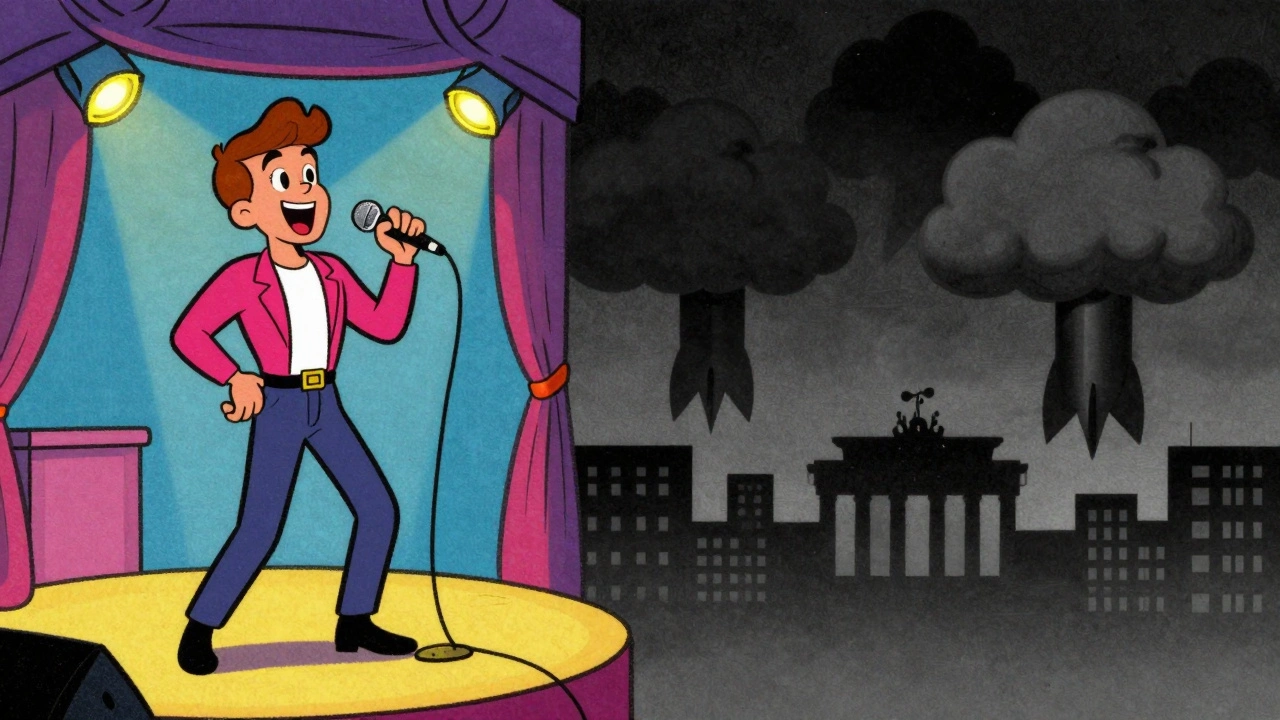
Consider the lines: “Heaven can wait, we’re only watching the skies / Hoping for the best but expecting the worst.” This isn’t generic poetry. In 1984, West Germany was right in the crosshairs of the Cold War. The threat of nuclear annihilation was a daily reality for young Europeans. When Gold sings, “Gonna drop the bomb or not?” he is directly referencing the geopolitical tension of the era. The desire to be “forever young” isn’t just about vanity; it’s a desperate wish to freeze time before the apocalypse arrives.
This duality is what gives the song its lasting power. On the surface, it’s an uplifting anthem. Underneath, it’s a elegy. Music critics often describe the track as “haunting” or “poignant” because it captures a specific Western European sensibility: the ability to find beauty and hope while standing on the edge of disaster. That bittersweet tone resonates deeply today, even if our anxieties have shifted from nuclear bombs to climate change or economic instability.
From Chart Flop to Cultural Icon
Here’s a twist that might surprise you: Forever Young wasn’t an instant global smash hit in the way “Billie Jean” or “Like a Virgin” were. Released as the third single from the album Forever Young, it followed the massive success of “Big in Japan.” Initially, it achieved moderate chart success in Europe. It didn’t top the charts immediately in the US.
So how did it become one of the most recognizable songs in history? The answer lies in what music historians call “long-tail cultural presence.” While other hits faded after their initial radio run, Forever Young found a new life through repetition in visual media. It became the default soundtrack for rites of passage. Filmmakers and TV producers discovered that the song perfectly encapsulated the feeling of looking back on youth. It appeared in countless movies, TV shows, and advertisements throughout the 1990s and 2000s.
This constant exposure turned the song into a symbol. It stopped being just a track by a German band and started being a shorthand for “1980s nostalgia.” It’s now firmly entrenched in the collective memory as the ultimate prom song, the graduation anthem, and the wedding slow-dance staple. Its fame today far exceeds its original chart numbers, proving that cultural impact isn’t always measured in first-week sales.
The Cover Song Phenomenon
A song’s longevity is also proven by how many times other artists want to reinterpret it. Forever Young has been covered, sampled, and interpolated across multiple genres, each version introducing the melody to a new generation.
| Artist | Year | Genre/Context | Impact |
|---|---|---|---|
| Interactive | 1994 | Eurodance | Introduced the melody to European club-goers in the 90s with a faster, upbeat tempo. |
| Youth Group | 2006 | Indie Rock | Gained massive popularity after being featured in the US teen drama One Tree Hill, connecting with millennials. |
| Jay-Z | 2009 | Hip-Hop/R&B | Interpolated the chorus in “Young Forever,” bringing the theme of eternal youth to mainstream hip-hop audiences. |
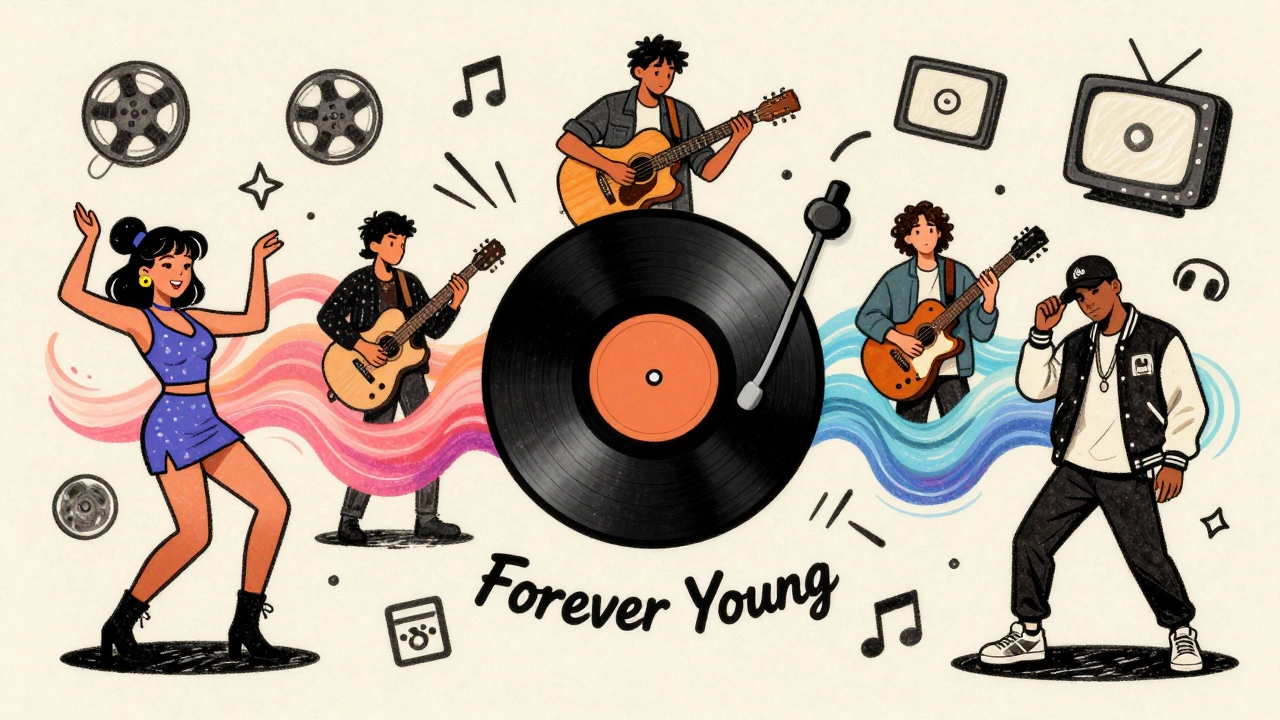
Notice the pattern? Each cover retains the core emotional hook-the desire to hold onto youth-but adapts the delivery for its audience. The Youth Group version stripped away the synths for acoustic guitars, making it feel raw and intimate for a 2000s indie crowd. Jay-Z used the melody to reflect on legacy and fatherhood. This flexibility proves that the song’s structure is robust enough to survive genre shifts without losing its identity.
Why We Still Crave 80s Synth-Pop
In 2026, we are living in another wave of 1980s nostalgia. But why does this specific decade resonate so strongly? Part of it is the aesthetic. The neon colors, the bold fonts, the shoulder pads-it’s visually distinct and fun. But musically, it’s about the blend of optimism and melancholy.
Modern pop production is often hyper-polished, quantized, and compressed. There’s less room for the slight imperfections that gave 80s synth-pop its character. When you hear Forever Young today, you’re hearing a time when technology was new enough to be exciting but old enough to be mastered. The synthesizers weren’t just presets; they were instruments that required skill to shape. The drum machines had a physical weight to them.
Furthermore, the themes remain relevant. We still worry about the future. We still fear aging. We still cling to memories of who we were when we were younger. Forever Young acts as a mirror. For older listeners, it triggers personal memories of high school dances and first loves. For younger listeners, it offers a curated, cinematic version of the past-a safe, nostalgic fantasy.
Streaming and the Catalog Economy
Today, Forever Young lives primarily in the digital realm. It’s available on all major streaming platforms, included in thousands of playlists titled “Best of the 80s,” “Classic Love Songs,” or “Throwback Prom.” The economics of music have shifted dramatically since 1984. Back then, you bought a 7-inch single or an LP. Today, the value comes from continuous, passive consumption.
Labels actively promote catalog recordings like this one because they generate steady revenue. Anniversary editions, remastered versions, and sync licensing deals keep the song in circulation. Alphaville continues to tour and engage with fans, ensuring the brand remains active. The song’s presence on algorithmic playlists ensures that someone, somewhere, is discovering it for the first time every day. This isn’t just about selling records; it’s about maintaining cultural relevance in an attention economy.
Conclusion: More Than Just a Hit
Forever Young endures because it is more than a catchy tune. It is a cultural artifact that captures a specific moment of tension and hope. It balances the mechanical precision of 1980s technology with the messy, fragile nature of human emotion. Whether you’re dancing at a wedding, crying at a movie, or just scrolling through a playlist, the song reminds you that youth is precious precisely because it ends. And maybe, just maybe, that’s why we never really stop listening.
Who wrote the song Forever Young?
The song was written by the three members of Alphaville: Marian Gold (lyrics and vocals), Bernhard Lloyd (keyboards), and Frank Mertens (guitar). It was produced by Colin Pearson, Wolfgang Loos, and Andreas Budde.
What is the meaning behind the lyrics of Forever Young?
While often interpreted as a simple wish to stay young, the lyrics address deeper themes of mortality and Cold War anxiety. Lines like "Gonna drop the bomb or not?" reference the fear of nuclear war prevalent in 1984. The song expresses a desire to preserve innocence and life in the face of impending doom.
Was Forever Young a number one hit?
No, it did not reach number one on major charts upon its initial release in 1984. However, it achieved significant long-term commercial success through radio play, movie soundtracks, and covers, becoming more famous over time than its original chart position suggests.
Which synthesizers were used in Forever Young?
While the exact studio session list is not publicly detailed, the sound is characteristic of mid-1980s European synth-pop, likely utilizing analog synthesizers such as the Roland Juno-60 or Jupiter series, along with digital reverb units to create the spacious, atmospheric quality.
How did the Youth Group cover affect the song's popularity?
The 2006 indie-rock cover by Youth Group gained massive exposure when it was featured in the popular US television series One Tree Hill. This introduction helped the song resonate with a millennial audience who may not have been familiar with the original 1984 Alphaville version.