
Have you ever put on a record, flipped it over at exactly the right moment, and felt like the music never actually stopped? That is the magic of album sequencing in progressive rock. It isn't just about shuffling songs into a list; it is about crafting two distinct musical journeys that fit onto the physical limitations of a vinyl disc. For prog fans, the "side" of an album is not just a technical detail-it is a structural unit as important as a verse or a chorus.
The Physics of the Groove: Why Sides Matter
To understand why prog rock albums are structured the way they are, you have to look at the plastic itself. A standard 12-inch LP has a hard limit. If you push too much audio onto one side, the grooves get squeezed together, leading to distortion and noise. According to modern production guides from Disc Makers, the sweet spot for a high-quality listening experience is roughly 18 minutes per side. This means the total runtime of a classic prog album usually hovers around 36 to 40 minutes.
This physical constraint changed how bands wrote music. Instead of writing three-minute pop songs, groups like Yes and Jethro Tull started composing long-form suites designed specifically to fill that 18-to-22-minute window. Engineers also had to consider bass response. Louder, bass-heavy tracks sound best near the outer edge of the record where the groove velocity is highest. Quieter, more delicate passages work better toward the center. So, when you hear a thunderous opening riff on Side A, followed by a soft piano interlude near the end of the side, that wasn't just artistic choice-it was acoustic engineering.
| Constraint / Factor | Technical Reality | Prog Rock Adaptation |
|---|---|---|
| Max Runtime per Side | ~18-22 minutes for optimal quality | Composing single suites to fill one entire side |
| Bass Response | Stronger at outer grooves (start of side) | Placing loud, energetic openings at start of sides |
| Noise Floor | Higher hiss near inner grooves (end of side) | Ending sides with quiet fades or deliberate pauses |
| The Flip | Physical interruption of playback | Using fade-outs/fade-ins or continuous themes across the break |
The Blueprint: Abbey Road and the Birth of the Suite
Before prog rock dominated the charts, The Beatles laid the groundwork. In September 1969, they released Abbey Road, which features Side Two as a continuous medley of song fragments stitched together. This roughly 22-minute sequence proved that listeners would accept-and love-a long, uninterrupted flow of music. It showed that an album side could be a narrative chapter rather than a collection of singles.
Progressive rock bands took this idea and ran with it. By the early 1970s, the "side-long suite" became a genre staple. Bands didn't just want to write a long song; they wanted to write a piece that demanded your full attention for nearly half an hour. This shift moved the focus from radio-friendly hits to the immersive experience of sitting down with a full record. The listener was no longer a passive consumer of snippets but an active participant in a musical journey.
Case Study: Yes's Close to the Edge
If there is a gold standard for prog sequencing, it is Yes’s 1972 masterpiece, Close to the Edge. Released in September 1972, this album perfectly illustrates the two-side journey concept. Side A is occupied entirely by the title track, an 18-minute epic divided into four movements. It acts as a self-contained symphony, building tension and releasing it within its own boundaries.
Then comes the flip. Side B contains two separate tracks: "And You and I" and "Siberian Khatru." These aren't just leftovers; they provide contrast. After the dense, complex harmony of the title suite, Side B offers more melodic, accessible, yet still intricate compositions. Bassist Chris Squire noted that the band deliberately aimed for this structure-one monumental piece on Side A, followed by varied emotional textures on Side B. This balance keeps the listener engaged without burning them out before the needle lifts.
The Continuous Flow: Pink Floyd and Jethro Tull
Not all prog bands respected the side break as a hard stop. Some used it as a transition point. Jethro Tull’s Thick as a Brick (1972) is technically one 44-minute song, split into Part 1 and Part 2 solely because vinyl couldn't hold it all on one side. The band created a fade-out at the end of Side A and a fade-in at the start of Side B to mimic the continuity of a live performance. Listeners who play this on vinyl often describe the act of flipping the record as part of the ritual, a brief pause that heightens anticipation for the second half of the journey.
Pink Floyd took a different approach with The Dark Side of the Moon. Released in 1973, this album uses sound effects-heartbeats, clocks, cash registers-to glue tracks together seamlessly. While it is split into two sides, the thematic arc flows continuously from birth to death. Side A explores time and money, while Side B deals with madness and mortality. The sequencing creates a lifecycle frame, making the physical side break feel less like an interruption and more like a turning point in the story.
Narrative Arcs and Listener Psychology
Why does this sequencing matter beyond nostalgia? Recent research suggests our brains expect stories to have structure. A 2025 study analyzing thousands of albums found that musicians intuitively follow an "inverted U-shape" for tempo and energy. Albums often start slower, build to a chaotic or energetic middle, and then wind down toward the end. Progressive rock amplifies this effect.
Think of Side A as the setup and inciting incident. It introduces the main themes and hooks the listener. Side B is the climax and resolution. Because prog tracks are long, placing a 20-minute suite on Side A risks losing casual listeners early on. Many bands mitigate this by putting their most accessible material first, earning the listener's trust before dropping them into the deep end of experimental jazz-rock fusion on Side B. This psychological pacing is crucial for maintaining engagement over a 40-minute span.

Sequencing in the Streaming Age
Today, most people listen to music on phones, not turntables. Does the "two-side" model still apply? Surprisingly, yes. Even in digital playlists, artists and producers often design albums with imaginary sides. They create "anchor points"-strong openers and closers-that mirror the vinyl experience. When you skip through a prog album on Spotify, you might notice that the tracklist still feels divided into two halves. The first half builds momentum; the second half provides depth.
However, streaming challenges the traditional prog format. Short attention spans mean fewer people commit to a 20-minute suite. As a result, some modern prog bands release shorter, punchier tracks alongside their epics, or they break up long suites into multiple indexed tracks to make them easier to navigate. Yet, dedicated fans still seek out the full, unbroken experience, often buying vinyl reissues to hear the albums as originally intended.
Practical Tips for Creating Your Own Prog Journey
If you are a musician planning a prog album, keep these principles in mind:
- Respect the Clock: Aim for 18-20 minutes per side if you plan a vinyl release. This ensures high audio fidelity.
- Balance Dynamics: Place your loudest, most aggressive sections at the start of each side. Save quieter, reflective moments for the inner grooves.
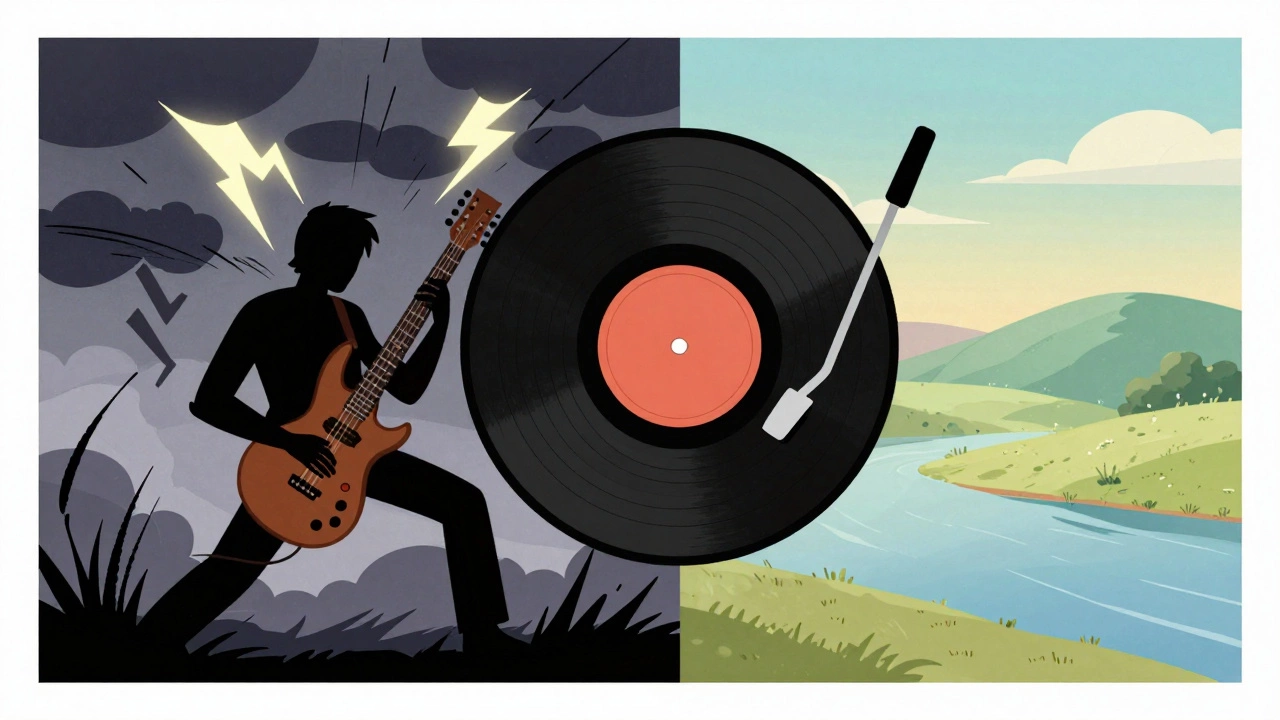
- Create Contrast: Don't let both sides feel the same. If Side A is heavy and complex, make Side B melodic and spacious.
- Use the Flip: Treat the side break as a dramatic pause. Use fades, silences, or recurring motifs to bridge the gap between sides.
- Think in Chapters: View each side as a chapter in a book. Give each one a beginning, middle, and end.
Album sequencing in prog rock is more than a technical exercise; it is an art form. By mastering the flow across two vinyl sides, bands create immersive worlds that invite listeners to stay, explore, and return again and again.
What is the ideal length for a vinyl side in prog rock?
The ideal length is typically between 18 and 22 minutes per side. Going beyond 22 minutes can cause groove compression, leading to reduced dynamic range and increased surface noise.
Why do prog bands use side-long suites?
Side-long suites allow composers to develop complex musical ideas without the interruption of short song structures. They create a cohesive narrative arc that treats the entire side as a single musical statement.
How does bass frequency affect vinyl sequencing?
Bass frequencies reproduce better at the outer edges of the vinyl disc where the groove velocity is higher. Therefore, louder, bass-heavy tracks are usually placed at the beginning of each side.
Did The Beatles influence prog rock sequencing?
Yes, particularly with the medley on Side Two of Abbey Road. It demonstrated that rock music could sustain listener interest over a long, continuous sequence, paving the way for prog epics.
Is album sequencing still relevant in the streaming era?
Yes, many artists still design albums with intentional arcs and "imaginary sides" to guide listener emotion, even though physical side breaks no longer exist in digital formats.


