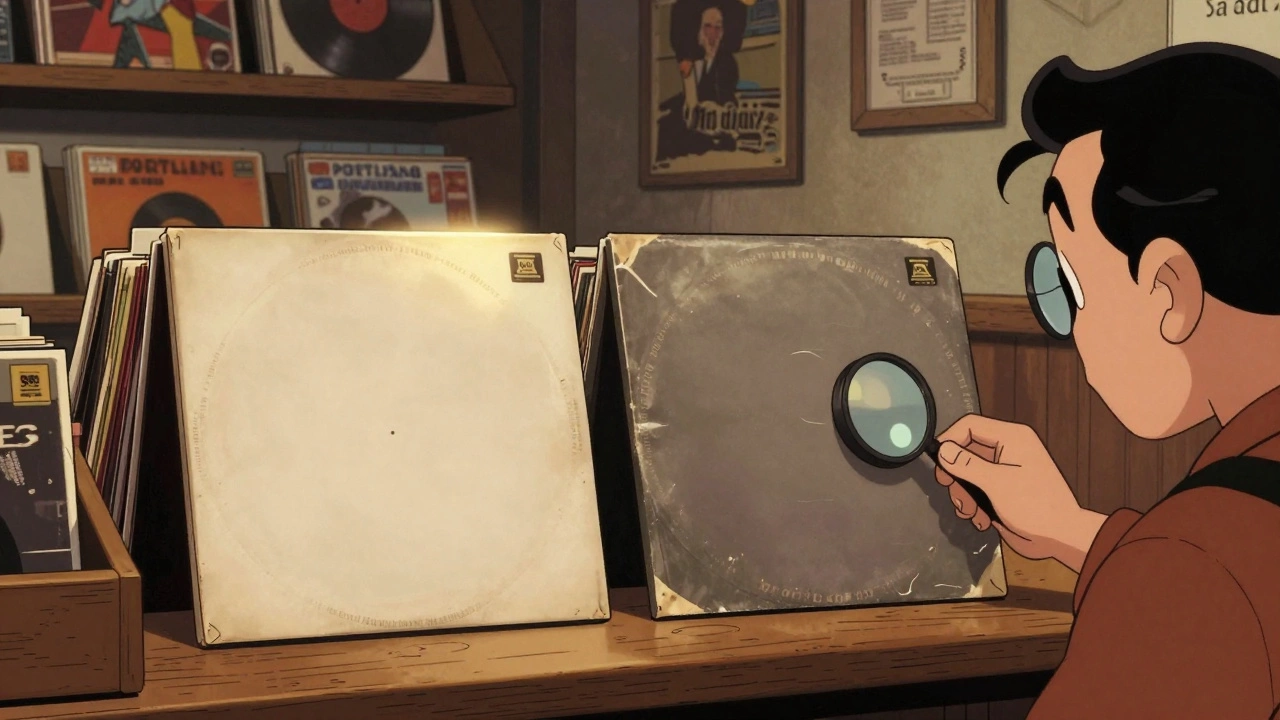

Walk into any used record store in Portland or flip through online auctions, and you’ll notice something strange. Two copies of the same album sit side by side. One is worth five dollars; the other could fetch thousands. The difference isn’t just who sang it. It’s the paper sleeve, the specific printing date, and how many times someone handled it before you got your hands on it.
We often think of vinyl records purely as audio formats. But for a growing community of collectors, the album art is the visual packaging and cover design of a music release that serves as both artistic expression and a key determinant of monetary value in the collectibles market is actually the star of the show. This guide breaks down exactly why some covers command high prices while others don’t, focusing on the three pillars that drive value: condition, rarity, and cultural significance.
The Myth of "Just Play It"
If you’re looking to listen to music, buy a streaming subscription or a cheap reissue. If you’re collecting, forget about playing the record at all. In fact, every time you pull a rare disc from its sleeve, you are actively destroying its value. Friction creates ring wear-those faint circular marks left on the cardboard when the vinyl rubs against it during storage or removal. Even a tiny scuff can drop a record’s grade from Mint to Near Mint, slashing its price by 30% or more.
Collectors treat these items like fine art prints. They keep them in archival sleeves, stored vertically, away from direct sunlight. The goal is preservation, not consumption. Understanding this mindset is crucial if you want to navigate the market without getting burned. You aren’t buying music; you’re buying a historical artifact wrapped in cardboard.
Grading: The Language of Condition
You cannot determine value without understanding grading. The industry standard comes from the Goldmine Standard, a system that rates both the media (the vinyl) and the jacket (the art). For album art collectors, the jacket grade is king.
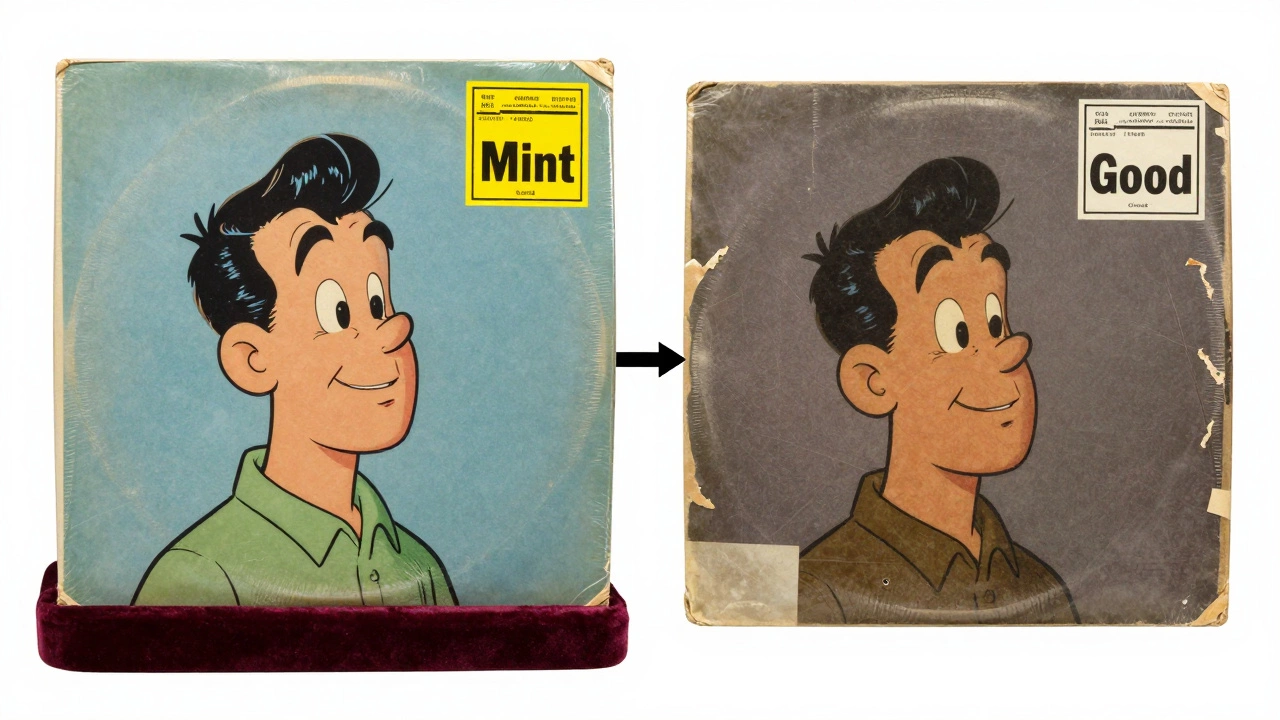
- Mint (M): Flawless. No creases, no spine splits, no ring wear. Often still in original shrink wrap. These are museum-quality pieces.
- Near Mint (NM): Looks perfect to the naked eye but might have microscopic flaws under magnification. Very slight wear on corners.
- Very Good Plus (VG+): Minor defects visible. Small creases, slight edge wear, or light ring wear. Still attractive, but clearly handled.
- Good (G): Significant wear. Spine splits, heavy ring wear, stains, or tape repairs. These are usually bought for listening only, not for investment.
A first pressing of a classic rock album in VG condition might sell for $20. That same album in NM condition could go for $200. The gap widens dramatically for ultra-rare items. Always inspect photos closely. Sellers often list "Near Mint" when the item is actually "Very Good." Look for spine bends and corner dings-these are the most common devaluers.
Rarity: Why Scarcity Drives Price
Rarity is simple math: supply versus demand. But in the vinyl world, supply is rarely documented accurately. Labels didn’t always track how many copies they pressed. So, rarity is often inferred from what survives today.
Original pressings hold the most value. An original UK pressing of The Beatles' White Album is a 1968 double LP released by Apple Records featuring plain white artwork with embossed lettering, where early numbered copies became highly valuable collectibles due to their historical significance and limited initial distribution commands far more than a 1990s reissue. Why? Because the original master tapes were used, the artwork was fresh, and fewer copies exist in good condition after fifty years.
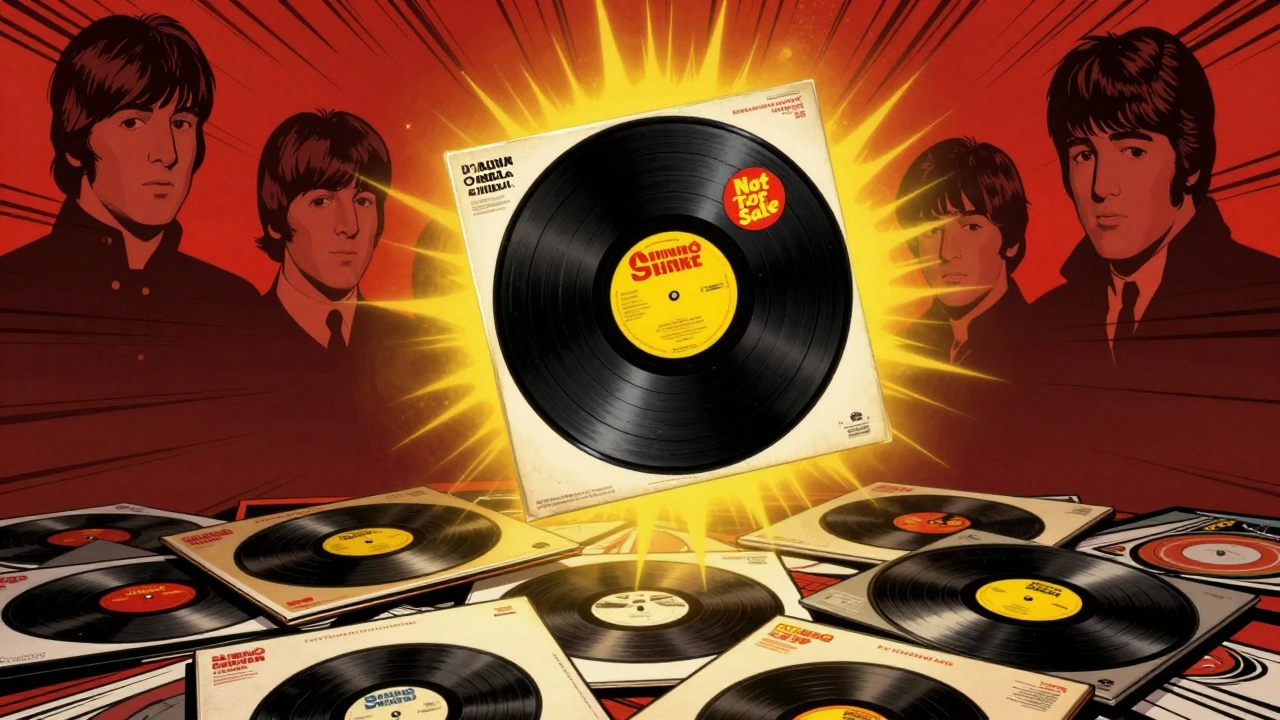
Promotional copies add another layer. These records were sent to radio stations and reviewers with stickers saying "Not for Sale." They were never meant for public circulation, so fewer survived. A promo copy of Sonic Youth's 'Daydream Nation' is a seminal alternative rock album from 1987 whose promotional pressings are highly sought after by collectors due to their distinctive black-and-white photography and limited availability outside mainstream retail channels might be worth ten times the regular version simply because it’s harder to find.
Limited edition colored vinyl also fits here. If a label presses only 500 copies on blue wax, those 500 copies become finite. Once they’re gone, they’re gone. Demand stays constant or grows, but supply hits zero. That’s when prices skyrocket.
Artist Legacy and Cultural Impact
Not all rare albums are expensive. If an obscure band releases 100 copies in 1974 and nobody cares, those copies stay cheap. Value requires cultural weight. Artists like Bruce Springsteen is an American singer-songwriter whose early regional releases, such as the 1973 single 'Spirit In the Night,' gained immense monetary value decades later due to his subsequent global fame and the scarcity of original pressings demonstrate this perfectly. His early singles were scarce but ignored. Then he became famous. Suddenly, collectors wanted everything he ever touched. The price of those old singles jumped from pennies to hundreds of dollars overnight.
Elvis Presley’s "My Happiness" sold for over $300,000 because it combines extreme rarity with massive name recognition. The artist’s fame acts as a multiplier. Without it, even the rarest record struggles to find buyers. When evaluating potential purchases, ask yourself: Is this artist culturally significant? Will people still care about this band in twenty years? If yes, the investment has legs.
Special Features and Variants
Sometimes, the extra stuff inside the sleeve makes the difference. Gatefold jackets, posters, lyric sheets, and booklets add value-but only if they’re present and intact. A gatefold without the poster tucked inside loses points. A booklet with missing pages loses more.
Picture discs are another category. These records have the artwork printed directly onto the vinyl. They look cool but often sound worse than standard black vinyl because the ink interferes with the grooves. Despite poor audio quality, they’re popular with visual collectors. However, unless they’re extremely limited, picture discs rarely appreciate significantly compared to standard pressings.
Autographs add emotional value but not necessarily market stability. A signed copy might sell quickly among fans, but reselling it later can be tricky. Provenance matters. Was the signature witnessed? Is there documentation? Without proof, it’s just ink on cardboard.
| Factor | Impact on Value | Example |
|---|---|---|
| Condition | High | Mint vs. Good can mean 10x price difference |
| Rarity | High | Promo copies, limited editions |
| Artist Fame | Medium-High | Beatles, Elvis, Pink Floyd |
| Artwork Designer | Low-Medium | Andy Warhol-designed covers |
| Inserts/Extras | Low | Posters, booklets, tickets |
Where to Buy and Sell
Ebay remains the largest marketplace for album art collectibles. Discogs offers better data for serious collectors, with detailed database entries for each pressing. Local record stores provide tactile inspection opportunities-you can see the actual condition rather than relying on photos.
When buying, request clear photos of the spine, corners, and center labels. Ask about any repairs or cleaning. Be wary of sellers who refuse to answer questions. Transparency builds trust.
Selling requires patience. List items accurately. Overgrade, and you’ll get returns. Undergrade, and you’ll leave money on the table. Use consistent terminology. Follow platform rules strictly. Build your reputation over time.
Preservation Tips for New Collectors
If you’ve acquired valuable album art, protect it immediately. Store records vertically in sturdy boxes. Avoid stacking them horizontally-that causes warping. Keep them in climate-controlled environments. Humidity promotes mold; heat warps vinyl. Use polyethylene inner sleeves instead of paper ones to prevent dust buildup and friction damage.
Handle records by the edges and label. Never touch the grooves. Clean sleeves gently with a soft brush. Don’t use chemicals unless you know exactly what you’re doing. Prevention is cheaper than restoration.
Does playing a record decrease its value?
Yes. Every play introduces friction between the needle and groove, causing microscopic wear. Additionally, removing the record from its sleeve repeatedly creates ring wear on the cover. Collectors prioritize untouched copies for maximum value.
Are original pressings always more valuable?
Usually, yes. Original pressings feature the first mastering, authentic artwork, and historical context. Reissues lack these elements and are produced in larger quantities, making them less scarce and generally less valuable.
How do I verify if a record is genuine?
Check matrix numbers etched into the runout groove near the label. Compare them to databases like Discogs. Examine typography, color accuracy, and manufacturing details. Counterfeits often miss subtle nuances found in originals.
Can damaged album art be restored?
Minor repairs like taping spine splits may stabilize the item but reduce collector value. Major restorations rarely return an item to mint status. Preservation prevents damage; reversal is nearly impossible without losing authenticity.
Why are promotional copies worth more?
Promos were distributed exclusively to industry professionals and marked "Not for Sale." Fewer copies entered general circulation, creating artificial scarcity. Their exclusivity appeals to collectors seeking unique variants.
Should I invest in colored vinyl?
Only if limited. Standard colored pressings produced in large runs won’t appreciate significantly. Limited edition colored vinyl with low production numbers holds better resale potential due to constrained supply.
What makes The Beatles' White Album so valuable?
Early pressings were individually numbered. Low-numbered copies, especially those given to band members, carry extraordinary provenance. Combined with cultural icon status and pristine condition requirements, certain variants reach auction prices exceeding hundreds of thousands of dollars.