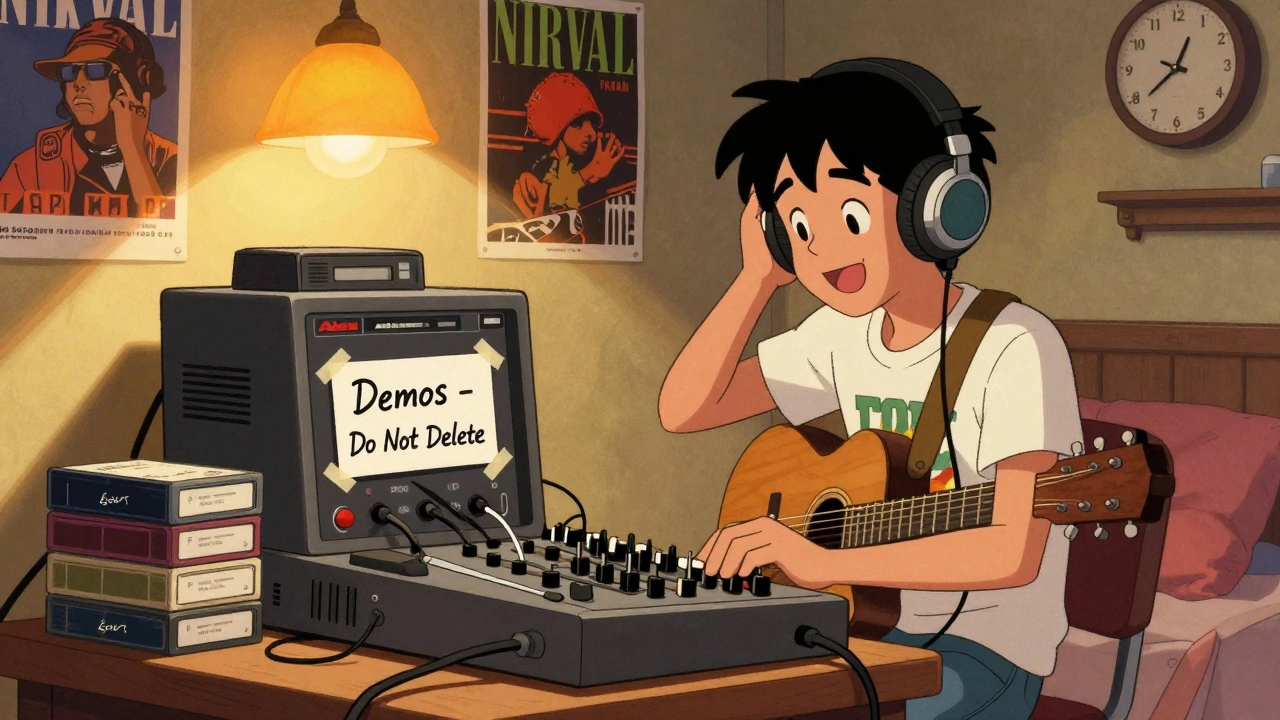

Before laptops could record a full album, before plugins could fix a bad vocal take, before anyone had heard of Pro Tools - there was ADAT. It wasn’t glamorous. It didn’t have a touchscreen. It didn’t even use computer hard drives. It used Super VHS tapes - the same ones you’d rent movies on in the 1990s. But for musicians who couldn’t afford a real studio, ADAT was a game-changer. It was the last stand of tape-based multitrack recording, and it changed everything.
What Was ADAT, Really?
ADAT stood for Alesis Digital Audio Tape. Released in 1992, it was a machine that could record eight tracks of digital audio onto a standard S-VHS tape. That might sound laughable today. But back then, professional 24-track analog tape machines cost more than $150,000. ADAT? $3,995. That’s less than the price of a new car. Suddenly, a bedroom in Portland, a garage in Minneapolis, or a basement in Atlanta could turn into a recording studio.
The original model, nicknamed the "Blackface," didn’t just cut costs - it cut barriers. It recorded at 16-bit, 44.1 kHz or 48 kHz - the same quality as a CD. No hiss. No wow and flutter. No tape stretch. Just clean, consistent digital sound. And because it used consumer-grade tapes, replacements were cheap. A single tape held 40 minutes of eight-track audio. You could buy a dozen for under $20.
How It Changed the Game
Before ADAT, if you weren’t signed to a label or didn’t have a rich uncle, recording an album meant borrowing time in a studio - maybe an hour here, a day there - and paying by the hour. Studio time was a luxury. You had to plan every note. One mistake? Rewind, re-record, pay more. Many artists just gave up.
ADAT flipped that. Now, you could record all night. Experiment. Mess up. Try a new drum sound. Layer three guitars. Save takes. You didn’t need a producer. You didn’t need a studio engineer. You just needed a pair of headphones and a little patience. Bands like The Shins, Modest Mouse, and countless indie acts from that era recorded early demos on ADATs. Some of them ended up on major labels. Others never left their basements - but they sounded professional.
What made ADAT even more powerful was its modularity. One machine gave you eight tracks. Two machines? 16 tracks. Three? 24 tracks - the standard for professional studios. Link up 16 machines, and you had 128 tracks. This wasn’t just affordable - it was scalable. A band could start with one ADAT, save up, and add another next year. No need to replace everything. Just plug in the next one.
ADAT vs. The Competition
The main rival was Tascam’s DA-88. It did the same thing - eight tracks, digital, on tape. But it used Hi-8 video cassettes. ADAT used S-VHS, which was cheaper, more widely available, and more reliable. ADAT also had better sync stability and a more open interface. That’s why ADAT became the standard. By 1995, if you were serious about home recording, you had an ADAT.
Other attempts at digital multitrack recording existed before ADAT - like the Akai A-DAM and the Yamaha DRU8 - but they were niche. Expensive. Clunky. ADAT wasn’t perfect. It had tape jams. It was loud. You had to rewind manually. But it worked. And it was everywhere.
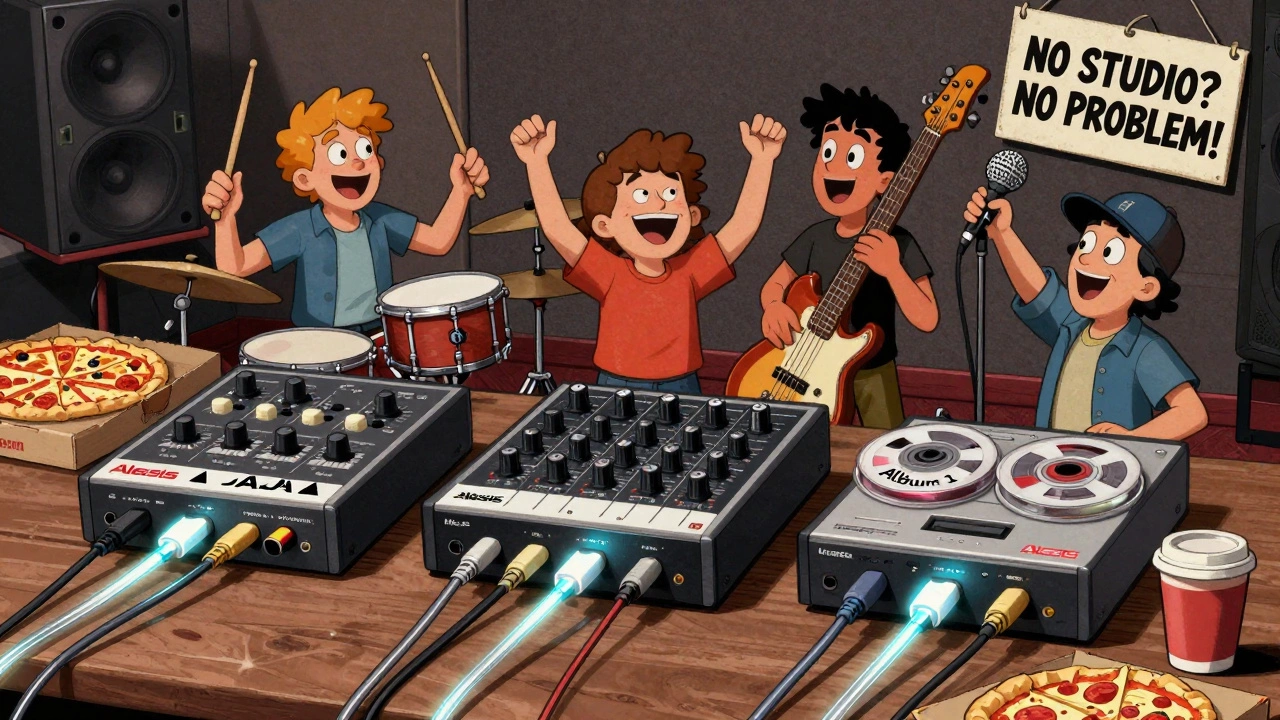
The Lightpipe Legacy
Even after the tapes stopped spinning, ADAT left behind something that still lives today: the ADAT Optical Interface, or Lightpipe. This was a fiber-optic cable that let ADATs talk to other digital gear - mixers, converters, even early computers. It carried eight channels of digital audio over a single cable. Clean. Stable. Fast.
Today, you’ll still find Lightpipe inputs on high-end audio interfaces. You’ll see it on outboard converters. Even some modern DAWs support it. That’s because ADAT didn’t just sell machines - it created a standard. And standards stick.
Why It Didn’t Last
ADAT ruled the 1990s. But by the late ’90s, things started to shift. Pro Tools hit the scene. It wasn’t just digital - it was editable. You could cut, copy, paste, nudge, pitch-shift, and undo. Tape didn’t have undo. Tape didn’t have infinite tracks. Tape didn’t have auto-save.
Then came the hard drive. The ADAT-HD24, released in 1998, tried to keep up - it recorded to hard drives instead of tapes. But it was too late. By then, a $2,000 computer with a sound card could do everything ADAT did - and more. No rewinding. No tape heads to clean. No tape hiss. No tape breakdowns.
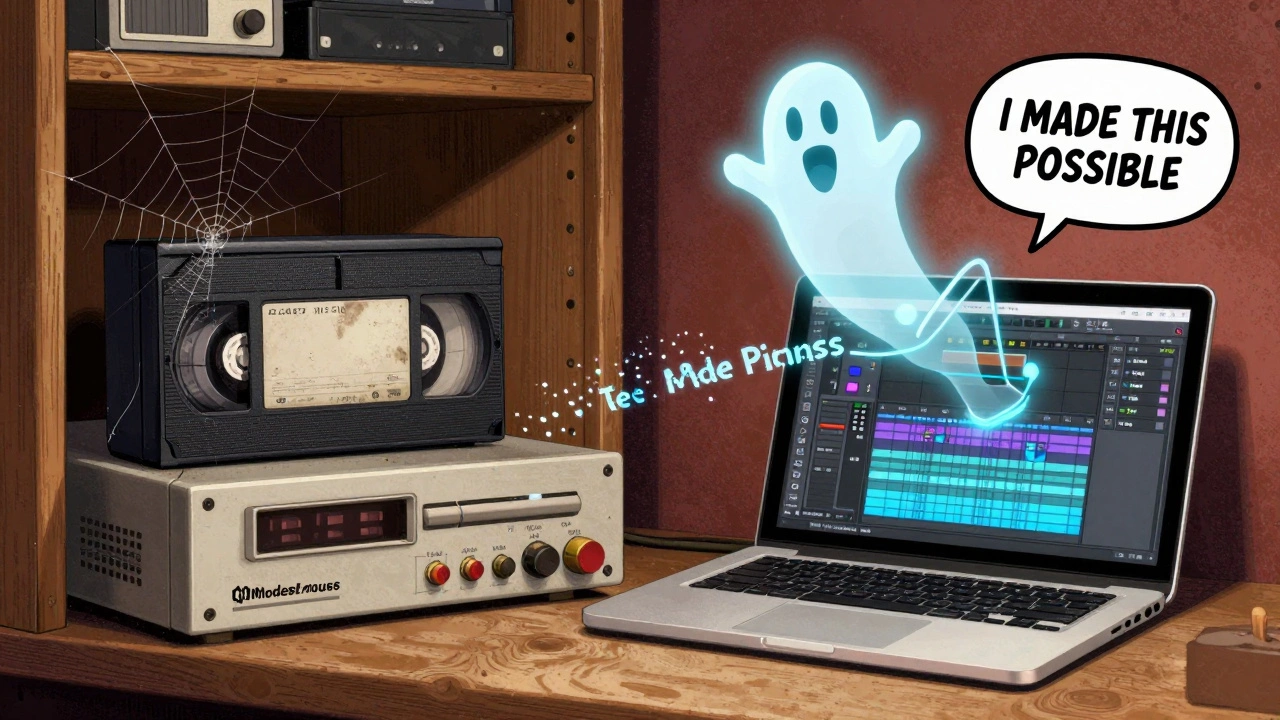
By 2002, most project studios had switched. Alesis stopped making new ADATs. Tape manufacturers stopped making S-VHS tapes for audio. The last ADATs sat in closets, collecting dust. But they weren’t forgotten.
The Lasting Impact
ADAT didn’t just make recording cheaper. It made it possible. For the first time, thousands of musicians didn’t have to beg for studio time. They could make albums on their own terms. That freedom gave birth to the DIY music culture of the 1990s and 2000s. Punk, indie rock, lo-fi hip-hop, bedroom pop - all of it owes something to ADAT.
Think about it: if you could record eight tracks on tape for under $4,000, why wait for a label? Why not release your own CD-Rs? Why not sell them at shows? That’s how bands like Nirvana, The Breeders, and countless others started. ADAT didn’t make them famous - but it gave them the tools to try.
Today, you can record an entire album on your phone. But you can’t ignore what came before. ADAT was the bridge between analog and digital. It was the last tape-based system that mattered. And it was the first system that truly let anyone become a producer.
| Feature | ADAT (1992-1998) | Professional Analog (Studer A820) | Early DAW (Pro Tools 3.0, 1996) |
|---|---|---|---|
| Cost | $3,995 (8 tracks) | $150,000+ (24 tracks) | $10,000+ (8 tracks, with hardware) |
| Recording Medium | S-VHS tape | 2-inch analog tape | Hard drive |
| Track Count (Per Unit) | 8 | 24 | 8-16 (limited by hardware) |
| Audio Quality | 16-bit, 44.1/48 kHz | 16-24 bit, analog warmth | 16-24 bit, digital precision |
| Editing | No | No | Yes (cut, copy, paste) |
| Expandability | Up to 128 tracks (linked) | Up to 48 tracks (linked) | Unlimited (with more hardware) |
What Happened to the Tapes?
Today, you can still find ADAT tapes on eBay. Some collectors use them to archive old recordings. Others repurpose them as backup drives - yes, you can still read them with an old ADAT machine hooked to a computer. But no one makes new tapes anymore. The last batch was produced around 2005.
Some studios still use ADATs for their analog character. A few engineers swear that the slight compression and saturation of tape adds warmth that digital can’t replicate. But those are exceptions. For most, ADAT is history.
Why It Still Matters
ADAT didn’t just record music. It changed who could make it. It gave power to the people. It didn’t require permission. It didn’t need a label. It just needed a tape, a machine, and a song.
That’s why, even in 2026, ADAT matters. Because every bedroom producer today - recording on GarageBand or Ableton - is standing on the shoulders of someone who used an ADAT in the 1990s. They were the first to prove that you didn’t need a million dollars to make a great record. You just needed a little grit, and a Super VHS tape.
What was the cost of an ADAT in 1992?
The original Alesis ADAT cost $3,995 USD in 1992. That was about one-fortieth the price of a professional 24-track analog tape machine like the Studer A820, which could cost over $150,000. The affordability made it accessible to project studios and bedroom musicians.
Could ADAT record more than 8 tracks?
Yes - by linking multiple ADAT machines. Each unit recorded 8 tracks. You could sync up to 15 additional units, creating a 128-track system. Most studios used 3 units (24 tracks) for full albums. This modular design made scaling up affordable and practical.
Did ADAT use the same tapes as VCRs?
Yes. ADAT used standard Super VHS (S-VHS) tapes - the same ones used for recording TV shows. That’s why replacement tapes were cheap and easy to find. A single tape held 40 minutes of 8-track audio. You could buy them at any electronics store.
What replaced ADAT?
Digital Audio Workstations (DAWs) like Pro Tools, Logic, and Cubase replaced ADAT in the late 1990s. Unlike tape, DAWs allowed non-destructive editing, unlimited tracks, instant recall, and plugin effects - all on a computer. The shift was fast: by 2002, most studios had switched.
Is ADAT still used today?
Rarely as a primary recorder. But the ADAT Optical Interface (Lightpipe) is still used in high-end audio interfaces and converters today. Some engineers also use old ADATs to archive analog-style warmth. However, new tapes are no longer made, and the machines are mostly collectors’ items.


