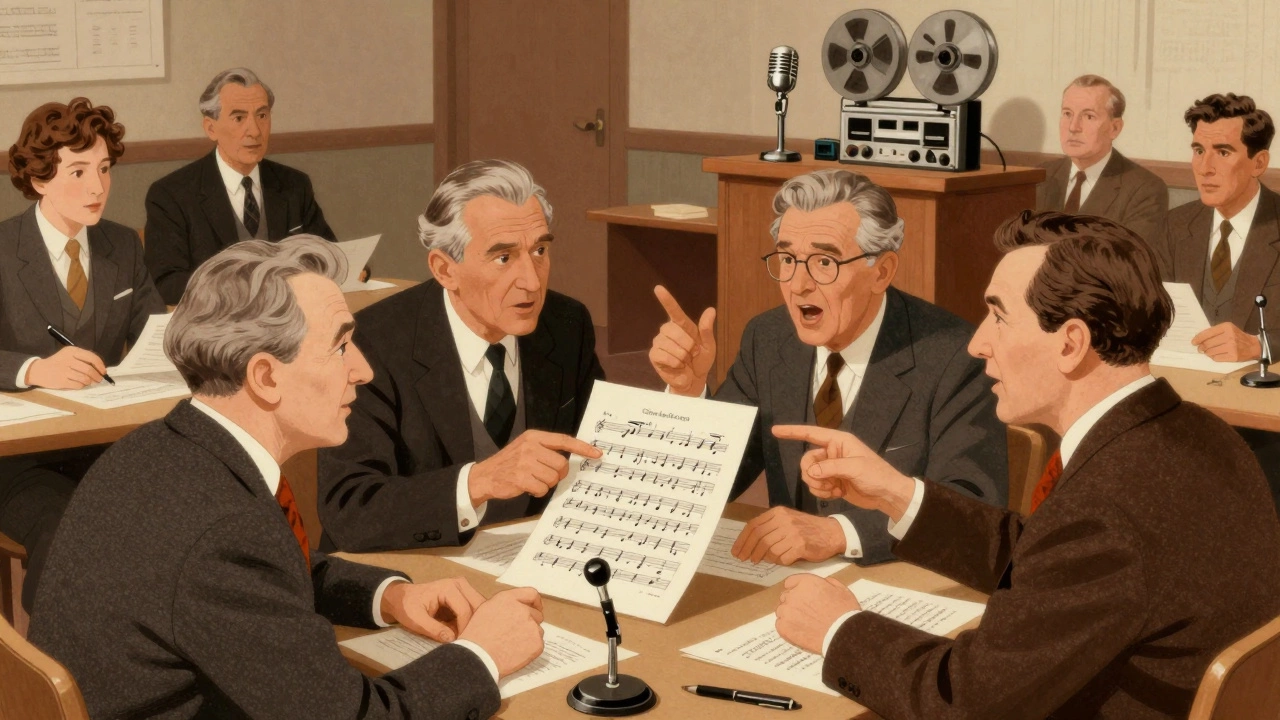

Think about the last time you heard a deep dive into why disco faded or how punk reshaped culture. Chances are, that insight didn’t just come from a blog post-it likely started in an academic conference room. Academic conferences on 1970s music are scholarly gatherings where researchers present rigorously evaluated papers focusing on music produced during the 1970s or research cultures from that decade. These events are not just parties for professors; they are the engine room of modern music journalism and history.
When you read a definitive article on the socio-political impact of 1970s soul or the technical evolution of analog synthesis, you are often reading the aftermath of a paper that survived a brutal peer-review process. This ecosystem, overseen by giants like the International Association for the Study of Popular Music (IASPM) and the American Musicological Society (AMS), ensures that what we accept as "fact" about this pivotal decade is backed by evidence, not just nostalgia.
The Origins of Studying Popular Music Academically
It wasn't always this way. For decades, classical music held the monopoly on serious academic study. The shift began with early attempts to reassess how universities engaged with contemporary sounds. A key moment was the symposium titled “Music in Higher Education in the 1970’s,” held at the University of Toronto on November 7, 1970, under the auspices of The College Music Society. This meeting marked one of the first times scholars openly debated whether popular styles deserved the same scholarly rigor as Bach or Beethoven.
By the time the American Musicological Society’s 35th Annual Meeting took place in December 1970 in Toronto, historical musicologists were starting to argue that the music of their own time-including emerging 1970s popular styles-needed formal analysis. However, explicit topics on 1970s pop were still rare in official abstracts back then. It took another decade for this field to solidify. The true turning point arrived with the International Conference on Popular Music Research in Amsterdam in June 1981. Its proceedings, published as Popular Music Perspectives, edited by David Horn and Philip Tagg, created a model for disseminating peer-reviewed conference papers to a global audience. This established the precedent that research on rock, pop, and disco from the previous decade could be treated as legitimate academic inquiry.
Key Organizations Driving the Field
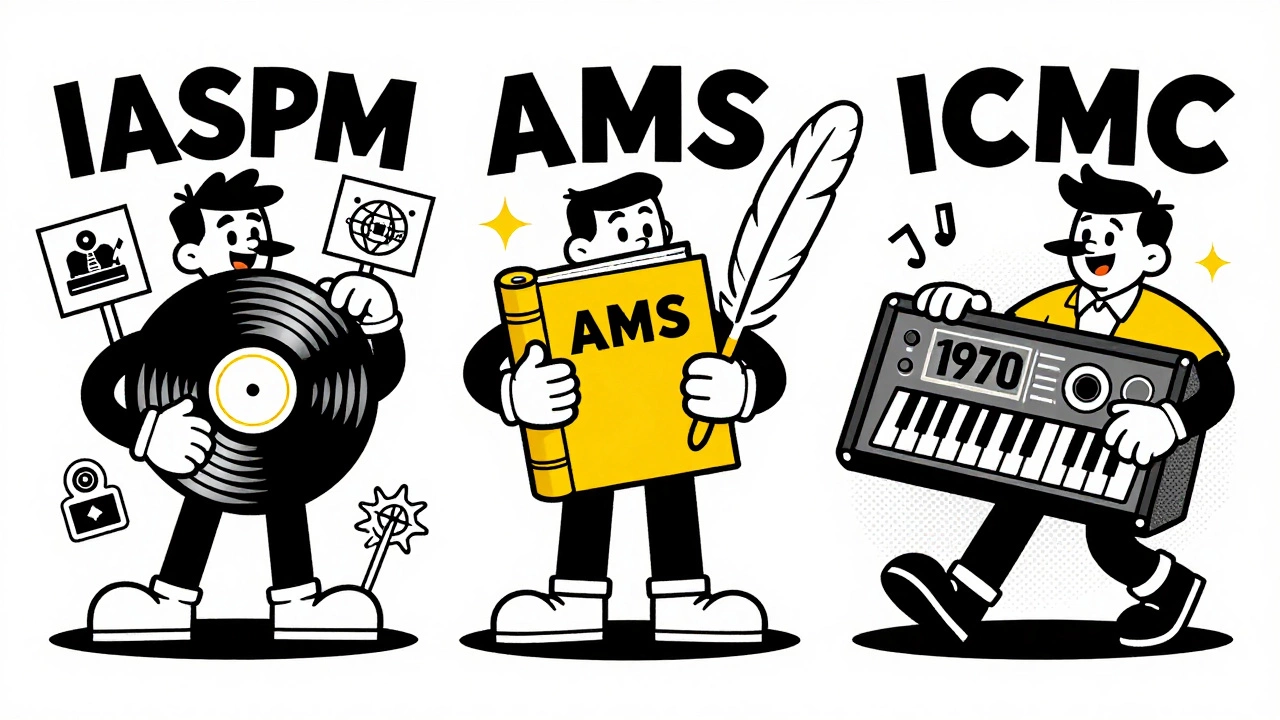
Today, three main organizations dominate the landscape of 1970s music research. Understanding them helps you navigate where specific types of papers go.
| Organization | Primary Focus | Role in 1970s Music Studies |
|---|---|---|
| IASPM | Popular Music Inquiry & Scholarship | Central hub for cultural, social, and industrial analysis of 1970s genres like punk, disco, and soul. |
| AMS | Historical Musicology | Focuses on historiography and teaching; treats 1970s music as part of broader historical narratives. |
| ICMC | Computer & Electronic Music | Analyzes 1970s technology, such as early synthesizers and digital processing techniques. |
The International Association for the Study of Popular Music (IASPM) is perhaps the most relevant for cultural studies. Its US branch, IASPM-US, organizes recurring conferences where every individual paper and panel is subject to peer review. Recent calls for papers in 2024 and 2025 explicitly mentioned themes like "popular music research in the 1970s and 1980s." For example, the IASPM-US 2026 conference, scheduled for February 26-29, 2026, in Washington, DC, focuses on "Popular Music and the State," framing 1970s music within debates on policy and social movements.
In contrast, the American Musicological Society (AMS) has been running annual meetings since 1948. By 2025, it reached its 91st iteration. While less focused exclusively on pop, its sessions on "Teaching Music History" often include case studies of 1970s repertoires to discuss curriculum changes. The International Computer Music Conference (ICMC) offers a different angle, publishing open-access proceedings that frequently address technologies originating in the 1970s, treating the decade as a technical baseline for modern electronic music.
How Peer Review Works in Music Conferences
You might assume peer review is only for journals, but in these fields, conference acceptance is the first major hurdle. The process typically follows a two-stage model. First, external reviewers-usually at least two independent experts-evaluate your submission. They score it based on originality, relevance, and quality. Then, program chairs make the final decision.
For musicology, this often means double-blind review, where neither the author nor the reviewer knows each other's identity. This mirrors the standards set by the Journal of the American Musicological Society (JAMS), which uses an editorial team to mediate all interactions. In practice, if you submit a paper on 1970s disco to an IASPM conference, your abstract goes through this vetting before you even get on stage. If accepted, your full paper might later be expanded to 6,000-8,000 words for publication in the Journal of Popular Music Studies (JPMS), undergoing another round of double-blind review.
This system ensures that claims about the era are supported by evidence. For instance, a paper arguing that 1970s Christian rock influenced social change must provide quantifiable data or rigorous archival proof, not just anecdotes. Reviewers look for fatal flaws in logic or lack of primary sources. This rigor transforms personal opinion into scholarly dialogue.
Themes and Topics in 1970s Music Papers
What exactly do these papers talk about? The themes have evolved significantly since the 1980s. Early work focused heavily on musical structure-analyzing chord progressions in rock or rhythmic patterns in funk. Today, the focus is broader and more interdisciplinary.
- Socio-Historical Context: Many papers link 1970s soul music to urban politics and civil rights movements. Scholars use government reports and live recordings as primary sources to show how music reflected societal turbulence.
- Culture Wars: Research examines how evangelical Christians viewed music as a tool for social change. Case studies often quantify how religious leaders invoked musical examples during the 1970s and 1980s.
- Industry and Technology: With the rise of digital tools, papers now analyze the transition from analog to digital recording. Quantitative studies, like those published in Royal Society Open Science, use statistical methods on Billboard Hot 100 charts to identify stylistic shifts, noting that the 1970s was a period of genre consolidation between the revolutions of 1964 and 1983.
- Mental Health Discourses: Recent special issues explore myths around "sex, drugs, and rock ’n’ roll," analyzing how mental health was discussed-or ignored-in lyrics and media coverage of the era.
These topics show that 1970s music is no longer just studied for its sound, but for its role in shaping modern identity, politics, and technology.
Submitting Your Own Paper: Practical Steps
If you want to contribute to this field, the barrier to entry is high but clear. Here is what you need to know:
- Write a Strong Abstract: Most conferences require abstracts of 200-300 words. This is your sales pitch. Clearly state your research question, methodology, and expected findings. Vague statements like "I will explore 1970s rock" will be rejected.
- Follow Style Guidelines: Organizations like IASPM have strict templates. For full articles, expect to write 6,000-8,000 words. Adhering to citation norms (often Chicago or MLA style) is non-negotiable.
- Prepare for Multiple Formats: You aren't limited to a 20-minute lecture. IASPM accepts panels, roundtables, workshops, and even performance-based demonstrations. If your paper involves audio analysis, prepare high-quality playback files.
- Plan for Timelines: Peer review takes time. Submissions are often due months in advance. Reviews can take several weeks or months depending on the committee size. Start early.
Understanding how reviewers think is crucial. As guides suggest, frame your contribution clearly. Show how your work fills a gap in existing literature. If you're writing about 1970s synthesizer technology, don't just describe the gear; explain how it changed compositional practices compared to the 1960s.
The Future of 1970s Music Scholarship
As we move through 2026, the infrastructure for studying this decade remains robust. The AMS plans its 92nd Annual Meeting online for November 2026, and specialized events like the Teaching Music History Conference at NYU in June 2026 continue to integrate 1970s repertoires into pedagogical debates. The long-term viability of these conferences is strong, though formats may shift toward hybrid models due to travel constraints and digital transformation.
The core mission remains unchanged: to ensure that our understanding of the 1970s is built on verified, peer-reviewed evidence rather than myth. Whether you are a journalist looking for credible sources or a researcher preparing your next submission, recognizing the weight of these conferences helps you navigate the vast ocean of music history with confidence.
What is the difference between IASPM and AMS conferences?
IASPM (International Association for the Study of Popular Music) focuses specifically on popular music genres, cultural studies, and industry analysis, making it ideal for papers on punk, disco, or soul. AMS (American Musicological Society) is broader, covering all historical periods, but includes sessions on historiography and teaching where 1970s music is analyzed within larger historical contexts.
Are conference papers on 1970s music peer-reviewed?
Yes. Major organizations like IASPM and AMS subject all individual papers and panels to peer review before acceptance. This usually involves at least two anonymous reviewers evaluating the work for originality, evidence, and clarity. Accepted papers may later be expanded for journal publication, undergoing further review.
How long should an abstract for a music conference be?
Most academic music conferences, including those hosted by IASPM, require abstracts to be between 200 and 300 words. This short format forces authors to concisely state their research question, methodology, and significance without unnecessary detail.
Can I present a performance-based paper instead of a traditional lecture?
Yes. Many modern music conferences, particularly those under IASPM, accept diverse formats including performance-based demonstrations, audio-visual analyses, and workshops. This allows researchers to demonstrate musical concepts directly rather than just describing them verbally.
Where can I find published papers from these conferences?
Proceedings are often published in edited volumes or associated journals. For example, IASPM-affiliated papers may appear in the Journal of Popular Music Studies (JPMS). Computer music papers are available in the open-access International Computer Music Conference Proceedings. Historical collections like 'Popular Music Perspectives' also archive earlier seminal works.


