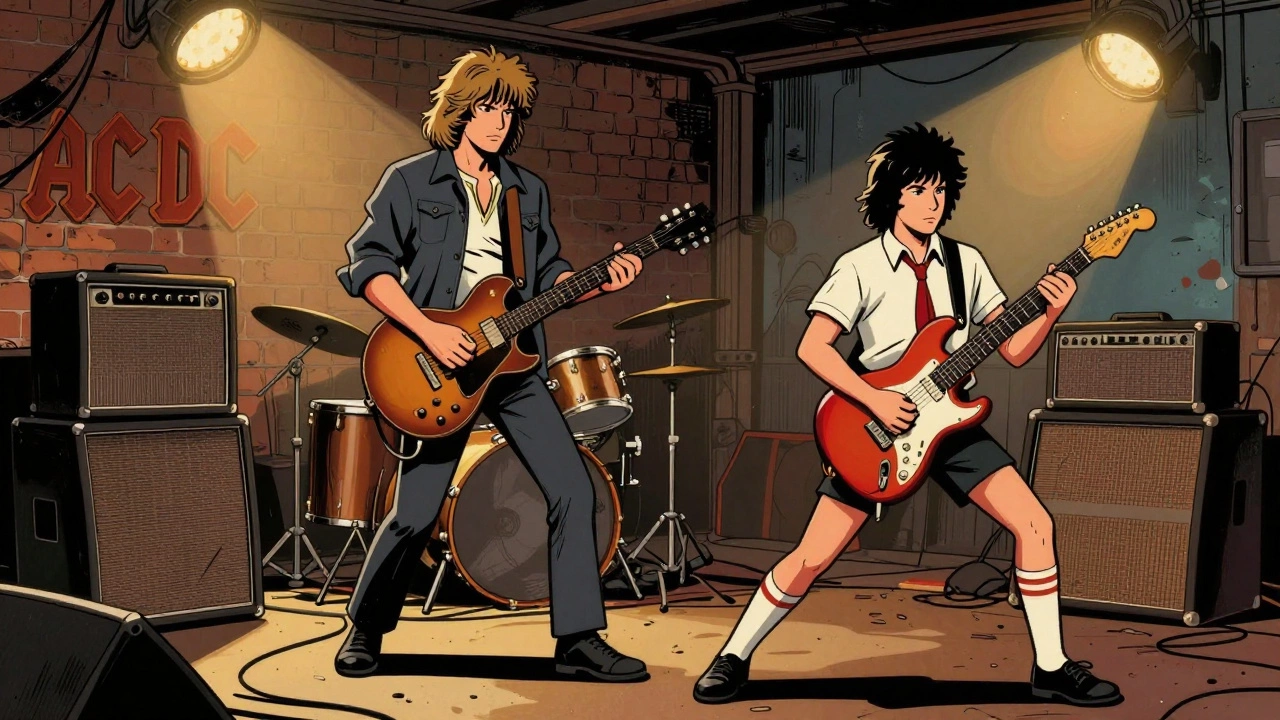

Rock history often gets written by the loudest voices or the most complex musicians. But in the mid-1970s, a band from Sydney decided to ignore all the trends. They didn't care about seven-minute guitar solos or concept albums about space opera. They just wanted to play loud, simple, and fast. That band was AC/DC, an Australian hard rock band formed in 1973 that revolutionized heavy music with stripped-down blues-based riffs. Their approach wasn't just different; it was a direct challenge to everything else happening in rock music at the time.
When you look back at the 1970s, progressive rock and glam metal were taking over stadiums. Bands like Yes and Queen were building intricate soundscapes. AC/DC looked at that and said, "No thanks." They went back to basics. They took the raw energy of early blues and amplified it until it shook the floorboards. This article breaks down how this Australian group turned a vacuum cleaner logo into a global phenomenon and defined the sound of hard rock for decades.
The Brothers Who Built the Foundation
It starts with two brothers. Malcolm Young and Angus Young moved from Scotland to Australia as children. Their older brother, George Young, was already a successful musician in Australia. He saw potential in his younger siblings and pushed them toward music. But it was Malcolm who had the vision. He wanted a band that played with power and precision, not ego.
Malcolm’s rhythm guitar playing is often overlooked because Angus is the one running around on stage in a school uniform. But Malcolm was the engine. His riffs were chunky, syncopated, and relentless. He didn't play many notes, but he played them perfectly. This style created a wall of sound that allowed the rest of the band to lock in tight. Without Malcolm’s rhythmic backbone, AC/DC would have been just another noisy garage band. With it, they became a machine.
Angus provided the spark. His lead guitar work was pure blues pentatonic scale, delivered with ferocious energy. He didn't try to be Eddie Van Halen. He didn't try to be Brian May. He just played what felt right. His stage persona-the schoolboy outfit-wasn't just a gimmick; it was a character that embodied youthful rebellion. It made the music feel accessible, even when the volume was cranked to eleven.
Bon Scott: The Voice of Rebellion
A band needs more than good guitars. It needs a voice that can carry the attitude. In 1974, AC/DC replaced their original singer, Dave Evans, with Bon Scott. This change changed everything. Scott was 28 years old, an age where most rock singers were still finding their footing. He brought a raspy, powerful vocal style that sounded like gravel mixed with honey.
Scott’s lyrics were provocative but rarely malicious. Songs like 'Whole Lotta Rosie' and 'Let Me Put My Love Into You' dealt with sexual themes, but they did so with humor and respect. This was a stark contrast to the increasingly aggressive or overly poetic lyrics of other hard rock acts. Scott sang about being a "bad boy" and a "problem child," but there was always a wink in his eye. He connected with working-class audiences who tired of the pretension in mainstream rock.
His delivery was commanding. He didn't need perfect pitch; he needed presence. When Scott stepped up to the mic, you listened. His Australian accent gave the band a unique identity, distinguishing them from their British and American counterparts. He was the face of the band's anti-establishment ethos, and fans loved him for it.
The Classic Lineup Locks In
A great song needs a great rhythm section. By 1975, AC/DC had found theirs. Phil Rudd joined on drums, and Cliff Williams took over bass duties. This lineup-Young, Young, Scott, Rudd, Williams-is considered the classic era of AC/DC. And for good reason.
Rudd’s drumming was minimalist but powerful. He didn't fill every gap with fills. Instead, he focused on timekeeping and dynamics. His beats drove the songs forward, creating a sense of urgency. Listen to 'T.N.T.' or 'Go Down,' and you’ll hear how his drums lock in with Malcolm’s guitar to create an irresistible groove. It’s tight, precise, and heavy.
Williams’ bass work supported this foundation. He didn't try to stand out. His job was to lock in with Rudd, creating a solid low-end that let the guitars soar. This simplicity was intentional. AC/DC believed that if the rhythm section was strong, the melody could cut through clearly. It was a lesson in restraint that many modern bands forget.
High Voltage and the Birth of a Sound
In February 1975, AC/DC released their debut album, High Voltage. Produced by George Young and Harry Vanda, the album was raw and unpolished. It featured ten tracks (twelve in international releases) that showcased their signature sound. Distorted guitars, thunderous drums, and Bon Scott’s vocals dominated. There was no synthesizer, no orchestral arrangement, no fancy production tricks.
The hit single 'It's a Long Way to the Top (If You Wanna Rock 'n' Roll)' reached number 16 on the Australian charts. It was an anthem for aspiring musicians everywhere. The song captured the struggle and the reward of pursuing rock and roll. Fans connected with its honesty. Critics ignored it, preferring the more "serious" prog-rock albums of the day. But the people knew what they liked.
This album established AC/DC as serious contenders in the hard rock genre. It proved that you didn't need technical virtuosity to make an impact. You needed energy, attitude, and memorable hooks. These principles became the blueprint for hard rock throughout the 1980s and beyond.
T.N.T. and Let There Be Rock
Following High Voltage, AC/DC kept the momentum going. In December 1975, they released T.N.T. in Australia. This album included fan favorites like 'Whole Lotta Rosie' and 'The Jack.' It reached number 9 on the Australian charts, showing growing commercial success. The live versions of these songs became staples of their setlist, showcasing their ability to deliver high-energy performances night after night.
Then came Let There Be Rock in March 1977. This album marked their breakthrough into international consciousness. Recorded at Festival Studios in Sydney, it maintained the raw, live-sounding production that defined their earlier work. The title track features one of Angus Young’s most celebrated guitar solos. Tracks like 'Go Down' and 'Whole Lotta Rosie (live version)' demonstrated their growing prowess.
The album reached number 17 in Australia and number 154 on the Billboard 200 in the United States. It wasn't a chart-topper immediately, but it resonated deeply with rock fans. It became a touchstone of hard rock, influencing countless bands who followed. The message was clear: keep it simple, keep it loud, and keep it real.
Powerage and International Reach
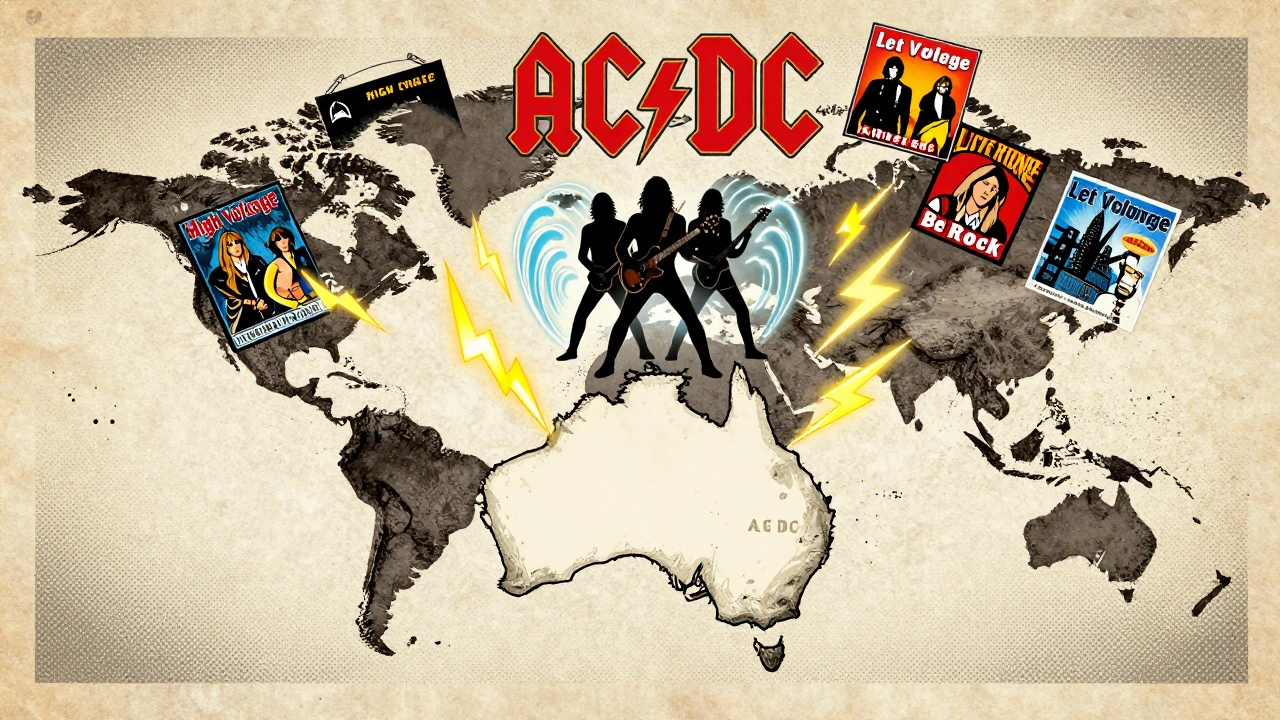
In May 1978, AC/DC released Powerage. This album further refined their sound. It reached number 13 in Australia and number 148 on the Billboard 200. While not a massive commercial hit initially, it expanded their international reach. The album showed maturity without losing the raw edge that defined their earlier work.
By the end of the 1970s, AC/DC had transitioned from an Australian regional act to an international rock phenomenon. They had built a loyal fan base through relentless touring and consistent quality. Their live performances were legendary. Audiences described visceral experiences characterized by Angus’s gymnastic movements and Bon Scott’s commanding presence.
| Album | Release Date (Australia) | Peak Chart Position (Australia) | Key Tracks |
|---|---|---|---|
| High Voltage | February 17, 1975 | - | 'It's a Long Way to the Top' |
| T.N.T. | December 1, 1975 | 9 | 'Whole Lotta Rosie', 'The Jack' |
| Let There Be Rock | March 21, 1977 | 17 | 'Let There Be Rock', 'Go Down' |
| Powerage | May 9, 1978 | 13 | 'Rock 'n' Roll Ain't Noise Pollution' |
The Legacy of Raw Power
AC/DC’s influence on subsequent generations of musicians is immeasurable. Their stripped-down, blues-based approach provided an alternative template to the technical extremes of metal. Bands like Guns N' Roses, Aerosmith, and Def Leppard drew inspiration from their simplicity and power. They proved that rock and roll required only powerful playing, authentic attitude, and songs with memorable hooks.
Their success also transformed Australian music's international profile. Before AC/DC, Australia was seen as a peripheral market for rock music. Afterward, it became a source of talent and innovation. Bands like Midnight Oil and INXS followed in their footsteps, bringing Australian rock to the world stage.
Today, AC/DC remains one of the best-selling bands in history. Their 1970s recordings are foundational documents in hard rock aesthetics. They remind us that sometimes, less really is more. In a world obsessed with complexity, AC/DC chose clarity. And in doing so, they changed music forever.
Who were the members of AC/DC in the 1970s?
The classic 1970s lineup consisted of Malcolm Young (rhythm guitar), Angus Young (lead guitar), Bon Scott (vocals), Phil Rudd (drums), and Cliff Williams (bass). Earlier members included Dave Evans (vocals) and Chas Chandler (bass).
What makes AC/DC's sound unique?
AC/DC's sound is defined by its simplicity and power. They used blues-based riffs, minimal effects, and a focus on rhythm and groove. Unlike progressive rock bands, they avoided complex structures and technical displays, prioritizing raw energy and accessibility.
Why is Bon Scott important to AC/DC?
Bon Scott brought a distinctive vocal style and charismatic stage presence. His rough, Australian-accented delivery and provocative yet humorous lyrics helped define the band's identity. He connected deeply with fans through his authenticity and rebellious spirit.
How did AC/DC influence later rock bands?
AC/DC influenced countless bands by proving that hard rock could succeed without technical virtuosity or conceptual pretension. Their emphasis on groove, attitude, and catchy hooks inspired groups like Guns N' Roses, Aerosmith, and many others in the 1980s and beyond.
What was the significance of the album 'Let There Be Rock'?
Released in 1977, 'Let There Be Rock' marked AC/DC's breakthrough into international markets. It showcased their raw, live-sounding production and featured iconic tracks like the title song and 'Go Down.' The album solidified their reputation as a premier hard rock act.