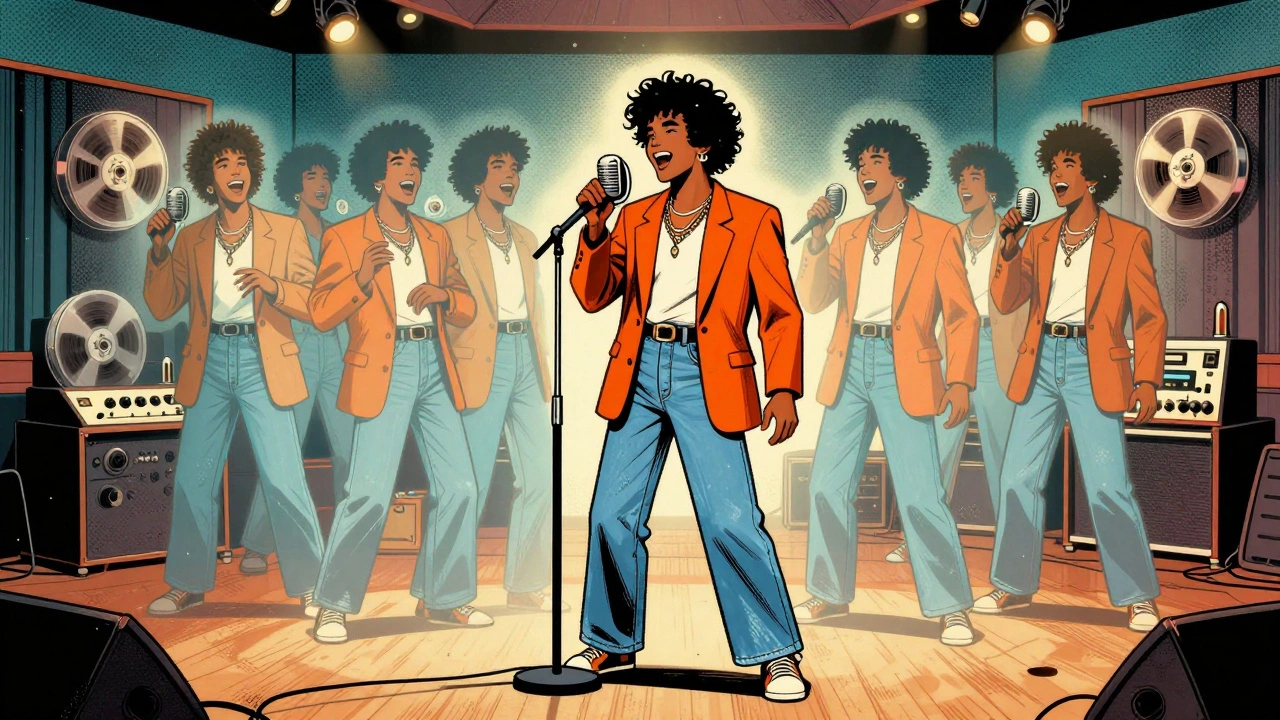

Close your eyes and think about the biggest R&B hits from the mid-to-late 1990s. You probably hear that massive, wall-of-sound chorus where the lead singer feels like they are standing in front of a giant choir. It is lush, emotional, and incredibly wide. That sound was not an accident. It was the result of a specific production style known as vocal stacking, which involved layering dozens of tracks to create a signature texture. Alongside these dense harmonies, producers used call-and-response patterns derived from gospel music to make the track feel like a conversation between the artist and their backup singers.
If you are trying to recreate this classic 90s R&B sound today, you need to understand more than just melody. You have to look at how those vocals were arranged, recorded, and mixed. The technology has changed since the days of analog tape, but the core principles remain exactly the same. Here is how you can build those iconic background stacks and dynamic responses in your own projects.
The Anatomy of a Background Stack
In modern pop production, it is common to see background vocal counts reach over 60 tracks for a single song. While that level of density became easier with digital audio workstations (DAWs) later on, the foundation was laid in the 1990s. The goal was always the same: create width and power without cluttering the mix.
To build a stack that sounds like Boyz II Men or SWV, you start with simple chord tones. Do not overcomplicate it. Use the 1st, 3rd, and 5th degrees of the scale to form a basic triad. For example, if you are in C Major, you sing C, E, and G simultaneously. This creates a solid harmonic base.
Once you have those three notes, you do not just record them once. You double them. In fact, you might record each part two, three, or even four times. If you have a three-note chord and you double each note twice, you already have six tracks. Then, you pan those doubles hard left and right. This stereo pairing trick makes a small group of singers sound like a large ensemble filling up the entire soundstage.
| Component | Description | Mix Position |
|---|---|---|
| Lead Vocal | Main melody, centered, dry-ish | Center (Mono) |
| Lead Double | Subtle reinforcement of the lead | Center (Low volume) |
| Triad Stack (1-3-5) | Harmony notes sung on sustained vowels | Panned L/R Pairs |
| Octave Doubles | Same notes sung an octave higher/lower | Panned L/R Pairs |
| Ad-libs / Responses | Short phrases or shouts answering the lead | Panned L/R or Centered |
Mastering Call-and-Response Techniques
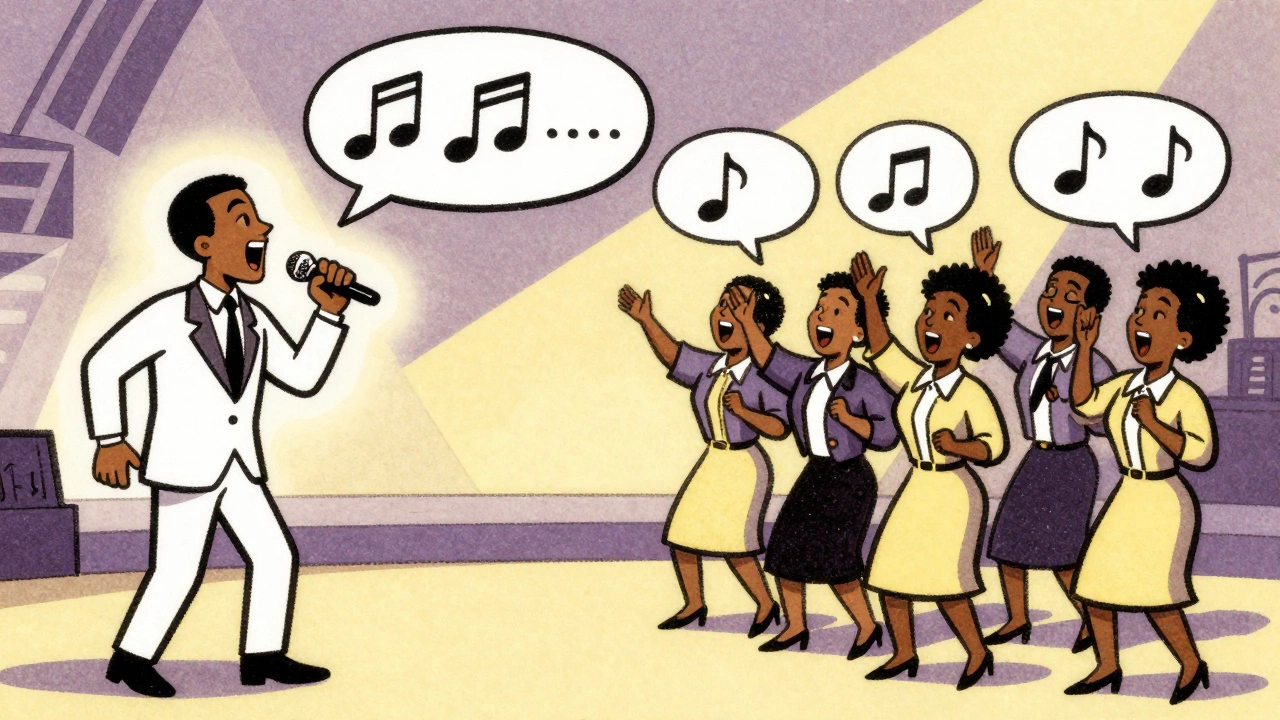
A static stack of harmonies can get boring quickly. This is where call-and-response comes in. Rooted deeply in African American musical traditions, particularly gospel, this technique turns the arrangement into a dialogue. The lead singer delivers a line (the call), and the background vocals answer back (the response).
You do not need to write complex new lyrics for the response parts. Often, the most effective responses are simple interjections like "yeah," "oh," or short rhythmic chants. These elements act as counterpoint, filling the empty spaces in the arrangement where the lead singer is breathing or pausing.
Consider the structure of a verse. The lead sings a sentence. Instead of silence following it, the background stack sustains a long "ooh" melody underneath. Or, perhaps a separate track punches in with a rhythmic shout on beats 2 and 4. This keeps the energy moving forward. When the lead ends a phrase, let the backgrounds continue into a riff or a sustained vowel. This overlapping effect creates that cascading, emotional outro feel that defined the era.
Session Workflow: Recording for Impact
How did producers actually capture this sound? The workflow was methodical. First, they recorded the lead vocal. This was the anchor. Next, they added a single double of the lead, but kept it very low in the mix. This subtle layer adds thickness to the main voice without making it sound doubled or phasy.
After securing the lead, the arranger would move on to the backgrounds. They recorded these parts in sets of two. Why pairs? Because panning one take left and one take right creates instant stereo width. Every background element should exist as a stereo pair to surround the listener.
Don't forget emphasis tracks. These are recordings where the singer only repeats certain key words from the lyric for extra impact. If the lead sings "I love you," the emphasis track might just scream "LOVE!" on the downbeat. These moments add drama and human emotion to the polished production.
Mixing Priorities: Keeping the Lead King
You can have the best arrangements in the world, but if the mix is muddy, the track fails. The golden rule of 1990s R&B mixing is simple: the lead vocal must always be dominant. Everything else exists to support it.
To achieve this, engineers treated background vocals differently from the lead. They applied aggressive EQ filtering to the stacks. Specifically, they used high-pass filters to cut out all the low-end rumble. The goal was to make the backgrounds "as thin as they could possibly be." By removing the low frequencies, the backgrounds occupy a narrower band of the spectrum, leaving plenty of room for the lead vocal to sit clearly in the front.
Panning is another critical tool. Pretty much every background track gets panned either hard left or hard right. This ensures that no matter how many layers you add, the center channel remains clear for the lead. It also enhances the perception of width, making the track feel huge on headphones or a stereo system.
Effects and Spatial Depth
Reverb and delay are not just effects; they are placement tools. In a 90s-style mix, background vocals and ad-libs typically receive 5-10 dB more reverb and delay than the lead vocal. This pushes them further back in the virtual space. The lead stays intimate and present, while the stacks create a lush, cinematic atmosphere behind it.
Ad-libs often get special treatment. They might be tuned harder than the lead to emphasize their stylized, almost instrumental role. They are mixed at a lower level but with heavier effects, allowing them to float around the listener without competing directly with the main melody. This balance allows the ad-libs to provide energy and excitement without distracting from the song's core message.

Common Pitfalls to Avoid
When building these dense arrangements, it is easy to go too far. One major mistake is adding too many independent melodic lines. If every background track is doing something different, the midrange becomes cluttered and chaotic. Remember, most of those 60+ tracks in a modern session are near-identical doubles or simple support parts. Stick to the roles: lead, pad stack, rhythmic response, and ad-lib.
Another issue is timing. With multiple doubles of the same harmony note, slight variations in timing can make the stack sound messy. Ensure that consonants are aligned within roughly 10-20 milliseconds. Tight tuning is also essential. If pitches are not tightly clustered around the target note, the harmony will sound dissonant rather than rich. Use pitch correction tools carefully to maintain natural emotion while ensuring clarity.
Applying 90s Techniques Today
Even though we are in 2026, the principles of 1990s R&B arranging are more relevant than ever. Artists like SZA, Daniel Caesar, and Bryson Tiller still use these methods. The difference is simply the tools. You no longer need expensive tape machines. A computer, a good microphone, and a DAW are enough.
Start by building your 3-note triads. Record them multiple times. Pan them wide. Add your call-and-response phrases to fill the gaps. High-pass filter your backgrounds. Send them to a shared reverb bus. Keep the lead vocal dry and centered. If you follow this workflow, you will capture that timeless, soulful essence that defined a generation of music.
What is the best chord structure for 90s R&B background vocals?
The most effective structure uses simple triads based on the 1st, 3rd, and 5th degrees of the scale. This creates a solid harmonic foundation that sounds cohesive when doubled and layered. You can add extensions like 7ths or 9ths later, but starting with the basic triad ensures clarity.
How many background vocal tracks should I use?
There is no fixed number, but modern productions often use 60+ tracks for full choruses. For a authentic 90s feel, aim for at least 6-12 tracks per chord section (doubled triads). Focus on quality and tight performance over sheer quantity. Ensure each track serves a specific role.
Why should I high-pass filter my background vocals?
High-pass filtering removes low-frequency rumble from background tracks, making them "thinner" in the mix. This prevents muddiness and leaves space for the lead vocal to dominate the low-mid range. It helps keep the arrangement clean and focused.
What is the difference between a stack and a call-and-response?
A stack refers to layered harmonies sung simultaneously to create width and power. Call-and-response involves a rhythmic or melodic exchange where background vocals answer or react to the lead singer's phrases. Stacks provide texture; responses provide dynamics and conversation.
How do I mix ad-libs so they don't overpower the lead?
Keep ad-libs at a lower volume level than the lead vocal. Apply more reverb and delay (5-10 dB more) to push them back in the spatial field. Pan them creatively, often hard left or right, to avoid frequency clashes with the centered lead. Tune them precisely to ensure they blend well.


