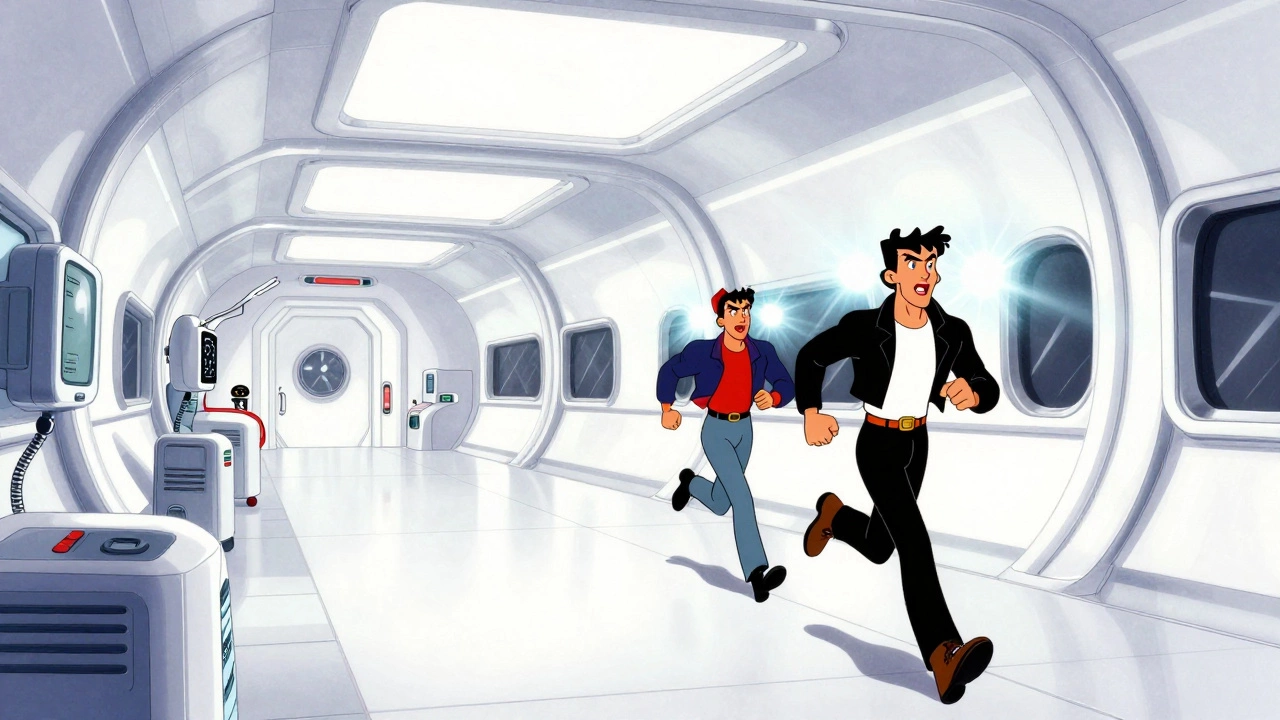

You probably remember watching MTV is the global cable television network and media brand that revolutionized music promotion in your teenage years. But do you remember the sheer absurdity of what record labels were spending? In 1995, two siblings named Michael and Janet Jackson dropped a music video called Scream is a 1995 pop duet and accompanying music video. They didn't just pay a few hundred thousand dollars to shoot it. They spent $7,000,000. That is seven million dollars in cash for a five-minute clip that played on TV between commercials. When you adjust for inflation to today's numbers, that price tag climbs past $14 million. It remains the most expensive music video ever made with a publicly disclosed budget. Nothing since has come close.
The Golden Age of Excess
To understand why anyone would sign a check for that amount, you have to look at the landscape of the mid-90s. We weren't living in the era of streaming downloads or TikTok trends yet. Music sales were booming. CD prices held firm, and major record labels had massive profit margins. These companies viewed music videos not just as advertisements, but as prestige assets. If you could land the biggest director and build the most spectacular set, you controlled the culture. This created a feedback loop where artists felt pressure to outdo each other visually, and labels were more than happy to foot the bill because a hit video meant physical album sales skyrocketing in real-time stores.
Think about the competition. You had the top tier artists fighting for prime rotation slots on MTV. If your video looked cheaper than the next guy's, it got skipped. This environment birthed a specific breed of production values that blended cinema quality with short-form entertainment. It wasn't enough to point a camera at a band playing in a room anymore. You needed narratives, special effects, and cinematic lighting that rivaled Hollywood blockbusters like Jurassic Park or Mission: Impossible, which were dominating theaters around the same time.
Anatomy of a Blockbuster Video: Scream
Let's dig into the line items that made up that historic $7 million for Michael Jackson is an American singer, songwriter, and dancer known as the King of Pop. You can't just buy a set for that kind of money. The production team built thirteen distinct set pieces to create a futuristic hospital and space station environment. The cost of lighting alone hit $175,000. Yes, you read that right-$175k just for lights. There was also a computer-generated spaceship included in the visual package, costing a cool $65,000 to render. At the time, this level of CGI required specialized talent and processing power that took days to process, unlike modern cloud rendering.
Who was behind the lens for this spectacle? Mark Romanek is an acclaimed film and music video director known for cinematic visuals. He was the go-to guy for high-concept visuals in the 90s. Before he touched Jackson, he was already establishing his reputation. Working with Romanek meant getting a specific aesthetic that pushed the boundaries of what was acceptable for a 30-second promo. The narrative of Scream involved the siblings escaping Earth's media backlash via a spacecraft, requiring elaborate choreography and stunt work alongside the digital wizardry. Every element-from the costume design to the prop fabrication-was executed at feature-film standards.
The Heavyweights: More Than Just One Video
If you think Jackson was an outlier, you'd be wrong. The decade was packed with productions that dwarfed standard budgets. Look at Madonna. In 1995, she collaborated with Romanek again on Bedtime Story is a 1994 pop song by Madonna with a surreal visual component. The nominal budget sat at $5 million. Adjusted for inflation, that translates to over $10.5 million in current dollars. Then there is Guns N' Roses. Their 1993 track Estranged featured an epic score and a narrative involving a couple struggling against societal pressures. Director Andy Morahan helmed a project that cost exactly $5 million nominal, roughly $11.1 million adjusted for inflation.
| Video / Artist | Year | Director | Reported Budget (Nominal) | Inflation Adjusted Estimate |
|---|---|---|---|---|
| Scream / MJ & J. Jackson | 1995 | Mark Romanek | $7,000,000 | $14,790,347 |
| Bedtime Story / Madonna | 1995 | Mark Romanek | $5,000,000 | $10,564,534 |
| Estranged / Guns N' Roses | 1993 | Andy Morahan | $5,000,000 | $11,143,746 |
| Black or White / MJ | 1991 | John Landis | $4,000,000 | $9,455,167 |
Even late in the decade, when the turntables were slowing down, the investment remained staggering. The Backstreet Boys' Larger Than Life came out in 1999 with a production cost of $2.1 million. One specific scene involving Brian Littrell flipping on a flying surfboard cost $90,000 in isolation. Think about that expense ratio. We were burning hundreds of thousands of dollars on single shots of guys doing gymnastics. For comparison, a decent metal video in the early 90s usually hovered around £25,000 (British pounds) to clear the bar for airplay on MTV Europe. That gap between the indie/grindcore budget and the pop blockbuster budget was a canyon.
Hollywood Lenders
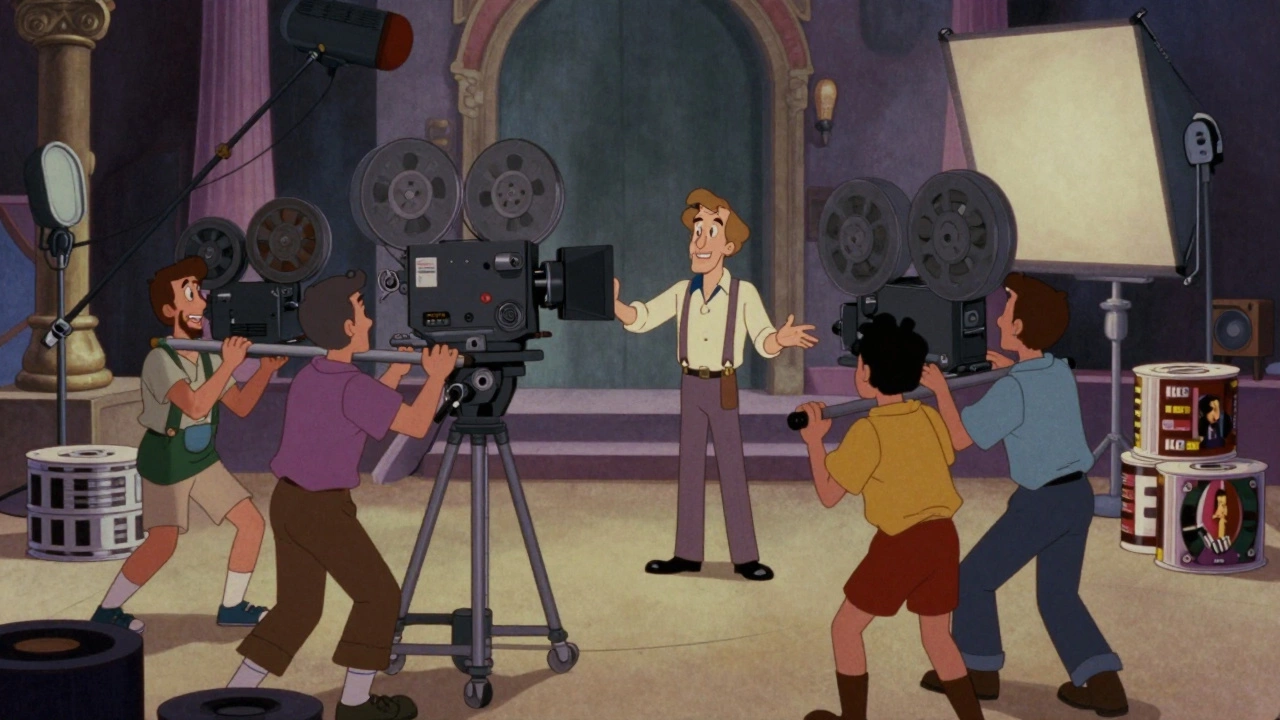
A major reason these videos looked so good was who was actually filming them. In previous decades, music videos were often made by commercial jingle directors or people working strictly in the music industry. The 90s changed the hiring pool. Major film directors wanted the exposure and the creative freedom. David Fincher directed Madonna's Express Yourself in 1989, which broke records at the time with a $5 million tab. John Landis is a famous American filmmaker and director known for iconic films directed Michael Jackson's Black or White earlier in the decade.
This crossover elevated the status of the medium. These filmmakers brought professional film crews, union-standard labor practices, and high-end equipment rentals to the job. They utilized film stock rather than tape. The cost of 35mm film stock and processing was massive, often constituting the bulk of the budget along with camera hire. Editing suites charged premium rates, and editors worked weeks or months to craft the final product. Post-production involved optical compositing and the nascent stages of digital color grading.
Why Did It End?
So why don't we see these numbers anymore? By the 2010s and leading into today, the economics shifted entirely. The collapse of physical album sales meant labels stopped subsidizing these extravaganzas. Marketing budgets moved toward social media presence, touring, and merchandise. Today, you can produce a video worthy of MTV distribution is broadcast standards for video content on a budget of £3,000. Technology became cheaper, faster, and more accessible. Smartphones and consumer-grade cameras offer resolution that beats film stock from 1995. Digital software replaced costly photochemical labs.
We lost the budget, but we gained access. The democratization of video tools means any independent artist can create something visually stunning without corporate backing. However, the loss of the big-budget video meant the death of the shared cultural watercooler moment. When everyone watched the same Scream on Saturday night, the collective reaction was instantaneous and global. Now, content is fragmented across countless platforms, meaning even expensive videos might never get eyes beyond a loyal fanbase.
Frequently Asked Questions
What is the most expensive music video ever made?
The record holder is "Scream" by Michael Jackson and Janet Jackson. Produced in 1995, its reported nominal budget was $7,000,000, which adjusts to over $14 million in today's currency.
Who directed the highest budget music videos of the 90s?
Mark Romanek directed several high-profile productions, including "Scream" and Madonna's "Bedtime Story." Other notable directors included John Landis for Michael Jackson and David Fincher for Madonna.
How did music video budgets change after the 90s?
Budgets plummeted as physical sales declined. Modern videos suitable for broadcast quality can often be produced for under £3,000 compared to multi-million dollar productions of the 90s.
Why were 1990s music video budgets so high?
Record labels operated at peak profitability and treated videos as essential marketing assets. High budgets allowed for film directors, CGI, and elaborate sets necessary to compete for MTV airplay.
Did any bands outside of pop spend similar amounts?
Guns N' Roses spent $5 million on their video for "Estranged," matching the cost of many pop superstars. Generally, non-pop genres like metal had significantly lower budgets, typically around £25,000 in the early 90s.


