
The 1990s didn't just sound different; it looked different. If you flip through a magazine from that decade, you aren't seeing the polished, airbrushed perfection of the 80s or the algorithm-driven aesthetic of today. You are looking at raw, unfiltered moments that captured the soul of an era. 1990s music photojournalism is a visual movement defined by intimate portraiture, cultural authenticity, and narrative-driven storytelling that shifted focus from commercial gloss to genuine human connection. This wasn't just about selling records. It was about documenting culture.
During this period, photographers stopped being mere technicians hired to make stars look good. They became embedded journalists, often coming from the same neighborhoods as the artists they shot. The result? Images that feel like secrets shared between friends rather than advertisements. From the grunge scene in Seattle to the hip-hop boom in New York, these visuals defined how we remember Kurt Cobain, The Notorious B.I.G., and Janet Jackson. Let’s break down who took these shots, why they matter, and how they changed the game forever.
The Shift from Glamour to Authenticity
To understand why 90s music photos hit so hard, you have to look at what came before. In the 1980s, music photography was often about spectacle. Think big hair, neon lights, and heavy studio production. The goal was to create an untouchable idol. But the 90s demanded something else. Audiences wanted to see the person behind the persona.
This shift was driven by a new generation of photographers who were deeply embedded in music culture. They weren't outsiders looking in; they were insiders with cameras. This cultural fluency allowed them to capture vulnerability and intensity in equal measure. When Guzman the husband-and-wife photography duo of Constance Hansen and Russell Peacock shot Debbie Harry for her 1986 album cover, they set the tone for their 90s dominance. They didn't just pose her; they revealed her. Their work on Fishbone, En Vogue, and Lenny Kravitz showed a range that crossed genre lines, proving that authentic storytelling worked whether you were shooting alternative rock or R&B.
The key difference? Lighting and location. Instead of sterile studios, photographers started using natural light and real environments. A candid laugh in a green room, a tired stare after a long tour bus ride-these became the iconic images. The camera became a tool for dignity, not exploitation. Artists were treated as subjects of artistic attention, which resonated with fans who craved connection over fantasy.
Hip-Hop Photography: Capturing the Renaissance
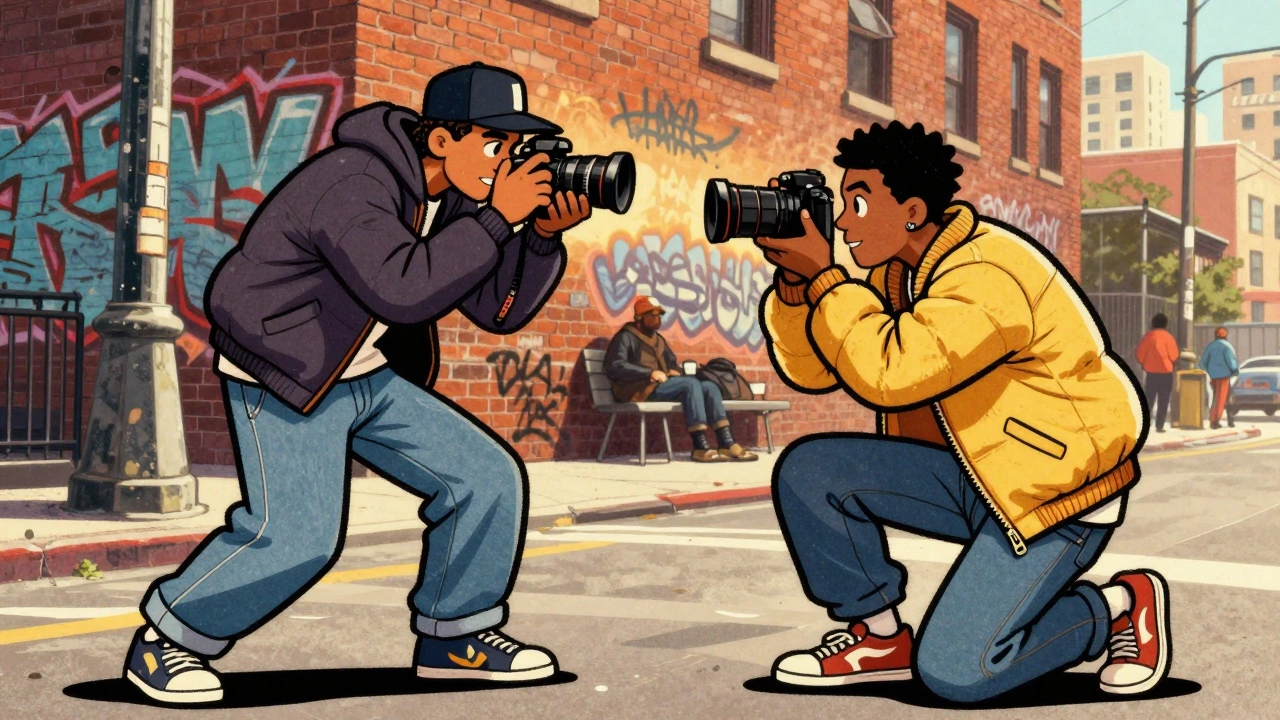
If any genre defined the visual language of 90s photojournalism, it was hip-hop. The early 90s saw a cohort of young photographers turning their lenses toward the streets of New York and beyond. These shooters understood the culture because they lived it. They didn't approach Tupac Shakur or Wu-Tang Clan with journalistic distance; they approached them with respect and familiarity.
Sue Kwon a prominent photographer known for capturing hip-hop icons during the genre's 1990s renaissance emerged as a vital figure in this space. Her work with Biggie Smalls (The Notorious B.I.G.) and members of Wu-Tang Clan isn't just documentation; it's art. She captured the confidence and charisma that made these artists larger than life, yet she kept them grounded in reality. Similarly, Michael Benabib a photographer whose exhibited work includes rare portraits of legendary hip-hop artists documented never-before-seen moments with Mary J. Blige, Snoop Dogg, and Tupac. His images reveal the concentration of significant photographic activity happening during this decade, preserving history before digital archives became the norm.
This era of hip-hop photography fundamentally shaped how the genre was represented in mainstream media. Before this, hip-hop imagery was often stereotyped or misunderstood. These photographers corrected the record. They showed the intelligence, style, and humanity of the artists, influencing public perception and elevating hip-hop to high art status.
Modu and the Iconic Biggie Portrait
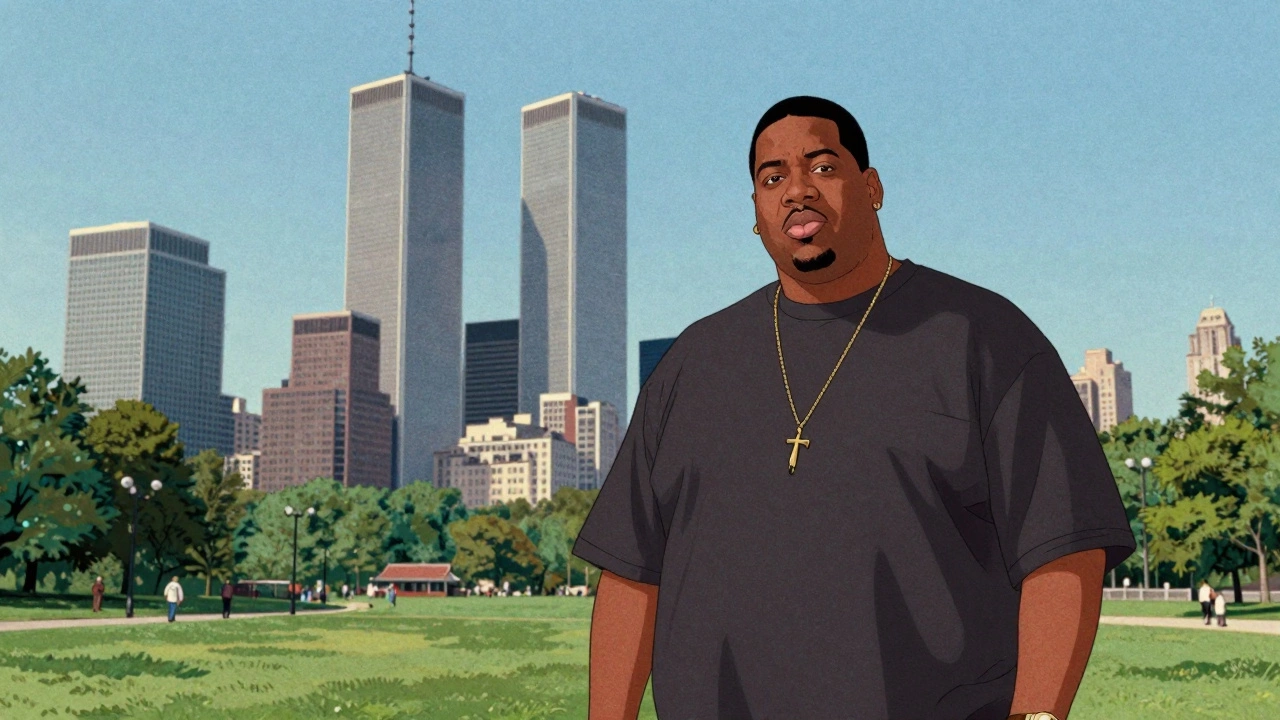
You cannot talk about 90s music photography without mentioning Modu Nigeria-born, New Jersey-raised photographer famous for his iconic 1996 portrait of The Notorious B.I.G.. His 1996 photograph of Biggie at Liberty State Park in Jersey City is arguably the most recognizable image of the decade. The composition is simple but powerful: Biggie stands confidently with the World Trade Center looming in the background.
Why does this photo resonate so deeply? First, it captures Biggie at his commercial peak, exuding the cool that defined East Coast hip-hop. Second, the backdrop adds a layer of historical weight. Taken five years before the September 11 attacks, the image freezes a specific moment in New York City's physical and cultural landscape. Today, looking at those Twin Towers in the background evokes a sense of loss and nostalgia that wasn't present when the shutter clicked. Modu’s work transcends commercial music documentation; it has become a legitimate cultural artifact. It proves that great photography can anticipate historical significance even if the photographer doesn't intend it.
The Role of Music Publications: NME and Martyn Goodacre
While street-level photographers captured the raw energy, established publications played a crucial role in shaping global taste. Martyn Goodacre Berlin-based music photographer central to the British publication New Musical Express (NME) occupied a unique position in this ecosystem. As a core photographer for NME, one of the most influential music magazines in the world, Goodacre had access to major international artists. His choices directly influenced how generations of fans visually conceptualized contemporary musicians.
NME didn't just report on music; it curated it. Goodacre’s editorial eye helped define the visual identity of the Britpop and indie rock scenes. His later publication of a dedicated music photography book highlights the retrospective value of this work. It shows that 90s music photography is now recognized as a coherent artistic category worthy of archival preservation. Goodacre’s career illustrates how institutional support from major publications amplified the reach of these visual narratives, spreading them far beyond local scenes.
Technological Context: Film, MTV, and the Early Web
The medium matters. Most of these iconic 90s images were shot on film. This forced photographers to be intentional. You couldn't just spray and pray with a digital sensor; every frame cost money and required thought. This constraint led to higher quality, more considered compositions. Additionally, the rise of MTV created a new demand for behind-the-scenes content. Photographers like Guzman and Benabib often worked on music video sets, capturing stills that complemented the moving images.
Toward the end of the decade, the World Wide Web began to change everything. Digital reproduction technologies started transforming how images were shared and archived. While the 90s remained largely analog, the transition to digital laid the groundwork for the instant sharing culture we have today. Understanding this technological pivot helps explain why 90s photos feel so tangible-they were physical objects before they became pixels.
| Photographer | Primary Genre Focus | Iconic Subject(s) | Visual Style |
|---|---|---|---|
| Guzman | Rock, Hip-Hop, R&B | Kurt Cobain, Janet Jackson, Snoop Dogg | Intimate, versatile, cross-genre fluency |
| Modu | Hip-Hop | The Notorious B.I.G. | Urban landscape integration, documentary realism |
| Sue Kwon | Hip-Hop | Biggie Smalls, Wu-Tang Clan | Candid, culturally embedded, charismatic |
| Michael Benabib | Hip-Hop, R&B | Tupac Shakur, Mary J. Blige | Raw, emotional, rare archival depth |
| Martyn Goodacre | Indie Rock, Britpop | NME Editorial Covers | Editorial, stylized, globally influential |
Legacy and Retrospective Value
Today, nearly three decades later, we are seeing a surge in interest in 90s music photography. Gallery exhibitions, books, and media features are revisiting the work of these pioneers. This isn't just nostalgia; it's recognition of historical importance. Figures like T. Eric Monroe, who moved away from music photography in the late 90s, noted that he "never thought much about his work" at the time. He viewed it as commercial activity. Now, that same work is seen as essential cultural documentation.
This retrospective lens allows us to appreciate the skill and vision of these photographers. They didn't know they were creating history. They were just doing their jobs with passion and integrity. The fact that their images continue to circulate in the 2020s proves their lasting impact. They defined the visual identity of a transformative period in music history, showing us that true power lies in authenticity.
Who took the iconic photo of Biggie with the Twin Towers?
The iconic 1996 photograph of The Notorious B.I.G. with the World Trade Center in the background was taken by photographer Modu at Liberty State Park in Jersey City.
What makes 1990s music photography different from other eras?
1990s music photography shifted from the glamorous, studio-heavy style of the 80s to a more intimate, authentic approach. Photographers focused on capturing genuine emotion and cultural context, often using natural light and real-world settings.
Who are Guzman and why are they important?
Guzman is the husband-and-wife team of Constance Hansen and Russell Peacock. They are important because they dominated 90s music photography across multiple genres, including rock, hip-hop, and R&B, capturing artists like Kurt Cobain and Janet Jackson with remarkable versatility.
How did hip-hop photography influence mainstream culture in the 90s?
Hip-hop photography in the 90s, led by photographers like Sue Kwon and Michael Benabib, presented artists with dignity and authenticity. This challenged stereotypes and helped elevate hip-hop from a niche genre to a dominant cultural force in global media.
Did technology play a role in 90s music photojournalism?
Yes, the 90s marked the transition from film to digital photography. While most iconic images were shot on film, the emergence of the World Wide Web and digital reproduction technologies toward the end of the decade began changing how images were shared and archived globally.
What is the significance of Martyn Goodacre's work with NME?
Martyn Goodacre was a central photographer for New Musical Express (NME), one of the most influential music publications. His work shaped how international audiences visually perceived artists, particularly in the Britpop and indie rock scenes, demonstrating the power of editorial photography.